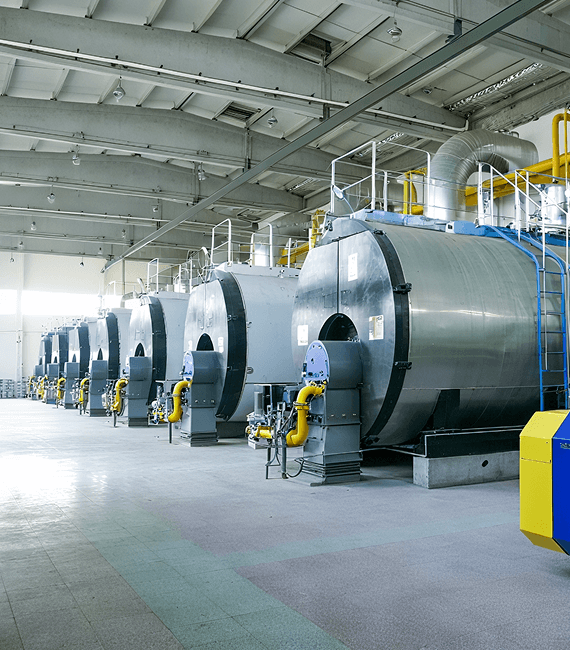

Industrial steam boilers are critical heat-supply equipment in factories, and their steam output directly determines production efficiency. Following production expansion, existing boilers often fail to meet the increased demand for steam. Given the high cost of boiler replacement and the significant losses associated with downtime, most factories prefer to optimize their existing equipment.
The vast majority of industrial steam boilers currently in use offer room for increased capacity. By identifying and optimizing the shortcomings of boiler equipment, steam production can be increased without replacing the boiler with a new one, thus meeting the steam demand for production.
Many people confuse the concepts of "evaporation capacity" and "steam output." Evaporation capacity refers to the boiler's theoretical water evaporation capability, whereas steam output represents the actual quantity of compliant steam produced by the equipment under real-world operating conditions. The rated steam production capacity marked on the equipment at the factory is the maximum production capacity under standard operating conditions. In actual production, due to various on-site conditions, boilers can hardly reach their rated capacity.
The failure to meet rated capacity stems primarily from a few key issues. Incomplete fuel combustion leads to significant heat loss. Deteriorated heat transfer efficiency across the boiler's heating surfaces prevents heat from being effectively transferred to the boiler water. Additionally, feedwater temperatures or water quality that fail to meet standards increase the boiler's heating load.
Furthermore, improper operating parameter settings and insufficient output from auxiliary equipment can also act as bottlenecks for steam production. Before attempting to optimize capacity, it is essential to clearly identify the specific limiting factors; this avoids haphazard adjustments and ensures that optimization efforts are aligned with actual on-site requirements.
Boiler steam output efficiency is essentially a dynamic balance between heat input, heat transfer efficiency, and operating conditions. Simple fine-tuning is unlikely to produce noticeable results. Only by making multi-dimensional adjustments based on the equipment status can steam production be steadily increased. The following are low-cost optimization methods that can be readily implemented on the factory floor.
Fuel combustion is the source of heat for steam generation in boilers, and the quality of the combustion process directly determines thermal efficiency. Many boilers suffer from low output primarily due to unstable combustion conditions.
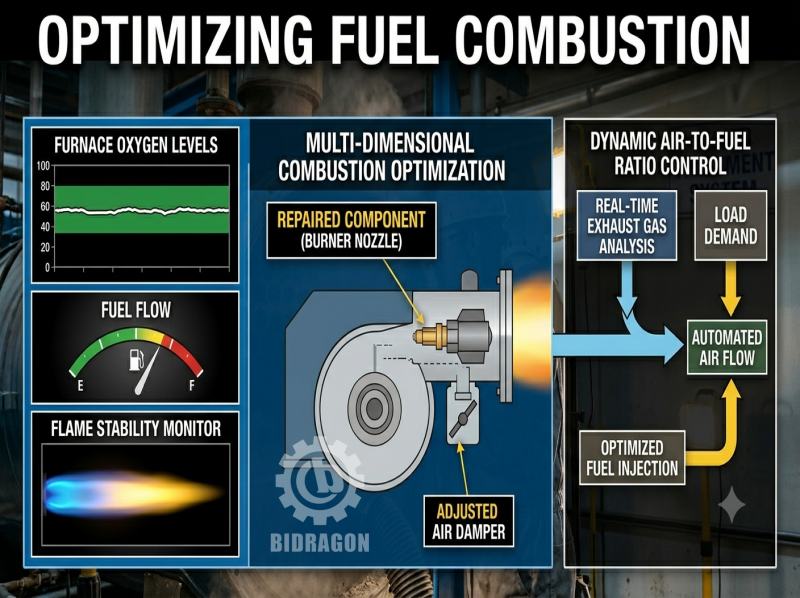
The air-to-fuel ratio is the critical factor in combustion adjustment. Excessive airflow introduces large amounts of cold air into the furnace, carrying away usable heat. Insufficient airflow will prevent fuel from burning completely. This not only wastes fuel but also leads to the formation of soot, carbon deposits, and other impurities.
During daily operation, the burner can be periodically adjusted to repair issues such as component wear and blockage, resulting in a more stable flame combustion state. Additionally, continuous monitoring of furnace oxygen levels and proper control of the excess air ratio allow the fuel to release its full thermal energy, thereby providing a robust heat source for steam generation.
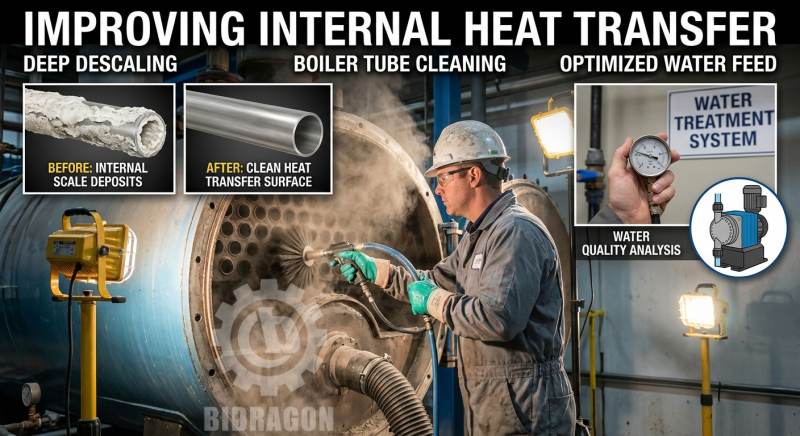
During prolonged continuous operation, deposits inevitably accumulate on the boiler's heat transfer surfaces. Hard scale will form on the water side of the furnace, while dust and fuel residue will accumulate on the flue gas side pipes and furnace walls. These deposits possess extremely poor thermal conductivity, effectively creating an insulating layer over the heat transfer surfaces.
This is a primary reason why many boilers experience a decline in production capacity over time. Thorough and regular cleaning to remove scale from heating surfaces and deposits from the flue-gas side can significantly reduce thermal resistance. This allows heat generated within the furnace to be transferred rapidly to the boiler water, thereby accelerating the rate of evaporation and naturally boosting steam production efficiency.
Are you struggling to hit your factory's peak steam demand with an underperforming boiler that stalls your production lines?
Click here to request a custom industrial boiler solution and project quote.

Boilers require heat to raise cold water to the point of vaporization. The higher the initial temperature of the boiler feedwater, the less heat the equipment needs to consume. Raising the feedwater temperature is an effective way to reduce the boiler's operating load and increase the rate of steam generation.
The primary function of the economizer is to preheat the boiler feedwater. Routine maintenance is essential to ensure unobstructed piping and clean heat-exchange surfaces, thereby allowing the economizer to consistently deliver effective preheating. Condensate generated during production retains significant heat; discharging it directly results in energy waste. Recovering and reusing this condensate can effectively raise the overall feedwater temperature.
At the same time, standardizing the operation of the deaerator helps stabilize feedwater temperature and pressure. Once the entire feedwater system is optimized, the boiler no longer needs to consume large amounts of heat to warm up cold water, enabling it to produce more steam under the same operating conditions.
Heat loss through flue gas represents the primary form of heat loss in industrial boilers, as a significant amount of heat is discharged directly from the equipment along with the exhaust. Minimizing this loss allows the retained heat to be fully utilized for steam generation.
Personnel should routinely monitor flue gas temperatures and promptly investigate combustion or heat exchange issues whenever abnormally high temperatures are detected. Air leakage is common in boiler furnaces, flues, and inspection ports. When cold air from the outside enters the equipment, it lowers the furnace temperature and raises the exhaust gas temperature.
Promptly sealing leakage points and employing waste heat recovery systems to capture residual heat from the flue gas ensures that more usable heat remains within the boiler system. This improved heat utilization leads to a steady increase in steam production capacity.
A stable steam drum water level is crucial for maintaining the boiler's evaporation balance. If the water level is too high, boiler water is easily carried over with the steam, leading to moisture carryover issues. Conversely, if the level is too low, the boiler's heating surfaces cannot make sufficient contact with the water, directly affecting normal steam production and potentially creating safety hazards for the equipment.
Keeping the steam drum water level within the standard range with only minor fluctuations effectively minimizes moisture carryover and improves steam dryness. Stable steam quality ensures consistent boiler evaporation conditions, effectively preventing fluctuations in output and guaranteeing the stable operation of downstream production processes.
Often, the boiler unit itself is sound, yet output falls short because the auxiliary equipment cannot keep pace. Various auxiliary equipment are the basic guarantee for the high-load operation of boilers. Any weakness in any link will limit the overall steam production capacity.
Insufficient feed water pressure or flow rate causes the feed water supply to lag behind the evaporation rate. Abnormal operation of forced-draft and induced-draft fans leads to poor furnace ventilation and unstable combustion conditions. Issues such as jamming or insufficient output in fuel handling equipment result in fuel supply shortages.
Regular, comprehensive checks of auxiliary equipment status are essential, as is the timely repair of faulty components and adjustment of operating parameters. Ensuring that auxiliary equipment meets the demands of high-load boiler operation eliminates hidden bottlenecks in the system's production capacity.
The decline in boiler performance is usually a gradual process, making subtle day-to-day changes in output easy to overlook. Recognizing the signs of equipment abnormality allows for the timely detection of capacity issues.
The most obvious indicator is the equipment's persistent failure to meet its design steam output; even when operating at full load, it cannot satisfy the workshop's steam requirements. Fuel consumption during production continues to rise without a corresponding increase in steam output, signaling a continuous decline in the boiler's thermal efficiency.
Persistently high flue gas temperatures and frequent fluctuations in steam pressure are clear signs of significant heat loss and unstable operating conditions. The boiler's response time to changes in production load becomes increasingly sluggish, and manual adjustments to operating parameters fail to yield significant improvements in steam generation capacity. These issues clearly indicate operational abnormalities. If the boiler frequently produces scale and accumulates ash, it indicates that there are oversights in routine maintenance. These problems will continue to constrain boiler operation and suppress the equipment's steam production potential.
Boilers are specialized pieces of equipment designed for long-term, continuous operation. Boiler performance naturally degrades over time; therefore, proper routine maintenance is essential for stabilizing steam output capacity and preventing a decline in productivity.
Standardized water treatment practices minimize scale formation on heat-transfer surfaces at the source, thereby ensuring sustained heat-transfer efficiency. Prolonged use of burners can lead to problems such as nozzle clogging and component wear. Regular cleaning and maintenance can maintain good combustion.
Accumulated ash on heat-transfer surfaces must be removed periodically to prevent the buildup of stubborn, insulating layers. Although such preventive maintenance tasks may seem minor, they effectively delay equipment performance degradation. Boilers that receive consistent, high-quality maintenance remain in excellent operating condition, avoiding significant drops in steam output.
Many enterprises focus solely on boiler operating parameters while overlooking the importance of feedwater quality. Feedwater quality is a critical factor determining long-term heat transfer efficiency and the stability of steam production.
Boiler water that has not undergone advanced treatment often contains significant levels of hardness ions and suspended solid impurities. During high-temperature heating, these impurities precipitate and adhere firmly to the heated tube walls, forming scale. Even a scale layer just a few millimeters thick can drastically increase thermal resistance, severely impeding heat transfer.
Substandard water quality can also lead to issues such as pipeline corrosion and clogging, further compromising equipment operating conditions. Strict control of water quality parameters and diligent chemical management of boiler feedwater are essential. These measures ensure that boiler heat transfer surfaces remain clean over the long term, guaranteeing continuous and stable steam production.
The various operating parameters of a boiler are interconnected and collectively influence steam generation efficiency. Properly adjusting these parameters allows for increased production capacity without the need for equipment modifications.
The steam pressure setting directly affects the boiling and evaporation efficiency of the boiler water. Feedwater temperature determines the total amount of thermal energy the boiler must supply. The amount of excess air in the furnace is directly linked to the completeness of fuel combustion.
Flue gas temperature is a direct indicator of heat utilization efficiency. Abnormal flue gas temperature indicates excessive heat loss. Improper blowdown operations result in the loss of high-temperature boiler water, carrying away significant amounts of heat. By continuously monitoring operating data and fine-tuning parameters based on production conditions, operators can ensure the boiler consistently maintains optimal operating performance.
There are limits to how much boiler capacity can be increased through routine operation, commissioning, and maintenance. If the boiler still fails to meet production steam demands after optimization, the enterprise must undertake targeted upgrades and retrofits of the boiler equipment.
Older burners generally have low combustion accuracy and poor operational stability. Replacing the burner with a high-performance burner in this situation can improve fuel efficiency. Enterprises can also install or retrofit economizers and waste heat recovery systems. Such equipment effectively recovers waste heat from flue gases, thereby minimizing heat loss.
Many aging boilers suffer from poorly designed heating surface layouts. The heat exchange area of the equipment itself is too small, which limits its evaporation capacity. Targeted modifications and expansion of the heating surface can directly improve the boiler's evaporation efficiency. Installing automated control systems allows for precise monitoring and regulation of operating parameters, effectively mitigating operational fluctuations caused by manual handling. These types of targeted equipment upgrades can overcome the original capacity limitations of older boilers, enabling them to meet the factory's increasing steam load requirements.
Increasing boiler steam production is only a phased optimization effort. Maintaining stable high-capacity boiler operation and preventing a continuous decline in equipment performance is the core objective of equipment management. A single optimization adjustment yields only short-term gains and cannot guarantee long-term, stable boiler performance.
Enterprises need to establish standardized boiler operating procedures. Uniform operational guidelines help minimize human error and effectively prevent process fluctuations caused by improper handling. Staff must regularly collect boiler operating data; analyzing these trends allows for the early detection of potential performance degradation.
Enterprises must institutionalize boiler water treatment, regularly tune combustion systems, and comprehensively overhaul auxiliary equipment to ensure the smooth operation of the entire system. Preventive maintenance should be carried out in strict accordance with established schedules, addressing minor faults promptly to prevent them from escalating and impacting production capacity. Sustained, meticulous management enables the boiler to maintain high-efficiency steam production over the long term.
Increasing the steam output of industrial boilers does not require the indiscriminate replacement of equipment. The key lies in optimizing combustion conditions and improving heat transfer efficiency. Proper water quality control, routine maintenance, and parameter fine-tuning can stabilize the long-term steam production performance of the boiler.
By precisely identifying operational bottlenecks and implementing targeted optimization and maintenance strategies, the full potential of existing boiler equipment can be realized. Dynamic adjustments and optimization enable the boiler to maintain efficient, long-term steam production that meets the enterprise's operational needs.