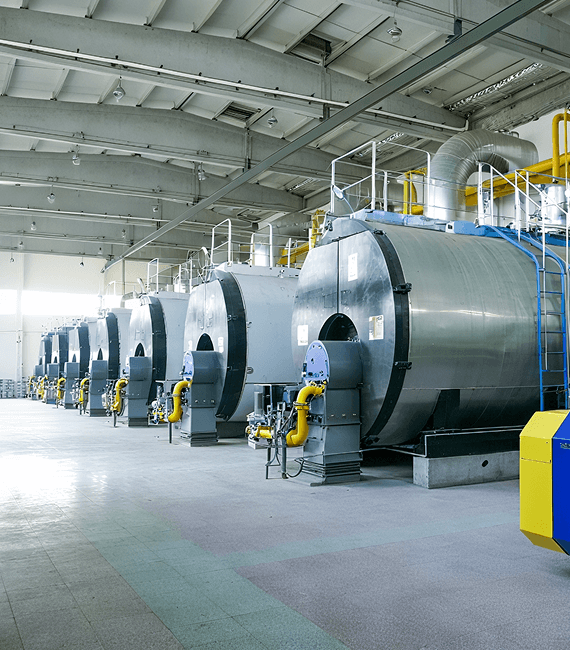

Definition of Biomass Boilers
Biomass boilers use renewable materials such as agricultural and forestry waste, industrial organic residues, and similar fuels to generate heat through combustion, producing hot water or steam. The fundamental difference between biomass boilers and conventional boilers lies in their fuel sources.
Traditional boilers rely on fossil fuels like natural gas, coal, and oil—resources that take millions of years to form and are finite. In contrast, biomass fuels derive from energy accumulated during plant growth; as long as sunlight and land are available, they can be continuously produced.
From the perspective of the carbon cycle, plants absorb carbon dioxide from the atmosphere during growth, and when burned, release an equivalent amount back into the air. This process does not increase atmospheric carbon levels beyond what is naturally cycled, making it the core advantage of biomass energy.
Biomass pellets are currently the most widely used fuel. Made from raw materials such as wood chips and straw, they are processed through grinding, drying, and extrusion into cylindrical pellets 6–12 mm in diameter. Pellets have high density, making them easy to store and transport, and they burn steadily and reliably.
Wood chips are primarily derived from forestry operations and woodworking byproducts. While cheaper than pellets, they occupy more space, requiring greater storage and transportation capacity. Their moisture content varies significantly, placing certain demands on boiler combustion systems.
Firewood is the most traditional biomass fuel. It requires no complex processing and can be used directly as logs or split firewood. Suitable for small-scale boilers and rural areas, firewood has lower combustion efficiency and requires frequent refueling.
Agricultural residues include straw, rice husks, peanut shells, and sugarcane bagasse. These are byproducts of farming activities, widely available and low-cost. Since residue types vary by region, boiler designs must be adapted accordingly.
Forestry residues come from forest management, thinning, and wood processing, including branches, bark, and sawdust. Collecting and handling these materials require specialized equipment and are best suited to regions with stable forestry resources.
Industrial organic waste includes food processing byproducts, paper mill black liquor, textile scraps, and similar materials. If discarded directly, these wastes can pollute the environment; however, using them as boiler fuel enables resource recycling.

Global energy structures are undergoing profound transformation. The extensive use of fossil fuels has led to increasingly severe climate change and environmental pollution, prompting countries worldwide to seek alternative energy sources.
The push toward carbon neutrality has accelerated this transition. Major economies—including the European Union, China, and the United States—have committed to achieving carbon neutrality by mid-century. As the only renewable carbon-based energy source capable of replacing fossil fuels, biomass energy has gained unprecedented attention.
Industry is one of the largest consumers of energy and emitters of carbon. Many energy-intensive enterprises face significant pressure to reduce emissions. Biomass boilers help companies cut carbon emissions while managing energy costs, making them a key solution for industrial decarbonization.

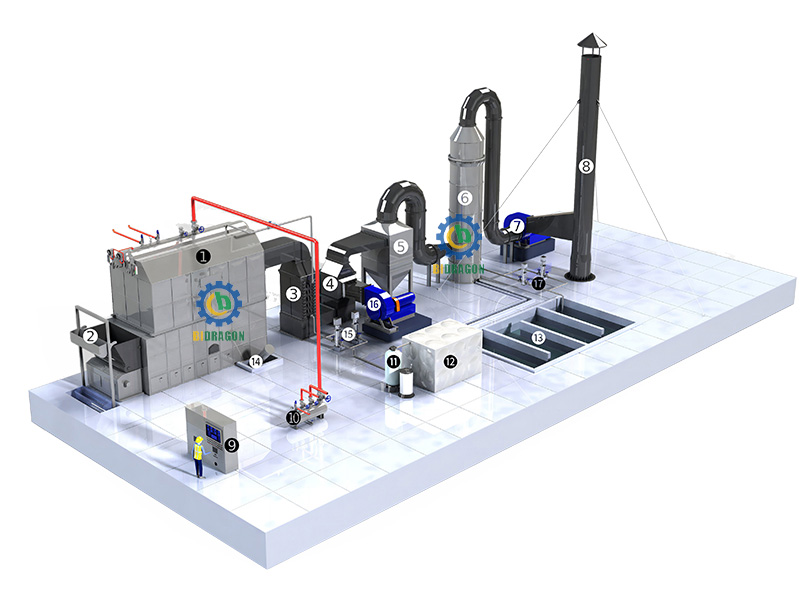
Fuel is first transported from the storage silo to the boiler's combustion zone via a conveying system. Conveying methods vary by fuel type; screw conveyors are commonly used for pellet fuel, while belt conveyors are often used for wood chips.
Upon entering the combustion chamber, the fuel ignites and releases a significant amount of heat. This process requires precise control of the air supply to ensure complete combustion while preventing excessive airflow from carrying away heat.
High-temperature flue gas generated during combustion passes over the boiler's heat-absorbing surfaces, transferring heat to the water inside the tubes. As the water absorbs heat, its temperature rises, converting it into hot water or steam.
The hot water or steam is piped to the point of use for industrial processes or space heating. Condensate resulting from the process returns to the boiler to be reheated and recirculated.
Before discharge, the flue gas undergoes purification to remove pollutants such as particulate matter, sulfur dioxide, and nitrogen oxides. Once emissions meet national standards, the gas is released into the atmosphere through the chimney.
The combustion system is the heart of the boiler. It converts the chemical energy in the fuel into thermal energy and comprises the grate, combustion chamber, burner, and fuel supply mechanism. Different combustion technologies utilize specific grate structures, such as chain grates, reciprocating grates, or fluidized beds.
The boiler body is a pressure vessel designed to withstand high temperatures and pressures. It consists of components such as the furnace chamber, water walls, convective tube banks, and the steam drum. The furnace chamber provides the space for combustion, while the water walls and convective tube banks serve as the primary heat-absorbing surfaces, capturing heat from the flue gas.
The water circulation system manages the flow of water within the boiler. It includes feedwater pumps, circulation pumps, piping, and heat exchangers. The system ensures adequate cooling of heat-absorbing surfaces, preventing damage caused by tube wall overheating.
The intelligent control system acts as the boiler's brain. Using various sensors, it monitors parameters such as temperature, pressure, water level, and flue gas composition in real-time. Based on this data, it automatically adjusts fuel supply, forced draft (air intake), and induced draft (exhaust) rates to maintain stable boiler operation.
The flue gas purification system is a critical component for meeting environmental protection requirements. It comprises a dust collector, a desulfurization unit, and a denitrification unit, designed to remove dust, sulfur dioxide, and nitrogen oxides from the flue gas, respectively.
Fully Automatic Biomass Boilers: In these boilers, the entire process—from fuel feeding, ignition, and combustion to ash discharge and flue gas treatment—is automatically managed by a control system. Operators simply need to set parameters on the control panel, allowing the boiler to run continuously around the clock.
Their advantages include labor savings and stable operating conditions. The control system automatically adjusts combustion parameters based on fluctuations in thermal load, thereby eliminating errors associated with manual operation. They also support remote monitoring, enabling managers to check the boiler's operating status from their offices.
Fully automatic boilers are suitable for large industrial enterprises and centralized heating projects, where there is a high demand for continuous heat supply and sufficient budget to cover the higher equipment costs.
Semi-automatic Biomass Boilers: These boilers require manual intervention for certain tasks, such as periodically adding fuel, clearing ash, and inspecting equipment status. Their control systems are relatively simple, focusing primarily on monitoring and safety protection functions.
These boilers are significantly less expensive than fully automatic models, making them suitable for small-to-medium-sized enterprises and individual users. Operation is straightforward, requiring only minimal training.
The downsides include the need for dedicated personnel on duty, which increases labor costs. Additionally, the precision of manual operation is limited; combustion stability may vary, potentially affecting the boiler's thermal efficiency.
Biomass Pellet Boilers: Specifically designed to burn biomass pellet fuel. They feature a compact burner structure that ensures complete combustion of the pellets. Pellet fuel offers good uniformity, making the combustion process easy to control.
Pellet boilers are relatively compact and easy to install. They are ideal for regions where there is no stable supply of wood chips or firewood but where pellet fuel is readily available.
Wood Chip Boilers: The furnace chamber and grate of these boilers are designed to accommodate larger wood chip fuel. Their fuel handling systems can adapt to variations in wood chip moisture content and size.
Wood chips are typically 30%–50% cheaper than pellets, offering substantial fuel cost savings over the long term. These boilers are suitable for areas located near wood processing plants or regions with abundant forestry resources. Wood-fired boilers feature a simple, robust, and durable structure. They have low fuel requirements and can burn wood of various sizes.
These boilers are primarily used for household heating and small workshops in rural areas. Their drawbacks include low combustion efficiency and the need for frequent refueling and ash removal.
Chain-grate biomass boilers: Chain-grate technology is one of the most mature combustion methods. Fuel enters at the front of the grate and burns gradually as the grate moves; the resulting ash is discharged at the rear.
Chain-grate boilers offer reliable operation and easy maintenance, and they are suitable for burning various fuels such as pellets and wood chips. However, their combustion efficiency is relatively low, and they are less adaptable to high-moisture fuels.
Reciprocating-grate boilers: Reciprocating grates use the back-and-forth motion of grate bars to push fuel forward. This movement ensures thorough mixing of fuel and air, resulting in more complete combustion.
Reciprocating grates offer better fuel adaptability than chain grates; they can handle fuels with higher moisture content and larger particle sizes, making them suitable for burning agricultural and forestry waste.
Fluidized-bed biomass boilers: Fluidized-bed boilers mix fuel with quartz sand, creating a boiling-like state driven by airflow. This combustion method ensures uniform temperatures and complete fuel combustion.
Fluidized-bed boilers offer high thermal efficiency and can burn various low-grade fuels. They also allow for direct desulfurization during combustion, reducing pollutant emissions. However, they feature complex structures and entail higher equipment costs.
Biomass gasification boilers: These boilers first gasify biomass fuel under oxygen-deficient conditions to produce combustible gas, which is then fed into a combustion chamber to be burned.
Gasification combustion achieves high temperatures and complete burning, resulting in low pollutant emissions. However, the gasification process requires specialized equipment, and the system is complex and difficult to maintain.
Environmental Benefits
The most prominent advantage of biomass boilers is their low carbon emissions. Carbon dioxide absorbed by plants during growth is released back into the atmosphere when burned, forming a closed carbon cycle. Compared to coal-fired boilers, biomass boilers can reduce CO₂ emissions by approximately 90%.
Using biomass fuel reduces dependence on fossil fuels. Fossil fuels are non-renewable resources with limited reserves and significant price volatility. In contrast, biomass energy is renewable and can be continuously supplied through proper utilization.
Biomass boilers also effectively handle large volumes of agricultural and forestry waste. If such waste is left unmanaged or burned indiscriminately, it pollutes the environment. By using this waste as boiler fuel, we not only solve waste disposal issues but also generate energy, turning waste into a valuable resource.
Biomass fuel typically costs less than natural gas and coal. This cost advantage is especially pronounced in regions rich in agricultural and forest resources. Long-term use of biomass boilers enables enterprises to significantly reduce energy expenses.
Many national and local governments have introduced policies supporting biomass energy development, including subsidies for renewable energy, carbon trading revenues, and tax incentives. These policies further lower operational costs and improve return on investment.
Biomass boilers have long service lives, generally exceeding 20 years. With proper daily maintenance, the equipment can operate stably over extended periods. Over the long term, biomass boilers offer better economic performance than conventional boilers.
High Energy Utilization Efficiency
Modern biomass boilers achieve high thermal efficiency levels. Advanced biomass pellet boilers can reach thermal efficiencies above 90%, which is 10–15 percentage points higher than traditional coal-fired boilers.
By installing heat recovery equipment such as economizers and air preheaters, boiler thermal efficiency can be further improved. These devices recover residual heat from flue gases to preheat feedwater and combustion air, minimizing energy waste.
Biomass combined heat and power (CHP) systems simultaneously produce heat and electricity, achieving overall energy utilization rates exceeding 90%. The system first uses the thermal energy generated from biomass combustion to generate electricity, then utilizes the residual heat after power generation for heating or industrial processes, enabling cascading energy use.
Biomass fuel can be produced and supplied locally, eliminating reliance on imports. This is crucial for ensuring national and regional energy security. Especially amid fluctuations in international energy markets, local energy supply offers greater stability and reliability.
Developing biomass energy also stimulates rural economic growth. Farmers can increase income by selling agricultural and forestry waste, while creating more employment opportunities in rural areas.
Food and Beverage Industry
The food and beverage industry is one of the primary users of biomass boilers. This sector requires substantial amounts of steam for various production processes, including cooking, sterilization, disinfection, and drying.
Steam produced by biomass boilers maintains consistent quality, meeting hygiene standards required in food production. Moreover, many organic by-products generated during food processing—such as distillery spent grain, fruit pomace, and sugarcane bagasse—can serve as boiler fuel, enabling resource recycling.
The pharmaceutical industry has stringent requirements for steam, necessitating clean steam. Clean steam is generated via specialized heat exchangers and contains no impurities, preventing contamination of pharmaceutical products.
Biomass boilers can provide stable high-pressure steam, which is then converted into clean steam via dedicated generators for use in drug manufacturing, extraction, concentration, and drying processes. Pharmaceutical plant residues, such as medicinal waste, also make excellent biomass fuel and can be processed on-site.
The papermaking industry is a major energy consumer, requiring large amounts of steam and electricity. Processes such as cooking, bleaching, and drying in pulp production all depend on steam.
Waste materials generated by paper mills—such as black liquor, bark, and wood chips—can all serve as fuel for biomass boilers. In particular, black liquor contains abundant organic matter and has a high calorific value. Many large-scale paper mills have dedicated black liquor recovery boilers to burn this waste and generate steam and electricity.
Wood Processing Industry
The wood processing industry produces substantial amounts of waste during production, including offcuts, sawdust, and bark. These by-products are ideal fuels for biomass boilers.
Processes such as wood drying and hot-pressing of panels require significant thermal energy. Biomass boilers can supply this heat, enabling on-site waste utilization and disposal. Many wood processing plants are equipped with biomass boilers, achieving near self-sufficiency in energy use.
The metal smelting industry requires high-temperature thermal energy for ore melting, metal heating, and heat treatment processes. Biomass boilers can produce high-temperature steam or hot air to meet these requirements.
Smelting non-ferrous metals such as copper, aluminum, and zinc demands considerable thermal input. Using biomass boilers can replace part of the fossil fuel consumption, reducing carbon emissions. Biomass boilers can also be integrated with other energy systems to form multi-energy complementary supply networks.
Biomass boilers are widely used in district heating and power generation. Biomass combined heat and power (CHP) projects can simultaneously provide heating and electricity to nearby residential areas and industrial users.
Compared to coal-fired CHP systems, biomass CHP emits less carbon and has a lower environmental impact. Additionally, biomass fuel can be sourced locally, stimulating regional economic development. In areas without centralized heating, constructing biomass district heating stations can replace numerous small coal-fired boilers, significantly improving air quality.
Boiler efficiency is a key indicator of boiler performance. It represents the ratio of chemical energy in the fuel that is converted into useful thermal energy.
Combustion efficiency refers to the ratio of heat released during combustion to the total heat content of the fuel. Higher combustion efficiency indicates more complete fuel combustion and reduced losses from unburned fuel.
Thermal efficiency refers to the ratio of useful heat output from the boiler to the heat released during fuel combustion. It accounts for various heat losses, such as heat loss in flue gas, heat dissipation losses, and losses due to incomplete combustion.
Overall efficiency refers to the energy utilization efficiency of the entire boiler system. It encompasses both the boiler's thermal efficiency and the energy consumption of auxiliary equipment, providing a more accurate reflection of the system's actual operating performance.
Fuel quality significantly impacts boiler efficiency. Factors such as moisture content, ash content, and calorific value affect combustion performance. High moisture content requires more heat for evaporation during combustion, thereby reducing the boiler's thermal efficiency.
Combustion technology is a core determinant of boiler efficiency. Different technologies yield varying levels of combustion and thermal efficiency; for instance, fluidized bed boilers generally achieve higher combustion and thermal efficiencies than chain-grate boilers.
Equipment design also plays a role. An optimized furnace structure, heating surface arrangement, and flue gas flow path can minimize heat loss and enhance heat transfer efficiency.
Operational management is another critical factor. The technical proficiency of operators, the adjustment of operating parameters, and the quality of equipment maintenance all influence the boiler's actual operating efficiency.
Installing an economizer is a common method for improving boiler efficiency. Located in the boiler's tail flue, the economizer utilizes waste heat from flue gas to preheat the boiler feedwater, thereby lowering the flue gas temperature and reducing heat loss through the exhaust.
Air preheaters are also frequently used for waste heat recovery. They utilize flue gas waste heat to preheat combustion air; introducing heated air into the furnace raises the combustion temperature, promoting more complete fuel combustion.
Waste heat recovery systems can capture additional waste heat from the flue gas. For example, waste heat can be utilized to produce hot water, heat air, or drive a lithium bromide absorption chiller for cooling purposes. This approach further enhances the overall energy utilization efficiency.
Optimizing the control system can also improve boiler efficiency. By precisely regulating fuel and air supplies to maintain an optimal fuel-to-air ratio, it is possible to prevent heat loss caused by excessive airflow and avoid incomplete combustion resulting from insufficient air.
|
Boiler Type |
Thermal Efficiency Range |
|
Chain Grate Boiler |
75%-85% |
|
Fluidized Bed Boiler |
85%-90% |
|
Biomass Pellet Boiler |
85%-92% |
|
CHP System |
Above 90% |
As shown in the table, biomass pellet boilers and fluidized bed boilers exhibit relatively high thermal efficiency. CHP systems achieve the highest overall energy utilization efficiency due to their combined heat and power generation capabilities.
Although chain-grate boilers have relatively lower thermal efficiency, they remain widely used across various sectors due to their operational reliability, ease of maintenance, and fuel versatility.
Boiler capacity is the primary factor influencing price. Boilers with larger capacities require more materials and involve more complex manufacturing processes, resulting in higher prices.
Fuel type also affects the price. Different fuels possess distinct combustion characteristics, necessitating specific combustion systems and grate designs. For instance, fluidized bed boilers are more expensive than chain-grate boilers.
Higher levels of automation lead to higher prices. Fully automated boilers are equipped with advanced control systems and various sensors, which naturally increases equipment costs.
Environmental protection specifications are a significant factor affecting price. Meeting strict emission standards requires the installation of environmental control equipment such as dust collectors, desulfurization units, and denitrification systems. These components are costly and significantly increase the total cost of the boiler.
Installation requirements also influence the final price. Installation costs can vary widely depending on site conditions and the complexity of the installation process.
Evaluating the cost of a boiler requires looking beyond the purchase price to consider the total life cycle cost. Life cycle costs encompass equipment procurement, installation, operation, maintenance, and fuel expenses.
Procurement and installation costs are one-time investments that represent a relatively small proportion of the total life cycle cost. Operating costs include electricity, water, and labor, while maintenance costs cover routine servicing, spare parts replacement, and major overhauls.
Fuel costs constitute the largest share of the life cycle cost, typically exceeding 70%. Therefore, selecting a fuel with stable pricing and reliable supply is crucial for controlling long-term costs.
The financial benefits of investing in a biomass boiler stem primarily from energy cost savings. Compared to traditional energy sources like natural gas or coal, biomass fuel offers significant savings on energy expenses.
The payback period refers to the time required to recoup the initial investment through energy savings. Generally, the payback period for biomass boilers ranges from 3 to 7 years. The exact duration depends on factors such as the fuel price differential, boiler operating hours, and government subsidies. Access to government renewable energy subsidies or revenue from carbon trading can further shorten the payback period.
Site Planning: Select a well-ventilated location with convenient access; allocate space for equipment installation, operation, and maintenance; and plan areas for fuel storage and ash/residue disposal.
Fuel Storage: Store pellets in sealed silos to prevent moisture absorption; store wood chips and firewood in a well-ventilated, dry area.
Administrative Procedures: File a report regarding the installation of special equipment with market regulatory authorities; complete the environmental impact assessment (EIA) and obtain approval from environmental protection agencies.
Foundation Construction: Pour a solid concrete foundation based on boiler specifications, ensuring it can support the load and withstand operational vibrations.
Equipment Hoisting: Lift and position the boiler unit, burner, and auxiliary equipment; ensure precise leveling and alignment.
Piping Connection: Securely connect all piping systems, including feedwater, steam, blowdown, and flue gas lines.
Commissioning and Operation: Conduct individual component testing followed by integrated system testing under simulated operating conditions; officially commission the unit once all tests are successfully passed.
Combustion System: Periodically check grate operation, remove slag/clinker, and clear burner nozzles.
Ash and Slag Removal: Regularly clean ash deposits from heating surfaces and promptly discharge combustion ash and slag.
Water Quality Management: Boiler feedwater requires softening; regularly test water quality and adjust chemical dosages.
Flue Gas System: Maintain dust collectors, clean filter bags/electrodes, and monitor operating parameters of desulfurization and denitrification units.
Ignition Failure: Sequentially check the fuel delivery system, the cleanliness and gap of ignition electrodes, and the ignition airflow rate.
Incomplete Combustion: Reduce grate speed, increase air supply, or switch to drier fuel.
Excessive Flue Gas Temperature: Clean ash deposits from heating surfaces and remove clinker from the furnace; adjust boiler operating load.
Boiler Clinkering: Lower furnace temperature, optimize combustion conditions, and use anti-clinkering additives if necessary.
Prioritize manufacturers with years of industry experience and independent R&D capabilities; focus on evaluating successful case studies within the industry and consider on-site visits to operational projects.
Verify that products hold key international certifications such as CE, ASME, ISO, and EAC, ensuring compliance with the quality and safety standards of the target market.
Select manufacturers capable of providing timely technical support, installation guidance, and spare parts supply; prioritize companies with local service outlets or a global service network.
A professional biomass boiler manufacturer offering products including chain grate, reciprocating grate, fluidized bed, and pellet boilers, with capacities ranging from 0.5 to 100 tons. Featuring advanced combustion technology, high thermal efficiency, and low emissions, the products hold multiple international certifications and have a track record of successful applications across various global industries.
Intelligent and Digital Transformation: Leveraging IoT and big data to enable remote monitoring, fault early warning, and automated operational optimization.
Ultra-Low Emission Upgrades: Emission levels will approach those of natural gas boilers, with integrated flue gas purification technology becoming increasingly widespread.
Widespread Adoption of CHP: Biomass Combined Heat and Power (CHP) systems will see expanded application due to the advantages of cascaded energy utilization.
Multi-Fuel Compatibility: Enhanced adaptability to diverse biomass fuels, reducing reliance on a single fuel source.
Core Role in Carbon Neutrality: Application scope expanding from heat and power generation to the production of biofuels and bio-based materials.
Biomass boilers offer both environmental and economic benefits, serving as key equipment for industrial decarbonization. Selection should consider factors such as thermal load, fuel supply, automation requirements, budget, and environmental regulations; a reliable manufacturer ensures the equipment's long-term, stable operation. Bidragon provides customized, high-efficiency, and eco-friendly biomass boiler system solutions tailored to client needs.