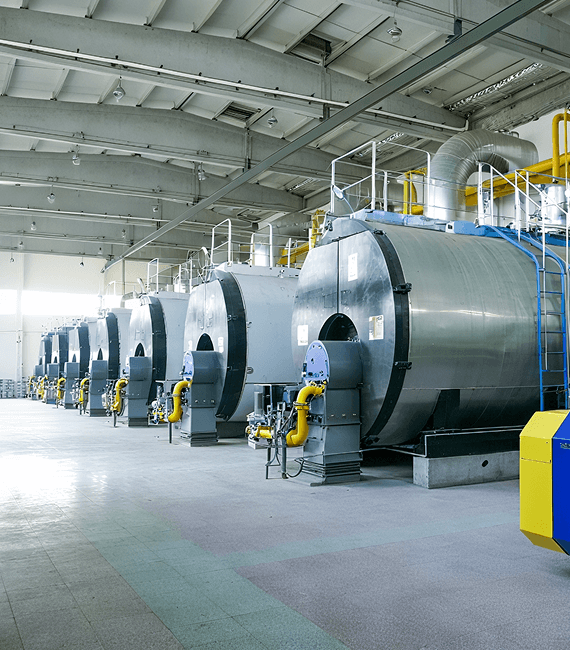

Industrial boiler load regulation is the operation of adjusting boiler output to match actual operating conditions based on changes in steam or thermal energy demand. This operation is crucial for boiler operation; stable regulation maintains reasonable output parameters, avoids operational disruptions caused by load fluctuations, improves combustion efficiency, reduces energy consumption and costs, and prevents equipment damage and safety accidents caused by sudden load changes, thus ensuring the long-term reliable operation of the unit.
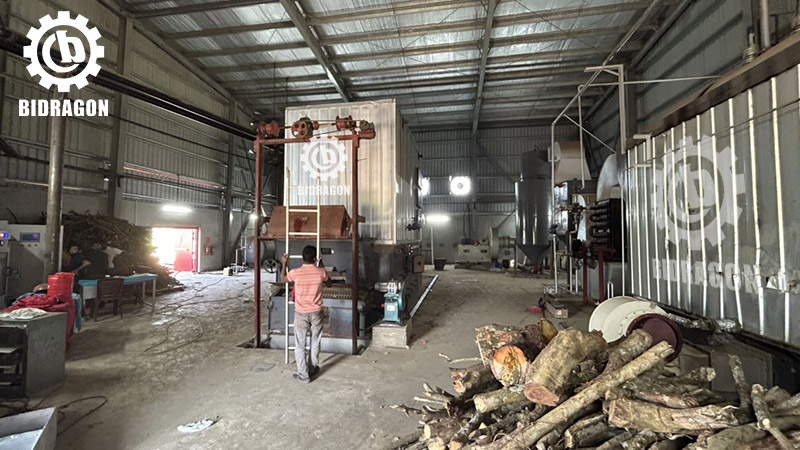
Load regulation is essentially the process of maintaining a dynamic balance between boiler output and external load demand by adjusting key parameters such as boiler fuel supply, air volume, and feedwater flow. In industrial boiler operation, steam demand fluctuates with changes in production conditions. Steam pressure, as a core indicator reflecting load balance, needs to be precisely matched with boiler output.
The basic control objectives of load regulation revolve around three core aspects. Pressure stability is the primary objective; stable steam pressure directly relates to the normal operation of downstream steam-using equipment and product quality. Temperature stability needs to be coordinated with pressure regulation to avoid abnormal temperatures affecting steam quality or the safety of the boiler's heating surfaces. Water level safety is the basic guarantee for boiler operation; excessively high or low water levels can cause serious safety hazards. Therefore, water level regulation needs to be integrated into the entire load regulation process, forming a linked control system.
Industrial boilers employ diverse load adjustment methods, and the specific method used is largely influenced by the boiler type, combustion medium characteristics, and control strategies. Different adjustment methods have varying working principles, control accuracy, and applicable scenarios. Choosing the appropriate load adjustment method can maximize boiler performance and achieve safe and efficient operation; conversely, it may lead to adjustment lag, low efficiency, and even affect equipment lifespan.
Manual load adjustment relies on operators adjusting fuel supply, air intake, and water supply through manual operation of valves, switches, and other devices based on their operating experience, thereby changing the boiler output. This adjustment method does not require complex automatic control equipment, has a simple structure, low initial investment cost, and easy-to-understand operating logic.
However, the accuracy and response speed of manual adjustment depend entirely on the operator's experience and judgment, making it difficult to cope with rapidly fluctuating load conditions, and parameter deviations are prone to occur during the adjustment process. At the same time, prolonged manual operation can lead to operator fatigue, increasing the risk of operating errors. Therefore, it is only suitable for smaller boiler units with simple operating conditions and smooth load fluctuations.
Automatic load adjustment uses various sensors to collect boiler operating parameters in real time, including steam pressure, temperature, water level, and furnace negative pressure. The collected signals are transmitted to the control system. The control system automatically issues commands to adjust the fuel supply, air volume, and water supply based on preset parameter thresholds and adjustment algorithms, achieving dynamic load adjustment.
Compared with manual adjustment, automatic load adjustment significantly improves operating stability and response speed, quickly responding to load fluctuations and controlling various operating parameters within a precise range. At the same time, automatic adjustment reduces human intervention, lowers the safety risks caused by operating errors, and can improve combustion efficiency by optimizing the adjustment logic. It is the mainstream load adjustment method widely used in modern industrial boilers. With the development of control technology, the intelligence level of automatic load adjustment systems is continuously improving, and their adaptability and reliability are further enhanced.
Constant pressure adjustment is a method of maintaining steam pressure stable at a set value during load changes. This control method compensates for the impact of load fluctuations on pressure by rapidly adjusting boiler output, ensuring that steam pressure does not deviate from the standard as the load changes. Constant pressure control provides stable steam parameters for downstream steam-using equipment, guaranteeing the consistency of the production process, and is suitable for systems with strict steam pressure requirements and relatively stable steam loads.
Sliding pressure control, on the other hand, allows steam pressure to fluctuate regularly with load changes. Pressure increases as the load increases, and decreases as the load decreases, without the need to maintain constant pressure. This control method reduces frequent fluctuations in boiler parameters, reduces equipment wear, and allows the boiler to operate in an optimal combustion state under different load conditions, improving operating efficiency at partial loads. Sliding pressure control is more suitable for scenarios with large load fluctuations and where steam-using equipment is more tolerant of pressure fluctuations. The two control methods should be selected appropriately based on operating conditions.
Boilers using different fuel types have significantly different load regulation logic and priorities, primarily due to adapting to the combustion characteristics of the fuel to ensure complete combustion and stable parameters. Load regulation for coal-fired boilers mainly revolves around the coordinated adjustment of coal feed rate, air supply, and induced draft. The fuel supply is controlled by changing the operating parameters of the coal feeding device, while the air supply is adjusted accordingly to ensure the oxygen required for combustion, and the induced draft is regulated to maintain stable negative pressure in the furnace.
Regulation of coal-fired boilers needs to consider the ignition delay of the fuel, avoiding excessive fluctuations in furnace temperature due to sudden changes in coal feed rate, which can affect combustion stability. Load regulation for gas and oil-fired boilers focuses on burner power adjustment, achieving load changes by adjusting the gas or oil supply to the burner, coupled with air volume adjustment. These boilers have fast combustion speeds and sensitive responses, resulting in relatively high control accuracy. The key is to ensure precise coordination of the fuel-air ratio to avoid incomplete combustion or excessive harmful gas production due to imbalances in the gas-air ratio, while also preventing safety issues such as flashback and flameout.
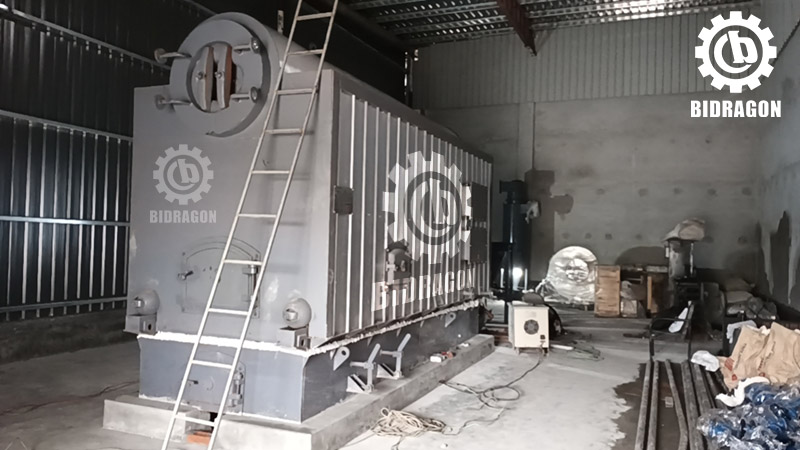
Single-loop control is a basic load regulation control strategy. It uses a single operating parameter as the control target, constructs an independent control loop, and adjusts the actuator through a feedback mechanism. This control strategy has a simple structure and is easy to debug, making it suitable for operating conditions with small load fluctuations and weak coupling between parameters. However, it is difficult to handle complex scenarios where multiple parameters interact, and its regulation accuracy and stability are limited.
Multi-loop control, on the other hand, targets multiple interrelated operating parameters, constructs multiple control loops, and establishes a linkage mechanism to achieve coordinated regulation between parameters. By comprehensively considering changes in pressure, temperature, water level, and other indicators, it optimizes the control commands to avoid adverse effects of single-parameter regulation on other parameters. The core of multi-loop control is the concept of coordinated control, emphasizing the synchronicity and adaptability of various control actions. By establishing correlation models between parameters, it achieves precise matching between load regulation and the overall operating state of the boiler.
Stability and feedback mechanisms are crucial for the effective implementation of control strategies. The feedback mechanism can monitor the regulation effect in real time, promptly correct regulation deviations, and ensure that the regulation process always revolves around the control target, avoiding parameter drift or over-regulation, thus guaranteeing the reliability of load regulation.
Fuel supply regulation is a core link in load regulation, directly adjusting boiler output by changing the fuel supply amount. The regulation method directly affects combustion efficiency and load response speed. For coal-fired boilers, multi-stage regulation or continuous proportional regulation is usually used to control the coal supply. Multi-stage regulation achieves stepped adjustment of the load by switching the operating gears of the coal feeding device, which is suitable for scenarios with small load fluctuations and low requirements for regulation accuracy.
Continuous proportional regulation can achieve smooth and continuous adjustment of the coal supply, precisely matching subtle changes in the load, improving regulation accuracy and combustion stability. For gas and oil-fired boilers, fuel supply regulation is achieved by adjusting the valve opening of the burner, allowing for continuous proportional regulation, with a fast response speed, enabling rapid adaptation to dynamic changes in the load.
Fuel supply regulation needs to be precisely matched with load demand. Over-regulation will lead to fuel waste or incomplete combustion, while insufficient regulation will fail to meet load demand. A reasonable fuel supply regulation method can optimize combustion conditions, improve energy utilization efficiency, and shorten the load response time, ensuring that the boiler output quickly adapts to changes in demand.
Air supply regulation is closely linked to fuel supply regulation, with the core objective of maintaining a reasonable air-fuel ratio to ensure complete combustion of the fuel, control harmful gas emissions, and guarantee a stable combustion process. Airflow regulation needs to be adjusted in real time according to changes in fuel supply. As the fuel quantity increases, the air supply should be increased accordingly to provide sufficient oxygen for combustion; when the fuel quantity decreases, the air supply should be reduced to prevent excess air from carrying away a large amount of heat and affecting combustion efficiency.
During combustion control, the coordinated control of both forced draft and induced draft air volumes must be considered. By adjusting the induced draft air volume, the negative pressure in the furnace can be maintained stably, preventing positive pressure in the furnace from causing flame flashback or excessive negative pressure from causing air leakage. A reasonable air-fuel ratio not only improves combustion efficiency and reduces energy loss but also reduces the generation of harmful gases such as carbon monoxide and nitrogen oxides, meeting environmental protection requirements.
Air supply regulation needs to consider both the stability and economic efficiency of combustion, avoiding incomplete combustion due to insufficient airflow, which can lead to carbon buildup or increased energy consumption; at the same time, it is also necessary to prevent excessive airflow, which can lower the furnace temperature and affect boiler output.
Feedwater control is crucial for maintaining stable steam drum water levels and directly impacts boiler operating safety. Different control methods have varying applicability and control accuracy. Single-element control uses the steam drum water level as the sole control signal, adjusting the feedwater flow based on water level changes. It is simple and easy to implement, but is significantly affected by steam flow fluctuations and exhibits considerable control lag. It is only suitable for small boilers with stable loads and minimal feedwater pressure fluctuations.
Two-element control adds a steam flow signal as an auxiliary control basis to the water level signal. By comprehensively evaluating changes in water level and steam flow, it adjusts the feedwater flow. This control method can anticipate the impact of load changes on the water level, shorten the control lag time, and improve control accuracy. It is suitable for boiler units with moderate load fluctuations.
Three-element control adds a feedwater flow signal to the two-element control, forming a mechanism for coordinated control of water level, steam flow, and feedwater flow. By comparing the deviation between steam flow and feedwater flow, combined with water level changes, it precisely adjusts the feedwater command. This effectively compensates for the impact of feedwater pressure fluctuations on the water level, significantly improving control accuracy and stability. It is a widely used feedwater control method for large industrial boilers.
Industrial boiler load control is not an independent operation of a single subsystem, but rather a coordinated operation process involving multiple subsystems such as fuel supply, air supply, and feedwater control. The control actions of each subsystem are interrelated and mutually influential; a control deviation in a single subsystem can trigger a chain reaction, affecting the overall operating state of the boiler. Therefore, coordinated control of multiple subsystems is key to ensuring stable and efficient boiler operation.
During coordinated control, the load demand should be the core focus, and the fuel supply, air volume, and feedwater flow should be adjusted simultaneously to ensure that all parameters are compatible. When increasing the load, the air volume should be increased appropriately first, then the fuel supply, while adjusting the feedwater flow to maintain a stable water level, avoiding combustion safety issues caused by imbalances in fuel-air ratio or water level fluctuations.
At the same time, the induced draft volume should be adjusted to maintain stable negative pressure in the furnace, preventing abnormal negative pressure from disrupting the furnace combustion conditions. Coordinated control of multiple subsystems effectively balances various operating parameters, maintains stable steam quality, reduces equipment damage caused by parameter fluctuations, and significantly improves the safety and stability of boiler operation.
Selecting the load control method for industrial boilers requires considering the equipment's characteristics and actual operating conditions to achieve a precise match between the control method and the boiler's operating needs. Boiler size and type are primary considerations; large boilers have a wide range of load fluctuations and high parameter control requirements, necessitating highly automated and precise control methods. Smaller boilers can use manual or basic automatic control methods depending on the complexity of the operating conditions.
The degree of automation and operating conditions must be considered together. In scenarios where production processes require high parameter stability and frequent load fluctuations, automatic control systems should be prioritized, coupled with multi-loop control strategies to improve response speed and accuracy. In scenarios with smooth load fluctuations and lower automation requirements, the control method can be simplified to reduce equipment investment and maintenance costs.
Reliability and ease of operation are also crucial. The control method must be adapted to the on-site operating environment, with low equipment failure rates and convenient maintenance. The operating procedures should also be consistent with personnel operating habits to reduce operating risks caused by complex equipment or cumbersome operations. By comprehensively considering these factors, the most suitable load control method can be selected, maximizing boiler performance.
Industrial boiler load control methods are diverse, with different methods having varying suitability for different scenarios, control accuracy, and operating effects. Rational load control not only maintains stable boiler operating parameters and ensures smooth production processes but also significantly improves combustion efficiency, reduces energy consumption and operating costs, effectively prevents safety accidents, and extends equipment lifespan.