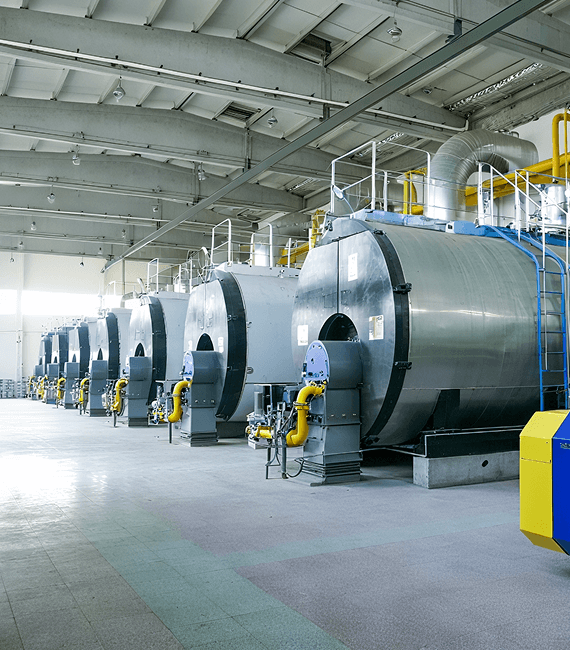

Boiler water carryover is a common anomaly in industrial steam systems. The core issue is the failure of steam-water separation within the steam drum, leading to mechanical entrainment and steam-water foaming. This contaminates the steam, disrupts system stability, and reduces equipment reliability. In severe cases, it can cause safety accidents and production interruptions. Understanding its formation mechanisms, identification, and mitigation methods is crucial for the daily operation and maintenance of industrial boilers.

Under normal operating conditions, the water in the boiler steam drum gradually vaporizes after heating. The resulting steam rises to the upper space of the steam drum and is separated by a steam-water separation device before being output as pure steam. However, when water carryover occurs, the steam-water interface in the steam drum becomes unclear. Water droplets that should have been separated are carried into the steam pipeline by the steam, resulting in the output of a steam-water mixture instead of pure steam. This condition worsens as operating conditions deteriorate.
Mechanical entrainment and steam-water foaming are two key factors causing water carryover, and the differences between them are significant. Mechanical entrainment refers to the steam rising at an excessively high velocity or due to ineffective separation devices, directly carrying water droplets from the steam drum into the steam side; this is a purely physical entrainment phenomenon. Steam-water foaming, on the other hand, occurs when the water in the steam drum, influenced by various factors, produces a large amount of stable foam. This foam layer occupies the upper space of the steam drum, and when the steam passes through the foam layer, it carries water droplets from the foam. The more stable the foam, the more severe the foaming problem becomes.
The accumulation of chemical impurities and excessive total dissolved solids (TDS) content are the primary chemical causes of water carryover. High TDS content significantly alters the physical properties of the boiler water, most notably increasing surface tension. This makes it more difficult for bubbles to burst during vaporization, leading to the accumulation of a large amount of foam in the steam drum. This foam not only causes the actual water level in the steam drum to be higher than indicated, but also weakens the steam-water separation effect, creating opportunities for mechanical carryover.
The alkalinity and organic matter content of the boiler water also significantly affect foam stability. Excessive alkalinity promotes the formation of more foam-generating compounds in the boiler water. These compounds envelop the bubbles, forming a dense foam layer that prolongs the lifespan of the foam. Organic matter forms a thin film on the surface of the bubbles, further hindering bubble rupture and causing the foam layer to thicken, making water carryover more likely and more severe.
The operating water level and internal structure design of the steam drum are core mechanical factors affecting water carryover. If the water level is too high during operation, the steam release space in the upper part of the steam drum is significantly reduced, forcing the steam to rise faster. This prevents sufficient steam-water separation, leading to water droplets being carried into the steam pipes. An excessively high water level can also submerge parts of the steam-water separation device, directly reducing separation efficiency and further exacerbating the abnormal operating conditions.
The working efficiency and design limitations of the steam-water separator should also not be overlooked. Different types of separators have corresponding operating parameters and separation capabilities. If the selection does not match the boiler's rated load and steam parameters, the separation effect will be significantly reduced. After long-term operation, internal components of the separator may experience wear, blockage, or deformation, further reducing separation efficiency and creating mechanical risks for water carryover.
Pressure fluctuations and sudden load changes during boiler operation are important dynamic factors that trigger water carryover. When the pressure drops sharply, the saturation temperature of the boiler water decreases accordingly. The boiler water, which was previously in a saturated state, rapidly vaporizes, producing a large amount of steam – this is commonly referred to as steam-water expansion. This expansion causes the steam-water mixture inside the steam drum to churn violently, disrupting the stability of the steam-water interface and leading to a large number of water droplets being carried away by the steam.
A sudden surge in steam demand also exacerbates the degree of steam-water co-entrainment. When the external demand for steam increases sharply, the boiler's steam output increases instantaneously, and the steam flow rate accelerates rapidly. This high-speed steam flow has strong carrying capacity and will directly carry incompletely separated water droplets from the steam drum into the main steam pipe. At the same time, sudden load changes can also destabilize the combustion state inside the furnace, further disrupting the steam-water balance in the steam drum.
Timely detection of signs of steam-water carryover allows for more time to address the issue and prevent the situation from worsening. The most direct indicator is violent fluctuations in the water level within the water level gauge. During normal operation, the water level remains within a stable range, but when steam-water carryover occurs, the water level in the gauge will fluctuate rapidly, even becoming blurry and difficult to read accurately. This is caused by the violent churning of the steam-water mixture in the steam drum.
A sudden drop in superheated steam temperature is also an important warning signal. When wet steam containing water droplets enters the superheater, the water droplets absorb heat and vaporize, consuming a large amount of heat and causing a rapid drop in superheated steam temperature. The temperature fluctuations are significant, and it is difficult to restore stability by adjusting combustion conditions. This temperature change will be directly reflected on the temperature monitoring instrument and can be used as auxiliary evidence for judging steam-water carryover.
An increase in the conductivity reading of the condensate return water is a key indicator for judging steam-water carryover from a water quality perspective. Pure steam condensate has extremely low conductivity, while wet steam containing boiler water impurities will carry these impurities into the condensate, resulting in a significant increase in conductivity. Continuous monitoring of condensate conductivity can help detect abnormal steam purity in a timely manner, indirectly indicating whether steam-water carryover has occurred.
Steam-water carryover can cause various damages to industrial boilers and related steam system equipment, shortening equipment lifespan and threatening production safety. Superheater tubes are the first to be affected. When wet steam containing water droplets enters the superheater, it causes thermal shock to the high-temperature tube walls. Temperature changes create thermal stress on the tube walls, and repeated occurrences can lead to cracks in the tube walls. At the same time, impurities in the boiler water will deposit and scale on the inner wall of the superheater tubes, reducing heat transfer efficiency, and in severe cases, causing pipe blockage and overheating and bursting of the pipes.
Steam turbines and valves will also suffer serious damage. The water droplets in the wet steam have high kinetic energy, and their high-speed impact on the turbine blades will cause erosion and wear, reducing the output and efficiency of the steam turbine, and in extreme cases, leading to blade fracture. When water droplets enter the valve, they trigger water hammer, impacting the valve core and body, leading to reduced sealing performance, leakage, and even direct damage to the valve.
Wet steam also reduces the overall heat transfer efficiency of the system, affecting production progress and quality. Many industrial processes rely on the high-temperature heat transfer of pure steam. Wet steam has a lower temperature than pure steam, and water droplets hinder heat transfer, causing the process temperature to fail to meet requirements, thereby affecting product quality and slowing down production efficiency. At the same time, the deposition of impurities on the surface of various heat exchange equipment further weakens the heat transfer effect, increasing energy consumption and maintenance costs.

When steam-water co-boiling occurs, emergency measures must be taken immediately to prevent the situation from escalating. The primary task is to reduce the boiler combustion load, slow down the heating rate of the boiler water, and reduce the amount of steam generated. At the same time, the main steam valve should be closed to cut off the supply of wet steam to the downstream system, avoiding further damage to subsequent equipment. When reducing the combustion load, the operation should be smooth to prevent sudden load drops from causing secondary fluctuations.
Timely bottom blowdown and increased continuous blowdown are key measures to quickly reduce the impurity content of the boiler water. Bottom blowdown can discharge impurities and high-concentration boiler water deposited at the bottom of the boiler, while continuous blowdown can continuously discharge high total dissolved solids boiler water from the surface, while simultaneously replenishing qualified feedwater, gradually reducing the impurity concentration of the boiler water, disrupting the conditions for foam formation, and alleviating the steam-water co-boiling phenomenon.
In addition, timely drainage through the condensate drain station is necessary to prevent water hammer. After closing the main steam valve, the residual wet steam in the steam pipeline will slowly condense into water. If this accumulated water is not drained in time, it can easily cause water hammer, causing impact damage to the pipeline and equipment. By continuously draining the condensate from the pipeline through the condensate drain station, the pipeline can be kept dry, effectively avoiding the hazards of water hammer and ensuring the normal and safe operation of the pipeline system.
Optimizing boiler water chemistry treatment is the most crucial method for preventing steam-water co-boiling. Installing an automatic blowdown control system allows for real-time monitoring of boiler water quality and automatic adjustment of blowdown volume. Based on key indicators such as total dissolved solids and alkalinity, it precisely controls blowdown time and volume, avoiding deviations caused by manual operation and maintaining boiler water quality within the appropriate range.
Choosing the right defoamer and water conditioning agents effectively controls foam generation and impurity accumulation. Defoamers break down the stability of boiler water foam, causing it to collapse quickly and reducing foaming; water conditioning agents reduce the hardness and alkalinity of boiler water, preventing scaling and impurity deposition, thus chemically preventing the possibility of carryover. The type and dosage of chemicals should be selected based on the actual boiler water quality and operating conditions.
Regularly testing feedwater quality is the first line of defense in maintaining boiler water quality. If the feedwater contains too many impurities, it will rapidly increase the total dissolved solids and alkalinity of the boiler water, significantly increasing the risk of carryover. Regularly testing the purity, hardness, and organic matter content of the feedwater ensures that it meets standards before being fed into the boiler, reducing the entry of impurities into the boiler water from the source and laying a solid foundation for stable boiler operation.
Effective load management, avoiding large fluctuations in steam demand, is a crucial guarantee for stable boiler operation. Optimizing production scheduling processes and rationally allocating steam usage in each stage avoids sudden increases or decreases in steam demand. At the same time, boiler load adjustments should be gradual, maintaining stable load changes to reduce pressure fluctuations and steam-water expansion caused by sudden load changes, preventing the disruption of the steam-water balance in the steam drum.
Strictly controlling the normal operating water level is fundamental to preventing carryover. The normal operating water level should be set according to the boiler design standards. During operation, the water level is monitored in real time through water level monitoring instruments, and the feedwater volume is adjusted promptly to ensure that the water level remains within the specified range. This avoids excessively high or low water levels due to inadequate feedwater control, creating favorable conditions for efficient steam-water separation in the steam drum.
Regular inspection and maintenance of the steam-water separator and cleaning devices are necessary to ensure that their separation efficiency does not decrease. The steam-water separator should be disassembled and inspected regularly, and any accumulated impurities and dirt should be cleaned. Worn or deformed parts should be repaired or replaced promptly to ensure the separator remains in optimal working condition. Simultaneously, the inside of the boiler should be cleaned regularly to remove scale and impurity deposits, reducing the impact of these factors on the boiler water quality and steam-water separation efficiency, thus providing preventative measures from a mechanical perspective.
Proactive monitoring and scientific management are crucial for addressing boiler steam-water carryover, directly impacting steam purity, equipment safety, and system lifespan. In industrial boiler operation and maintenance, it is essential to understand the formation mechanism of steam-water carryover, master identification techniques, and combine emergency response measures with preventive solutions to establish a comprehensive control system. By optimizing water chemical treatment, standardizing operating procedures, and strengthening equipment maintenance, the probability of steam-water carryover can be effectively reduced, providing solid support for stable and efficient industrial production.