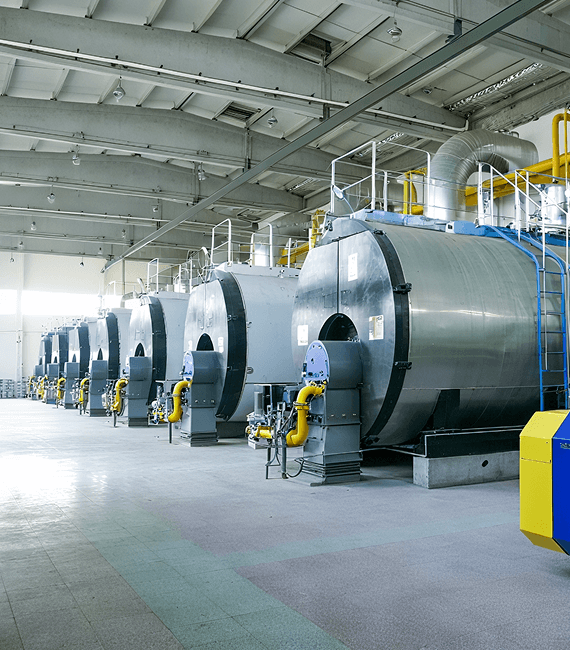

Coal-fired steam boilers are core equipment for steam supply in industrial production, playing a crucial role in energy conversion and stable output within the steam production system. For industries with high steam demand, such as power generation, chemicals, and textiles, the application value of coal-fired steam boilers is particularly prominent, serving as essential infrastructure to ensure continuous production.
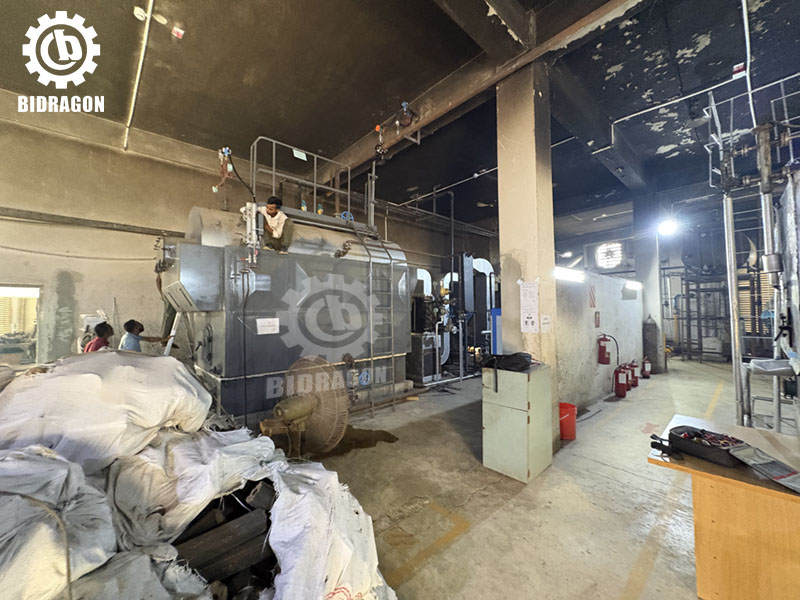
A coal steam boiler is an industrial device that uses coal as its primary fuel, heating water to boiling and generating steam with a certain pressure and temperature through a specific combustion and heat transfer mechanism. Essentially, it is an energy conversion device, its core function being the orderly conversion from chemical energy to thermal energy and then to steam energy.
Coal, as its primary fuel, possesses a series of characteristics suitable for industrial combustion. Its high calorific value provides a sufficient energy source; different types of coal have different ignition points and volatile matter contents, allowing them to be adapted to different types of combustion systems; and the solid state of coal allows for relatively mature operating methods in storage, transportation, and feeding.
Its energy conversion principle is clear and straightforward: coal burns fully in the furnace, releasing a large amount of chemical energy, which is then converted into heat energy. This heat energy is transferred to the water in the boiler drum through the boiler's heating surfaces, gradually increasing the water temperature. When the boiling point at the corresponding pressure is reached, the water gradually vaporizes into saturated steam. If higher parameters of steam are required, it can be further heated to form superheated steam, ultimately meeting different industrial needs.
The pressure-bearing structure is the core load-bearing part of a coal steam boiler, mainly including the boiler drum, water-cooled walls, headers, and furnace walls. Its design and manufacturing must fully consider pressure bearing capacity to ensure safe operation under high temperature and high pressure environments. The boiler drum, as a key component for water storage and steam separation, usually has an internal steam-water separation device to ensure steam quality.
The furnace, where combustion takes place, is the main space for coal combustion. The shape and size of the furnace are optimized according to the combustion method to ensure complete coal combustion while minimizing heat loss. The inner wall of the furnace is generally equipped with water-cooled walls, which absorb the heat generated by combustion and protect the furnace walls from high-temperature burning.
The forced draft and induced draft systems work together to maintain the combustion environment within the furnace. The forced draft system uses a fan to deliver combustion air into the furnace, providing sufficient oxygen for coal combustion. The induced draft system uses negative pressure to extract the flue gas generated during combustion from the furnace, while simultaneously controlling the pressure within the furnace. The coordinated operation of these two systems directly affects combustion efficiency and flue gas emission performance.
The steam-water circulation system plays a crucial role in heat absorption and transfer. It consists of the boiler drum, water-cooled walls, convection tube bundles, and downcomers. Through natural or forced circulation, water continuously flows within the system, absorbing heat from the furnace and flue, gradually completing the water-to-steam conversion process, ensuring efficient heat transfer.
The coal combustion process is the initial stage of energy release, and its efficiency directly determines the overall performance of the boiler. Coal feeding methods vary depending on the boiler type, commonly including chain grate feeding and coal stoker feeding. Regardless of the method, it is necessary to ensure a uniform and stable coal feed rate to maintain continuous combustion. The ignition process typically involves igniting the fuel using an ignition device, then gradually guiding the coal to burn. In the initial stage, the air supply needs to be controlled to prevent the flame from being blown out.
Coal combustion can be roughly divided into four stages: drying and preheating, volatile matter combustion, fixed carbon combustion, and burnout. In the drying and preheating stage, the moisture in the coal evaporates, and the temperature gradually rises. The volatile matter combustion stage releases a large amount of heat, providing conditions for fixed carbon combustion. Fixed carbon combustion is the main stage of heat release and the core of the combustion process. The burnout stage requires sufficient oxygen and adequate residence time to reduce the loss of unburned carbon.
The forced draft and induced draft systems have a significant impact on combustion efficiency. Insufficient air supply leads to incomplete coal combustion, increasing incomplete combustion losses; excessive air supply removes too much heat, lowering the furnace temperature. The induced draft system needs to maintain an appropriate negative pressure within the furnace. Excessive negative pressure may cause cold air leakage, increasing heat loss; insufficient negative pressure will hinder flue gas exhaust, affecting the stability of the combustion process.
Heat transfer is the key link between combustion and steam generation, mainly achieved through heating surfaces. Boiler heating surfaces include water-cooled walls, convection tube bundles, and superheaters. When high-temperature flue gas flows through the furnace and flue, heat is transferred to the heating surfaces through radiation, convection, and conduction. Water-cooled walls primarily absorb radiative heat from the furnace, while convection tube bundles primarily absorb convective heat from the flue gas in the flue.
The evaporation of water and the steam formation mechanism follow thermal principles. After absorbing heat transferred from the heating surfaces, the water in the boiler drum gradually rises to its saturation temperature at the corresponding pressure, at which point the water begins to vaporize. As heat is continuously input, saturated water gradually transforms into saturated steam. The temperature remains constant throughout this process, but a significant amount of latent heat of vaporization is absorbed.
Steam-water separation is crucial for ensuring steam quality. When saturated steam escapes from the water, it carries some water droplets. If these droplets enter the steam pipeline, they can affect steam quality and even damage downstream equipment. Therefore, cyclone separators and corrugated plate separators are typically installed inside the boiler drum. These devices utilize centrifugal force and inertial force to separate water droplets from the steam, ensuring the output steam meets the specified dryness requirements.
Stable steam pressure control is one of the core control objectives of boiler operation. Excessive steam pressure threatens boiler safety, while insufficient pressure fails to meet production demands. The control system monitors steam pressure in real time using pressure sensors. When the pressure exceeds the set value, the system adjusts the combustion system to reduce coal feed and air supply, lowering combustion intensity, and may also open safety valves for pressure relief. When the pressure falls below the set value, the system increases coal feed and air supply to improve combustion efficiency, ensuring the pressure remains within a reasonable range.
Steam is delivered to production equipment via a steam pipeline system. The pipeline design must consider steam pressure, temperature, and flow rate, with a reasonable pipeline layout and insulation layers to minimize heat and pressure losses during transport. Valves, pressure gauges, and thermometers are installed on the pipelines for monitoring and control of the transport process.
The control system plays a crucial role in ensuring safe operation. Besides pressure control, it includes water level control, temperature control, and interlocking protection functions. Both excessively high and low water levels can lead to serious safety accidents; therefore, the water level control system monitors the boiler drum water level in real time and adjusts the feedwater accordingly. In the event of abnormal water levels, abnormal pressure, or flameout, the interlocking protection system immediately activates, cutting off fuel supply and stopping fan operation to prevent the accident from escalating.
Chain grate boilers are a widely used type of coal steam boiler in the industrial sector. Their core feature is the use of a chain grate as the coal carrier and conveyor. Coal is evenly spread on the grate by a feeding device. As the grate moves slowly, the coal sequentially undergoes preheating, combustion, and burnout stages, with ash and slag finally discharged from the end of the grate. This type of boiler has a relatively stable combustion process, is easy to operate, and is suitable for burning coals with high volatile matter and strong coking properties. It is widely used in small and medium-sized industrial enterprises.
Circulating fluidized bed boilers are a type of high-efficiency coal-fired boiler. Their working principle involves using airflow to fluidize the coal particles and desulfurizing agent in the furnace, creating intense mixing and reaction. In this fluidized state, the coal is in full contact with air, significantly improving combustion efficiency. Simultaneously, the desulfurizing agent effectively absorbs sulfur dioxide from the flue gas, reducing pollutant emissions. This type of boiler is highly adaptable to different coal types, efficiently burning both high-quality and low-quality coal, and is therefore widely used in large-scale industrial and power generation sectors.
Besides being classified according to combustion method, coal fired steam boilers can also be categorized according to various standards. By pressure, they can be divided into low-pressure, medium-pressure, high-pressure, and ultra-high-pressure boilers; by capacity, they can be divided into small, medium, and large boilers; and by structure, they can be divided into fire-tube boilers and water-tube boilers. Boiler types under different classification standards have different applicable scenarios and technical characteristics, allowing selection based on specific production needs.
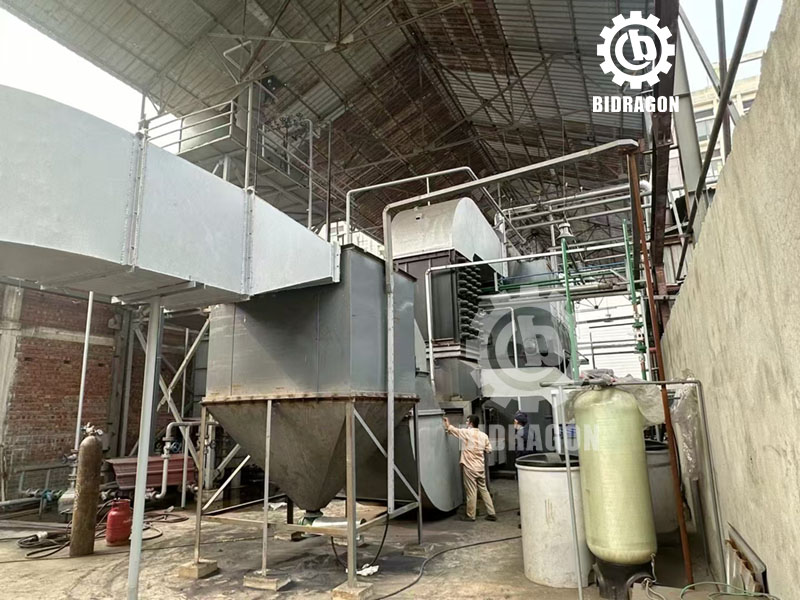
In the power generation industry, coal-fired steam boilers are one of the core pieces of equipment in thermal power plants. Large numbers of coal steam boilers generate high-temperature, high-pressure steam to drive turbines, which in turn drive generators to produce electricity, providing a stable power output for the power system. Especially in areas requiring large-scale power supply, coal steam boilers, with their mature technology and stable production capacity, have become an important support for power production.
The food, textile, and chemical processing industries also rely heavily on coal-fired steam boilers. In the food industry, steam is used in processes such as cooking, sterilization, and drying, ensuring hygiene and efficiency in food processing. In the textile industry, steam is used for humidifying and setting yarns, as well as dyeing and drying fabrics, directly affecting the quality of textiles. In the chemical industry, steam serves as a heating medium in various chemical reactions and is also used in processes such as evaporation, concentration, and distillation of materials, making it an indispensable energy source in chemical production processes.
For long-cycle, high-steam-volume industrial scenarios, such as metallurgy and papermaking, coal steam boilers offer even greater advantages. These industries typically require continuous operation, placing extremely high demands on the supply and stability of steam parameters. Coal-fired steam boilers, through continuous coal feeding and stable combustion, can achieve sustained steam output over extended periods, ensuring uninterrupted production processes.
Achieving high steam production capacity at a lower cost is one of the most prominent advantages of coal steam boilers. Coal, as an abundant fuel, has relatively low procurement costs, especially in regions rich in coal resources, where its fuel cost advantage is even more pronounced. Meanwhile, mature combustion technology and equipment design enable coal-fired steam boilers to achieve large-scale steam production at relatively low operating costs, providing strong support for enterprises to reduce production costs.
The adaptability to various coal types enhances the flexibility and applicability of the equipment. Coal resources vary in quality across different regions; some areas have abundant high-quality coal, while others rely primarily on low-quality coal. By adjusting the design and operating parameters of the combustion system, coal steam boilers can adapt to various coal types with different calorific values and characteristics, such as anthracite, bituminous coal, and lignite, without requiring frequent equipment changes to accommodate different fuel supply conditions.
The suitability for large-scale continuous production gives it an irreplaceable position in the industrial sector. Many industrial production processes require continuous and stable steam, and the structural design and operating mechanism of coal-fired steam boilers can meet this demand. Through automated coal feeding, air supply, and ash removal systems, 24-hour uninterrupted operation is achieved, providing a continuous and stable energy guarantee for large-scale industrial production and avoiding production stoppages due to steam supply interruptions.
The required steam volume and pressure parameters are the primary basis for selecting a coal-fired steam boiler. Different industrial production processes have significantly different steam demands and parameter requirements. It is necessary to determine the boiler's rated evaporation capacity and parameters based on the rated steam consumption, maximum steam load, and required steam pressure and temperature of the production equipment. This ensures the boiler's capacity meets production needs while avoiding energy waste or equipment damage due to parameter mismatch.
Compatibility with different coal types is also a crucial consideration. Enterprises need to select boiler types capable of efficiently burning the local mainstream coal types, taking into account local coal resources. When local low-quality coal resources are abundant, circulating fluidized bed boilers and other equipment with strong coal adaptability can be prioritized to reduce fuel procurement costs and improve energy efficiency.
Boiler efficiency, automation level, and environmental protection facilities are equally important. Boiler efficiency directly affects energy consumption and operating costs. High-efficiency boilers reduce coal consumption and lower energy expenditures. Highly automated boilers reduce manual operation, improve operational stability, and reduce the risk of human error. With increasingly stringent environmental requirements, boiler environmental protection facilities are also crucial, requiring efficient dust removal, desulfurization, and denitrification equipment to ensure flue gas emissions meet relevant standards and prevent environmental pollution.
Regular ash removal and slag removal are fundamental measures for maintaining efficient boiler operation. During coal combustion, ash and slag are produced. If these substances adhere to the heating surfaces, they form scale with extremely low thermal conductivity, hindering heat transfer and reducing boiler efficiency. Simultaneously, slag accumulation at the bottom of the furnace and in the ash hopper affects the combustion space and ventilation. Therefore, it is necessary to clean the ash accumulation on the heating surfaces according to a prescribed cycle using mechanical ash removal, high-pressure water washing, etc., and to promptly remove slag from the furnace and ash hopper using slag removal equipment to ensure clean heating surfaces and unobstructed furnace flow.
Water quality management is crucial for protecting heating surfaces and improving boiler efficiency. If the boiler water contains excessive amounts of calcium, magnesium ions, and other impurities, scale will form during heating, adhering to the heating surfaces and pipe inner walls. Scale has poor thermal conductivity, severely affecting heat transfer efficiency and potentially causing localized overheating of the heating surfaces, leading to safety accidents such as pipe rupture. Therefore, a comprehensive water treatment system is needed to soften and desalinate the feedwater, ensuring it meets boiler operating requirements. Regular acid and alkali cleaning of the boiler drum and pipes is also essential to maintain good heat transfer performance of the heating surfaces.
Safety inspections and efficiency optimization are crucial components of maintenance. Regular comprehensive inspections of the boiler's pressure-bearing components, valves, instruments, and safety accessories are necessary to promptly identify and address potential hazards, ensuring safe operation. Simultaneously, monitoring boiler operating parameters such as flue gas temperature, excess air coefficient, and steam parameters allows for analysis of factors affecting boiler efficiency. Adjusting combustion parameters and optimizing operating modes improves energy utilization efficiency.
Coal steam boilers, with their mature energy conversion mechanism, hold irreplaceable value in the industrial sector. Leveraging their advantages in cost, capacity, and coal type compatibility, they ensure continuous power generation and support production processes in various industries, including food and chemicals, providing a solid energy guarantee for industrial development. This core value combined with technological upgrade potential ensures their continued importance in future industrial energy systems.