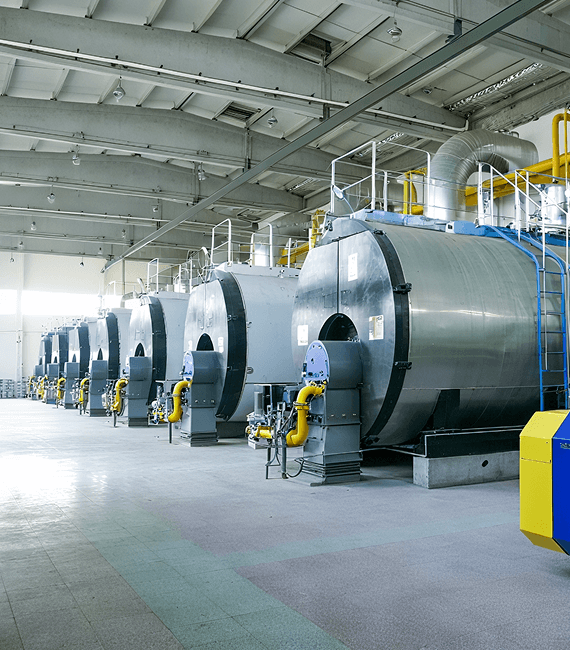

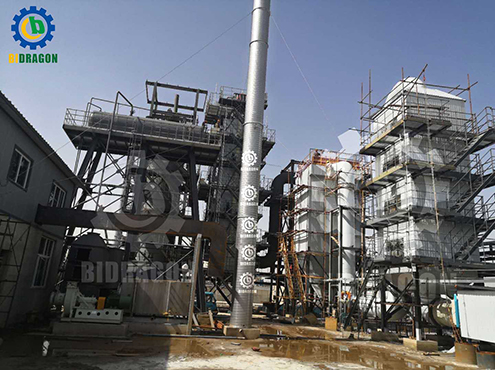
An industrial steam boiler is an industrial device specifically designed to transfer heat energy from fuel or other energy sources to water, heating the water to specific parameters and generating steam with a specific pressure and temperature. It is not simply a heating device, but a core hub for energy conversion in industrial production processes, and its operational stability is directly related to the continuity of the entire production chain.
Steam boilers play a crucial role in multiple stages of industrial processes, earning them the title of "the heart of industry." In process heating, they provide precise and stable heat energy for chemical reactions, food processing, and textile printing and dyeing, ensuring that production processes meet predetermined requirements. In power supply, they can serve as core equipment in self-contained power plants, providing reliable power support to factories and avoiding losses caused by external power outages. In sterilization and disinfection, the pharmaceutical and food industries rely on the high-temperature steam they generate to achieve a sterile production environment and ensure product safety. Furthermore, steam is widely used in auxiliary processes such as material conveying and equipment cleaning.
Boiler manufacturers do not merely provide customers with a piece of equipment; they also bear the important responsibility of performance optimization, safety assurance, and long-term value assurance. In terms of performance, manufacturers ensure efficient boiler operation under rated conditions by precisely designing boilers to match the energy needs of different industries. Regarding safety, every aspect, from structural design to material selection and quality control, determines the safety boundaries of boiler operation, preventing accidents. In terms of long-term value, the manufacturer's technical strength and service capabilities directly affect the boiler's lifespan, maintenance costs, and energy consumption, providing stable support for the company's long-term operation.
Fire-tube boilers are designed with flue gas flowing inside the tubes, transferring heat to the water outside the tubes through the tube walls. Their structure is relatively simple, operation is stable, and maintenance is convenient. They are suitable for low-pressure, small-to-medium steam production needs and are typically used in food processing, small chemical plants, and heating systems.
Water-tube boilers, on the other hand, have water flowing inside the tubes while flue gas releases heat by scouring the outside. This design results in a larger heating area, higher thermal efficiency, and the ability to withstand higher pressures and temperatures. They are suitable for high-steam-production scenarios, such as large chemical industrial parks, power plants, and heavy industries like steel metallurgy.
Modular boilers consist of multiple independent small boiler units. The number of units can be flexibly started and stopped according to steam demand, achieving on-demand energy supply, reducing energy waste, and offering convenient installation, making them suitable for enterprises with large steam load fluctuations.
Single-tube/spiral tube boilers employ a unique piping arrangement. The single-tube design simplifies the structure, while the spiral tube increases heat exchange efficiency by increasing the heating length. Both are characterized by their small size and excellent heat exchange performance, making them suitable for production scenarios with limited space.
Waste heat boilers are key equipment for energy recovery and utilization. Their core design is to recover high-temperature flue gas and waste residue emitted during industrial production, converting it into steam for reuse, achieving energy conservation and emission reduction. They are widely used in industries with abundant waste heat resources, such as cement, steel, and chemicals.
Natural gas boilers have advantages such as high combustion efficiency, low emissions, and convenient operation. However, their operating costs are significantly affected by fluctuations in natural gas prices, making them suitable for areas with high environmental protection requirements and abundant natural gas supply.
Oil-fired boilers have lower initial investment and readily available fuel, but their combustion efficiency is lower than natural gas boilers, and their emissions contain higher levels of pollutants. They are suitable for scenarios where natural gas supply is limited.
Biomass boilers use renewable biomass such as straw and sawdust as fuel, aligning with sustainable development principles and offering lower fuel costs. However, fuel storage space and combustion stability must be considered, making them suitable for areas with abundant agricultural and forestry resources.
Electric boilers operate without pollution, with low noise and high control precision, but typically have the highest operating costs. They are suitable for scenarios with abundant power resources, extremely high environmental requirements, or small-scale steam demand.
Steam output, pressure, and temperature are core parameters for boiler selection, directly matching the company's production process needs. Manufacturers must accurately design boiler parameters based on the company's peak load, continuous operating time, and other actual operating conditions to avoid energy waste due to over-engineering or insufficient parameters affecting production. Companies should clearly communicate their specific needs during communication to ensure that the equipment provided by the manufacturer is highly compatible with their production requirements.
The efficiency and fuel consumption of a boiler directly determine its operating costs. Evaluation should focus on the boiler's rated thermal efficiency, actual operating thermal efficiency, and fuel consumption. Rated thermal efficiency reflects the equipment's design level, while actual operating thermal efficiency is affected by factors such as operation and load. High-efficiency boilers can significantly reduce fuel consumption, especially for enterprises operating at high loads, resulting in substantial long-term cost savings. Therefore, this indicator is a crucial factor in selecting a manufacturer.
Compliance certification is a vital guarantee for boiler safety and quality. Different countries and regions have different standards and requirements. ASME certification is an internationally recognized high standard certification for boiler manufacturing, representing that the equipment meets strict specifications in design, materials, and manufacturing. ISO certification reflects the manufacturer's quality management system level; CE certification is a prerequisite for products entering the EU market. Choosing manufacturers with relevant certifications ensures that the equipment complies with local regulations and reduces compliance risks.
The control system and automation capabilities of modern industrial steam boilers directly affect operational reliability and ease of operation. Advanced control systems can achieve precise control of parameters such as steam pressure, temperature, and water level, automatically respond to load fluctuations, reduce manual intervention, and lower the risk of operational errors. Meanwhile, the automated system can monitor equipment operating status in real time, provide timely warnings of malfunctions, and offer data support for preventative maintenance, thereby improving the stability and safety of boiler operation.
With increasingly stringent environmental regulations, boiler emission standards have become a mandatory requirement for selection. Manufacturers must possess low-NOx combustion technology and exhaust gas treatment technology to ensure that pollutants such as nitrogen oxides and sulfides emitted by the boiler comply with local standards. Furthermore, attention should be paid to the manufacturer's investment in sustainable development, such as biomass boiler research and development and waste heat recovery technology applications, which not only meet current environmental requirements but also adapt to future regulatory upgrades.
The factory space and installation site conditions of a company directly affect boiler selection. Manufacturers must provide suitable boiler design solutions based on site limitations such as land area, floor height, and load-bearing capacity. Modular boilers, with their modular installation capabilities, can effectively address installation limitations in narrow spaces and complex sites, reducing construction time and difficulty. When selecting a manufacturer, it is essential to ensure that they have the ability to customize designs according to site conditions.
Material selection is fundamental to boiler quality, especially the steel used in pressure-bearing components, which directly affects the boiler's durability and safety. High-quality steel offers superior resistance to high temperatures, high pressures, and corrosion, effectively extending boiler lifespan and reducing safety risks such as leaks and explosions caused by material fatigue. While manufacturers may reduce initial costs by using inferior materials, this creates significant safety hazards and increases maintenance costs later on.
A comprehensive quality control process is crucial for ensuring boiler quality. Manufacturers must conduct rigorous testing and inspection at every stage, including raw material procurement, component processing, welding, and final assembly. Pressure vessel testing is a core component, using hydrostatic and airtightness tests to assess the sealing performance and pressure resistance of pressure-bearing components. Welding quality directly affects boiler structural stability and requires adherence to strict welding standards and non-destructive testing to ensure defect-free weld joints.
ASME "S/U" certification is a specialized certification for boilers and pressure vessels. Obtaining this certification signifies that the manufacturer possesses the capability to design and manufacture high-standard boilers, and that their products enjoy high recognition in the international market. CE certification, specifically the boiler module certification, ensures that products comply with relevant regulations such as the EU's Pressure Equipment Directive, and is a necessary condition for entering the EU market. These certifications are not only proof of quality but also important guarantees for enterprises to expand into domestic and international markets.
A manufacturer's engineering capabilities are reflected in their design professionalism, customized services, and R&D capabilities. A professional design team can provide optimized boiler design solutions based on the company's individual needs, combined with industry characteristics and process requirements. Customization capabilities ensure that equipment is adaptable to special operating conditions, such as complex environments with high altitude and high humidity. Strong R&D capabilities enable manufacturers to keep up with technological trends, launch efficient, environmentally friendly, and intelligent new boilers, and provide long-term technical support to enterprises.
After-sales service capabilities directly affect the boiler's service life and operational safety. As large-scale special equipment, boilers inevitably experience component wear and performance degradation after long-term operation. Timely and professional after-sales service can quickly resolve faults and reduce downtime. Simultaneously, a professional service team can provide scientific maintenance advice, helping companies avoid risks from improper operation and extend the boiler's service life.
Preventive maintenance is the core means of reducing boiler failure risks. Key tasks include regularly checking the reliability of safety accessories such as water level gauges, safety valves, and pressure gauges; cleaning scale and soot from inside the boiler; checking for corrosion on pressure-bearing components; and calibrating the control system. Maintenance cycles need to be determined based on factors such as boiler operating load, fuel type, and water quality. Manufacturers should provide clear maintenance cycle recommendations and detailed maintenance procedures to help companies establish a standardized maintenance system.
Sufficient spare parts supply ensures rapid replacement of parts in the event of a failure, reducing downtime losses. Manufacturers need to establish a comprehensive spare parts inventory and supply system, especially for imported or special-model boilers, ensuring timely availability of spare parts.
Professional technical support includes fault diagnosis and technical consultation to help companies solve technical problems encountered during operation. Systematic operation training improves operators' skills, standardizes operating procedures, and prevents equipment damage or safety accidents caused by operational errors.
Remote monitoring and diagnostics are an important form of modern boiler after-sales service. Manufacturers install sensors and data transmission modules on the boiler to collect equipment operating data in real time and remotely monitor parameters such as boiler pressure, temperature, and water level. Once an anomaly is detected, the system can automatically issue an alert. Technicians can remotely diagnose the cause of the fault, guide on-site personnel to quickly handle it, and even achieve remote repair of some faults, greatly improving service efficiency.
Feedwater treatment is a critical aspect of boiler operation and maintenance. Poor water quality can lead to internal corrosion and scale buildup, severely impacting equipment performance and lifespan. Deaeration removes oxygen and carbon dioxide from the feedwater, preventing these gases from reacting with metal pipe walls and causing corrosion. pH control adjusts the feedwater's acidity or alkalinity, maintaining it within a neutral or slightly alkaline range to reduce acid corrosion. Furthermore, softening and desalination processes are necessary to reduce hardness and prevent scale buildup that could affect heat exchange efficiency.
Boiler operation involves various risks. Safety valve failure can prevent pressure release, leading to overpressure accidents. Improper water level control can cause dry burning due to water shortage or overflow, damaging boiler components and potentially causing explosions. Manufacturers must ensure the reliability of safety accessories and provide comprehensive emergency training to businesses, including fault identification, emergency shutdown procedures, and accident handling measures, enhancing their ability to respond to emergencies.
Emissions monitoring and control during operation is a crucial requirement for compliant business operations. Manufacturers should provide corresponding emission monitoring equipment to monitor the pollutant content in boiler exhaust gas in real time, and also equip the boiler with appropriate emission control devices, such as denitrification and desulfurization equipment. Businesses must regularly record emission data to ensure that emission indicators comply with local environmental regulations and avoid penalties for exceeding emission standards.
When evaluating potential manufacturers, enterprises should ask targeted questions, including: Does the manufacturer possess the certifications required for the project? How is the actual operating efficiency of the boiler verified? What experience do they have with similar projects in this industry? What is the spare parts supply cycle and after-sales service response time? Can they provide customized design solutions? These questions help enterprises comprehensively understand the manufacturer's capabilities and suitability.
A manufacturer's reputation can be assessed through their performance record and efficiency guarantees. Review past client case studies, especially those from companies in the same industry, to understand equipment operation feedback and after-sales service evaluations. Simultaneously, pay attention to whether the manufacturer provides clear efficiency guarantees and how these guarantees are fulfilled in actual operation; this information directly reflects the manufacturer's reliability.
On-site preparation before boiler installation is crucial. The manufacturer should provide detailed on-site preparation guidelines, including the load-bearing requirements and dimensional standards of the boiler foundation, the design specifications of the exhaust system to ensure smooth flue gas discharge, and the materials and sealing standards for pipe connections. Companies must strictly follow the guidelines for on-site preparation to avoid affecting boiler installation and operation due to unstable foundations, poor exhaust, or pipe connection problems.
When selecting a boiler, it's not enough to focus solely on the initial purchase cost; a comprehensive assessment of the total cost of ownership is necessary. This includes purchase cost, operating cost, maintenance cost, spare parts cost, and equipment residual value. Some manufacturers offer lower purchase prices but lower operating efficiency and higher maintenance costs, resulting in a higher total cost of ownership in the long run. Conversely, while high-quality equipment may have higher purchase costs, it offers higher efficiency, fewer malfunctions, and longer lifespan, making its total cost of ownership more advantageous. Assessing long-term value requires a comprehensive cost calculation considering factors such as equipment lifespan and annual operating time.
Selecting a suitable industrial steam boiler manufacturer is not merely purchasing equipment, but a strategic decision impacting factory safety, efficiency, compliance, and long-term operating costs.
High-performance boilers matched to process requirements precisely meet the steam parameter requirements of production, avoiding energy waste and production interruptions, ensuring optimal efficiency and fuel use, and reducing operating costs while ensuring production continuity.
Certified manufacturers adhere to strict standards from design and materials to manufacturing, ensuring greater safety and compliance for their products. This effectively reduces equipment operation risks, helps companies comply with local regulations, and avoids compliance penalties.
A robust after-sales service system can quickly respond to fault needs, reducing equipment downtime, extending boiler lifespan, and improving equipment operational stability through preventative maintenance and timely technical support.
Effective feedwater treatment and professional maintenance guidance are essential components of a manufacturer's service, helping companies prevent internal corrosion and scaling problems, avoiding costly repairs and production losses due to equipment failure.
Total cost of ownership (TCO) assessment reflects the long-term value of equipment better than the purchase price alone. Choosing manufacturers that focus on optimizing the entire lifecycle cost can bring more lasting economic benefits to enterprises.
Scale and corrosion are the most common water-side problems in boiler operation, reducing thermal efficiency and shortening equipment life. Top manufacturers provide customized feedwater treatment solutions to address this issue, including recommending suitable water treatment equipment such as softeners and deaerators, specifying water quality requirements, and regularly testing and evaluating water quality, adjusting treatment plans based on test results to solve scale and corrosion problems at their source.
Faced with increasingly stringent emissions regulations, manufacturers help enterprises achieve compliance through two core solutions: first, using low-NOx burners to reduce nitrogen oxide generation by optimizing combustion methods; second, equipping with high-efficiency emissions control devices, such as selective catalytic reduction (SCR) and selective non-catalytic reduction (SNCR), to treat pollutants generated during combustion at the end of the process, ensuring emissions meet standards. Some manufacturers also provide tailored emissions solutions based on the regulations of different regions.
To address issues such as limited factory space and complex installation sites, manufacturers employ modular or skid-mounted design solutions. Modular design breaks down the boiler into multiple independent units, which can be prefabricated in the factory, requiring only simple assembly on-site, reducing on-site construction and space occupation. Skid-mounted design integrates the boiler and supporting equipment onto a movable skid, eliminating the need for complex foundation construction, offering convenient and flexible installation, and quickly adapting to different site conditions.
For enterprises with significant steam load fluctuations, manufacturers address this in two ways: first, by equipping with an advanced and flexible control system that monitors load changes in real time and automatically adjusts parameters such as fuel supply and combustion intensity to ensure stable boiler output; second, by providing adjustable boiler systems, such as multi-unit modular boilers, which start and stop corresponding units according to load demand, achieving precise energy supply and avoiding efficiency reduction and equipment wear caused by load fluctuations.
Before purchasing, overseas customers need to clarify their steam requirements and detailed technical specifications based on their own production processes. This includes the rated steam output, maximum pressure and temperature, continuous operating time, and load fluctuation range. Local fuel types, environmental standards, voltage frequencies, and other external conditions must also be considered to ensure that the technical specifications meet production needs and are suitable for the local operating environment.
The RFP must be comprehensive and clear. Core content includes: project overview and background, detailed technical specifications, quality standards and certification requirements, after-sales service requirements (such as spare parts supply, maintenance cycles, and response time), delivery time and location, quotation requirements, and evaluation criteria. A well-developed RFP helps manufacturers accurately understand the requirements and provide precise quotations and solutions.
When evaluating quotes, price alone is insufficient; a multi-dimensional comparison is necessary. First, verify that the quoted price fully meets the technical specifications and that there are no parameter deviations. Second, confirm that the manufacturer's certifications comply with local regulations. Then, assess the completeness of the spare parts supply system and the comprehensiveness of maintenance services. Finally, consider the total cost of ownership to comprehensively judge the reasonableness of the quote.
If conditions permit, overseas clients should conduct on-site visits or entrust a third-party agency to conduct audits. The visit should include assessing the manufacturer's production scale, equipment level, quality control processes, and R&D capabilities. On-site investigation verifies the manufacturer's strength and reputation, avoiding procurement risks due to information asymmetry.
Before signing the procurement contract, it is crucial to negotiate the service agreement, warranty terms, and spare parts supply. Clearly define the scope of after-sales service, response time, and pricing; determine the warranty period, scope, and disclaimers; and agree on the supply cycle, price, and inventory methods for spare parts. Special consideration should be given to potential delays in spare parts supply due to overseas transportation to ensure long-term stable equipment operation.
Choosing an industrial steam boiler manufacturer is a strategic decision concerning the long-term operation of the factory. Its equipment performance, safety efficiency, and service capabilities directly determine production stability and operating costs. Investing in manufacturers with high-quality products, authoritative certifications, and comprehensive services ensures the safe and efficient operation of the steam system and adapts to future development trends. If you have procurement needs, please contact us for professional consultation and customized solutions to assist in scientific selection.