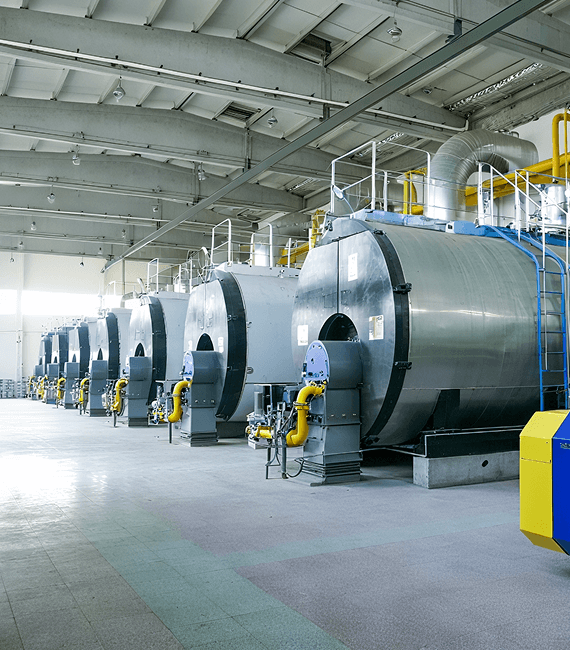

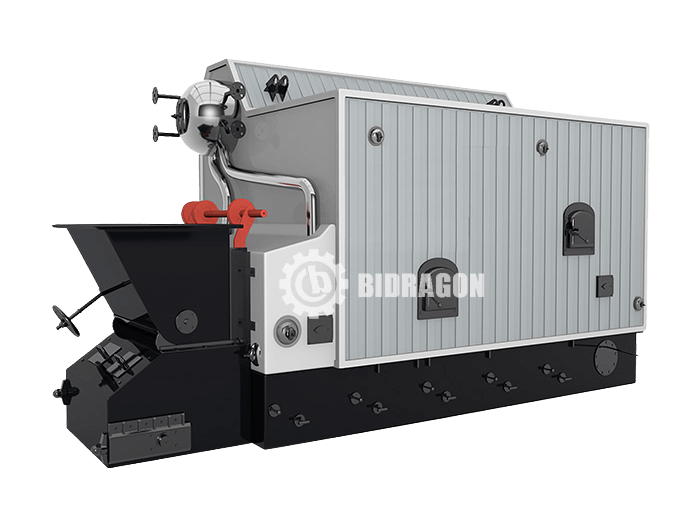
A coal-fired boiler is a thermal energy device that heats water in the boiler to a steam state by burning coal to release thermal energy. It is widely used in industrial production and energy supply. Its basic working principle is: coal is fully burned in the furnace, and the high-temperature flue gas transfers heat through the heating surface, causing the working fluid in the boiler drum to absorb heat and complete the phase change from water to steam, ultimately outputting steam that meets process requirements.
Common combustion technologies for coal-fired boilers include grate combustion, pulverized coal combustion, and circulating fluidized bed combustion. Grate combustion is suitable for small and medium-capacity boilers, where coal forms a uniform fuel layer on the grate for combustion; pulverized coal combustion grinds the coal into fine powder and feeds it into the furnace through burners for suspension combustion, which is mostly used in large-capacity power plant boilers; circulating fluidized bed combustion technology uses airflow to circulate and burn fuel particles in the furnace, characterized by high combustion efficiency and easy control of pollutant emissions.
In industrial operation, coal-fired boilers have the characteristics of stable heat output and a wide load adjustment range, which can meet the continuous energy needs of most industrial scenarios. However, their start-up and shutdown processes are time-consuming, and the coal combustion state needs to be frequently monitored during operation. They also have certain requirements for the calorific value and ash content of the coal to ensure combustion efficiency and equipment safety.
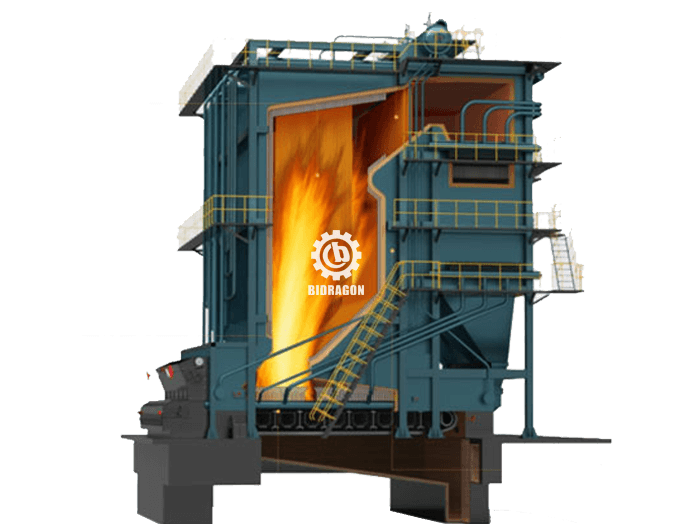
A biomass boiler is a thermal energy device that uses biomass energy as fuel, generating heat by burning renewable resources such as straw, wood chips, and biomass pellets to heat and vaporize water. Its operating principle is similar to that of a coal-fired boiler, with the core difference being the combustion adjustment method determined by the fuel characteristics—biomass fuel burns in the furnace to produce high-temperature flue gas, which transfers heat through the heating surface to heat the working fluid into steam. The combustion conditions need to be optimized for the characteristics of the biomass fuel.
Common types of biomass steam boilers in the industrial field mainly include biomass chain grate boilers, circulating fluidized bed biomass boilers, and biomass gasification boilers. Chain grate boilers transport fuel via a grate and are suitable for granular or lump biomass fuels; circulating fluidized bed biomass boilers utilize airflow to achieve thorough fuel mixing and combustion, adapting to various biomass fuels; biomass gasification boilers first gasify the biomass to produce combustible gas, and then heat the working fluid by burning the gas, offering superior environmental performance.
In industrial applications, biomass fuels come in various forms, mainly including molded fuels (such as pellets and briquettes), loose fuels (such as straw and wood chips), and biomass waste (such as bagasse and mushroom residue). Molded fuels are the most widely used in small and medium-sized industrial biomass boilers due to their high density, stable calorific value, and convenient transportation and storage; loose fuels are mostly used in large biomass boilers or industrial settings near fuel production sites.
Overall, coal-fired boilers have a more compact furnace design and a relatively higher heat load density; while biomass boilers usually have larger furnaces and a more dispersed heat load design.
This is mainly because coal has a higher calorific value and a relatively longer combustion cycle. A compact furnace volume combined with a higher heat load density helps coal achieve complete combustion in a limited space. Biomass fuels, on the other hand, have a relatively lower calorific value but burn faster. Therefore, by increasing the furnace size and adopting a more dispersed heat load design, the difference in fuel calorific value can be compensated, thus ensuring stable steam output.
From a design perspective, coal-fired boiler grates focus more on high-temperature corrosion resistance and preventing coal leakage; biomass boiler grates, however, focus more on improving air permeability while also incorporating anti-coking designs.
The chain grates and reciprocating grates commonly used in coal-fired boilers are made of materials that specifically consider resistance to the high temperatures and corrosion caused by coal combustion. The smaller grate gaps also reduce coal leakage to a certain extent. Biomass boilers often utilize grate-type or water-cooled grates, with larger gaps designed to facilitate the rapid release of volatile matter produced during fuel combustion. This also enhances air permeability and fuel adaptability, reducing problems such as grate coking and blockage.
In comparison, the feeding system of coal-fired boilers is relatively simple, primarily ensuring continuous and uniform fuel supply; the feeding system of biomass boilers, however, incorporates specific anti-clogging designs to ensure smooth feeding.
Coal-fired boilers typically use screw feeders or belt conveyors, which have a simple structure and mainly meet the need for continuous and uniform coal supply. Some large boilers are equipped with crushing equipment to accommodate different coal particle sizes. Considering the low density of biomass fuel and its tendency to bridge, its feeding system mostly uses scraper or vibrating feeders, with reinforced anti-clogging designs. Some boilers using formed fuels also have additional stirring devices in the hopper to further ensure smooth feeding.
Based on fuel characteristics, the ash removal and flue gas systems of coal-fired boilers focus more on efficient ash removal and anti-accumulation design, while biomass boilers prioritize anti-coking, resulting in a relatively simpler system structure.
Considering the relatively high ash content after coal combustion, coal-fired boilers usually employ a combination of mechanical and pneumatic ash removal methods, coupled with larger cross-section flue gas channels and specialized ash cleaning devices to reduce the impact of fly ash accumulation on heat transfer efficiency. The low ash content but easy slagging characteristics of biomass fuel mean that its ash removal system mainly uses scraper ash removal, with a simpler structure; the inner wall of the flue gas channel is equipped with an anti-wear coating and a reasonable inclination angle to better address coking problems and facilitate the smooth sliding of ash and slag.
Fuel type and availability are one of the most fundamental differences between the two. Coal, as a traditional fossil fuel, has an uneven global distribution, mainly concentrated in specific regions. Industrial users need to rely on long-term stable supply chains to ensure fuel supply, and fuel prices are significantly affected by international energy policies and geopolitical factors. Biomass fuel is a renewable energy source with a wide range of sources, including agricultural waste, forestry residues, and industrial organic waste. In some regions, localized supply is possible, and fuel supply is less restricted by geographical location, resulting in relatively stable prices.
In terms of ignition characteristics and burn rate, the two fuels behave quite differently. Coal has a higher ignition point, especially anthracite, requiring more energy for ignition and burning more slowly with a longer burn time. This necessitates optimizing the furnace structure to extend the fuel residence time. Biomass fuel has a low ignition point, ignites easily and quickly, burns rapidly, and has a short burn time. Therefore, the combustion system of a biomass boiler needs to match the rapid combustion characteristics of the fuel to ensure complete combustion in a short time.
There are significant differences in combustion stability during continuous and intermittent operation. During continuous operation, coal-fired boilers have a significant advantage in combustion stability due to the stable combustion of coal and uniform heat release, resulting in small fluctuations in steam output. During intermittent operation, coal maintains high temperatures for a longer period, and the residual heat in the furnace after shutdown can be maintained for a considerable time, making it easy to restore stable combustion upon restart. Biomass boilers require precise control of the feeding rate to maintain stable combustion during continuous operation; during intermittent operation, the fuel burns quickly, the furnace temperature drops rapidly, and restarting requires re-ignition and heating, resulting in relatively weaker combustion stability.
In terms of operational flexibility and automatic ignition capabilities, biomass boilers have an advantage. The ignition process of biomass fuel is simple, and modern biomass boilers are generally equipped with automatic ignition systems, allowing for quick startup using electronic ignition devices. They can also flexibly adjust the feeding rate and combustion intensity according to steam demand, adapting to rapid changes in load. The automatic ignition system of coal-fired boilers is complex, the startup process is cumbersome, and load adjustments require gradual changes in feeding rate and air supply, resulting in a longer adjustment cycle and relatively poor operational flexibility.
Air pollutant emissions are the most prominent environmental problem associated with coal-fired boilers. The combustion of coal releases large amounts of sulfur dioxide, nitrogen oxides, and particulate matter. These pollutants not only cause atmospheric environmental problems such as acid rain and smog but also pose serious health risks to humans. Although modern coal-fired boilers are equipped with desulfurization, denitrification, and dust removal equipment, it is still difficult to completely eliminate pollutant emissions. The problem of excessive pollutant emissions is even more serious in some small and medium-sized coal-fired boilers due to insufficient investment in equipment.
In terms of greenhouse gas emissions, coal-fired boilers are one of the main sources of carbon emissions. Coal is a carbon-intensive energy source, and its combustion releases a large amount of carbon dioxide. This carbon dioxide enters the atmosphere and exacerbates global warming. Coal-fired boilers have a high carbon emission intensity, and the carbon elements in coal are fossil carbon, which cannot achieve carbon balance through natural cycles, making it difficult to fundamentally solve the greenhouse gas emission problem.
The generation and disposal of solid waste face numerous challenges. Coal combustion produces a large amount of ash and slag, including bottom ash and fly ash. The amount of these solid wastes is directly related to the ash content of the coal. The accumulation of large amounts of ash and slag not only occupies land resources but may also pollute soil and groundwater due to leachate. Although some ash and slag can be used for resource utilization such as building materials production, a large amount of ash and slag still needs to be safely landfilled, increasing the environmental costs and disposal pressure for enterprises.
Biomass boilers have more environmentally friendly combustion emission characteristics. The sulfur and nitrogen content of biomass fuel is far lower than that of coal, and the emissions of sulfur dioxide and nitrogen oxides during combustion are only a fraction or even a tenth of those from coal-fired boilers, and particulate matter emissions are also relatively low. Even without complex flue gas treatment equipment, the pollutant emissions of biomass boilers can meet the environmental standards of most regions. With simple dust removal equipment, the emission indicators can be further optimized.
The core advantage of biomass energy lies in its carbon-neutral characteristics. Biomass fuel absorbs carbon dioxide from the atmosphere through photosynthesis during its growth, and then releases this carbon dioxide during combustion, forming a complete carbon cycle, theoretically not increasing the concentration of carbon dioxide in the atmosphere. This carbon-neutral characteristic makes biomass boilers an important energy equipment for addressing global climate change and achieving "dual carbon" goals.
In terms of ash and slag utilization and solid waste treatment, biomass boilers have significant advantages. The ash content of biomass fuel is usually less than 5%, far lower than that of coal, significantly reducing the amount of solid waste generated. Meanwhile, biomass ash is rich in elements such as potassium and phosphorus, and can be used as organic fertilizer in agricultural production or as an auxiliary material in building materials, achieving the reduction and resource utilization of solid waste and reducing the pressure of environmental protection and disposal.
In terms of thermal efficiency, the gap between the two is gradually narrowing. The thermal efficiency of traditional coal-fired boilers is usually between 70% and 85%, while high-efficiency coal-fired boilers equipped with advanced combustion technology and heat exchange systems can achieve thermal efficiencies of over 90%. The thermal efficiency of biomass boilers is greatly affected by fuel characteristics. Early biomass boilers had a thermal efficiency of only 75%-85%, but with the optimization of combustion technology and the improvement of heat exchange structures, the thermal efficiency of modern biomass boilers can reach 88%-92%, and some advanced models can even be comparable to high-efficiency coal-fired boilers.
The difference in combustion efficiency and fuel utilization rate mainly stems from fuel characteristics. During coal combustion, problems such as incomplete local combustion and coking are prone to occur, resulting in some fuel not being completely burned and a relatively low fuel utilization rate, especially during low-load operation, where the combustion efficiency decreases significantly. Biomass fuel has a fast combustion speed and high volatile content. If matched with a reasonable combustion system, complete combustion can be achieved, resulting in a higher fuel utilization rate. However, if the feeding is uneven or the air ratio is inappropriate, incomplete combustion can easily occur.
Combustion technology is crucial to overall efficiency. After adopting circulating fluidized bed combustion technology, coal-fired boilers can improve fuel combustion efficiency by optimizing the airflow organization and enhancing the heat transfer effect, increasing the overall efficiency by 5%-10%; using flue gas waste heat recovery technology can further recover the waste heat in the flue gas and improve thermal efficiency. After adopting gasification combustion technology or semi-gasification combustion technology, biomass boilers can increase the combustion efficiency of the fuel to over 95%, and with a tail-end waste heat recovery device, the flue gas temperature can be effectively reduced, significantly improving the overall operating efficiency.
Fuel cost is a core factor affecting the operating costs of both. The fuel cost of coal-fired boilers is significantly affected by fluctuations in coal prices. In the long run, with the increasing scarcity of coal resources and tightening environmental policies, coal prices are trending upwards. The fuel cost of biomass boilers, however, is relatively stable. Localized biomass fuel supply can reduce transportation costs, and biomass fuel is often derived from the utilization of waste resources, so its price is usually lower than coal. Some regions can also enjoy biomass energy subsidies, further reducing fuel costs.
In terms of equipment investment requirements, both have different focuses. Coal-fired boilers have a high level of technological maturity, and the equipment investment for traditional coal-fired boilers is relatively low. However, to meet strict environmental standards, additional funds are required to equip them with environmental protection equipment such as desulfurization, denitrification, and dust removal systems, significantly increasing the overall investment cost. The equipment investment for biomass boilers is usually higher than that of traditional coal-fired boilers, mainly due to their more complex combustion and feeding system designs. However, they do not require large-scale investment in environmental protection equipment, and the overall investment cost is basically the same as that of coal-fired boilers equipped with environmental protection equipment.
There are significant differences in operating and maintenance costs. The maintenance focus of coal-fired boilers is on the grate, furnace, and ash removal system. The high temperature and corrosion generated by coal combustion accelerate equipment wear, requiring frequent replacement of vulnerable parts. The operation and maintenance of environmental protection equipment also increase maintenance costs. Biomass boilers experience less wear and tear, have a relatively longer maintenance cycle, and the maintenance focus is on preventing clogging of the feeding system and slagging in the furnace. The maintenance content is relatively simple, and the overall operating and maintenance costs are lower than those of coal-fired boilers.
Biomass boilers: Characterized by multi-fuel adaptability, they can accommodate various forms of fuel, including granular, bulk, and waste materials. They can flexibly adjust the fuel type based on local resources, and the diversity of fuel sources stems from their renewable energy attributes.
Coal-fired boilers: Characterized by a single focus, they mainly adapt to coal with specific calorific value and particle size. Fuel selection is largely limited by the supply chain, which is closely related to their dependence on fossil fuels with fixed resource distribution.
Coal-fired boilers: Following the concept of enhanced combustion intensity, they utilize a compact furnace and high-density heat load design to match the high calorific value and slow burning characteristics of coal. The core objective is to improve the thermal output efficiency per unit of space.
Biomass boilers: Adhering to the concept of optimizing the combustion space, they use a large furnace and highly permeable structure to match the low calorific value and fast burning characteristics of biomass, focusing on ensuring complete combustion of the fuel within a limited time.
Coal-fired boilers: Prioritizing stability, they have long operating adjustment cycles. The control focus is on maintaining furnace temperature and combustion stability, making them more suitable for continuous, high-load industrial scenarios; the automatic ignition system has a complex structure and requires cumbersome procedures to ensure smooth operation.
Biomass boilers: Emphasizing flexible response, the core control is to precisely match the fuel supply and air volume to cope with fluctuations in fuel characteristics, making them more suitable for working conditions with frequent load changes; quick start and stop can be achieved with a simple ignition mechanism, making operation more convenient.
Coal-fired boilers: As a source of carbon emissions, the fossil carbon released during combustion disrupts the atmospheric carbon balance. They are positioned as highly polluting equipment requiring strict control, which directly affects their treatment under environmental policies.
Biomass boilers: Belonging to the carbon cycle, they achieve carbon balance through their carbon-neutral characteristics. They are positioned as environmentally friendly clean energy equipment, better aligned with current environmental policy trends.
Coal-fired boilers: Advantages include stable continuous operation and strong high-load output capacity; limitations include high environmental pressure and high risk of fuel cost fluctuations. These characteristics are directly related to their fuel characteristics and design philosophy.
Biomass boilers: Advantages include good environmental compliance and stable fuel costs; limitations include fuel supply being geographically restricted and weaker stability during intermittent operation. These are also determined by their core characteristics.
In terms of environmental performance, biomass boilers have a comprehensive advantage. In terms of air pollutant emissions, the sulfur dioxide and nitrogen oxide emissions of biomass boilers are only 10%-30% of those of coal-fired boilers, and particulate matter emissions are also significantly reduced. They can meet standards without complex environmental protection equipment; coal-fired boilers would require high environmental protection costs to achieve the same emission levels. In terms of pollutant control difficulty, the emission characteristics of biomass boilers make them easier to meet stringent environmental standards.
The core difference in carbon emission assessment lies in the nature of the carbon source. Coal-fired boilers burn fossil carbon, and the emitted carbon dioxide is considered new carbon, directly exacerbating the greenhouse effect, making carbon reduction extremely difficult; biomass boilers burn recycled carbon absorbed during biomass growth, theoretically achieving zero carbon emissions, aligning with the global carbon reduction trend. From a carbon footprint perspective, the life cycle carbon emissions of biomass boilers are far lower than those of coal-fired boilers.
In terms of solid waste and sustainability, biomass boilers demonstrate significant advantages. Their ash production is only 10%-20% of that of coal-fired boilers, and the ash can be recycled as fertilizer and building materials, forming a circular chain of fuel-energy-waste-resources; the large amount of ash produced by coal-fired boilers requires landfill disposal, which not only occupies land but also poses a risk of secondary pollution, resulting in poor sustainability.
Industrial users need to focus on core evaluation factors, including energy demand, fuel conditions, environmental policies, and operational capabilities. In terms of energy demand, continuous high-load operation scenarios are more suitable for coal-fired boilers, while scenarios with frequent load fluctuations or intermittent operation should prioritize biomass boilers; fuel conditions are fundamental, users near coal production areas with stable supply chains can consider coal-fired boilers, while users with abundant local biomass resources will find biomass boilers more cost-effective.
The boiler type needs to be precisely matched with fuel availability. When choosing a coal-fired boiler, it is necessary to confirm the long-term supply channels, transportation costs, and calorific value stability of coal to avoid production disruptions due to fuel supply interruptions; when choosing a biomass boiler, it is necessary to evaluate the types, output, collection costs, and storage conditions of local biomass fuels, prioritizing molded biomass fuels with stable output and easy storage to reduce fuel supply risks.
Balancing cost, efficiency, and environmental compliance is the key decision-making logic. In the short term, traditional coal-fired boilers have lower equipment investment, but environmental equipment investment and long-term fuel price fluctuations need to be considered; biomass boilers have higher initial investment, but fuel costs are stable and environmental investment is low, making them more advantageous in terms of long-term operating costs. At the same time, it is necessary to consider local environmental protection policies to avoid equipment obsolescence due to upgraded environmental standards and ensure investment efficiency.
The choice of overseas markets needs to take regional characteristics into account. In areas with abundant coal resources and lenient environmental policies, coal-fired boilers may be more competitive; in areas with developed agriculture, abundant biomass resources, or strict environmental policies and high carbon taxes, biomass boilers are a better choice. In addition, it is necessary to consider fuel transportation costs, after-sales service capabilities, and local energy subsidy policies in overseas markets to develop customized solutions.
Biomass steam boilers and coal-fired boilers differ significantly in structural design, fuel characteristics, and environmental performance. Coal-fired boilers excel in stable continuous operation, but face development bottlenecks due to high pollution and high carbon emissions; biomass boilers, relying on their carbon-neutral advantages and environmental characteristics, have become an important direction for energy transformation. Although there are limitations in fuel supply and intermittent operation stability, these are gradually improving with technological upgrades.
The selection of industrial boilers needs to be based on actual energy needs, combined with fuel supply conditions, environmental policy requirements, and long-term operating costs. Against the backdrop of increasingly stringent environmental regulations and the promotion of renewable energy, biomass boilers show broader application prospects, while coal-fired boilers need to rely on upgraded environmental technologies to achieve compliant operation.