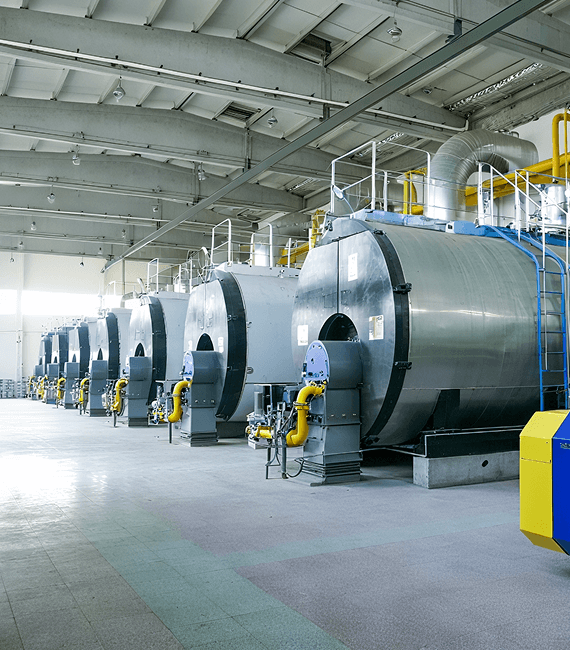

The boiler combustion system is the core unit for energy conversion in industrial boilers. Through precise control of the fuel-air mixture and combustion reaction, it efficiently converts the chemical energy contained in the fuel into thermal energy, providing the basis for subsequent steam generation or heat supply. In industrial production settings, the stable operation of the boiler combustion system directly determines production efficiency and operational safety. Therefore, a deep understanding of the system's composition and working process is not only a technical prerequisite for equipment design, installation, and commissioning, but also the core basis for operation, troubleshooting, and performance optimization.
From a thermal engineering perspective, the boiler combustion system is an organic whole composed of multiple functional modules, including fuel processing, air supply, combustion reaction, heat transfer, and flue gas emission. Its core function is to complete the complete combustion of fuel under controlled conditions and efficiently release thermal energy. The fuel undergoes a series of physical and chemical changes within the system, and the chemical energy is converted into thermal energy through combustion reactions. This thermal energy is transferred to the boiler's heating surface in the form of radiation and convection, ultimately achieving the heating or vaporization of water or other working fluids.
Combustion stability is a key indicator of system performance. A stable combustion state ensures the continuity and uniformity of thermal energy output, avoiding uneven heat load on the heating surface caused by combustion fluctuations, thereby reducing the risk of equipment corrosion and slagging. At the same time, stable combustion can effectively improve fuel utilization, reduce the generation of incomplete combustion products, and improve energy utilization efficiency while ensuring operational safety.
An industrial boiler combustion system is not simply a collection of isolated components, but rather a complex system of multiple interconnected and interacting subsystems. These subsystems revolve around three core elements: fuel, air, and the combustion space, forming a complete closed loop from fuel input to flue gas discharge. The quality and supply of fuel, the proportion and efficiency of air supply, and the structure and thermal environment of the combustion space—the degree of matching between these three factors directly determines the combustion efficiency.
Understanding the composition of the combustion system at the system level is crucial. Focusing solely on the performance of a single subsystem will not achieve overall optimization. For example, high-quality fuel supply will lead to incomplete combustion if it lacks adequate air supply; similarly, an advanced burner will struggle to perform effectively if it operates in an unstable furnace pressure environment. Only by considering each subsystem as part of a unified whole can efficient and stable combustion be achieved.
The core task of the fuel supply subsystem is to stably and continuously deliver fuel to the combustion zone according to the boiler load requirements. The supply path and processing methods vary depending on the fuel type. For solid fuels, pre-treatment processes such as crushing, grinding, and drying are required to ensure the fuel particle size and moisture content meet combustion requirements. The fuel is then transported to the burner via equipment such as coal feeders and conveying pipelines. Liquid fuels are sprayed into the combustion zone in atomized form through storage tanks, oil pumps, and atomizing devices to increase the contact area with air. Gaseous fuels, due to their good fluidity, are directly transported through pressure regulating valve sets and pipeline systems without complex pre-treatment processes.
The quality of fuel treatment before entering the combustion zone directly affects combustion efficiency. For example, insufficient grinding fineness of solid fuels will prolong the burnout time, and poor atomization of liquid fuels will lead to incomplete combustion in some areas. Stable fuel supply is the basis for ensuring continuous combustion. Fluctuations in fuel supply will directly cause drastic changes in furnace temperature and pressure, and may even lead to safety accidents such as flameout. Therefore, the fuel supply subsystem needs to have precise adjustment capabilities and reliable operating performance.
The air supply system delivers combustion air to the combustion zone in a specific proportion and manner according to combustion requirements. The functions of primary and secondary air are clearly defined and work in coordination. Primary air mainly carries the fuel into the furnace, provides initial oxygen for ignition, and reduces the ignition heat requirement of the fuel through preheating, promoting the stability of the ignition process. Secondary air is introduced after the fuel ignites, supplementing sufficient oxygen for the combustion process, and simultaneously enhancing the mixing of fuel and air through airflow turbulence to ensure complete combustion.
Precise control of airflow and pressure is crucial for combustion quality. Insufficient airflow will lead to incomplete combustion, increasing energy consumption and pollutant emissions; excessive airflow will carry away a large amount of heat from the furnace, reducing boiler thermal efficiency. The air supply and exhaust sections of the ventilation system need to work closely together. The air supply device provides sufficient pressure to send air into the furnace, while the exhaust device uses negative pressure suction to promptly remove the flue gas produced by combustion, maintaining a stable pressure environment in the furnace and ensuring that the combustion process proceeds in an orderly manner. The matching of supply and induced draft airflow is the core of ventilation system regulation, directly affecting the stability of furnace pressure and combustion conditions.
As the core device of the combustion reaction, the internal structure design of the burner directly determines the mixing effect of fuel and air and the flame shape. Common burners have internal components such as nozzles, flame stabilizers, and air distributors. Through reasonable structural arrangement, efficient mixing of fuel and air is achieved inside or at the outlet of the burner. Mixing methods are divided into premixed and diffusion types. Premixed combustion completes the thorough mixing of fuel and air before combustion, resulting in a fast combustion speed and high flame temperature; diffusion combustion gradually mixes during the combustion process, resulting in a longer flame length, suitable for specific combustion scenarios.
Flame stability is the core function of the burner, achieved through the recirculation zone formed by the flame stabilizer. The recirculation zone draws high-temperature flue gas from the furnace back to the burner outlet, providing a continuous ignition heat source for the newly introduced fuel-air mixture, ensuring that the flame does not extinguish after ignition. The ignition mechanism mainly relies on the electric spark or high-temperature flame generated by a high-energy ignition device, causing the fuel-air mixture to reach the ignition temperature and initiate the combustion reaction. Burner design parameters such as outlet cross-sectional area, airflow velocity, and mixing angle directly affect combustion intensity and flame shape, and need to be precisely matched according to boiler capacity and fuel characteristics.
The furnace, as the main space for fuel combustion, has a combustion process that can be divided into three continuous stages. The pre-ignition preparation stage: the fuel receives radiant heat from the furnace and is heated by high-temperature flue gas, completing moisture evaporation and volatile matter release. This stage is an endothermic process, with the heat source mainly from flame radiation and high-temperature flue gas recirculation; the volatile matter combustion stage: the released volatile matter mixes with oxygen and reaches the ignition temperature, initiating the combustion reaction and releasing a large amount of heat, causing the furnace temperature to rise rapidly; the fixed carbon combustion stage: in the high-temperature environment provided by volatile matter combustion, the fixed carbon in the fuel begins to burn. This stage is the main stage of heat release, with a vigorous reaction and a longer duration.
The flame development process in the furnace is closely related to airflow movement and mixing effects. The initially formed small flame continuously expands under the drive of the airflow, gradually covering the entire combustion area and forming a stable flame field. Heat transfer in the furnace is primarily through radiation. High-temperature flames and flue gases transfer a large amount of heat to the heating surfaces of the furnace inner wall through radiation. This heat transfer method is highly efficient, enabling rapid transfer and utilization of thermal energy, providing sufficient heat for heating the working fluid.
Under the action of the induced draft system, the flue gas generated by combustion flows along a specific path inside the boiler. The design of this flow path aims to maximize heat recovery efficiency. After exiting the furnace, the flue gas first enters the superheater area, transferring heat to the steam in the superheater through convective heat transfer, increasing the steam temperature; then it flows through the economizer, heating the feedwater entering the boiler and reducing the exhaust gas temperature; some boilers also have air preheaters, which use the waste heat of the flue gas to heat the combustion air, further improving combustion efficiency.
Convective heat transfer is the main method of flue gas heat utilization. In the superheater, economizer, and other areas, the high-temperature flue gas undergoes sufficient heat exchange with the heating surfaces, transferring heat to the working fluid. Waste heat recovery is an important part of flue gas treatment. By recovering the heat in the flue gas that has not been fully utilized, it not only improves the overall thermal efficiency of the boiler but also reduces the exhaust gas temperature, reducing energy waste and meeting the requirements of high-efficiency and energy-saving operation.
The ignition system is a critical component for boiler startup. Its function is to initiate the combustion reaction of the fuel-air mixture during the startup phase. It mainly consists of an ignition device, a flame detector, and a control unit. The ignition device typically uses high-energy electric spark ignition or a small oil gun ignition method, capable of quickly generating a sufficient energy ignition source. The flame detector monitors the ignition process in real time, ensuring successful ignition and feeding the signal back to the control unit.
The combustion characteristics during the startup phase are characterized by low load, low furnace temperature, and poor combustion stability. During this stage, the fuel and air input must be strictly controlled, gradually increasing the furnace temperature to prevent the accumulation of unburned fuel due to excessive fuel input, which could lead to safety accidents such as furnace explosions. During startup, the ignition source is usually activated first, followed by a gradual increase in fuel and air flow to ensure a smooth transition of the combustion process.
During low-load operation, the core problem faced by the boiler combustion system is decreased combustion stability. At low loads, the fuel input is reduced, resulting in insufficient heat release in the furnace, which can easily lead to flame pulsation or even flameout. To ensure stable combustion at low loads, measures such as increasing the primary air-coal powder concentration, increasing the combustion air temperature, and introducing auxiliary fuel are necessary to maintain a stable thermal environment in the furnace and ensure continuous ignition and combustion of the fuel.
Fuel-air ratio control is the core logic of combustion control. It ensures that the fuel supply and air supply are maintained within the optimal ratio range by coordinating their adjustments. When the boiler load changes, the control system simultaneously adjusts the fuel and air input to avoid insufficient or excessive airflow, ensuring complete combustion, improving energy utilization efficiency, and reducing pollutant generation.
Furnace pressure control is achieved by adjusting the output of the induced draft system. During normal operation, the furnace needs to maintain a slightly negative pressure to prevent flue gas leakage, which would cause heat loss and safety hazards, and to avoid excessively high furnace pressure affecting combustion stability. The control system automatically adjusts the speed of the induced draft fan or the damper opening based on the real-time signal from the furnace pressure sensor to ensure that the pressure remains stable within the set range.
Flame monitoring and interlock protection are the last line of defense for system safety. The flame detector continuously monitors the flame status in the furnace. When flame extinction or unstable combustion is detected, the interlock protection mechanism is immediately triggered, quickly cutting off the fuel supply and issuing an alarm signal to prevent unburned fuel from accumulating in the furnace and avoiding serious safety accidents such as explosions.
The excess air coefficient is a core parameter for measuring whether the air supply is reasonable during the combustion process. It is defined as the ratio of the actual air supply to the theoretical air required for combustion. An excessively low excess air coefficient will lead to incomplete combustion, while an excessively high one will reduce the furnace temperature and thermal efficiency. Therefore, it needs to be controlled within the optimal range according to the fuel characteristics and combustion conditions.
The furnace temperature distribution significantly affects combustion efficiency and equipment safety. A uniform temperature distribution ensures complete combustion of the fuel and avoids local overheating that can lead to slagging or corrosion of the heating surfaces; while uneven temperature distribution can cause thermal stress concentration and shorten the service life of the equipment. The furnace temperature distribution is mainly adjusted through reasonable burner arrangement and air distribution methods.
The air distribution method directly affects combustion stability and pollutant emissions. Reasonable air distribution can strengthen the mixing of fuel and air, promote complete combustion, and reduce the generation of incomplete combustion products such as carbon monoxide; at the same time, methods such as staged air distribution can effectively suppress the generation of pollutants such as nitrogen oxides, achieving both environmental protection and high efficiency. 7. Typical Combustion Process Sequence in Boiler Operation
The typical combustion process in industrial boilers follows a fixed logical sequence, forming a complete energy conversion chain from fuel entry into the system to flue gas discharge. Fuel first enters the pretreatment stage through the supply subsystem, undergoing processes such as crushing, grinding, and atomization before being transported to the burner; simultaneously, the air supply system preheats the combustion air and delivers it to the burner, where it mixes with the fuel at or near the burner outlet.
The mixed fuel-air mixture ignites under the action of the ignition device, forming a flame that enters the furnace. Within the furnace, the entire process of volatile combustion and fixed carbon combustion takes place, releasing a large amount of thermal energy; this thermal energy is transferred to the furnace's heating surfaces through radiative heat transfer, heating the working fluid inside; the flue gas produced by combustion, under the action of the induced draft system, flows sequentially through heat exchange areas such as superheaters and economizers, further releasing heat through convective heat transfer, and is then discharged from the system after dust removal and desulfurization.
In this process, energy is converted from the chemical energy of the fuel to thermal energy, and then transferred to the working fluid, converting it into thermal or mechanical energy. Each step depends on the coordinated cooperation of each subsystem. Optimizing the performance of a single component cannot improve overall efficiency; only by ensuring the precise matching of fuel supply, air distribution, combustion, and heat exchange can high efficiency and stability of the combustion process be achieved.
The composition and working process of the boiler combustion system are closely related. Each subsystem forms an integrated whole around efficient fuel combustion and thermal energy utilization. Its operating performance is determined by key factors such as fuel supply stability and air distribution accuracy. Coordination of all parts is crucial for safe and efficient operation. System coordination is essential for the long-term stability of the boiler, requiring integrated control of each subsystem to achieve matching of fuel, air, and combustion space; understanding the combustion mechanism is fundamental to operational optimization, and operators need to master system principles to cope with complex operating conditions and ensure efficient boiler operation.