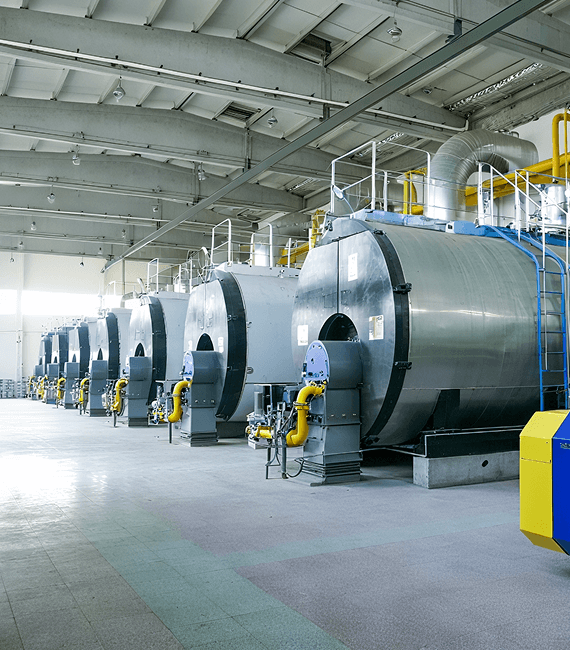

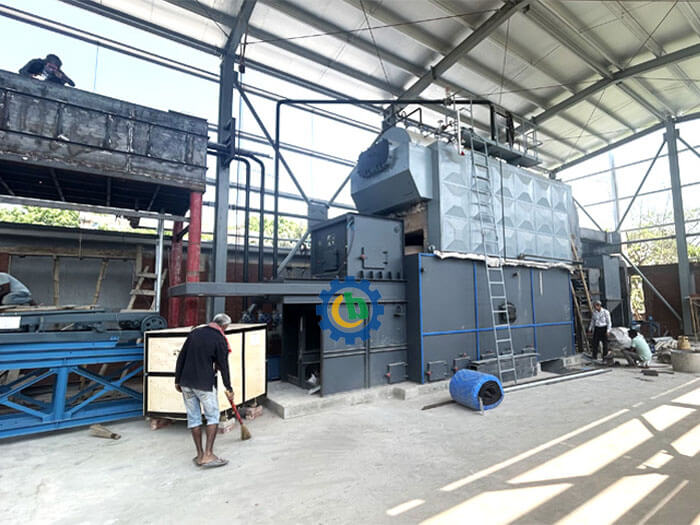
A biomass steam boiler is an energy conversion device that uses biomass as fuel, converting biomass energy into thermal energy through efficient combustion, and then heating water to produce steam. Its fuel mainly comes from agricultural and forestry waste, crop straw, wood chips, rice husks, and other cellulose-rich organic materials, belonging to an important category of renewable energy utilization equipment.
The process of converting biomass fuel into usable steam is roughly divided into three core stages. First is the preheating and drying stage: after the fuel enters the combustion chamber, water evaporates at 80℃-120℃, preparing for subsequent combustion; when the temperature rises to 200℃-350℃, it enters the volatile matter release and combustion stage, where the organic components in the fuel decompose to produce combustible gases, which rapidly burn and release a large amount of heat, raising the combustion chamber temperature to 800℃-1000℃; finally, the char combustion stage, where the remaining char after volatile matter combustion continues to burn, and the heat from the previous stage acts together on the boiler's heating surface.
The heat generated by combustion is transferred to the water in the heating surface through radiation, convection, and conduction, causing the water to gradually heat up and vaporize, ultimately forming high-temperature and high-pressure steam that meets industrial needs. The entire process achieves efficient conversion of biomass energy into thermal energy, and the fuel utilization process is clean and controllable.
The core components of a biomass steam boiler include the combustion chamber, heating surface (water-cooled wall, superheater, economizer, etc.), fuel conveying system, ventilation system, and control system. The combustion system is the core, adopting a linkage design between the gasification chamber and the combustion chamber. Some boilers have multiple combustion chambers, and through reasonable air distribution, the combustible gases and char are fully burned, extending the residence time of the flue gas, allowing the combustion temperature to reach 1000℃-1200℃, ensuring full heat release.
Compared with fossil fuels, the advantages of biomass fuel are concentrated in three dimensions. From a resource perspective, biomass is derived from agricultural and forestry waste, making it a renewable resource that can be sourced locally, thus avoiding the risk of fossil fuel depletion. From an environmental perspective, biomass combustion results in near-zero carbon emissions and significantly reduces the emission of pollutants such as sulfur dioxide and nitrogen oxides. From an economic perspective, biomass fuel supply is stable and less affected by fluctuations in international energy prices, helping companies build a more controllable energy cost system.
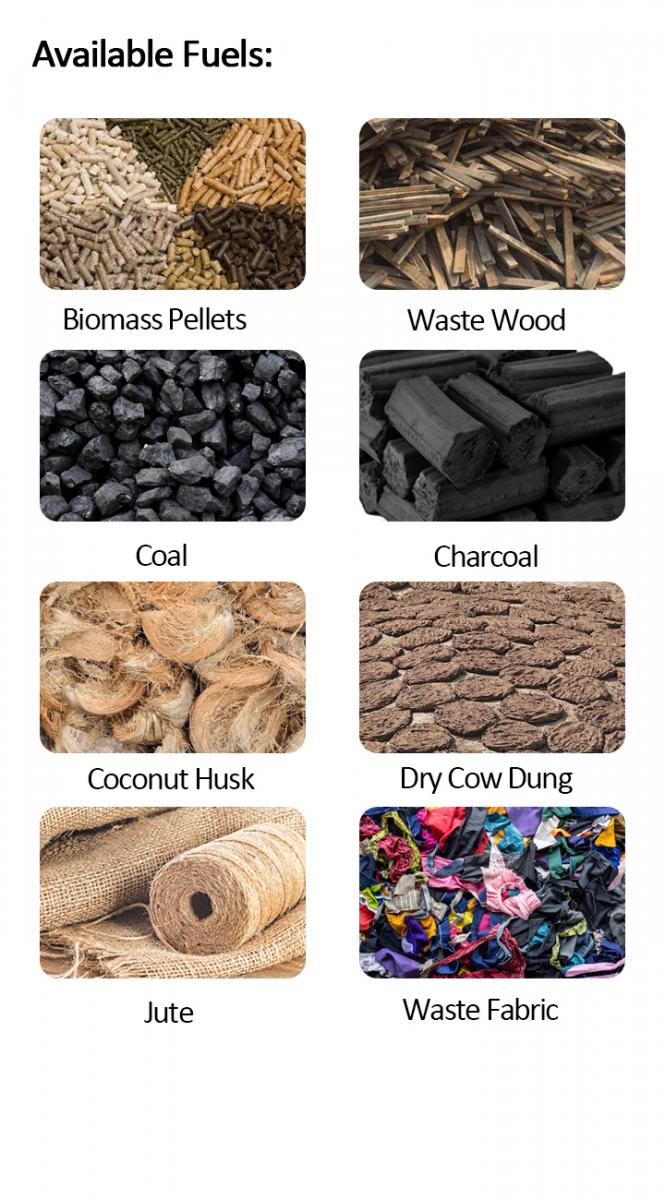
Biomass steam boilers have extremely strong fuel adaptability. Whether it's straw, wood chips, rice husks, or agricultural and forestry processing by-products, all can be used after simple crushing and shaping. This flexibility allows companies to choose fuel based on local resources, reducing logistics costs associated with long-distance transportation. Especially in areas with concentrated agriculture and forestry, the abundant supply of biomass raw materials creates a stable local energy supply chain, further enhancing cost advantages.
Through optimized combustion system design and heat transfer mechanisms, biomass steam boilers can achieve continuous and stable steam output, avoiding the problem of fluctuating steam pressure in traditional boilers. Its thermal efficiency benefits from a thorough combustion process and an efficient heat recovery system. Some advanced equipment, through waste heat utilization technology, can achieve a comprehensive energy utilization rate of over 80%, providing efficient and reliable thermal energy support for industrial production.
Environmental policies are becoming increasingly stringent globally, and the dual carbon goals are driving the industrial sector to accelerate energy transformation. During the combustion process, biomass steam boilers emit significantly less carbon dioxide than coal-fired boilers and effectively reduce sulfur and particulate matter emissions. They can meet environmental standards in most regions without complex exhaust gas treatment equipment, helping companies avoid environmental penalties and successfully achieve green production transformation.
Biomass steam boilers can adjust steam output and pressure parameters according to the needs of different industries, from decentralized heating for small and medium-sized enterprises to centralized steam supply for large industrial parks. Whether it's food processing requiring low-temperature steam or chemical production requiring high-pressure steam, the needs can be met by adjusting the boiler model, demonstrating broad industrial applicability.
In industrial production, industries such as food processing, textile printing and dyeing, papermaking, and chemical manufacturing are typical high-energy-demand sectors, with multiple stages of their production processes relying on a continuous and stable supply of steam. The common characteristics of these industries are high steam consumption, long continuous operating times, and strict requirements for steam quality (temperature and pressure stability). Biomass steam boilers are ideally suited to meet these core needs.
Industrial scenarios with medium to high steam demand require higher stability and cost-effectiveness in energy supply. Biomass steam boilers reduce the unit cost of steam through large-scale operation, and their modular design allows multiple boilers to operate in conjunction, dynamically adjusting the operating load according to steam demand, thus avoiding energy waste. Compared to natural gas boilers, their fuel costs are less affected by international energy markets; compared to coal-fired boilers, their environmental advantages are more prominent, making them one of the optimal solutions for scenarios with medium to high steam demand.
Several key stages of food processing rely on steam: the cooking process requires stable steam to ensure even heating of ingredients; the drying process requires controlled steam temperature for precise moisture removal; and sterilization and blanching processes have stringent requirements for steam purity and continuous supply, as any interruption in steam supply can lead to product spoilage.
Biomass steam boilers produce stable steam quality, and the combustion process is odorless and free of pollutant migration, ensuring food hygiene and safety. Their continuous operation capability matches the 24-hour uninterrupted operation needs of food production lines, making them a core energy equipment for food companies.
The dyeing and finishing processes in the textile industry require extremely stable steam supply. In the dyeing process, even small fluctuations in steam temperature can lead to color differences in the fabric; the setting and drying stages of finishing also require constant temperature steam to ensure product quality.
In addition, the drying of fabrics after washing and the ironing process in garment manufacturing also require continuous medium-temperature steam support. Biomass steam boilers can precisely control steam temperature and pressure, preventing energy supply problems from affecting the quality of textile products, while their environmental attributes help companies meet the increasingly stringent green production standards of the textile industry.
The paper industry's steam demand spans the entire production process: Pulping requires steam to heat chemical agents, accelerating fiber separation; the drying stage after sheet formation is the core steam-consuming process, directly determining paper moisture content and flatness; chemical recovery systems utilize steam-driven mechanisms to achieve resource recycling.
Waste materials generated during paper production, such as wood chips and waste pulp, can be directly used as fuel for biomass boilers, forming a closed-loop system of production-waste-energy. This inherent resource recycling characteristic makes biomass steam boilers a natural fit for the paper industry, simultaneously reducing fuel costs and resolving waste disposal challenges.
In chemical production, steam is widely used in raw material heating, distillation separation, and reactor temperature control. These processes require extremely high precision in steam pressure and temperature, directly affecting chemical reaction efficiency and product purity. Biomass steam boilers can achieve precise parameter control through intelligent control systems, meeting the stringent requirements of chemical production. Meanwhile, under the centralized energy supply model of chemical industrial parks, biomass steam boilers can be integrated with other energy equipment into the industrial public energy network. This large-scale operation improves the stability and economic efficiency of energy supply, helping chemical companies achieve low-carbon production.
The vulcanization process of rubber products is a core step requiring steam, needing continuous heating at specific temperatures and pressures to ensure sufficient cross-linking of rubber molecules and improve product elasticity and wear resistance. In addition, the preheating and molding stages of rubber raw materials also require stable steam support.
Biomass steam boilers provide stable steam pressure, ensuring consistent parameters during the vulcanization process and reducing the defect rate of rubber products. Their high thermal conversion efficiency can reduce energy consumption per unit of product, significantly improving the cost competitiveness of enterprises in large-scale production scenarios such as tire manufacturing.
The pharmaceutical industry has stringent requirements for the cleanliness and safety of the production environment. Steam is mainly used for sterilization of medical devices and heating and sterilization during drug production. This field not only requires high-quality steam but also has extremely high demands on the stability and environmental friendliness of energy supply.
Biomass steam boilers burn cleanly with no harmful gas emissions, avoiding pollution to the drug production environment. At the same time, their operating cost advantages can help pharmaceutical companies control energy expenditures, achieving improved economic benefits while meeting environmental regulations and industry standards.
In wood product manufacturing, wood drying is a critical step determining product quality, requiring low-temperature steam to slowly remove moisture from the wood to prevent cracking and deformation; stable steam is also needed for heat energy in processes such as board pressing and glue curing.
Furniture and wood product companies generate a large amount of wood chips and shavings during production, which are excellent fuels for biomass boilers. This "self-produced and self-consumed" fuel supply model allows companies to utilize waste resources, further reducing energy costs and forming a green production closed loop.
Fuel availability is the primary factor for companies choosing biomass steam boilers. Companies located near agricultural and forestry areas with convenient access to biomass raw materials can maximize cost advantages. A complete fuel pretreatment and storage system can also ensure the continuous and stable operation of the boiler, avoiding production disruptions due to interruptions in raw material supply.
Steam demand and parameter requirements vary significantly across different industries and production lines. Enterprises should select boilers with appropriate capacity based on their peak steam output and common pressure range, avoiding energy waste from oversized equipment or insufficient supply due to undersized boilers. Some enterprises use a combination of multiple boilers to achieve flexible adjustment of steam supply.
Modern biomass steam boilers feature automated control systems that enable full-process automation of fuel delivery, combustion regulation, and parameter monitoring, reducing manual labor. Simultaneously, the difficulty and frequency of equipment maintenance also influence enterprise decisions. Boiler models with simple structures and fewer wear parts can reduce downtime for maintenance and lower operating and maintenance costs.
Environmental regulations regarding boiler emissions vary across different regions. Enterprises must select biomass steam boilers whose emission indicators comply with local standards. For areas with extremely stringent environmental requirements, models equipped with exhaust gas purification devices can be chosen to ensure long-term compliance with policy requirements and avoid equipment obsolescence due to regulatory upgrades.
Biomass steam boilers, with their efficient energy conversion capabilities, precisely match the thermal energy needs of various industries. Their dual advantages of economy and environmental protection make them a core piece of equipment in the industrial energy transition. From food processing to chemical production, from textile dyeing to wood product manufacturing, stable steam output and flexible adaptability make them a reliable choice in high-demand scenarios, driving industrial production towards a greener and more efficient direction.