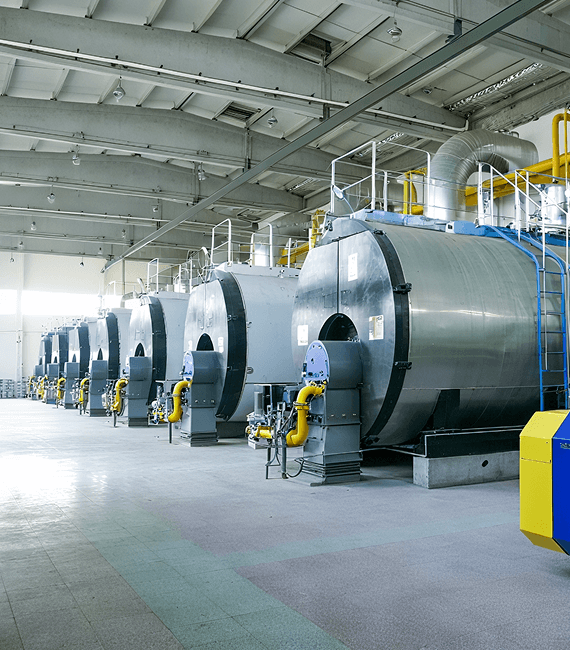

When traveling, the convenience of instantly hot water from a tap in the morning or a perfectly comfortable room temperature may seem trivial—but these details are supported by a comprehensive heating system. Unlike residential homes, which only need to serve a single household's heating and hot water needs, hotel heating systems must simultaneously cover hundreds of guest rooms, public areas, and support facilities. With significant load fluctuations and diverse usage scenarios, there is little room for error in design.
Heating performance directly impacts guest satisfaction—sudden temperature changes in water or uneven room temperatures can easily lead to negative reviews. Conversely, energy consumption accounts for a substantial portion of a hotel's operating costs; poorly designed systems result in unnecessary annual expenses on gas and electricity.
Modern hotel heating systems are far more complex than simply installing a few boilers and connecting pipes. From heat source selection and pipeline layout to terminal controls, every component must be carefully integrated to ensure optimal comfort while minimizing operational costs.
Hotels have thermal energy needs distributed across several distinct areas, each with different requirements regarding water temperature, usage timing, and load characteristics; understanding these scenarios is essential before beginning the design process.
Domestic hot water for guest rooms is the most fundamental requirement and the one that most significantly impacts the guest experience. It is used for bathing and hand-washing, characterized by usage concentrated during morning and evening peak hours with high instantaneous flow rates, while loads remain very low at other times. Furthermore, there is a strict requirement for stable water temperature; fluctuations caused by pressure changes—resulting in sudden shifts between hot and cold—must be avoided.
Space heating is primarily required in regions with cold winters. Coverage extends beyond guest rooms to include public areas such as lobbies, corridors, and restaurants. Heating schedules vary by area; for instance, lobbies are occupied during the day while guest rooms may be empty, so a uniform heating approach would lead to energy waste.
The laundry room is a major consumer of thermal energy. Washing and drying linens typically require steam or high-temperature hot water. The load is concentrated during daytime operations; while water consumption is steady, temperature requirements are high, and the process often involves the use of steam-based equipment.
Heating for swimming pools and spa areas represents a continuous, low-load demand. Pool water must be maintained at a constant temperature; although heat dissipation is slow, heat loss occurs around the clock. Spa pools require higher temperatures, necessitating continuous reheating to compensate for makeup water and heat loss, alongside strict temperature precision requirements.
Thermal energy use in kitchen areas primarily involves steaming and boiling equipment, hot water for cleaning, and some steam requirements. Usage is concentrated around meal times, resulting in significant load fluctuations.
Additionally, facilities such as gyms, public restrooms, and staff areas have sporadic needs for hot water and space heating. While the aggregate demand is substantial, it is widely dispersed.
Given the vastly different thermal usage patterns across these areas, the core of a robust heating system lies in delivering sufficient heat to the right area at the right time while minimizing energy consumption when heat is not required.
Many hotel heating system issues stem from inaccurate initial load calculations. Overestimating the load leads to the purchase of expensive equipment that operates at low capacity year-round, while underestimating it results in insufficient capacity during peak periods—creating problems in either scenario.
Calculating the space heating load begins with an assessment of the building's thermal envelope. The better the thermal insulation of walls, windows, doors, and roofs, the less heat is lost in winter, and consequently, the less supplemental heat is required. There is often a vast difference in this regard between renovated older hotels and newly constructed ones.
Outdoor climate is another key variable. Minimum winter temperatures and their duration vary by region; heating loads for hotels in the north and south are on completely different scales, and allowances must also be made for extreme cold weather.
Ventilation and fresh air loads are easily overlooked. To ensure indoor air quality, hotels must continuously introduce fresh air. In winter, incoming cold air must be heated to room temperature before distribution; this accounts for a significant portion of the heat load, especially in public areas requiring high fresh air volumes.
Calculating domestic hot water needs begins with the total number of guest rooms and the hotel's market positioning. Per-capita hot water consumption differs greatly between economy hotels and high-end resorts; the latter often feature bathtubs, naturally driving up water usage.
Occupancy rate is a crucial factor. Since hotels are rarely fully booked every day, calculations must balance the average annual occupancy rate with peak season highs. Simply basing designs on maximum capacity leads to oversized equipment operating inefficiently—a case of "using a sledgehammer to crack a nut"—for most of the time.
Accurate peak demand calculation is also essential. Periods such as 7–8 AM and 9–10 PM see concentrated water usage; the instantaneous flow rate during these times determines whether the system can handle the load, meaning average daily consumption figures alone are insufficient.
Laundry facility loads depend on equipment configuration—specifically whether steam or high-temperature hot water is used—as well as daily wash volumes and operating hours. Many hotels operate centralized laundry facilities, resulting in more predictable load patterns.
Swimming pool heating loads are primarily determined by pool surface area, target water temperature, and ambient temperature, while also accounting for heat loss through surface evaporation. SPA pools, characterized by smaller volumes but higher temperatures and frequent water replenishment, require separate load calculations.
Hotel load calculations invariably incorporate a "simultaneous usage factor," reflecting the reality that not all areas will operate at maximum load at the same time.
For instance, during the morning and evening peaks when guests are showering, the laundry facility may not yet be in operation; similarly, swimming pool heating is a gradual, 24-hour process that does not compete with guest room hot water systems for peak capacity. If this coefficient is disregarded and the maximum values are simply aggregated, the selected equipment will inevitably be oversized; this not only entails higher procurement costs but also leads to excessive gas and electricity consumption due to frequent start-stop cycles during operation, while also compromising the equipment's service life.
The heat source is the heart of the entire heating system; the choice depends on local energy prices, site conditions, environmental regulations, and the hotel's specific load characteristics.
Natural gas boilers are currently the most common choice for hotels. Gas prices are relatively stable, boiler technology is mature, water temperature is stable, and it has a strong ability to handle peak loads, making it suitable for hotels in most cities. Their downsides include dependence on gas pipeline infrastructure and relatively higher carbon emissions.
Electric boilers are easy to install and produce no gas emissions, making them ideal for locations without natural gas access or areas with preferential electricity rates. However, operating costs are usually higher than gas; large-scale use can be expensive, so they are generally better suited for small hotels or as supplementary heating.
Air-source heat pumps have seen increasing adoption in recent years. They operate by extracting heat from the air, consuming only a fraction of the electricity required for direct electric heating; they offer dual functionality, providing heating in winter and cooling in summer. Their drawback is reduced efficiency during extreme cold in northern regions, often requiring a supplementary heat source in very cold areas.
Ground-source heat pumps offer superior operational stability, utilizing the constant temperature of underground soil for heat exchange, unaffected by outdoor air temperatures. However, the initial cost of drilling wells is high, and the system requires sufficient space, making it best suited for newly built resort hotels or projects with ample land.
Solar water heating systems serve as supplementary heat sources; on sunny days, collectors heat the water, significantly reducing conventional energy consumption. The disadvantage is that it is greatly affected by the weather. On rainy days and in winter, it needs to rely on auxiliary heat sources to supplement the heat and is generally not used as the main heat source on its own.
Waste heat recovery is an energy-saving measure that is easily overlooked. Sources such as air conditioning condenser heat, laundry wastewater, and kitchen exhaust fumes can be captured to heat cold water, effectively providing "free" heat. With proper piping design and low initial investment, the long-term returns are substantial.
In practice, few hotels rely on a single heat source. Many mature solutions are hybrid systems, such as solar energy plus gas boilers, or air source heat pumps plus condensing boilers, which combine the strengths of each system to ensure reliability while reducing operating costs.
.png)
Choosing Between Centralized and Decentralized Systems
Hotel heating systems generally fall into two categories: centralized and decentralized. There is no absolute superior choice—selection depends on the hotel's scale and architectural layout.
A centralized system uses a single heat source room serving the entire hotel, providing uniform heating and simplifying management and maintenance. This is ideal for standalone mid-to-large hotels. However, if the piping network is long, heat loss can be significant, and temperature adjustments across different zones become less flexible.
In contrast, a decentralized system places heat sources in separate zones—for example, one for guest rooms, another for the pool area, or even individual heating units per floor. This approach features shorter piping, reduced heat loss, and greater flexibility in zone control. It’s particularly suitable for resort-style hotels with scattered buildings or renovation projects where unified piping is difficult to implement.
Regardless of whether the system is centralized or decentralized, zoning control is essential. Grouping areas with similar heating patterns into distinct zones allows for more efficient regulation than supplying hot water and heating uniformly throughout the entire building.
Guest rooms should form an independent zone, operating according to occupancy schedules. During daytime hours when guests are absent, heating temperatures can be moderately lowered, and hot water circulation can be slowed down.
Laundry rooms should also be zoned separately, receiving steam and heat only during operational hours. After closing, supply can be cut off entirely, eliminating the need to maintain temperature.
Pools and spas have stable heating loads and require their own dedicated circuits to maintain constant water temperature, avoiding fluctuations caused by water usage changes in other zones.
Kitchens typically have concentrated heating demand during meal times. By zoning them independently, heating equipment can be turned on or off as needed, preventing unnecessary energy waste outside peak dining periods.
The design of the hot water piping network directly affects delivery speed at endpoints and heat loss along the way.
A proper recirculation loop is crucial for instant hot water availability. Guest room hot water pipes should be arranged in a closed-loop system so that hot water remains circulating within the pipes, ensuring immediate hot water upon tap opening without waiting for cold water to flush out. However, recirculation pumps shouldn’t run at full speed continuously, as this wastes electricity and heat unnecessarily.
Insulating pipes is one of the most cost-effective energy-saving measures. Proper insulation significantly reduces heat dissipation along the pipeline, especially for long main lines. With effective insulation, annual heat savings can be substantial.
Variable flow systems are now standard practice. When hot water demand increases, pump speed rises; when demand decreases, it slows down. Compared to traditional constant-flow systems, this saves considerable electricity and reduces heat loss in the piping network.

Boilers are the core equipment in many hotel heating systems. Choosing the right one ensures smooth operation for decades; choosing incorrectly leads to frequent maintenance, high energy consumption, and increased failure rates.
The first step in boiler selection is accurately calculating the required load—specifically, the heat load calculation we discussed earlier. It's not about bigger being better. When boilers operate at low loads for extended periods, combustion efficiency drops, and frequent on/off cycling accelerates component wear. The ideal selection keeps the boiler operating mostly within 60%–80% of its capacity range, where combustion performance is optimal and longevity is maximized.
Modular boiler systems are increasingly popular among hotels. These systems use multiple small boilers connected in parallel instead of a single large unit. During low-demand periods, only one boiler runs; as demand increases, additional units start up sequentially. This allows each boiler to operate within an efficient range, offering far greater flexibility than a single large boiler. Moreover, if one unit fails, the others can continue running, preventing total system shutdown.
When using gas as the heat source, condensing hot water boilers should be prioritized. Conventional boilers release exhaust gases at high temperatures, losing significant heat through flue gas. Condensing boilers recover this waste heat from the flue gas, achieving thermal efficiency more than 10% higher than conventional models. Over time, the savings in gas costs are substantial—especially in hotels that require continuous hot water year-round, where the payback period for condensing boilers is relatively short.
For facilities like hotels, where heating reliability is critical, redundancy must be built into the boiler design. In simple terms, installing just one boiler is risky: if it breaks down, guests lose access to hot water, resulting in losses beyond repair costs—reputation damage and lost bookings. Standard practice involves installing at least two boilers. One unit can handle most daily loads, while both run together during peak times or extreme weather. If one requires maintenance, the other remains operational.
During selection, it's also important to allow some future growth margin. Consider whether the hotel might add floors, expand guest rooms, or introduce new features such as swimming pools or spa facilities. Planning ahead by reserving sufficient boiler capacity and mechanical room space avoids having to dismantle and rebuild the entire system later.
Over the years, our experience with hotel heating projects has led us to consistently recommend fully premixed condensing commercial hot water boilers combined with modular configurations. This approach meets the load requirements of hotels of various sizes while balancing energy efficiency and reliability—many chain hotel projects have adopted this solution.
Even with excellent equipment, energy consumption won't drop without proper control. Modern hotel heating systems typically include an automated control system, eliminating the need for constant manual monitoring.
Building Management Systems (BMS) serve as the central control hub, integrating heating, ventilation, and air conditioning onto a single platform. They collect temperature and flow data from different zones and automatically adjust equipment output. Managers no longer need to walk around checking individual areas—they can monitor the entire system's status from a centralized control room.
Automatic temperature control sets customized temperature ranges for different zones. For example, guest rooms maintain their set temperature when occupied, then automatically switch to energy-saving mode after check-out. Public areas adjust heating and cooling based on business hours, eliminating the need for manual switching.
Variable frequency pumps work in tandem with the control system, adjusting speed according to real-time water usage and supply-return temperature differences. During low-demand periods, the pump runs slower, saving over half the electricity compared to continuous full-speed operation.
Scheduled operation functions suit areas with fixed routines. For instance, laundry rooms receive steam only during working hours, and kitchens begin preheating before meal service starts. The system automatically turns on and off at preset times, avoiding unnecessary idling after hours.
Remote monitoring is now highly practical. Maintenance staff don't need to be physically present in the machine room—they can view boiler operation data and fault alerts via smartphone or computer. Minor issues can often be resolved remotely, and potential failures can be predicted in advance, minimizing downtime. When combined, these control functions don't achieve significant savings through any single measure, but rather gradually eliminate various scattered inefficiencies. Over time, a 15% to 20% reduction in energy consumption is quite normal.
Beyond initial design, there are several proven energy-saving methods applicable to both new construction and renovation projects.
Condensing boilers are fundamental. If you're still using older non-condensing boilers, upgrading to condensing models offers the quickest return on investment—by recovering waste heat from flue gases, gas consumption drops noticeably.
Heat recovery has many applications. For example, during summer cooling, air conditioning systems generate waste heat that would otherwise be released into the air; capturing this heat to warm domestic hot water provides free hot water. Laundry rooms produce wastewater at high temperatures, which can be used via heat exchangers to preheat incoming cold water, significantly reducing heating demand.
Condensate recovery is especially effective in steam-using applications. After steam use in laundry rooms or kitchens, the resulting condensate remains hot. Discharging it directly wastes energy. By recycling it back into the boiler system, not only do you save water, but you also reduce the boiler's heating load.
Thermal storage tanks are excellent for load shifting. During off-peak hours at night, excess heat can be stored in insulated water tanks and then released during peak daytime periods to meet demand. This allows boilers to operate more efficiently without needing oversized units just for short-term peaks, ensuring stable operation. In areas with time-of-use electricity pricing, storing heat at night and using it during the day further reduces energy costs.
Whenever possible, incorporate renewable energy sources. Installing solar thermal collectors on rooftops or using air-source heat pumps as primary heat sources, supplemented by boilers, is an effective strategy. Although upfront costs may be higher, long-term energy expenses become more predictable and align with current environmental trends.
Preventive maintenance is often overlooked. Issues such as boiler scaling, trapped air in pipes, or damaged insulation may seem minor, but they gradually degrade system efficiency. Regular cleaning, inspection, and maintenance keep equipment operating at peak performance—effectively saving money over time.
Having worked on many hotel projects and witnessed numerous cases where problems occurred during operation due to inadequate design considerations in the early stages, I have identified several of the most common pitfalls. Fortunately, avoiding these mistakes is not overly difficult.
Choosing a boiler that is too large is the most common issue. Many people believe that a larger boiler is safer, but as a result, the boiler operates at a low load for an extended period, resulting in insufficient combustion and increased energy consumption. A proper load calculation combined with redundant design is much more reliable than blindly choosing a larger boiler.
Calculating only the average daily load and ignoring peak demand can also lead to problems. For example, only considering the amount of hot water used each day without taking into account the instantaneous flow during peak hours results in a significant drop in water temperature during peak hours, leading to poor guest experience. Peak demand calculation and simultaneous usage coefficients should be considered together, as relying on a single number is not sufficient.
Poor insulation of pipelines is an invisible waste. Especially for long pipelines in basements or manholes, if the insulation layer is thin or damaged, the heat will dissipate along the way, and even if the boiler operates more frequently, the end may not be hot. This investment is low, but the return is high.
Not implementing zone control, where the entire building operates with a single set of parameters, is bound to result in waste. For example, when there are no guests in the guest rooms during the day, the heating is still the same as in the lobby; in the late night, when the kitchen does not need hot water, the heating is still continuously circulating. Implementing separate control for each zone will increase costs minimally, but the energy-saving effect is very substantial.
Not having a backup boiler increases risks. Hotels are 24-hour operation venues, and if a single boiler fails and stops operating, the entire hotel will have no hot water, directly affecting business operations. At least having one boiler for backup or combining multiple modular units will significantly increase reliability.
Using a control system that is too simple and relying solely on manual operation is problematic. Many old hotels still use manual start/stop and manual temperature adjustment for boilers. The maintenance staff cannot monitor 24 hours a day, and they may not be aware of temperature fluctuations or equipment idling. A good and functional automatic control system can help alleviate a lot of concerns and save a significant amount of energy.
Hotel heating is a systematic project. The key lies in accurately calculating the heat load, selecting the right boiler models, and combining with an automatic energy-saving solution. Reasonable initial investment can lead to quick return on investment through energy savings, achieving a balance between guest experience and operational costs.
If you have any requirements for hotel heating design or renovation, please provide the project details. Our engineers will provide targeted solutions and quotations.
Q: What Is The Best Heating System For a Hotel?
A: There is no absolute best option. It depends on the size of the hotel, local climate, energy prices, and site conditions. For most medium-sized and large hotels in cities, a condensing gas boiler combined with zone control is a reliable solution; in hot southern regions with high temperatures, air-source heat pumps offer better economic performance; for resort hotels with sites, a combination of ground source or solar energy with auxiliary heat sources can be considered.
Q: How Is The Hot Water Demand For a Hotel Calculated?
A: The basic algorithm is to multiply the number of guest rooms by the hot water consumption per room, and then combine it with occupancy rate and concurrent usage coefficient. The specific requirements vary for different hotel grades. For economy hotels, each room is estimated at 100-150 liters per day, while for high-end hotels, it may be more than 200 liters. Additionally, the instantaneous flow during peak hours needs to be considered to ensure stable water temperature during peak periods.
Q: Should a Hotel Use a Steam Boiler Or a Hot Water Boiler?
A: Currently, for most hotels' heating and domestic hot water needs, a hot water boiler is sufficient. The water temperature is easy to control, and the heat loss is small. If the laundry room and kitchen require a large amount of steam, a steam boiler should be considered, or a combination of a hot water boiler and a steam generator can be used. For simple heating and domestic hot water supply, a hot water boiler is more energy-efficient and safer than a steam boiler.
Q: How Large Of a Boiler Should a Hotel Choose?
A: There is no fixed value. It completely depends on the result of the heat load calculation. For small hotels with only a few rooms, one or two boilers of 40-50 kilowatts will be sufficient; for large hotels with hundreds of rooms and a swimming pool laundry room, several megawatt-level boilers may need to be connected in parallel. The key is to accurately calculate the load and leave sufficient redundancy. Do not blindly choose larger boilers.
Q: Can a Heat Pump Completely Replace a Boiler?
A: It depends on the region and load type. In areas with not too low winter temperatures in the south, air-source heat pumps can basically meet both heating and hot water needs; in cold northern regions, heat pumps' efficiency drops in extremely cold weather, and a boiler still needs to be used as an auxiliary heat source. If high hot water temperature is required, such as in the laundry room, heat pumps alone may not be enough, and a boiler should be combined.
Q: How Can a Hotel Reduce Heating Costs?
A: It cannot be reduced significantly by a single measure. It works when combined. First, choose equipment with low heat loss, such as condensing boilers; then, do a good job in zone control and automatic regulation to reduce ineffective heating; add auxiliary measures such as heat recovery, pipe insulation, and heat storage; finally, perform regular maintenance to keep the equipment in good condition. After implementing this, the operating cost can be reduced by about 20%.