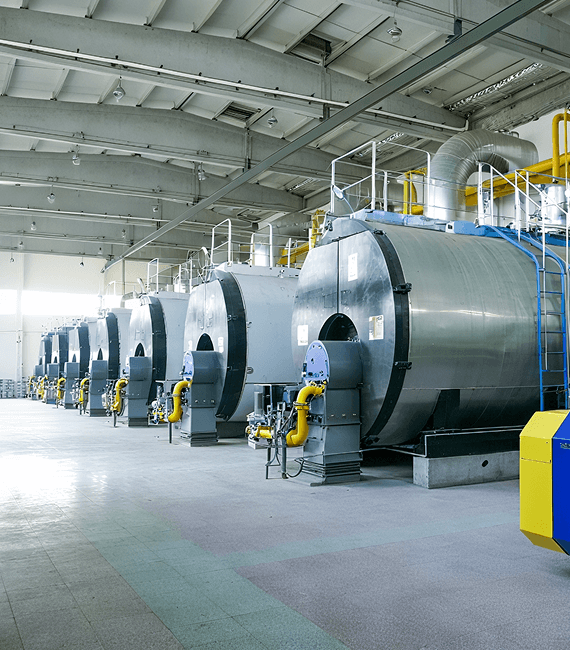

Global climate change is becoming more and more severe, and environmental protection has become a key issue for the survival and development of mankind. In this context, enterprises are facing the pressure to reduce carbon emissions. This pressure comes not only from the constraints of policies and regulations, but also from the general concern of society for sustainable development.
Steam boiler is one of the main equipments for energy consumption in industrial production. Traditional boilers rely on fossil fuels and the pollutants they emit become an environmental burden. Against this backdrop, biomass steam boilers are gradually gaining attention in the industry as a sustainable alternative - one that facilitates environmental protection and reduces greenhouse gas emissions, in line with the needs of the global energy transition.
The characteristics of biomass energy sources in the environmental protection has a natural advantage, the next will be analyzed from a number of dimensions of its environmental benefits, to help readers fully understand this green steam solution.
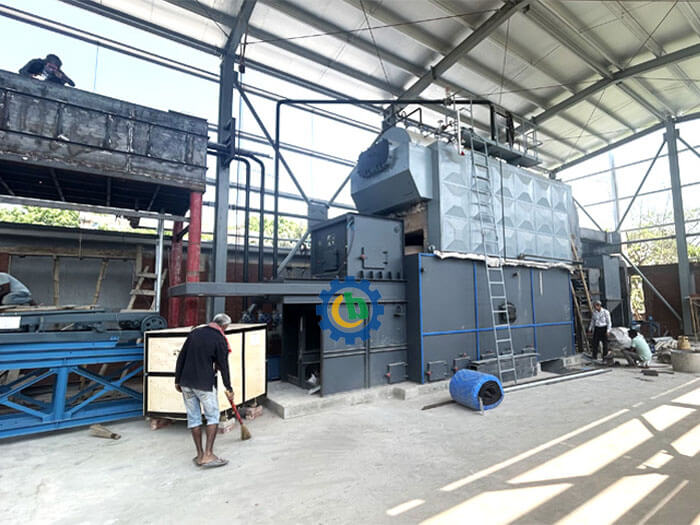
Biomass steam boiler is a biomass as a fuel, through the combustion of thermal energy, and then the water heated into steam equipment. Its working principle is similar to that of a traditional boiler, but the fuel source and combustion characteristics are fundamentally different.
Common biomass fuels include wood chips, rice husks, palm shells, bagasse, straw, etc. These fuels mostly come from agricultural residues. These fuels mostly come from agricultural production residues or forestry processing waste, belonging to the natural regeneration of by-products, a wide range of sources and renewable.
Compared with coal-fired and gas-fired steam boilers, the core difference between biomass boilers is the fuel properties. Coal-fired boilers rely on non-renewable coal, which releases large amounts of pollutants when burned; gas-fired boilers have relatively low emissions, but natural gas is still a fossil fuel, and there are transportation and storage safety risks.
The key to biomass being recognized as a renewable energy source is its ability to regenerate through photosynthesis. Plants absorb carbon dioxide during growth, and the amount of carbon dioxide released during combustion is basically equivalent to the amount absorbed during the growth phase, forming a natural cycle.

The carbon cycle of biomass is at the core of its logic for achieving carbon neutrality. In many countries and regions, biomass boilers are regarded as an important form of carbon neutral energy application, and this perception has become the industry consensus.
Plants absorb carbon dioxide from the atmosphere through photosynthesis during growth, storing it in the form of organic matter in tree trunks, straw and other parts of the plant. When this biomass is burned as a fuel, carbon dioxide is re-released, but the amount released is roughly balanced with the amount absorbed during the growth phase - the equivalent of releasing the carbon fixed in nature again, without adding additional carbon to the atmosphere.
In contrast, the combustion of a coal-fired boiler releases a large amount of carbon stored in ancient times, which was not originally involved in the modern atmospheric cycle and directly contributes to higher carbon dioxide concentrations; the carbon intensity of oil-fired boilers is also much higher than that of biomass boilers.
For enterprises, the use of biomass steam boilers to help achieve carbon emission reduction targets, in line with the ESG (Environmental, Social and Governance) development requirements, laying the foundation for sustainable development of enterprises.
Biomass fuel itself has a very low sulfur content, and as a by-product of natural regeneration, it contains far fewer pollutants than fossil fuels. Sulfur dioxide emissions from the combustion process is much lower than coal-fired boilers, which means that no complex desulfurization equipment to meet environmental standards for sulfur dioxide emissions requirements.
Modern biomass combustion technology reduces the generation of NOx by optimizing the combustion conditions. Compared with traditional fossil fuel boilers, biomass boilers emit significantly lower concentrations of nitrogen oxides, which have less impact on the atmospheric environment.
For the particulate matter that may be generated during the combustion process, biomass boilers are usually equipped with equipment such as cyclone dust collectors, baghouse dust collectors or electric dust collectors. These devices can effectively capture particulate matter and prevent it from being emitted directly into the air.
As environmental regulations become more stringent, companies are faced with ever-tightening emission limits. Biomass steam boilers, with their low emission characteristics, can help companies easily comply, avoiding the risk of penalties due to excessive emissions, while significantly improving regional air quality.
The fuel for biomass steam boilers is mostly waste generated during the agricultural and forestry production process, such as rice husks after harvesting, palm shells after palm processing, wood shavings after wood processing.
If these wastes are not utilized, they are often disposed of by open burning or landfill. Open burning produces large amounts of smoke and pollutants that pollute the atmosphere, while landfilling takes up land resources and may contaminate soil and groundwater.
Converting these wastes into boiler fuel not only realizes the reuse of resources, but also solves the problem of disposal of agricultural and forestry wastes. For agricultural production areas, this model can reduce the environmental pressure caused by the accumulation of waste, and at the same time bring additional income for farmers.
In the palm growing areas of Southeast Asia, a large number of palm shells are used as biomass boiler fuel; in China's main rice producing areas, the application of rice husk boilers is more common, these cases have proved the feasibility of resource utilization of agricultural and forestry waste and environmental value.
Traditional industrial steam production is highly dependent on fossil fuels such as coal, oil, natural gas and other energy sources are non-renewable, and with the increase in extraction, their reserves are decreasing, and the price fluctuations.
Biomass steam boilers are fueled by renewable biomass, which can effectively reduce companies' dependence on fossil fuels. This not only helps to stabilize the energy supply, but also reduces the cost risk of enterprises due to fossil fuel price fluctuations.
From the perspective of regional energy security, biomass fuels are mostly produced and supplied locally, which reduces the dependence on external energy inputs and improves the regional energy self-sufficiency rate.
In the long run, the promotion of biomass steam boilers will help build a sustainable energy system, in line with the global trend of renewable energy development, and provide strong support for the energy transition in the industrial sector.
The ash produced by biomass combustion is different in composition from the fly ash produced by coal combustion. Biomass ash is rich in potassium, phosphorus and other elements, and after treatment can be used as fertilizer for agricultural production, as well as raw materials for construction materials, realizing the reuse of resources.
In contrast, fly ash often contains heavy metals and other harmful substances, which can easily cause soil and groundwater pollution if not disposed of properly. The heavy metal content in biomass ash is extremely low, and as long as it is disposed of according to specifications, the risk to the environment is minimal.
During boiler operation, a certain amount of boiler effluent water is generated. The combustion process of biomass boilers is cleaner, and the pollutant content in the discharge water is lower, so it can be discharged according to the standard after simple treatment, which has less impact on the water environment.
This low-pollution characteristics, so that biomass steam boilers in the operation process, the surrounding soil, water and other ecological environment significantly reduce the impact, more in line with the requirements of green production.
Biomass steam boiler is not an isolated energy device, but an important part of the circular economy system. It converts agricultural and forestry waste into energy, and the ash produced after the use of energy can be returned to farmland or used in industrial production, forming a closed-loop cycle.
In agricultural processing, food, textile, wood processing and other industries, biomass boilers can be deeply integrated with the production process. For example, the waste residue from food processing plants and the trimmings from textile mills can be used as boiler fuel to achieve in-situ resourcing of waste.
This model supports the concept of green manufacturing and promotes companies to build a sustainable supply chain. From the procurement of raw materials to the production process, and then to the disposal of waste, to form a whole chain of environmental protection closed loop, to enhance the sustainable development of enterprises.
At the same time, the application of biomass boilers also fits the global sustainable development policies, such as the United Nations Sustainable Development Goals, for enterprises to participate in international competition provides an environmental advantage.
Due to the environmental characteristics of biomass energy, many countries have introduced incentive policies to support the promotion and application of biomass steam boilers. These policies include financial subsidies, tax breaks, etc., which reduce the procurement and operating costs of enterprises.
In the carbon trading market, the carbon emission reductions brought about by the use of biomass boilers can be converted into carbon credits, and enterprises can obtain additional revenue by selling carbon credits. This mechanism further incentivizes enterprises to adopt environmentally friendly equipment.
Biomass steam boilers can obtain a number of environmental certificates, these certificates are not only a proof of the environmental strength of the enterprise, but also help enterprises to take advantage of the project bidding, market competition.
Countries are actively encouraging the application of biomass boilers, the core is its ability to effectively reduce carbon emissions, reduce environmental pollution, help achieve the national level of carbon neutral goals. Policy support for the adoption of biomass steam boilers provide a favorable external environment.
The environmental advantages of biomass steam boilers are reflected in a number of aspects: to achieve carbon neutrality, reduce air pollutant emissions, resource utilization of agricultural and forestry waste, reduce fossil fuel dependence, reduce the risk of water and soil pollution.
What needs to be viewed objectively is that there are some limitations in the application of biomass energy. For example, the acquisition and storage of biomass fuels require a certain amount of energy and cost, the application of its perception has not yet been fully popularized, and the relevant combustion technology still has room for optimization to further reduce emissions.
However, in terms of long-term development, the renewability and recycling characteristics of biomass energy make it a sustainable option for industrial steam production. With the advancement of science and technology and environmental awareness, these limitations will be gradually resolved, and the momentum of biomass as a clean energy source is unstoppable.
It not only helps companies cope with environmental pressures, but also enhances their social image and market competitiveness. For enterprises seeking clean steam solutions, biomass steam boiler is the ideal choice to balance environmental protection, economic and social benefits, and will inject sustained momentum for industrial green transformation.
Yes. The amount of carbon dioxide absorbed by biomass during the growth process is basically equal to the amount of carbon dioxide released during combustion, and will not additionally increase the carbon concentration in the atmosphere. This natural carbon cycle makes biomass steam boilers carbon neutral, which is the core reason why many countries and regions recognize their carbon neutral properties. However, the realization of carbon neutrality needs to ensure a sustainable supply of fuel and reasonable combustion methods to avoid additional carbon emissions during fuel collection and transportation.
Biomass boilers are much cleaner than coal-fired boilers. As a by-product of natural regeneration, biomass itself contains far fewer pollutants than coal. In terms of sulfur dioxide emissions, biomass fuel sulfur content is very low, the emission concentration is usually only a few tenths of the coal-fired boilers; nitrogen oxides emissions through the technical optimization, but also significantly lower than the coal-fired boilers; particulate matter can be effectively controlled through the supporting dust removal equipment. Overall, the pollutant emission concentration of biomass boilers can easily meet the current environmental standards, is a cleaner choice than coal-fired boilers.
Industries such as agroforestry, food processing, textile, paper, and chemical are all well suited for the use of biomass steam boilers. These industries either produce a large amount of agricultural and forestry waste, which can be used as boiler fuel to achieve on-site resource utilization; or a large demand for steam, and high environmental requirements, the use of biomass steam boilers can meet the production needs, but also reduce the pressure on environmental protection. In addition, some sensitive to carbon emissions, the pursuit of green production of enterprises, is also very suitable for the use of biomass steam boilers.
Biomass ash is safe for the environment. It does not contain harmful heavy metals, but instead is rich in nutrients such as potassium, calcium and phosphorus. After crushing and processing, it can be applied to farmland as organic fertilizer, which can improve the soil structure; it can also be used to make building materials such as bricks and cement additives. As long as it is disposed of and utilized according to specifications, biomass ash will not pollute the soil, water bodies and other environments, and it can also achieve the reuse of resources.
There are three main limitations in the application of biomass energy: first, the acquisition and storage of fuel requires the investment of a certain amount of energy and cost, especially in large-scale applications, the collection, transportation and storage system of fuel needs to be specially built; second, its environmental value and application advantages have not yet been universally recognized, and some enterprises are still concerned about the maturity of its technology; third, there is still room for improvement in the combustion efficiency and emission control technology. Need to further optimize the use of the effect through technology iteration. However, these issues will be gradually resolved with the development of the industry.