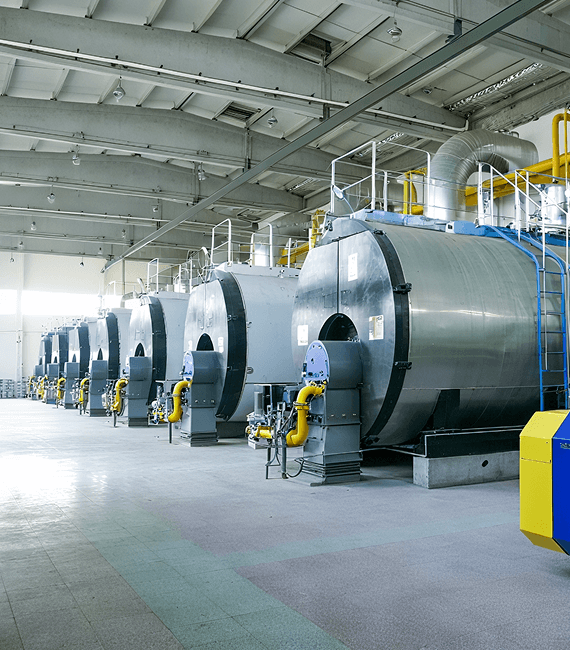

Steam serves as a fundamental energy source throughout multiple core processes in feed production. From raw material conditioning and pelletizing to sterilization and disinfection, nearly every critical stage relies on a stable steam supply. For most large-scale feed mills, steam-related energy consumption accounts for a significant portion of total production costs. Therefore, efficient use of steam and minimizing waste directly impact the plant's profitability.
Many feed mills still face issues related to inefficient steam system operations: damaged insulation leading to heat loss in pipelines, boiler parameters not matching production demands, and insufficient steam dryness. While these problems may seem minor individually, their cumulative effect results in substantial energy waste. Understanding the specific characteristics of steam utilization in feed production and making targeted improvements are key strategies for reducing production costs.
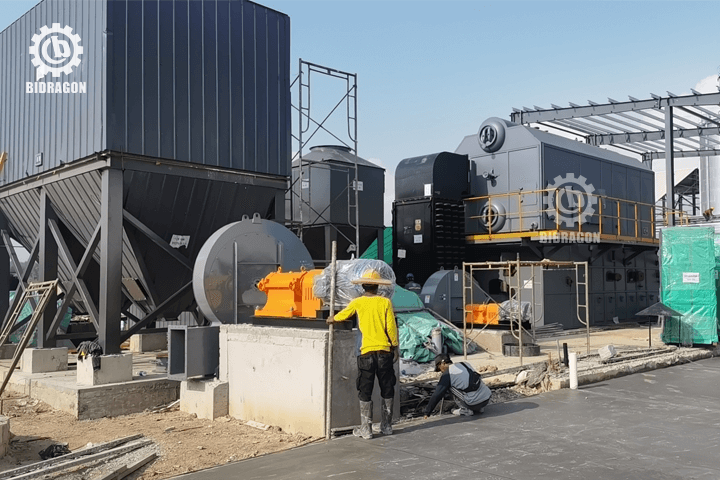
Feed hygiene standards represent the baseline for production, and high-temperature steam treatment is the primary method for eliminating pathogens—such as bacteria and viruses—from raw materials. The industry-standard pelletizing temperature ranges from 85°C to 88°C; this range satisfies sterilization requirements without excessively degrading the feed's nutritional content.
Steam dryness is a critical factor in achieving optimal sterilization. The industry generally requires a steam dryness level exceeding 97.5%. Steam with insufficient dryness carries excessive moisture, which reduces actual heat transfer efficiency and can lead to localized areas of excessive moisture in the feed. Many factories ask how to resolve insufficient steam dryness; in reality, regular maintenance of steam-water separators and the identification of pipeline leaks can significantly improve dryness, ensuring that dry saturated steam enters the pelletizer.
Temperature and pressure stability are equally important. If the steam pressure fluctuates greatly and the granulation temperature goes up and down, not only will the sterilization effect not be guaranteed, but it will also affect the uniformity of granulation and increase the defect rate. Installing a stable steam pressure-reducing valve can mitigate the impact of upstream pressure fluctuations on the steam-consuming equipment.
Conditioning is a pivotal step in enhancing the quality of finished feed, and the role of steam is most direct here. When high-temperature steam contacts the material, it induces starch gelatinization and protein denaturation; this improves pellet formation and water stability while enhancing the animal's ability to digest and absorb the feed.
Beyond conditioning quality, steam also plays a role in moisture regulation. Different types of feed have specific requirements for final moisture content—for instance, ruminant feed is typically controlled within the 12%–13% range. Precise control of steam injection stabilizes the finished product's moisture content, preventing issues such as mold growth caused by excessive moisture, or pellet fragility and high fines generation caused by insufficient moisture.
In actual production, moisture control is closely linked to conditioning effectiveness. Insufficient steam results in inadequate material cooking and poor pellet hardness, whereas excessive steam increases the load on downstream drying equipment and raises the risk of machine blockages. This necessitates a constant match between steam supply and material flow; supply cannot simply be managed based on rough estimates or experience.
Profit margins in the feed industry are generally slim, making profitability highly sensitive to fluctuations in energy costs. Steam energy consumption typically accounts for 20% to 30% of a feed mill's total production costs, representing the largest share of energy expenditure. Plants with higher production capacities consume more steam, meaning the cost savings achieved through energy efficiency improvements are particularly significant.
Many feed mills report excessively high steam costs; in reality, most losses stem from routine leaks and poor equipment operating conditions. Traditional boilers have limited thermal efficiency, and when combined with long steam transmission distances and inadequate pipeline insulation, significant heat is lost along the way. Consequently, the steam reaching the point of use often suffers from insufficient pressure and excessive moisture. Some factories have made unreasonable equipment selections, with boiler capacity far exceeding actual needs. These boilers operate at low loads year-round, resulting in low thermal efficiency and fuel waste.
Many hidden losses are easily overlooked, such as steam leakage from valves, failure of steam traps, and steam leakage at pipe flange connections. These problems may not seem like much loss on their own, but when considered across the entire plant, the amount of steam wasted each year is considerable.

Let's start at the source: boilers and steam generators. When selecting equipment, many factories tend to choose larger units over smaller ones, believing that a generous capacity margin ensures reliability. However, in actual production, if the system operates at low loads year-round, boiler combustion efficiency drops significantly—a scenario akin to using a "heavy-duty horse to pull a light cart"—resulting in wasted fuel.
The proper approach is to calculate peak and routine steam demand based on the factory's actual production schedule and select equipment with the appropriate power rating. If the steam load fluctuates greatly, you can also consider combining equipment with different capacities, turning on all the equipment during peak hours and only turning on the smaller capacity equipment during off-peak hours, so that each piece of equipment can be kept in a higher thermal efficiency operating range.
Routine maintenance also has a major impact on efficiency. If boiler feedwater is not treated correctly, scale easily forms on heat-transfer surfaces. Even a scale layer just 1 millimeter thick can significantly reduce heat transfer efficiency, requiring more fuel to produce the same amount of steam. Regular descaling and proper boiler water treatment are fundamental to maintaining boiler efficiency.
Steam distribution systems also require regular inspection. Checks should cover the integrity of pipe insulation, steam leaks at valves and flanges, and the proper functioning of components such as steam traps, pressure-reducing valves, and steam-water separators. Many factories see a substantial reduction in steam loss after conducting a thorough inspection and rectification of their piping networks.
Operating parameters should not remain static. Adjusting the steam pressure and temperature at the boiler outlet according to different product categories ensures that the equipment always operates under the condition of highest thermal efficiency, which is much more economical than maintaining high pressure and high temperature throughout the entire process.
Many feed mills utilize their steam systems only once, discharging the steam immediately after use, even though significant waste heat remains recoverable. Condensate recovery is a high-return investment for energy conservation in feed mills; the condensate discharged from steam-consuming equipment is at a high temperature, so discharging it directly wastes both water and heat. Condensate collected from various process stages is treated and pumped back into the boiler as feedwater; this effectively preheats the boiler water, thereby reducing the fuel required for heating. Furthermore, the high quality of the recovered condensate lowers water treatment costs, offering a dual benefit.
Another recoverable heat source is boiler flue gas. Traditional boilers discharge flue gas at high temperatures, representing a wasted resource if vented directly into the atmosphere. Installing a flue gas waste heat exchanger allows the heat from the exhaust to preheat intake air or heat cold water. This recovered heat can be utilized for drying raw materials, auxiliary heating, or space heating for the workshop, further enhancing overall thermal energy utilization.
Energy conservation is not solely a matter of equipment; adjustments to production management can also yield significant steam savings. The most direct approach is to precisely control steam parameters based on the specific process requirements of different products, rather than maintaining constant pressure and flow rates throughout the entire operation.
For instance, in the granulation process, materials with different formulations require varying steam pressures; maintaining high pressure continuously is unnecessary. Adjusting the pressure to the appropriate range based on process specifications ensures granulation quality while preventing waste caused by excessive steam supply. Many factories observe a marked reduction in steam consumption simply by installing precision flow and pressure control valves on their granulators.
Implementing automated monitoring systems is also beneficial. A centralized control platform allows for real-time monitoring of steam usage across workshops and enables the timely closure of branch valves during non-production periods, preventing steam leakage during idle times. These systems also log steam consumption data by time and product, facilitating the identification of high-energy-consumption areas for targeted adjustments.
Production scheduling also impacts steam consumption. If you frequently switch between products with different formulas, you have to purge the pipes and adjust the parameters every time you change materials, which wastes a lot of steam. Scheduling the production of similar products or those sharing the same process together reduces the frequency of changeovers, thereby minimizing losses associated with equipment idling and steam venting.
Conditioning Process Upgrade: Improving Steam Absorption Efficiency
Conditioning is one of the main processes for steam consumption. Improving the steam absorption rate during conditioning can directly reduce steam consumption. Traditional single-layer conditioners offer short residence times and insufficient contact between material and steam, often requiring excess steam to achieve the desired level of cooking (gelatinization).
By switching to a multi-layer conditioner or appropriately extending the conditioning time, the material and steam can have more sufficient contact, resulting in more uniform starch gelatinization. This way, the ideal conditioning effect can be achieved without the need for additional steam. This approach not only lowers steam consumption but also stabilizes the quality of the finished pellets and reduces the need for subsequent reheating.
Cascaded Thermal Energy Utilization: Maximizing Heat Value at Each Stage
Different production stages have varying temperature requirements; relying solely on fresh steam for all of them is wasteful. The concept of cascaded thermal energy utilization involves using high-temperature steam first in processes requiring high heat, then utilizing the discharged low-temperature waste heat in processes with lower temperature requirements, thereby extracting value from the heat at each stage.
For example, fresh high-temperature steam is first supplied to processes requiring high heat, such as extrusion and drying. The low-pressure, low-temperature steam exhausted from these stages is then diverted to processes with lower temperature requirements, such as raw material pre-treatment and mixing/heating. This tiered approach maximizes the utility of every unit of heat and minimizes the waste of high-quality thermal energy.
Focusing Only On Initial Purchase Cost While Ignoring Long-Term Operating Costs
When selecting steam equipment, many factories prioritize products with lower prices. However, low-cost equipment often compromises on materials, combustion structure, and control systems, resulting in poor thermal efficiency and high failure rates. Savings realized during the initial purchase can quickly be offset—or even exceeded—by higher fuel and maintenance costs during operation.
Equipment selection should be based on the total lifecycle cost. Priority should be given to qualified suppliers who provide clear thermal efficiency specifications, alongside reliable after-sales and maintenance services. In the long run, equipment that operates stably with low failure rates actually saves more money.
Blindly Reducing Steam Supply to Save Energy
In an effort to lower energy consumption, some factories simply reduce the steam supply volume or lower operating parameters. This approach is prone to problems: insufficient steam leads to inadequate conditioning and gelatinization, incomplete sterilization, and failure to meet moisture standards for the finished product; in severe cases, it can even cause feed to go moldy, resulting in quality risks and customer complaints.
Energy conservation should not come at the expense of product quality. The correct approach is precise control, providing only the necessary amount of steam, reducing waste from oversupply and leaks, rather than the amount of steam required for the process.
Neglecting Routine Maintenance And Operator Training
A decline in steam system efficiency is often not due to the equipment itself, but rather inadequate maintenance. Issues such as failure to remove scale buildup, neglecting to calibrate inaccurate instruments, or failing to detect faulty steam traps can gradually reduce system efficiency and increase energy consumption.
The skill level of operators is also crucial. If workers are unfamiliar with the steam system and adjust parameters haphazardly based on guesswork, the equipment can easily drift away from its optimal, high-efficiency operating state. Regular training ensures workers understand the parameters and know how to adjust them correctly, thereby preventing significant energy waste caused by human error.
Digital Steam Management: Data-Driven Energy Optimization
An increasing number of factories are now adopting digital tools to manage steam systems. Data-based management systems can forecast steam demand in advance based on production schedules, automatically adjust boiler loads, and prevent either insufficient or excessive steam supply.
These systems also monitor the operational efficiency of every pipeline and piece of equipment in real time, issuing timely alerts when anomalies occur. Long-term accumulation of steam usage data provides a solid foundation for future energy-saving upgrades, transforming energy optimization from reliance on experience into data-driven decision-making.
Low-Carbon Steam Solutions: Clean Steam Supply as the Long-Term Goal
As environmental regulations tighten, traditional coal-fired boilers are being gradually phased out, driving the adoption of cleaner steam generation technologies. For example, low-emission gas boilers and biomass boilers, combined with efficient waste heat recovery systems, meet steam requirements while significantly reducing carbon emissions and pollutants.
Many facilities are also exploring integration with renewable energy sources—such as using solar power to preheat boiler feedwater—further reducing dependence on fossil fuels.
Integrated Energy Management: Connecting Production and Energy Data
Future steam management will no longer be an isolated system but will be fully integrated with production scheduling, equipment maintenance, and energy consumption tracking. Starting from the moment a production plan is issued, the system automatically matches the appropriate steam supply strategy, seamlessly linking production and energy data throughout the entire process to achieve optimal overall energy efficiency.
This integrated management approach enables comprehensive reduction of energy waste, making energy use in feed mills more rational and sustainable.
As the core energy source in feed production, steam not only underpins product quality but also directly impacts the factory's cost structure. Achieving steam energy efficiency relies not on a single technology or piece of equipment, but on a multi-dimensional approach encompassing equipment selection, system maintenance, production management, and process upgrades.
These strategies for steam energy efficiency in feed mills can be implemented in phases, tailored to a facility's specific production capacity and processes. By ensuring feed hygiene and finished product quality, and by using steam more precisely and efficiently, we can continuously reduce operating costs and enhance the long-term competitiveness of the factory.
It typically ranges from 20% to 30%; this proportion is higher in plants with larger production capacities and more extensive pelleting or extrusion processes.
Steam carrying water will reduce heat exchange efficiency, resulting in incomplete sterilization. It will also cause localized excessive moisture in the feed, increasing the risk of mold growth, and will also affect the uniformity of pellet formation.
Prioritize two actions: first, inspect the entire facility for steam leaks and malfunctioning steam traps; second, adjust the boiler's operating load to ensure equipment runs within its rated high-efficiency range, avoiding prolonged operation at low loads.