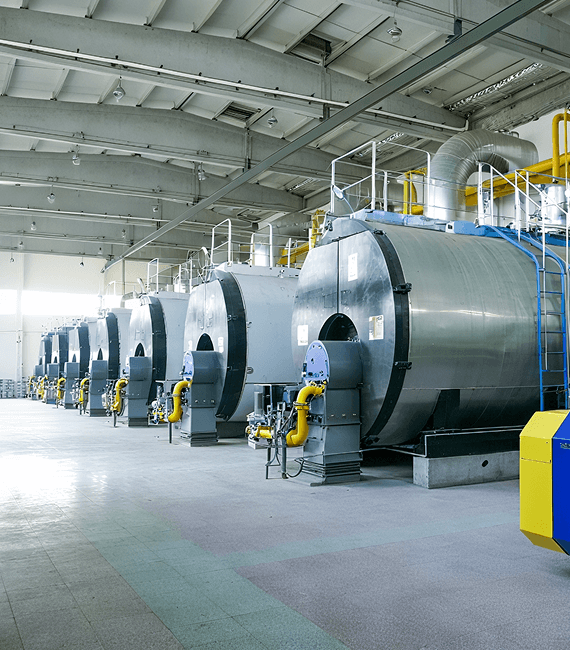

WNS and SZS are the two most mainstream types of industrial gas-fired boilers on the market. Both can utilize gaseous fuels such as natural gas, liquefied petroleum gas (LPG), and town gas; however, due to their fundamentally different structural principles, they are suited to different factory scales and production conditions.
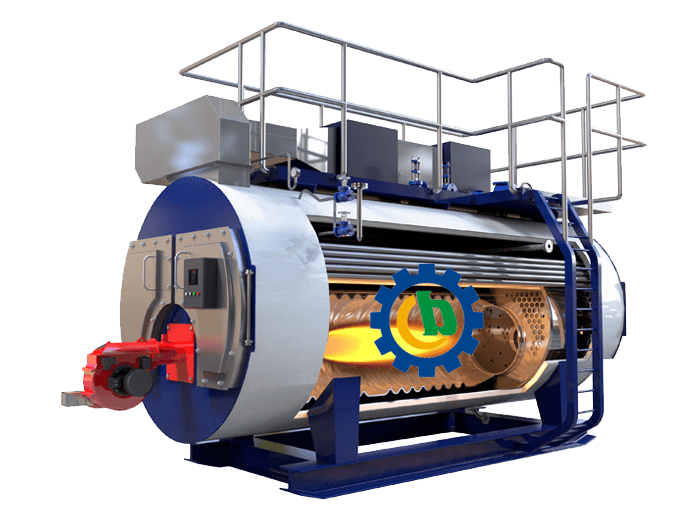
The WNS is a horizontal, three-pass fire-tube boiler. In its designation, "W" stands for horizontal, "N" for internal combustion, and "S" for fire-tube structure. After fuel burns within the furnace tube, high-temperature flue gases pass sequentially through the second- and third-pass tube bundles, transferring heat through the tube walls to the water inside the boiler shell. The unit features a horizontal cylindrical shell with internal flue tubes, resulting in a relatively compact structure.
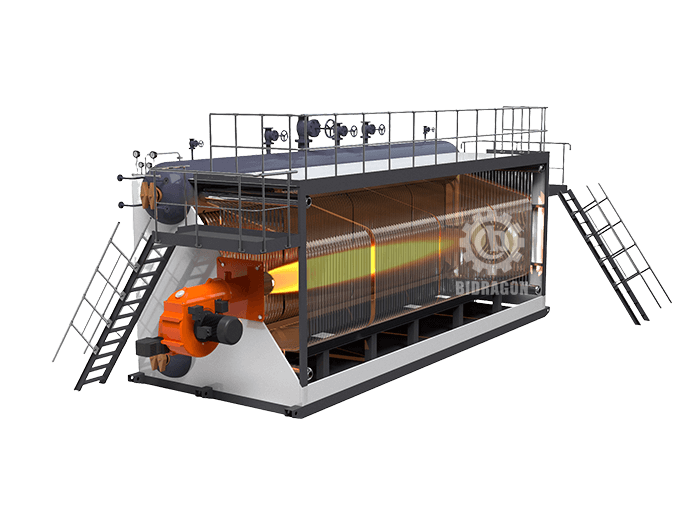
The SZS is a longitudinal, double-drum water-tube boiler. Here, "S" stands for double-drum, "Z" for longitudinal, and "S" for water-tube structure. Dense bundles of water tubes connect the upper and lower longitudinally arranged drums; the flame burns in the furnace chamber outside the water tubes, transferring heat through the tube walls to the water flowing inside. Viewed from above, the furnace and convection tube bundles form a "D" shape, allowing for a more comprehensive arrangement of heating surfaces.
Simply put, in a fire-tube boiler, "flue gas travels inside the tubes while water surrounds them," whereas in a water-tube boiler, "water flows inside the tubes while the fire burns outside them." This fundamental structural difference dictates the divergence in their maximum capacities, pressure-bearing capabilities, and load response times, making them suitable for industrial steam projects of varying scales.
The following is a side-by-side comparison of the two boiler types based on several core dimensions that directly influence selection decisions.
|
Comparison Dimension |
||
|
Boiler Type |
Fire-tube boiler (shell type) |
Water-tube boiler (double-drum longitudinal type) |
|
Typical Capacity Range |
1 ~ 20 t/h (small to medium) |
6 ~ 120 t/h (medium to large) |
|
Rated Steam Pressure |
0.7 ~ 2.0 MPa (low to medium pressure) |
1.25 ~ 5.4 MPa (medium to high pressure) |
|
Start-up & Pressure-Building Speed |
Relatively fast, with moderate water volume |
Suited for large systems; overall load ramping takes longer |
|
Footprint |
Compact structure, small footprint |
Larger footprint for boiler body + auxiliaries; higher demands on boiler room |
|
High-Load Adaptability |
Economic performance declines above 20 t/h |
Clear advantages under large-capacity conditions |
|
Installation Complexity |
Skid-mounted (integral delivery); low installation difficulty |
Medium-to-large units require field assembly; greater workload |
|
Daily Maintenance |
Simple structure; low maintenance threshold |
More complex system; higher demands on O&M capabilities |
|
Initial Investment |
Generally lower for the same tonnage |
Generally higher for the same tonnage |
There is no absolute superiority or inferiority among these differences; they simply suit different application scenarios. Next, we will break down the impact of each dimension from the perspective of practical equipment selection.
Steam output is a fundamental parameter in boiler selection; in most cases, the scale of a factory's steam consumption directly determines the most suitable boiler type.
When a factory's hourly steam demand falls within the 1–20 ton range, the WNS fire-tube boiler is the more common choice. This capacity range covers the majority of small-to-medium industrial users and commercial facilities.
Examples include processes such as steaming, sterilization, and drying in food processing plants; bleaching, dyeing, and heat-setting in textile mills; ironing and facility-wide heating in garment manufacturing; space heating and hot water supply for hotels, hospitals, and commercial complexes; and process steam for small-scale fine chemical and pharmaceutical plants.
These scenarios are characterized by relatively stable steam consumption and moderate pressure requirements (mostly within 1.6 MPa). WNS boilers are shipped as complete units, allowing for rapid installation and lower initial investment. Furthermore, their three-pass structure, combined with a condensing economizer, enables thermal efficiency exceeding 96% and keeps operating costs manageable. For small-to-medium projects, they offer a more favorable return on investment.
When the capacity of a single boiler exceeds 20 t/h, or when the total steam demand of the entire plant is substantial, the SZS water-tube boiler becomes the more logical choice. While SZS models are available for capacities as low as 6 t/h, they truly distinguish themselves in medium-to-large projects exceeding 20 t/h.
Typical applications include large textile printing and dyeing plants, petrochemical facilities, large-scale food and beverage production lines, basic chemical enterprises, and production lines in steam-intensive industries such as steel, building materials, and papermaking. In these factories, the steam consumption of a single production line can reach tens of tons per hour, often necessitating the parallel operation of multiple boilers. As capacity increases, the shell diameter of fire-tube boilers grows larger, leading to a rapid rise in manufacturing complexity and transportation costs; in contrast, water-tube boilers can increase capacity by adding more tube bundles, making their structure better suited for large-scale applications. Furthermore, for high-capacity operations, water-tube boilers offer greater flexibility in the arrangement of heating surfaces, as well as advantages in thermal efficiency and load-regulation capabilities.
When selecting boilers, many factories focus solely on the evaporation capacity (rated in "tons"), yet steam pressure is a parameter just as critical as capacity; it directly determines whether production process requirements can be met.
Low-pressure steam (0.7–1.0 MPa) is typically used for space heating, hot water supply, general cooking/steaming, and cleaning processes. Medium-pressure steam (1.0–2.5 MPa) is common in most industrial processes, such as food sterilization, textile heat setting, chemical evaporation, and pharmaceutical extraction. High-pressure steam (above 2.5 MPa) is utilized for specialized operations like hydrogenation, cracking, sterilization, and power generation.
WNS boilers typically operate within the 0.7–2.0 MPa range, generally not exceeding 2.5 MPa, which is sufficient to cover the process needs of the vast majority of small and medium-sized industrial enterprises. In fire-tube boilers, the boiler shell acts as the pressure-bearing component; larger diameters and higher pressures necessitate greater wall thickness and stricter manufacturing standards, leading to a significant decline in technical and economic viability once pressures exceed 2.5 MPa.
SZS water-tube boilers offer a much higher pressure ceiling; standard models range from 1.25 to 3.82 MPa, while custom units can reach the "sub-high pressure" level of 5.4 MPa. Because the pressure load in a water-tube design is borne by the tube bundles, achieving high pressure is easier through material selection and structural design, making them ideal for sectors like the chemical and petrochemical industries that have specific steam pressure requirements.
When making an actual selection, both capacity and pressure must be evaluated in conjunction with the production process. For two boilers with the same 10 t/h capacity, configurations, prices, and application scenarios differ vastly depending on whether they are rated at 1.25 MPa or 2.5 MPa. One cannot simply use "tonnage" to judge the merits of different boiler types.
Fuel costs typically account for over 70% of the operating expenses for gas-fired boilers; consequently, gas consumption is a primary concern for many factories.
Provided the design is sound, both boiler types are capable of achieving high thermal efficiency. When equipped with a condensing economizer, WNS boilers typically achieve thermal efficiencies of 96%–98%. SZS water-tube boilers, thanks to their optimized heating surface layout and membrane water-wall structure, also reach efficiencies exceeding 97%, with condensing models potentially achieving even higher figures.
However, discussing gas consumption without considering operating conditions is meaningless. A boiler's actual natural gas consumption depends on at least four factors:
Therefore, one cannot simply claim that WNS boilers are more gas-efficient than SZS boilers, or vice versa. Within their respective optimal capacity ranges, both types can achieve excellent gas utilization efficiency; the real differentiators are burner matching and operational management.
The boiler body is merely a vessel for heat exchange; the burner is the critical component determining whether fuel burns completely. Even if the correct boiler type is selected, a mismatch between the burner and the boiler will directly impact gas consumption, combustion stability, emission levels, and load response speed.
Since WNS boilers have a relatively fixed furnace volume, a standard modulating burner usually suffices. In contrast, SZS boilers—especially high-capacity models—operate with higher furnace heat loads. They impose stricter requirements regarding burner turndown ratio, flame shape, and low-NOx performance, often necessitating advanced fully premixed or electronic modulating burners.
Improper burner matching leads to common issues such as gas wastage due to incomplete combustion, flame impingement on tube walls, sluggish response to load fluctuations, and excessive NOx emissions. Ultimately, these issues translate into higher operating costs.

Site conditions are a selection factor often overlooked by many factories; discovering that the equipment does not fit only after it has arrived on-site can cause significant trouble.
The WNS boiler features a horizontal cylindrical structure and is shipped as a fully assembled unit. It typically measures 4–8 meters in length and 2–3 meters in diameter (depending on capacity); including the front and rear smoke boxes and the burner, its overall footprint is quite small. It has modest requirements for boiler room height, with a ceiling height of around 4 meters usually sufficing. Due to the concentrated weight, foundation construction is relatively simple.
The WNS boiler’s compact structure offers distinct advantages for projects involving the retrofitting of older plants, sites with limited space, or special installation locations such as rooftops or basements. Skid-mounted WNS models are also available, where the entire unit is integrated onto a single base, allowing for immediate use upon connection to gas, water, and power supplies on-site.
The SZS boiler is much larger in scale. Taking a 10 t/h SZS boiler as an example, the main body length approaches 10 meters and the height exceeds 4 meters; when the side-mounted furnace and the rear-mounted economizer and air preheater are included, the total footprint is significantly larger than that of a WNS boiler of the same capacity. Higher-capacity SZS models may even require shipping as separate components for on-site assembly, placing greater demands on the installation schedule and construction conditions.
Furthermore, the auxiliary equipment configuration for the SZS system is more complex; components such as water pumps, fans, water treatment systems, and steam headers require separate placement, while maintenance access paths and operational clearance must also be reserved. Such boilers typically require a dedicated boiler room, with advance planning needed for equipment layout, hoisting openings, and piping routes.
The differences in maintenance difficulty and workload between the two boiler types stem fundamentally from differences in system complexity and scale.
The internal structure of the WNS fire-tube boiler is uncomplicated, making routine maintenance relatively straightforward.
Inspecting and cleaning the fire tubes is a direct process; opening the front and rear smoke boxes exposes the ends of the smoke tubes, allowing for immediate visual assessment of ash accumulation and corrosion. Descaling is also relatively easy because the water side consists of a single, interconnected large space, allowing for treatment via standard chemical cleaning or boil-out procedures. Routine maintenance of components such as burners, valves, and instruments can be performed by standard boiler operators after training.
Regarding daily water treatment, the WNS series has specific water quality standards but offers greater tolerance compared to water-tube boilers. As long as standard water softening and chemical dosing procedures are followed, major issues are unlikely to arise.
SZS water-tube boiler systems are more extensive, demanding a higher level of professional expertise for maintenance.
The large number and dense arrangement of water tube bundles result in a heavier workload for inspection and cleaning. Maintenance is particularly challenging for components like water-wall tubes and convective tube bundles; addressing scaling or corrosion in these areas is more difficult than in fire-tube boilers. Tasks such as internal inspections of the upper and lower drums, maintenance of steam-water separation devices, and periodic safety valve calibration require professional personnel.
Additionally, SZS boilers typically feature more complex feedwater systems, automatic control systems, and safety accessories, requiring comprehensive knowledge for operational management. High-capacity, high-pressure SZS boilers generally require the presence of certified, dedicated boiler operators or the implementation of advanced remote monitoring systems.
This is not to say one type is inherently better than the other; rather, the larger the equipment scale and the higher the operating parameters, the greater the demand for professional operation and maintenance capabilities. A facility's own operational and maintenance capacity should be considered during the selection process.
Price is a key factor in equipment selection, but relying solely on the purchase price can lead to poor decisions. Boilers have a service life of 10 to 20 years, so cost calculations should be based on the total lifecycle.
For projects with capacities ranging from 1 to 20 t/h, the WNS series offers a clear advantage in terms of initial investment.
First, regarding the purchase price, a WNS boiler typically costs 15%–30% less than an SZS boiler of the same capacity. Second, installation costs are lower; as the boiler is shipped as a complete, factory-assembled unit, it only requires positioning and connection to piping and electrical systems, resulting in shorter installation times and reduced labor costs. Auxiliary equipment requirements are also relatively simple, eliminating the need for overly complex water treatment or control systems.
Furthermore, the cost of constructing the boiler room is lower; small-capacity units can even be housed in simple, lightweight structures. For projects with limited budgets and modest steam demand, WNS boilers offer a lower barrier to entry and a shorter payback period.
The purchase price for a single SZS boiler is significantly higher, as are the costs for installation and auxiliary equipment. However, for large-capacity, high-parameter industrial projects, the SZS offers superior long-term economic efficiency.
On one hand, manufacturing costs for fire-tube boilers rise sharply beyond a capacity of 20 t/h, whereas water-tube boilers benefit from economies of scale; the larger the capacity, the more pronounced the cost advantage per unit of steam generated. On the other hand, SZS boilers demonstrate more stable thermal efficiency during continuous, high-load operation and offer better fuel consumption control; over years of operation, the savings in gas costs can offset the initial price difference.
This is particularly relevant for factories with 24-hour continuous production, where the cost of downtime is extremely high. The SZS boiler's load-adjustment capabilities and operational reliability make it better suited for such scenarios; the reduced risk of downtime represents an implicit cost saving in itself.
Determining whether a boiler is expensive requires looking beyond the figures on the price quote. A comprehensive full-lifecycle cost analysis includes at least the following:
Often, a boiler with an initial price tag tens of thousands higher can recoup that difference within three to five years simply by being 1%–2% more thermally efficient. Conversely, opting for a cheaper but unsuitable model can lead to high operating costs and frequent breakdowns, ultimately resulting in higher total expenditure.
Returning to the core question: for a specific factory, how do you decide between the WNS and SZS models? You can start by comparing your situation against the scenarios below to make a preliminary assessment.
|
Factory Condition |
Recommended Boiler Type |
|
Small to medium steam demand (1–20 t/h) |
WNS |
|
Limited installation space; small boiler room area |
WNS |
|
Looking for lower initial investment; tight budget |
WNS |
|
Large steam demand (above 20 t/h) |
SZS |
|
High steam pressure requirement (above 2.5 MPa) |
SZS |
|
Continuous large-scale industrial production with stable load |
SZS |
|
Chemical, petrochemical, and other industries with high process requirements |
SZS |
If your factory meets most of the following criteria, the WNS boiler is usually the more practical choice:
If the following characteristics apply, the SZS boiler is the more logical solution:
To receive an accurate selection proposal and quotation, do not simply tell the manufacturer, "I need a 10-ton gas-fired boiler." The more specific the information, the better the solution will align with your actual operating conditions.
It is recommended to prepare the following parameters in advance:
A professional boiler manufacturer will use these parameters to determine the appropriate boiler type, specific model, burner configuration, and auxiliary equipment setup, rather than simply quoting a price for a generic model.
Finally, here is a concise checklist to help you quickly evaluate your decision.
Choose a WNS gas-fired boiler when:
Choose an SZS gas-fired boiler when:
There is no absolute "better" option between WNS and SZS; it is simply a matter of which is more suitable.
The right boiler is one that aligns with your steam demand, pressure rating, fuel specifications, plant layout, operating mode, budget, and maintenance capabilities. Do not make decisions based solely on model numbers or price, and avoid the trap of blindly assuming "bigger is better."
Industrial boilers serve as the power heart of a factory; the right choice ensures stable service for over a decade. The most reliable approach is to assess your specific production processes and operating conditions, then consult a professional manufacturer for a tailored solution.
FAQs
Should i Choose a Wns Or Szs Model For a 10-Ton Gas-Fired Boiler?
A 10-ton capacity falls within the overlapping range for both boiler types. If the required steam pressure is 1.6 MPa or lower, site space is limited, and the load fluctuates, the WNS model is more economical. If pressures exceeding 2.0 MPa are required, or if there are plans for future capacity expansion and higher demands for long-term reliability, the SZS model is a better choice.
Which Is More Gas-Efficient: The Wns Or Szs Boiler?
When operating under their respective optimal conditions and at rated loads, the difference in thermal efficiency between the two is negligible; both can achieve over 96% efficiency. Gas efficiency depends more on the burner configuration, operating load rate, and insulation quality than on the boiler type itself. Regardless of the type, gas consumption increases for boilers operated at low loads for extended periods.
What Is The Maximum Capacity For a Wns Boiler?
Standard WNS gas-fired boilers typically top out at 20 t/h, though a few manufacturers can produce 25 t/h units. For capacities beyond this, the manufacturing, transportation, and cost challenges for the boiler shell increase significantly, making them less economical than SZS water-tube boilers.
What Is The Maximum Pressure For An Szs Boiler?
Standard industrial SZS gas-fired boilers can reach pressures of up to 3.82 MPa, while customized medium-high pressure models can reach 5.4 MPa. These specifications meet the requirements of most medium-to-high-pressure applications, such as chemical processing, petrochemicals, and waste heat recovery.
What Are The Nox Emission Levels For Gas-Fired Boilers?
Both boiler types can achieve low emission levels when equipped with low-NOx burners. Standard low-NOx retrofits can reduce emissions to below 80 mg/m³, while ultra-low-NOx burners can bring them under 30 mg/m³; specific results depend on local environmental regulations and the chosen burner configuration.