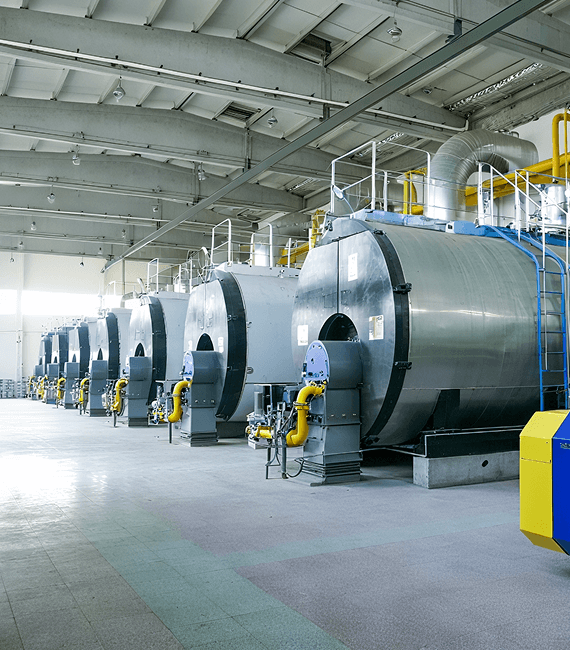

Thermal oil heaters are core equipment in industrial heating; stable oil temperature is directly linked to production quality and energy consumption. Many factories encounter issues such as slow heating or failure to reach set temperatures, resulting in insufficient production capacity, high energy consumption, and process instability. Root causes include inadequate heat generation, abnormal thermal oil circulation, oil aging or contamination, fouling on heat exchange surfaces, excessive heat loss from piping, and inaccurate temperature sensing. Simply raising the set temperature or blindly replacing parts merely masks the symptoms and accelerates equipment wear; identifying the root cause is essential for a permanent solution.
Troubleshooting does not require dismantling the unit. Quickly pinpoint the fault area by comparing key operating data: the deviation between set and actual temperatures, the temperature difference between inlet and outlet oil, the real-time heating rate, and the circulation pump's pressure and current.
Data analysis allows for the distinction of five core issues: insufficient heat generation capacity, reduced heat exchange efficiency, inadequate circulation flow, excessive system heat loss, and abnormal temperature sensing signals. Follow a "simple-to-complex" troubleshooting approach: first check accessible components like instruments, parameters, and valves, then address issues related to internal media and equipment structure.
Slow heating indicates weak heat generation capacity. Insufficient combustion power or incomplete combustion reduces heat output per unit of time, slowing the rate of oil temperature rise. While the equipment may eventually reach the set temperature after prolonged operation, overall efficiency remains low.
Temperature stagnation indicates an imbalance in the heat budget. When total heat generation merely offsets process consumption and pipeline heat loss, no net heat accumulates, and the temperature stops rising. Such issues are often accompanied by increased downstream thermal loads or abnormalities in the heat exchange or circulation systems.
Combustion conditions are critical to heat supply. Unstable fuel pressure, clogged filter elements, or carbon deposits on the nozzle directly reduce fuel supply. An improper air-fuel ratio leads to incomplete combustion; significant thermal energy is lost through flue gases, drastically reducing the equipment's effective heat output.
The burner is the core heat source of the entire system, and operational anomalies are the primary cause of heating failures. A common issue is the burner remaining stuck in "low-fire" mode and failing to switch to "high-fire" mode; this prevents the equipment from delivering its rated heating capacity, resulting in insufficient overall heat generation.
Abnormal fuel supply directly limits combustion power. For oil-fired heaters, one must verify stable fuel pressure and ensure filters are free of clogs. For gas-fired heaters, gas supply pressure and pipeline flow must be checked. Pipeline blockages or insufficient pressure result in consistently low fuel supply rates.
Carbon buildup, wear, or clogging of the nozzle impairs fuel atomization. If fuel cannot mix thoroughly with air, combustion efficiency drops drastically. This not only hinders temperature rise but also leads to soot accumulation on the furnace and pipe walls, creating a vicious cycle of worsening fouling.
Are suboptimal thermal oil heater temperatures quietly driving up your daily fuel costs while slowing down production?
Choose our high-efficiency industrial thermal oil heaters to safeguard your production efficiency.
Get your customized industrial heating solution today.

If heat generation is normal but the oil temperature fails to rise, the issue usually lies within the circulation system. If the thermal oil cannot promptly carry heat away from the furnace to the end-use equipment, heat accumulates in the furnace, causing the system's overall heat transfer to fail.
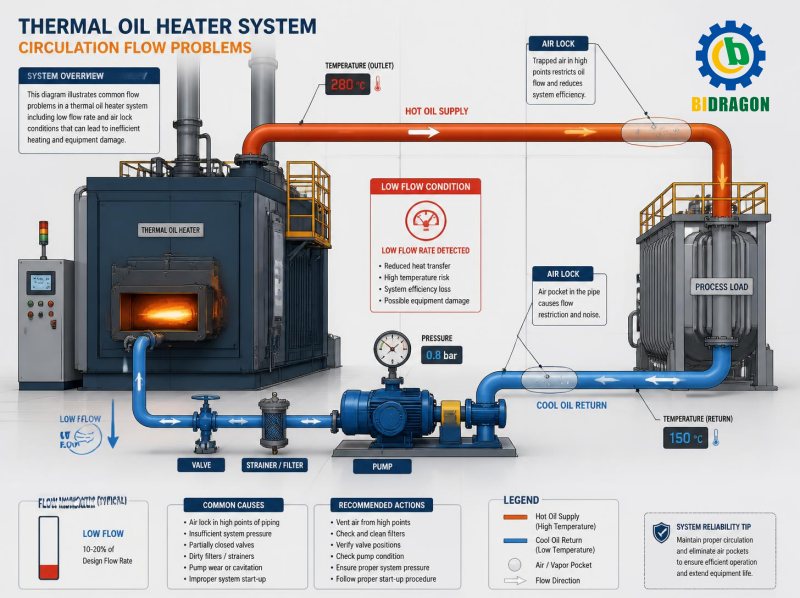
Insufficient circulation pump output is a common cause. Pump pressure or current readings below standard parameters indicate impeller wear, motor aging, or pump binding, resulting in consistently low flow rates. Valves that are not fully open, clogged pipeline filters, or bypass valves that have opened unexpectedly can obstruct or divert the flow of the heat transfer fluid.
Air accumulation in the system is a frequent, hidden fault. Failure to fully vent air after oil changes or maintenance can cause "air locks" in the piping, leading to intermittent circulation and pressure fluctuations. Visible symptoms include erratic inlet/outlet temperature differentials, inconsistent heating rates, and failure to maintain a stable temperature.
Heat transfer oil is the primary medium for heat transfer. Oil degradation is a major, often overlooked cause of sluggish heating in older equipment. Prolonged high-temperature operation leads to gradual oil oxidation and increased viscosity; this raises flow resistance, slows circulation speeds, and causes a continuous decline in heat exchange efficiency.
Aged oil generates impurities such as sludge and carbon deposits. These impurities—whether suspended in the medium or adhering to pipe walls and pump interiors—can clog pipeline filters and form insulating layers that hinder heat exchange. If new oil exhibits abnormal heating behavior, the cause is often moisture contamination; vaporization at high temperatures creates vapor locks, disrupting circulation and heating stability.
The long-term accumulation of ash, carbon deposits, and oily residue on the surfaces of the furnace chamber, heat exchange coils, and heat exchangers creates a persistent insulating layer. Heat generated in the furnace cannot be effectively transferred to the oil; instead, most of the thermal energy is exhausted directly with the flue gas, drastically reducing the equipment's thermal utilization efficiency.
Clogged pipeline filters directly restrict system flow. Minor blockages slow down the heating process, while severe blockages trigger a cascade of issues—such as insufficient flow, excessive pressure, and stagnant temperatures—making filters a critical area for routine inspection.
If heat generation, exchange, and circulation are all functioning normally yet the temperature fails to meet targets, the issue is likely excessive heat loss. Deteriorated, cracked, or detached insulation on pipes, flanges, and valves exposes large surface areas, leading to continuous heat loss.
Changes in production conditions can also disrupt thermal balance. Adding heat-consuming equipment or increasing production capacity raises the overall thermal load; if the existing boiler's heating capacity cannot match the new demand, achieving the target temperature becomes difficult. Additionally, excessively long pipelines or uninsulated outdoor piping contribute to ongoing, unproductive heat loss.
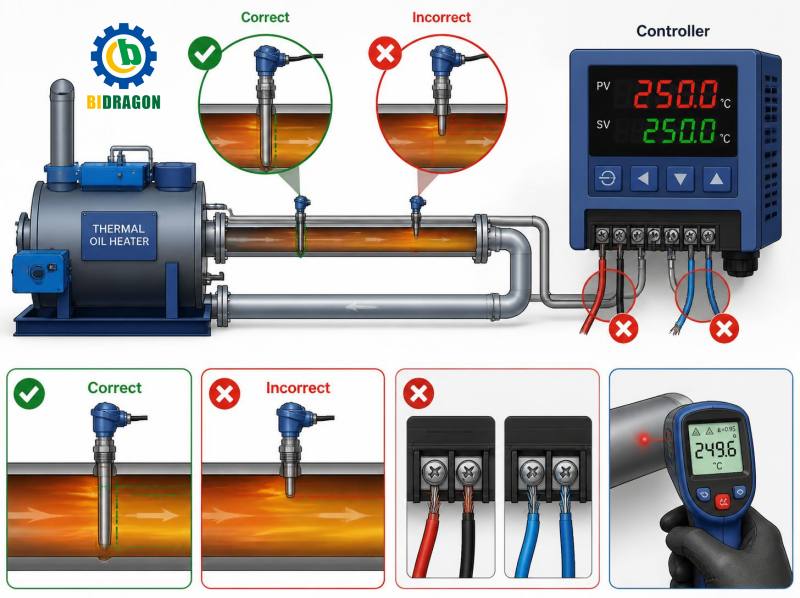
If the equipment operates normally under certain conditions but the displayed temperature is low or heating stalls, the issue lies with the temperature measurement and control system. Insufficient sensor insertion depth or poor contact can lead to inaccurate temperature readings. Poor wiring connections or signal interference can cause the temperature display to fluctuate or become distorted.
Incorrect temperature controller parameter settings can limit heating power. Improper settings for temperature differentials or upper limits may cause the system to prematurely determine that the oil temperature has reached the target, thereby restricting the burner's high-fire output and preventing the actual temperature from rising further. Comparing instrument readings with an independent temperature measurement tool allows for a quick determination of whether the temperature measurement is abnormal.
The combustion efficiency of oil- and gas-fired boilers depends heavily on flue gas exhaust and furnace negative pressure conditions. Flue blockages, excessive ash accumulation, or insufficient exhaust fan output increase exhaust resistance, preventing timely flue gas discharge and limiting the supply of fresh combustion air. Oxygen-deficient combustion significantly reduces thermal efficiency while generating black smoke and carbon deposits.
Imbalanced furnace negative pressure disrupts combustion stability. Excessive negative pressure draws away significant heat from the furnace, while insufficient negative pressure leads to flame instability. Ash and carbon buildup in the furnace and flues continuously impairs heat transfer capabilities, making it difficult to raise the temperature over the long term.
The two main types of faults can be quickly distinguished by observing operating parameters, without the need for complex testing. Typical signs of a combustion fault include a weak or unstable flame, black smoke emissions, the burner's inability to switch to high-fire mode, low fuel consumption, and a consistently slow system heat-up rate.
Typical signs of a circulation fault include normal combustion and stable fuel consumption, but with abnormal pump pressure and current, irregular inlet/outlet temperature differentials, insufficient heat supply at the end-user point, and intermittent temperature rise. Relying solely on outlet temperature can lead to misdiagnosis; a comprehensive assessment involving the flame, pump pressure, temperature differential, and heating rate is required.
Circulation pump failure is a primary cause of insufficient flow and sluggish heating. Troubleshooting should prioritize pressure and current readings: low pressure indicates insufficient flow, while pressure fluctuations often suggest air locks or blockages. Excessive current usually points to high pipeline resistance, excessively viscous oil, or a seized pump mechanism.
Key checks include ensuring the inlet and outlet valves are fully open, verifying pipeline clarity, and inspecting the filter for blockages. Confirm that the bypass valve is not abnormally open, which could cause medium backflow or flow diversion. Abnormal noise, vibration, leakage, or pump overheating during operation often indicate wear on bearings, seals, or the impeller, requiring timely maintenance and repair.
The condition of the fluid directly determines the system's circulation and heat exchange efficiency. Fresh fluid has moderate viscosity and good fluidity, allowing for rapid circulation and heat transfer. Conversely, aged fluid from prolonged operation exhibits increased viscosity and higher flow resistance, leading to a continuous decline in heat exchange efficiency.
High-temperature oxidation causes the fluid to form gums, sludge, and carbon deposits. These impurities adhere to heat exchange surfaces and the interior of piping, clogging flow channels and creating insulating layers that result in slow temperature rise and high energy consumption. Regularly monitoring indicators such as residual carbon, acid value, and viscosity—and promptly filtering or replacing the fluid—is crucial for preventing hidden faults.
Perform regular maintenance on the combustion system: clean carbon deposits from nozzles and filters, adjust combustion air volume, and stabilize fuel supply. Record daily operating parameters to detect performance degradation early through data analysis.
Maintain the circulation system routinely: clean filters, inspect valves and bypass piping, and thoroughly vent air after equipment startup or shutdown. Service circulation pumps on schedule and replace worn parts. Regularly test fluid quality to prevent operation with excessively degraded fluid.
Periodically repair pipe insulation to minimize heat loss. During annual shutdowns, clean the furnace chamber, heat exchange tube walls, and flues to remove accumulated ash and scale. Strictly adhere to the manufacturer's operation and maintenance guidelines and avoid arbitrary changes to equipment parameters to prevent heating issues at the source.
The primary causes for a heat transfer fluid heater failing to reach the target temperature fall into six categories: insufficient heat supply, poor circulation, fluid degradation, heat exchange fouling, excessive heat loss, and inaccurate temperature measurement. Troubleshooting does not require blind disassembly; following a logical approach—checking external components before internal ones and simple issues before complex ones—allows for rapid problem identification.
Standardized daily operation and maintenance can effectively prevent the vast majority of heating anomalies. Stable equipment operating conditions not only ensure production continuity but also effectively reduce energy consumption and equipment wear.