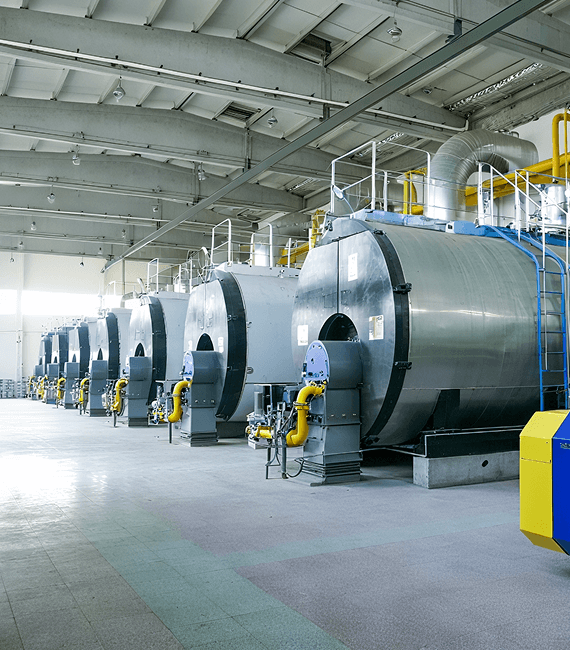

Indonesia produced 56.55 million tonnes of crude palm oil (CPO) and palm kernel oil (PKO) in 2025, retaining its position as the world's largest palm oil producer with roughly 58% of global output. Behind every tonne of that production sits a palm oil mill, and inside every mill sits a boiler — the single piece of equipment that sterilises fresh fruit bunches, powers the turbines, and keeps the extraction line running. Get the boiler right and a mill approaches energy self-sufficiency on its own waste; get it wrong and the operation bleeds money on diesel, battles disposal headaches, and risks falling foul of tightening environmental rules.
2026 makes the boiler decision more urgent than it has been in years. Three forces are converging at once. Indonesia's mandatory B40 biodiesel blend — backed by a 15.6 million kilolitre allocation for the year — is pushing mills toward fuller capacity utilisation. The EU Deforestation Regulation (EUDR) begins applying to large and medium operators on 30 December 2026, exerting downstream pressure on mills to demonstrably clean up their operations. And a large cohort of ageing boilers installed during the last commodity boom is now due for replacement.
This guide is not a supplier brochure. It draws on production data from GAPKI and BPS, USDA forecasts, Indonesia's own environmental ministry regulations, peer-reviewed research on biomass combustion, and field reporting from the 2026 PALMEX Jakarta exhibition. The goal is to give mill owners, engineering teams, and procurement decision-makers a structured, fact-based framework for selecting a boiler that fits their throughput, fuel mix, regulatory obligations, and return-on-investment targets.
Understanding boiler demand starts with understanding the scale and trajectory of the industry it serves. According to the Indonesian Palm Oil Association (GAPKI), CPO production reached 51.66 million tonnes in 2025, a 7.26% increase over the 48.16 million tonnes recorded in 2024. PKO added another 4.89 million tonnes, bringing combined output to 56.55 million tonnes — up 7.18% year on year. The USDA's Jakarta post forecasts 2025/26 production to rise a further 3%, reflecting steady yield recovery and continued expansion in mature planted area.
That planted area now stands at around 16.01 million hectares according to BPS-Statistics Indonesia. What matters for boiler planning is where that capacity is concentrated. Production is almost entirely split between two islands: Sumatra and Kalimantan (Indonesian Borneo). The top producing provinces — Riau, Central Kalimantan, North Sumatra, and West Kalimantan — together account for the lion's share of national output, with Riau alone producing over 9 million tonnes of CPO. This geographic concentration matters because it defines the logistics of equipment delivery, the availability of local fabrication and servicing support, and the kind of fuel profiles a boiler will encounter.
The trade picture reinforces how central this industry is to the national economy. In 2025, palm oil exports reached 32.34 million tonnes worth US$35.87 billion, a 29.23% jump in value over 2024. Domestic consumption totalled 24.77 million tonnes, and within that figure biodiesel alone consumed 12.70 million tonnes — roughly 51% of all domestic use. The biodiesel number is the one to watch. Indonesia transitioned from B35 to B40 in 2025, allocating 15.6 million kilolitres of biodiesel for 2026, and the industry is already preparing for B50. Every step up the blend ladder means more CPO channelled into fuel, more mills running at capacity, and more steam hours logged on every boiler in the fleet.
Key takeaway: Boiler demand is not a speculative future market — it is a present, dual-stream requirement: new mills coming online to meet rising demand, and existing mills replacing units that have run through their design life. Sizing, fuel flexibility, and compliance headroom are now selection criteria that carry real financial and regulatory weight.

Steam is not an incidental utility in a palm oil mill — it is the process itself. The extraction chain begins with sterilisation, where fresh fruit bunches (FFB) are cooked with low-pressure steam at roughly 3 bar and 140°C. This step loosens the fruit from the bunch, inactivates the lipase enzymes that would otherwise send free fatty acid levels soaring, and conditions the material for downstream pressing. Skip sterilisation or run it with insufficient steam and oil quality collapses; the FFA content that buyers penalise rises rapidly.
From sterilisation the process moves through digestion, pressing, oil clarification, and kernel drying — each of which draws on steam for heating. And beyond process heat, the mill needs electricity. In a well-designed operation, a single high-pressure boiler feeding a back-pressure or extraction steam turbine covers the entire electrical load of the mill while simultaneously supplying the low-pressure process steam the extraction line demands. This is cogeneration, and it is the architecture that separates an efficient mill from an expensive one.
What makes the economics compelling is the fuel. For every tonne of CPO produced, the mill generates roughly 23% EFB, 13% mesocarp fibre, and 5.5% PKS by input weight. These are not waste to be disposed of — they are fuel that arrives at the boiler house at essentially zero cost. A biomass boiler designed to burn these residues can push a mill close to 100% energy self-sufficiency, and in some configurations even export surplus power to the grid.
Contrast that with the alternative. Mills that fall back on diesel generators or grid electricity for process heat and power face fuel and purchased-energy costs that can eat 50–70% more of the operating budget than a biomass-based system, while still having to pay to dispose of the very residues that could have been burned. The boiler, in other words, is where a mill's cost structure and environmental footprint are both decided.
Fuel selection and boiler design are inseparable. The four fuels available to a typical Indonesian mill each behave very differently in a furnace, and a boiler engineered for one can fail badly on another.
| Fuel | Moisture Content | Energy Density | Key Combustion Challenge | Pre-processing Required |
|---|---|---|---|---|
| Palm Kernel Shells (PKS) | Low | High | Minimal — burns cleanly | None |
| Empty Fruit Bunches (EFB) | >50% | Low | Cl & K → slagging, chloride corrosion | Shredding + drying to ~20% |
| Mesocarp Fibre | Medium | Medium | Co-fire for stability | Minimal |
| Biogas (from POME) | N/A | Low–Medium | Wastewater treatment integration | Anaerobic digestion plant |
Palm kernel shells are the premium option. They have a high energy density, low moisture, and burn cleanly with minimal pre-processing. For a mill with a steady shell supply, PKS is the fuel of choice for higher-capacity boilers and is the reason many installations achieve such stable combustion performance.
Empty fruit bunches are the abundant but difficult fuel. EFB arrives at the boiler house wet — moisture content can exceed 50% — and its fibrous, stringy texture defeats standard feeding systems. More seriously, EFB carries high levels of chlorine and potassium. When burned, these alkali metals condense on hot heating surfaces, forming slag layers that both insulate the tubes (killing heat transfer) and drive chloride-induced high-temperature corrosion. Once metal temperatures climb past roughly 500°C, corrosion rates accelerate sharply, which is why many traditional biomass boilers cap steam temperature at 470°C and pressure at 9.8 MPa. EFB therefore almost always requires pre-processing — shredding and drying, ideally bringing moisture down toward 20% — before it enters the furnace.
Mesocarp fibre sits between the two. It is generally co-fired with shells to smooth out combustion and provide consistent heat input. Biogas, captured from the anaerobic digestion of palm oil mill effluent (POME), offers a fourth stream: a lower-grade but useful supplementary fuel that simultaneously solves a wastewater treatment problem and cuts methane emissions.
The engineering challenge with all of these fuels, and particularly EFB, is managing slagging, fouling, bed agglomeration, and corrosion. Boiler designs that succeed in palm oil service tend to share several features:
Research published in the Journal of the Energy Institute demonstrated that biomass-fired circulating fluidised bed (CFB) boilers engineered along these principles can achieve efficiencies of 90–93.5% while maintaining ultra-low NOx and SO₂ emissions, and can run stably across a 30–105% load range with continuous operation exceeding six months between outages. Those numbers matter directly to mill operators because they translate into fewer shutdowns and lower maintenance spend.
Most palm oil mill boilers fall into one of three technology families, and the right choice depends on throughput, pressure requirements, fuel mix, and whether the mill intends to generate electricity.
| Boiler Type | Capacity (t/h) | Pressure (MPa) | Efficiency | NOx Emission | Best Application |
|---|---|---|---|---|---|
| DZL (Packaged) | 2–10 | 1.0–2.5 | Standard | Standard | Small mill, process steam only |
| SZL (Chain-grate) | 10–35 | 1.0–2.5 | Good | Moderate | Mid-sized mill, dry PKS/fibre fuel |
| SZW (Reciprocating-grate) | 10–35 | 1.0–2.5 | Good | Moderate | Mid-sized mill, wet EFB primary fuel |
| BFB (Bubbling FB) | 20–75 | 3.82–9.8 | 88–90% | ≤150 mg/Nm³ | Large mill, blended fuel, cogen |
| CFB (Circulating FB) | 20–75 | 3.82–9.8 | 90–93.5% | <50 mg/m³ | Large mill, cogen + ultra-low emissions |
Packaged fire-tube and water-tube combination boilers (commonly classed as DZL-type) typically deliver 2 to 10 tonnes of steam per hour at 1.0–2.5 MPa. They are compact, relatively inexpensive, quick to start, and easy to maintain. For a small mill or one that only needs process steam with no cogeneration ambition, this class of boiler is often sufficient. The trade-off is capacity ceiling and pressure — they simply cannot reach the steam conditions needed for efficient power generation.
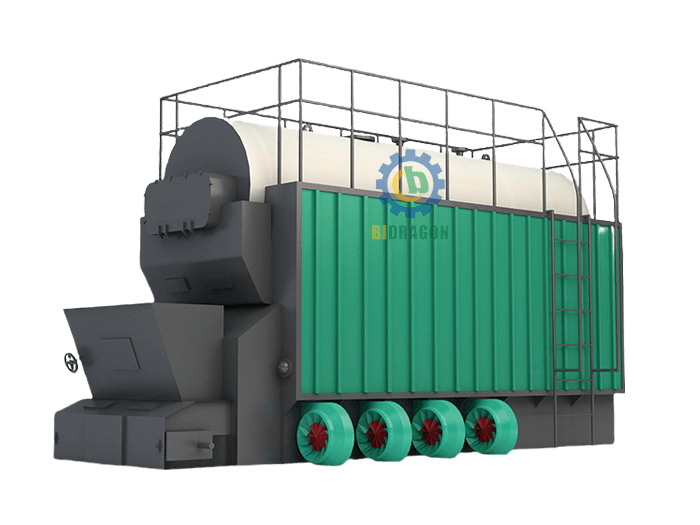
Chain-grate and reciprocating-grate water-tube boilers (SZL and SZW types) are the workhorses of mid-sized mills. Built with double-drum membrane water-wall construction, they offer the flexibility to handle different fuel profiles. A chain grate suits drier, more standard fuels like PKS and dry fibre, distributing fuel evenly and allowing straightforward maintenance. A reciprocating grate is engineered specifically for high-moisture, high-ash fuels — wet EFB and fibre — where the moving grate mechanically breaks up slag and removes ash to keep the furnace running. These boilers typically cover the 10–35 t/h range that matches the majority of Indonesian mill throughputs.
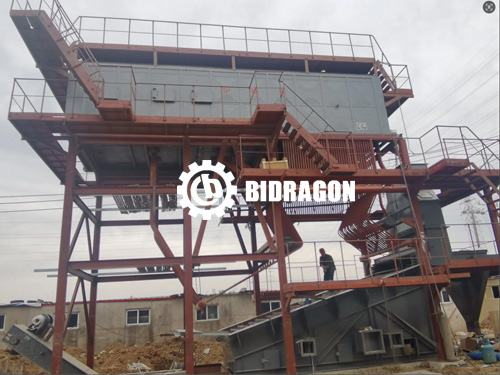
Bubbling and circulating fluidised bed boilers (BFB and CFB) represent the high end. With capacities from 20 to 75 t/h and operating pressures of 3.82–9.8 MPa, they are the choice for large mills pursuing cogeneration and ultra-low emissions. Fluidised bed technology achieves uniform combustion of even highly variable fuel blends — PKS, fibre, EFB, and even low-grade coal can be co-fired — and it inherently suppresses NOx formation because combustion temperatures stay lower than in grate firing. Industry data places BFB efficiency at 88–90% with NOx emissions at or below 150 mg/Nm³. CFB designs push further: the academic literature cited above reports efficiencies up to 93.5% and emissions below China's ultra-low thresholds (SO₂ < 35 mg/m³, NOx < 50 mg/m³). High-pressure CFBs can also be paired with reheat systems to lift power generation efficiency, which is why they are increasingly attractive to mills planning to export surplus electricity.
| Mill Requirement | Recommended Boiler Type |
|---|---|
| Process steam only, modest throughput | Packaged or chain-grate boiler (DZL/SZL) |
| Wet EFB as primary fuel | Reciprocating-grate water-tube (SZW) |
| Cogeneration, variable/blended fuel | Fluidised bed — BFB or CFB |
| Ultra-low emissions + power export | High-pressure CFB with reheat system |
Once the technology family is chosen, capacity sizing becomes a matter of matching steam output to mill throughput. The standard reference point is the FFB processing rate, measured in tonnes per hour.
| Mill Category | FFB Processing Rate | Steam Demand | Typical Boiler Capacity |
|---|---|---|---|
| Small | 5–10 t/h | 4–6 t/h | 4–6 t/h (DZL-type) |
| Medium | 20–30 t/h | 10–15 t/h | 10–15 t/h (SZL/SZW) |
| Large | 45–60+ t/h | 25–35 t/h | 25–35 t/h (BFB/CFB) or multiple units |
As a rule of thumb, a mill in the 30–60 t FFB/h range — which covers most Indonesian operations — will need a boiler in the 15–35 t/h range. Large mills often deploy multiple units for redundancy so that a single outage does not halt production.
| Application | Pressure Range | Steam Temperature | Use Case |
|---|---|---|---|
| Process heat only | 1.0–2.5 MPa | 130–226°C (saturated) | Sterilisation, clarification, drying |
| Sterilisation minimum | ~3 bar (~0.3 MPa) | ~140°C | FFB cooking only |
| Cogeneration | 3.82–9.8 MPa | 350–450°C+ (superheated) | Steam turbine power generation |
There is no value in over-specifying pressure for a process-heat-only duty. The picture changes entirely when cogeneration enters the equation: generating electricity efficiently requires high-pressure superheated steam feeding a steam turbine. The higher the steam parameters, the more power can be extracted per tonne of fuel — which is precisely why the academic work on high-pressure CFB technology is relevant to mill economics.
A boiler is also a system, not a single vessel. The auxiliary equipment determines whether a nominally efficient boiler actually delivers its rated performance in service:
| Auxiliary System | Function | Impact If Under-specified |
|---|---|---|
| Economiser & air pre-heater | Recover waste heat from flue gas | Efficiency drops 3–8 percentage points |
| Multi-stage flue-gas cleaning (cyclone + bag filter/scrubber) | Keep plant within emission limits | Regulatory non-compliance, fines |
| Water treatment & deaerator | Protect from scale and oxygen corrosion | Tube failure, reduced boiler life |
| DCS/PLC control system | Remote monitoring, design-point operation | Inconsistent performance, higher OPEX |
Mills that cut corners on auxiliaries to save on capital cost almost always pay for it in efficiency losses and maintenance within the first few years.
Step 1 → Calculate steam demand from FFB throughput
Step 2 → Determine pressure level required (process heat vs cogeneration)
Step 3 → Select fuel and combustion technology to match the fuel profile
Step 4 → Weigh footprint and budget constraints, then scope the full system
Getting these inputs right before approaching suppliers is what separates a well-scoped project from a costly mismatch.
Emission compliance is the area where many generic boiler selection guides go quiet — and where Indonesian operators face the most concrete, quantifiable obligations. Indonesia regulates boiler emissions through the Ministry of Environment framework, originally set out under Ministerial Regulation (Permen LH) No. 07/2007 and subsequently updated through Permen LHK No. 11/2021 and the newer Permen LH/BPLH No. 11/2025. The limits are specified by fuel type, and for palm oil mills the relevant category is biomass — specifically "serabut/cangkang kelapa sawit" (palm fibre and shell).
| Pollutant | Palm Biomass (fibre/shell) | Oil-Fired | Coal-Fired | Gas-Fired |
|---|---|---|---|---|
| Particulate Matter (PM) | 300 mg/m³ | 200 mg/m³ | 230 mg/m³ | — |
| SO₂ | 600 mg/m³ | 700 mg/m³ | 750 mg/m³ | 150 mg/m³ |
| NO₂ | 800 mg/m³ | 700 mg/m³ | 825 mg/m³ | 650 mg/m³ |
| HCl | 5 mg/m³ | — | — | — |
| Cl₂ | 5 mg/m³ | — | — | — |
| NH₃ | 1 mg/m³ | — | — | — |
| HF | 8 mg/m³ | — | — | — |
Note: Oil-fired boiler limits are at 3% oxygen correction with 15% opacity. Palm biomass boilers face the strictest HCl, Cl₂, NH₃, and HF limits because of the high chlorine and alkali content of palm residues.
These numbers are not abstract. A palm oil mill operating a biomass boiler must:
Non-compliance carries the risk of fines and operational shutdown. The flip side is that a boiler sized and equipped to meet these limits cleanly also tends to be the more efficient one, because the same combustion discipline that keeps emissions down also extracts more usable heat from the fuel.
For anyone selecting a boiler, the practical implication is to verify — with test data, not marketing claims — that the candidate unit's flue-gas cleaning package can hold the plant under the palm-biomass limits at the expected fuel mix and moisture conditions. This is a question to put directly to suppliers, ideally backed by third-party stack-test results from comparable installations.
The regulatory environment around palm oil is no longer just about stack emissions. The EU Deforestation Regulation adds a supply-chain dimension that, while not directly a boiler standard, is reshaping how mills think about their energy and waste systems.
| Requirement | Detail |
|---|---|
| Enforcement date (large/medium) | 30 December 2026 |
| Enforcement date (micro/small) | 30 June 2027 |
| Indonesia risk classification | "Standard risk" — full due diligence required |
| Geolocation traceability | Plot-level; ≤4 ha = single point, >4 ha = polygon; ≥6 decimal places |
| Deforestation cut-off | Plots must be deforestation-free after 31 December 2020 |
How does this touch the boiler house? The connection is sustainability credibility. As EU buyers demand traceable, deforestation-free supply chains, pressure travels upstream to the mill. Mills that can demonstrate genuinely sustainable operations — energy self-sufficiency through biomass cogeneration, biogas capture from POME, zero-waste management of EFB and PKS, and verifiable greenhouse gas reductions — are better positioned to retain access to EU-aligned buyers and to justify the compliance investment.
The certification landscape reinforces this. The Roundtable on Sustainable Palm Oil (RSPO) updated its Principles and Criteria in 2024 to require geolocation data collection for both certified and non-certified FFB, aligning it with EUDR's standards. But RSPO's Book and Claim model does not satisfy EUDR's physical traceability requirement — mills relying on it need to upgrade to Segregated or Identity Preserved supply chain models and still file a separate due diligence statement. Indonesia's own ISPO (Indonesian Sustainable Palm Oil) certification remains the mandatory national standard. For mills, the strategic question is whether their energy system — boiler, cogeneration, biogas — supports or undermines the sustainability narrative their buyers now demand.
| Process Type | GHG Emissions (kg CO₂e per tonne CPO) | Reduction vs Conventional |
|---|---|---|
| Conventional wet process | ~1,296 | Baseline |
| Dry process + biogas capture + biomass cogen | ~270 | −78% |
As dry-process technology gains ground in Indonesia and as biogas capture and CDM-style carbon credit projects proliferate, the boiler and energy system becomes a measurable contributor to a mill's compliance and market access position, not just a cost centre.
For procurement teams, the selection decision ultimately resolves into a question of return on investment. Breaking down the cost picture properly is what makes the difference between a justified project and a mistake.
| Budget Component | Description |
|---|---|
| Boiler vessel | Main boiler unit (grate, drums, tubes) |
| Fuel handling system | Belt conveyors, screw feeders engineered for fibrous palm waste |
| Combustion equipment | Grate or fluidised bed assembly |
| Heat recovery | Economisers and air pre-heaters |
| Flue-gas cleaning train | Multi-cyclones + bag filters or wet scrubbers |
| Control system | PLC or DCS with remote monitoring |
| Water treatment | Treatment plant + deaerators |
| Installation & civil works | Commissioning, structural, piping |
Under-budgeting the auxiliaries is the most common cause of cost overruns.
On the operating side, the economics of a palm-residue-fired boiler are almost uniquely favourable. Because the mill burns its own EFB, PKS, and fibre — materials it would otherwise pay to dispose of — the fuel cost is effectively zero. Industry case studies of typical mid-sized mill retrofits, where an older diesel-fired or underperforming unit was replaced with a biomass boiler in the 20 t/h steam range, report the following results:
| Metric | Typical Mid-Sized Mill Retrofit (Industry Reference) |
|---|---|
| Annual fuel savings | ~US$2 million |
| Carbon footprint reduction | ~85% |
| Project payback period | 14–18 months |
These are anonymised industry reference points, not a guarantee — actual results depend on throughput, fuel mix, and local energy prices — but they illustrate why the investment case is so often compelling.
Cogeneration adds a second revenue stream. A high-pressure boiler feeding a steam turbine can cover the mill's entire electrical load and, where Indonesia's renewable energy feed-in arrangements permit, export surplus power to the grid. For mills in remote Sumatra or Kalimantan locations where grid reliability is poor, self-generation is not just a saving — it is operational security.
| Recovery Measure | Typical Rate | Annual Energy Saving |
|---|---|---|
| Condensate recovery (deaerator heads) | >400 kg/h | — |
| Flash steam recovery | >20 kg/h | — |
| Combined annual saving | — | US$10,000–15,000 |
Small in isolation, these measures compound across a 25-year asset life.
That lifecycle perspective matters. A well-engineered biomass boiler is designed to operate for 25 years or more. Selecting on initial capital cost alone ignores the real economics — maintenance, spare parts, annual inspections, water-treatment chemicals, and the cost of unplanned downtime all accumulate over that life. The sound approach is to request from any supplier a total cost of ownership (TCO) calculation and a third-party efficiency test report, and to insist on references from comparable Southeast Asian installations with measured operating data.
The 2026 PALMEX Jakarta exhibition and the broader industry conversation reveal where mill thinking is heading. One of the most discussed topics was EFB briquette production. Compared with loose EFB fibre, briquettes offer higher density, easier transport, cleaner storage, more stable combustion, and better compatibility with industrial boiler systems. Typical briquette dimensions are 30×30 mm or 32×32 mm, and a central question mills are asking is whether their existing boilers can accept briquettes without major modification. The line of equipment behind a briquette plant — shredding, drying (the most energy-intensive step, reducing moisture from around 50% to 20%), feeding, and the briquetting press itself — requires real capital, so mills are evaluating these projects on hard investment-return terms rather than enthusiasm.
EFB Briquette Value Chain:
Shredding → Drying (50%→20% moisture) → Feeding → Briquetting press (30×30 mm output) → Boiler combustion or export market
Export-oriented biomass fuel strategies are also in view. Japanese and South Korean biomass demand is growing, and Indonesian mills are weighing EFB briquettes as a potential export fuel. But they are competing against established Vietnamese wood-pellet supply chains, and buyers scrutinise calorific value, ash content, potassium and chlorine levels, and slagging tendency before committing. For many mills, supplying fuel to nearby industrial boilers within a 50 km radius — other palm oil mills, sugar mills, refineries — is a more dependable demand base than export speculation.
On the technology side, high-pressure CFB cogeneration continues to gain traction as mills look to monetise surplus energy, and digitalisation is moving from option to expectation: PLC and DCS automation, remote performance monitoring, and predictive maintenance are increasingly standard features rather than premium add-ons.
Selecting a boiler for an Indonesian palm oil mill in 2026 means integrating fuel characteristics, process steam demand, emission compliance, sustainability pressure, and investment return into one decision. Get it right and the boiler turns waste into energy, cost into savings, and regulatory pressure into competitive advantage.
8-Step Selection Checklist
- Define FFB processing rate → calculate steam demand (t/h)
- Determine pressure level: process heat only (1.0–2.5 MPa) or cogeneration (3.82–9.8 MPa)
- Assess fuel mix and EFB pre-processing needs (shredding, drying to ~20% moisture)
- Verify flue-gas cleaning meets Indonesia's palm-biomass limits (PM 300 / SO₂ 600 / NO₂ 800 mg/m³)
- Factor in EUDR (30 Dec 2026) and RSPO/ISPO sustainability positioning
- Calculate TCO and expected payback against industry reference cases (~14–18 months)
- Confirm supplier credentials (ASME, CE, DOSH or equivalent) + SE Asian references + local after-sales
- Require third-party efficiency test data before committing