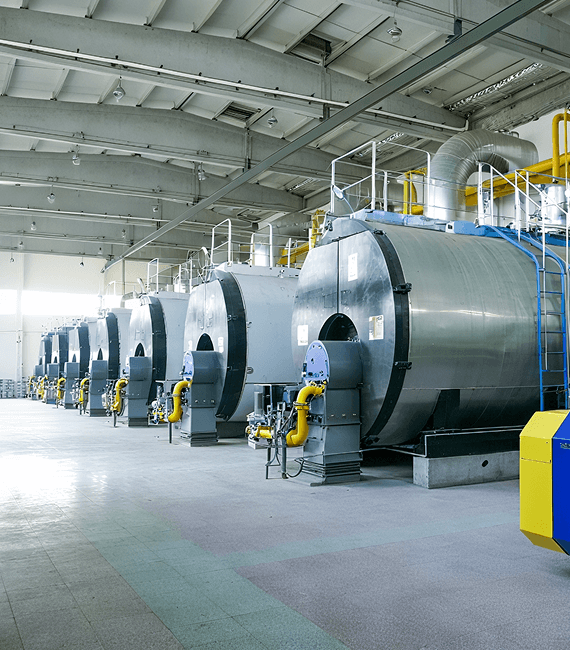

Industrial steam boilers serve as core equipment in a wide range of settings, including manufacturing plants, food processing facilities, chemical industries, and hospitals. Their stable operation directly impacts production schedules, operating costs, and even personnel safety. Prior to starting a steam boiler, operators must systematically complete a comprehensive inspection checklist. This process serves not only as the foundation for ensuring the safe operation of the equipment but also as a critical factor in maintaining a stable steam supply and extending the service life of the machinery. We will discuss in detail the various items that need to be checked before startup, focusing on the core items that affect safety and operation.
Pre-startup inspection serves as the first line of defense for the safe operation of industrial boilers. Boilers are high-pressure special equipment. If potential hazards are not discovered before startup, they can easily lead to serious accidents. For example, starting the boiler without water may cause it to burn dry, which could damage the boiler body or even cause an explosion. Similarly, failing to promptly identify and resolve abnormal pressure conditions can lead to pressure-related accidents, thereby endangering the safety of both on-site personnel and equipment.
Beyond safety considerations, pre-startup inspections also play a crucial role in ensuring the stability of steam output. During production, fluctuations in steam pressure and flow rate directly impact manufacturing efficiency and product quality. Conducting inspections in advance helps prevent interruptions in steam supply caused by equipment malfunctions, thereby minimizing losses associated with unplanned downtime.
Furthermore, comprehensive inspections effectively safeguard the boiler's internal components. Issues such as substandard water quality or anomalies in water circulation can lead to scale formation and corrosion within the boiler, ultimately shortening the equipment's service life. Adhering to standardized inspection protocols allows for the timely detection and proactive resolution of these issues, thereby reducing equipment maintenance costs. Moreover, thorough inspections ensure that the boiler enters an optimal operating state immediately upon startup, thereby enhancing overall operational efficiency.
Pre-startup inspection is not merely a cursory visual examination; it requires systematic execution, adhering to a structured process to address each step individually. No step can be taken lightly. A standardized inspection process can minimize safety risks, avoid unplanned shutdowns, and lay the foundation for stable boiler startup. The key items listed below represent the critical areas that must be thoroughly addressed prior to startup.
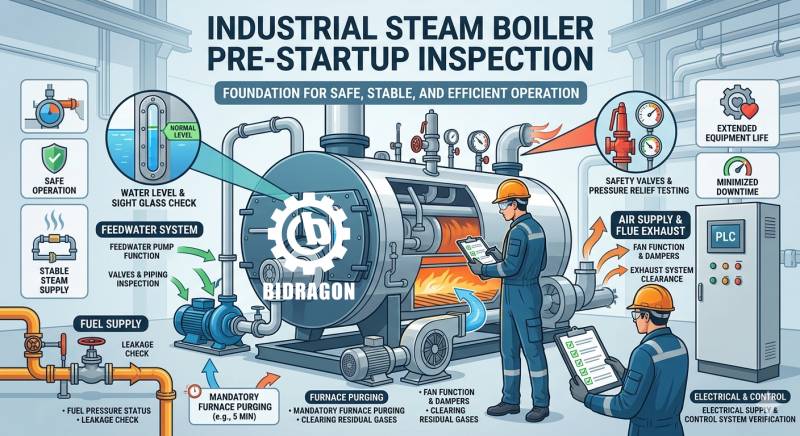
The water level is a fundamental prerequisite for boiler startup; it is imperative to verify that the level falls within the normal operating range specified for the equipment. Whether excessively high or low, an improper water level will compromise operational safety once the boiler is brought online. Operators must carefully inspect the water level gauge to ensure the display is clear and accurate, free from any blurring, blockages, or similar anomalies, thereby preventing misjudgments caused by erroneous readings.
Concurrently, the low-water-level alarm and protection systems must be tested to confirm they are functioning correctly. Should the water level drop below the safety threshold, the alarm system must provide immediate notification, while the protection system must automatically initiate countermeasures to prevent a dry-firing incident. Particular emphasis must be placed on the absolute prohibition against starting the boiler under water-deficient conditions. At best, it damages the furnace. At worst, it causes an explosion, with unimaginable consequences.
The feedwater system is critical to ensuring the normal operation of the boiler. Therefore, a thorough inspection of the feedwater pump is a top priority prior to startup. Verify that the feedwater pump is functioning correctly, that its discharge pressure meets prescribed standards, and that there are no anomalies such as unusual noises or leaks. A malfunction in the feedwater pump would result in an insufficient water supply to the boiler, thereby directly compromising both the startup process and subsequent operation.
Additionally, inspect the valves, piping, and check valves within the feedwater system. Examine these components for any signs of leaks or blockages. Ensure that the valves operate smoothly and that the check valves are functioning properly to prevent backflow. Prior to ignition, confirm that water circulation is proceeding normally to ensure that all boiler components are heated uniformly. In addition, water quality is crucial for boiler protection. Substandard water quality can lead to scaling and corrosion. Before starting the boiler, it is essential to confirm that the feedwater quality meets the boiler's operating requirements.
The stability of the fuel supply directly impacts the boiler's startup and combustion performance. Prior to startup, depending on the type of fuel used by the boiler, it is essential to inspect the gas pressure, oil pressure, or the supply status of solid fuels. Ensure that the fuel supply is stable and meets combustion requirements. Insufficient fuel supply or unstable pressure can lead to ignition failure or incomplete combustion.
Carefully inspect the fuel pipelines and connections for any signs of leakage. This is particularly critical for gas-fired boilers, as gas leaks can trigger severe accidents such as explosions or gas poisoning. Leaks must be dealt with immediately upon discovery. Under no circumstances is startup permitted until the issue is resolved. Additionally, verify that the fuel control valves are functioning correctly and operate smoothly. Precise control over the fuel supply volume is essential to ensure an adequate and stable fuel flow throughout the startup process.
The furnace and combustion chamber constitute the core combustion zone of the boiler. Prior to startup, it is imperative to verify that no residual combustible gases remain within the furnace. If combustible gases are present, ignition could trigger a deflagration, resulting in severe equipment damage or even personnel casualties. Operators must employ specialized procedures to conduct thorough checks, ensuring that the gas composition within the furnace complies with safety standards.
At the same time, check whether there are any foreign objects in the combustion chamber, such as tools or other debris. These items can damage the furnace body and affect combustion efficiency during combustion. Furnace ventilation and purging are equally critical; a thorough ventilation and purging cycle must be executed prior to startup. This process serves to eliminate combustible gases and foreign objects from the furnace, thereby establishing safe conditions for ignition. Insufficient inspection can easily leave latent safety hazards unaddressed, significantly increasing the risk of accidents during subsequent startup attempts.
Safety devices and protection systems are core components essential for ensuring the safe operation of a boiler. Prior to startup, these systems must undergo comprehensive testing to verify their proper functioning. First, inspect the safety valves and pressure relief devices; confirm that the safety valves are responsive and reliable, capable of promptly relieving pressure should it exceed permissible limits. Ensure that the pressure relief devices are free of blockages or leaks to prevent accidents caused by excessive pressure.
Pressure gauges are critical instruments for monitoring boiler pressure. Verify that the pressure gauges provide accurate readings and are currently within a valid calibration status. A malfunctioning pressure gauge prevents operators from accurately assessing pressure conditions, thereby creating a potential safety hazard. Additionally, the flame failure protection system must be tested to ensure that, in the event of a flameout, the fuel supply is immediately cut off to prevent the hazards associated with fuel leakage.
Furthermore, inspect the emergency shutdown and interlock control systems. Confirm that these systems are responsive and capable of rapidly initiating an emergency shutdown in critical situations, thereby safeguarding both equipment and personnel. These safety devices must comply with industrial boiler safety standards. Devices that do not meet industrial boiler standards are strictly prohibited from use.
The air supply and flue gas exhaust systems directly impact boiler combustion efficiency and the immediate operating environment. Prior to startup, verify that the forced draft fan and induced draft fan are functioning normally. Ensure there are no anomalies, such as unusual noises or vibrations, and confirm that the airflow output meets combustion requirements. The forced draft fan is responsible for delivering air into the furnace, while the induced draft fan is responsible for extracting the post-combustion flue gases; the coordinated operation of these two components is essential to ensure complete combustion.
Inspect the airflow volume and the operation of the dampers to ensure that the dampers open and close smoothly and can effectively regulate airflow in accordance with combustion demands. Insufficient airflow leads to incomplete fuel combustion, resulting in energy waste and the generation of harmful gases. Conversely, excessive airflow lowers the furnace temperature, thereby compromising steam generation efficiency. Additionally, inspect the flue gas exhaust system for any blockages. Restricted flue gas flow can lead to the accumulation of exhaust gases. It not only affects combustion but also pollutes the environment and can even cause equipment malfunctions.
The electrical and control systems serve as the "brain" for the boiler's startup and operation. Prior to startup, the power supply and the status of the control cabinet must be inspected. Confirm that the power supply is stable, the control cabinet has no fault alarms, and the wiring connections are secure, without any looseness or damage. Issues with the power supply or control cabinet can prevent the boiler from starting normally and may even result in damage to electrical components.
Inspect the PLC or automated control system to check for any active alarms or alerts, ensuring that the system is functioning correctly. Test sensors and communication systems. Verify that the sensors can accurately collect data such as temperature and pressure. Ensure the communication system is functioning properly and can transmit control signals in a timely manner. Finally, it is essential to confirm that the startup parameters are set correctly. Incorrect parameters can lead to abnormal boiler startup, affecting operational performance and even causing safety accidents.
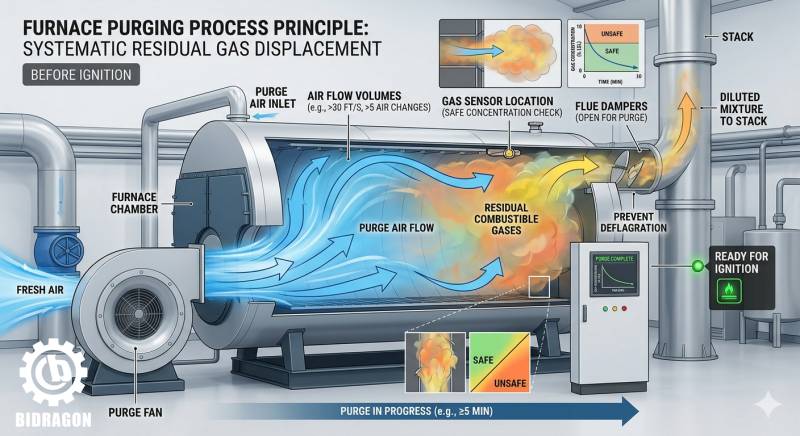
Furnace purging is an indispensable step prior to boiler ignition. Its primary objective is to eliminate residual combustible gases and debris from within the furnace, thereby preventing deflagration accidents during ignition. Following a boiler shutdown, unburned fuel gases may remain trapped inside the furnace. If these gases mix with air and reach a certain concentration, the introduction of an ignition spark can trigger a violent deflagration.
The purging process involves using a blower to introduce a sufficient volume of air into the boiler. This action expels the residual combustible gases from the furnace while simultaneously carrying away any internal debris. It is generally recommended that the purging duration be no less than five minutes, and the airflow volume must be sufficient to ensure a complete displacement of the gases within the boiler.
If the purging is insufficient, there may still be combustible gas residue in the furnace, which could cause an explosion when ignited. Such an event can cause damage to the boiler shell, piping, and other equipment, and may even endanger the lives of on-site operating personnel. Therefore, regardless of the duration of the boiler's shutdown, a thorough furnace purge must be conducted before ignition. This constitutes a mandatory safety protocol that cannot be omitted.
During pre-startup inspection procedures, in addition to the usual anomalies in operating parameters, one may also encounter subtle issues that are easily overlooked. Although infrequent, failing to detect these issues can delay the boiler startup process. For example, if the water level gauge is not thoroughly flushed, it can cause false water level readings, misleading operators. Should this situation arise, the inspection must be halted immediately. The water level gauge must be flushed again, and the inspection should only resume once the accuracy of the reading has been verified.
Another common, subtle issue involves stuck valves. Valves that have remained unoperated for extended periods may become jammed due to rust or scale accumulation, preventing them from opening or closing properly. This directly compromises the normal operation of critical systems, such as feedwater supply and fuel delivery. Such valves require prompt lubrication and cleaning to ensure they operate smoothly and freely. Some boilers may also experience abnormal negative pressure in the furnace, which is often caused by improper adjustment of the induced draft fan or slight blockage of the flue gas duct. It is essential to promptly adjust the induced draft fan parameters and clear any debris from the ducts to prevent interference with the subsequent ignition process.
Abnormal operation of the fan, such as unusual noises, vibrations, or insufficient air volume, is mostly caused by damaged fan bearings, dust accumulation on the blades, or baffle malfunction. Timely maintenance of the fan and cleaning of the blades are required to ensure the unit operates correctly. Additionally, electrical alarms and sensor malfunctions can also hinder the inspection and startup processes. It is imperative to promptly troubleshoot wiring circuits and sensors to ensure the electrical system is functioning properly. By identifying and resolving these issues in advance, the reliability of the boiler startup process can be significantly enhanced, thereby minimizing the risk of subsequent operational failures and unplanned downtime.
Operational protocols during the startup process directly impact the safety of both equipment and personnel. Operators must strictly adhere to Standard Operating Procedures (SOPs) and must not arbitrarily simplify steps or engage in unauthorized operations. During startup, temperature and pressure must be raised gradually. Rapid heating is not allowed to prevent thermal stress from sudden temperature rises and falls in the boiler body, which could lead to cracking and damage.
Throughout the startup process, steam pressure must be continuously monitored, with close attention paid to the pressure gauge readings. Should the pressure exceed prescribed limits, pressure must be promptly relieved via the safety valves to ensure it remains stabilized within the specified range. At the same time, it is necessary to observe the operating status of each component of the boiler, such as whether there are leaks in the pipes and valves, and whether the fans and water pumps are operating normally.
Furthermore, the boiler startup process must be supervised by qualified professional operators. Unauthorized personnel are strictly prohibited from operating the equipment to prevent safety incidents resulting from operational errors. Once the startup sequence is complete, monitoring should continue for a specific period. The equipment should only be placed into normal service after its stable operation has been fully verified.
Pre-start checks are temporary checks, while regular checks are key to ensuring boiler performance in the long term. Regular inspections enable the timely detection of potential hazards during boiler operation, allowing for proactive remediation before these issues escalate. This effectively enhances the stability of steam output, minimizes steam fluctuations caused by equipment malfunctions, and ensures that production demands are consistently met.
Through regular inspection and maintenance, the frequency of unplanned downtime can be reduced, thereby lowering the associated production losses and maintenance costs. Furthermore, regular inspections facilitate the timely removal of issues such as boiler scaling and corrosion, thereby protecting internal components and extending the overall service life of the boiler.
Regular inspections also serve to optimize combustion efficiency, ensuring the boiler consistently operates at its peak performance state and minimizing energy waste. Additionally, these inspections verify that all boiler parameters comply with industrial safety regulations, thereby preventing penalties resulting from non-compliant operations and safeguarding the continuity of the enterprise's business operations.
The quality of boiler equipment and safety systems directly determines the safety and reliability of operations. When selecting a boiler, it is important to focus on using high-quality boiler components. These include the boiler body, pipes, and valves, as the quality of these components directly affects the boiler's service life and safety performance. Substandard components are prone to failure, thereby creating latent safety hazards.
Control and monitoring systems constitute the core of boiler operations; therefore, it is essential to select systems that are both reliable and stable. A high-quality control system can precisely regulate boiler operating parameters and provide timely feedback on operational status, facilitating easy monitoring and adjustment by operators. Furthermore, the monitoring system must be highly sensitive and accurate, capable of promptly detecting anomalies and issuing alarm notifications.
The certification of safety valves and protective devices is of paramount importance. It is mandatory to select products that comply with industrial boiler safety standards to ensure they can effectively fulfill their protective functions in emergency situations. Additionally, when selecting equipment, one must consider long-term operational reliability as well as post-installation maintenance support. Opting for manufacturers that offer comprehensive after-sales services will greatly facilitate future equipment maintenance and troubleshooting.
Pre-startup inspection of industrial steam boilers is a critical step in ensuring equipment safety, operational stability, and asset protection. From checks on water levels and fuel systems to furnace purging and safety device testing, every stage of the inspection process is indispensable. Only when these various stages work in concert can safety accidents be effectively prevented, thereby maintaining the boiler's capacity for efficient and stable steam production.