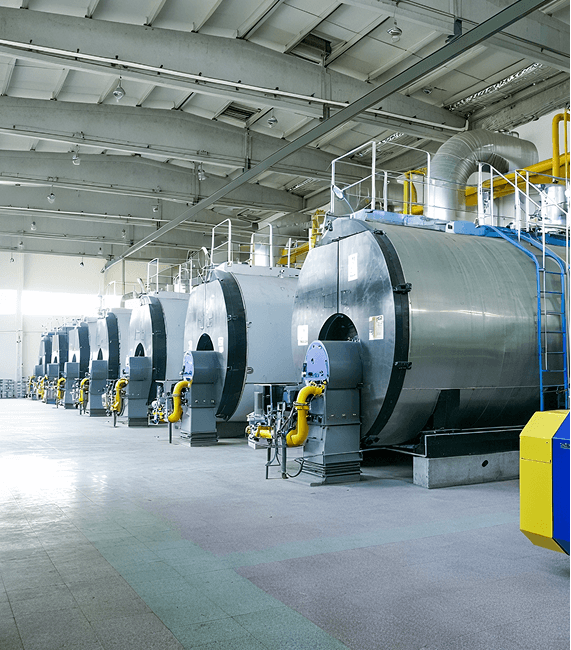

The steel industry is a large energy consumer. Long-process smelting consumes 18 to 22 GJ per ton of crude steel. Sintering, converter, electric arc furnace and other processes continue to discharge high-temperature flue gas, and a large amount of heat is directly vented.The waste heat boiler uses a tube bundle to transfer heat to capture the waste heat of the flue gas to produce steam, which can be used in the process of the plant and can also be fed into the steam turbine to generate electricity.From the directions of waste heat recovery, steam supply, power generation, energy efficiency and carbon reduction, this article talks about the logic of the widespread use of waste heat boilers in steel mills, and also talks about the cost and operating problems to be weighed when landing.
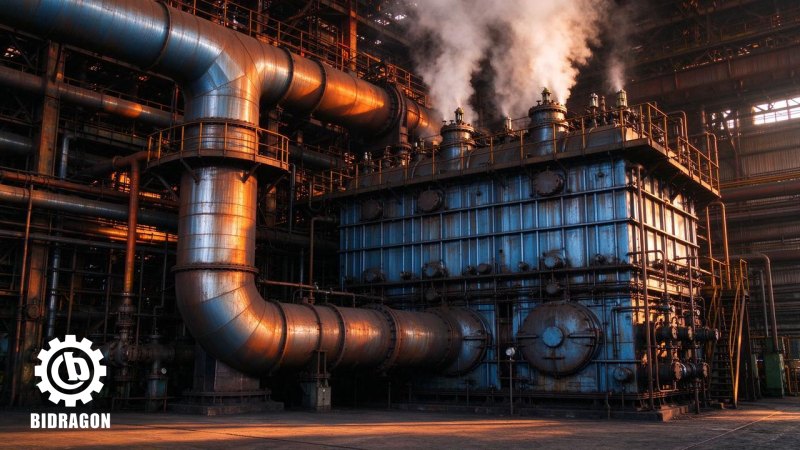
A waste heat boiler is a kind of heat transfer equipment that does not rely on fuel combustion to obtain heat. The heat source comes from the high-temperature flue gas discharged from the production process.The flue gas flows through the metal heating surface in the flue, and the heat is transmitted to the water supply in the pipe, which vaporizes it to produce usable steam.It does not have a furnace or burner, and its only task is to capture the significant heat lost in the flue gas and convert it into steam heat energy that can be used for process or power generation.
A typical waste heat boiler consists of a economizer, evaporator, steam drum and superheater. The actual configuration depends on the on-site conditions. Not all units are equipped.The economizer preheats the water supply in the low-temperature flue section, the evaporator assumes the main heat absorption to vaporize the water, the steam drum separates the steam and the furnace water to stabilize the quality, and the superheater continues to heat the steam to improve the ability to do work.
The fundamental difference from traditional fuel boilers is the heat source.Traditional boilers rely on coal or natural gas combustion to produce heat, with stable heat sources and high temperature in the combustion zone.The heat of the waste heat boiler is determined by the upstream process. The flow rate of the flue gas fluctuates greatly and the dust content is high. The boiler cannot adjust the heat intake independently.This feature directly affects the material selection, structural design and operation strategy.
A large amount of heat energy in steel production is directly emptied with the high-temperature flue gas, and the sintering link is the most prominent.The temperature of the main flue gas is 150 to 400 degrees Celsius, and the cooling exhaust gas reaches 300 to 450 degrees Celsius.All heat is lost when there is no recovery device.A reasonably configured waste heat boiler can reduce the flue gas from about 350 degrees Celsius to 160 to 180 degrees Celsius and then send it for dust removal, with considerable recovery potential.
After the high-temperature flue gas enters the flue, it scours each section of the tube bundle, and the heat is transmitted to the soda medium in the tube, and the evaporator assumes the main endothermic task.Taking a sintered boiler with a flue gas treatment capacity of 300,000 standard cubic meters per hour as an example, under the conditions of 350 degrees Celsius at the inlet and 170 degrees Celsius at the outlet, the heat can be recovered by about 25 megawatts, and the output of 1.6 MPa saturated steam per hour is about 35 tons.
However, there are constraints on recycling.The sulfides in the flue gas form sulfuric acid vapor, and the pipe wall corrodes below the acid dew point, which is mostly 120 to 150 degrees Celsius.Blindly lower the exhaust temperature and exchange more heat, corrosion and loss will eat up investment in two or three years.The smoke exhaust temperature is generally controlled at 160 to 180 degrees Celsius on site to strike a balance between the recovery rate and the life of the equipment.
Is low-temperature sulfuric acid dew point corrosion quietly thinning your flue pipes and threatening your sintering boiler lifespan?
Don’t sacrifice equipment durability for thermal yield—upgrade to our high-efficiency waste heat boilers.
Get a free steel mill waste heat boiler evaluation and quote today.

Coking desulfurization, sintering and humidification, steel-rolling pickling and plant heating are inseparable from medium and low-pressure steam. Traditionally, it is prepared by fuel boilers, and it consumes 80 to 100 kilograms of standard coal per ton of steam.The steam produced by the waste heat boiler is connected to the mother pipe of the plant, and the waste flue gas heat is used to replace the fuel.The converter recovers 80 to 120 kilograms of saturated steam per ton of steel at a pressure of 2.5 to 4.0 MPa.The workshop with an annual output of 2 million tons of steel recycles 40 to 60 tons of steam per hour, and can replace 25,000 to 30,000 tons of standard coal for 7,000 hours of annual operation.
However, there are shortcomings in the waste heat steam supply, and the rhythm of steam production follows the steelmaking process. It is difficult to match the steady demand for steam when it is blown up and falls down during the rest of the time.The industry is generally equipped with a heat accumulator or in parallel with a peak-regulating boiler to smooth out fluctuations. The heat accumulator increases the input area, but it is an indispensable support for the release of waste heat and steam.
When the steam parameters are high enough and the process steam consumption is not complete, the excess steam is passed into the steam turbine to generate electricity.The superheated steam enters the steam turbine to expand and do work to push the rotor, and the steam that completes the work is discharged into the condenser to condense into water, and then returned to the boiler for circulation.The steam turbine converts thermal energy into mechanical energy, and the generator into electrical energy.
The efficiency of waste heat power generation is restricted by the temperature of the flue gas.The sintered boiler produces steam from 1.6 to 2.5 MPa and 300 to 350 degrees Celsius, with a circulation efficiency of about 18% to 25%; the parameters of the converter boiler reach 3.8 to 4.0 MPa and 400 to 450 degrees Celsius, and the efficiency rises to 25% to 30%.In the end, only one-fifth to one-quarter of the heat input to the boiler becomes electricity, and the rest is taken away by the cooling water in the condenser. This is the inevitable result of the waste heat temperature being much lower than that of the coal-fired furnace.
Increasing steam parameters means higher costs.The pressure increased from 2.5MPa to 4.0 MPa, and the efficiency increased by 5 to 8 percentage points, but the metal consumption and manufacturing costs of the heated surface increased by 15% to 25%, and the steam turbine generator was also more expensive.Whether it is cost-effective or not depends on the local electricity price and the actual heat recoverable.
Steel mills are complex energy systems that import coke, pulverized coal, natural gas, and outsourced electricity, and output steel, by-product gas, and waste heat steam.The value of waste heat boilers lies in pulling the waste heat that was originally included in the energy loss back to the balance sheet and reducing the net input of external energy.
When there is no waste heat boiler, the heat of the flue gas is directly lost, and the plant has to burn another boiler to produce steam and generate electricity.After installation, this part of the heat is recovered to replace part of the coal-fired and outsourced electricity.The comprehensive energy consumption of tons of steel under the caliber of the whole plant can be reduced by 8% to 15%. For modern steel mills where the three heat sources of sintering, converter, and heating furnace are recovered, the energy consumption of tons of steel can be reduced from about 20 GJ to less than 17 GJ.
But recycling is not equal to automatic utilization.When the peak of steam production hits the trough of steam consumption, steam can only be discharged into the air.Operators should predict the supply of flue gas according to the production plan, arrange the time period for steam use, or rely on the regenerator to store peaks and fill valleys. This requires real-time data collection and load prediction capabilities, and they also have input.
The emission reduction effect of waste heat boilers is indirect, but the effect is clear.For every ton of flue gas heat originally emitted is recovered, the same amount of fuel is burned less to produce steam or the same amount of electricity is bought less.Coal-fired electricity emits 0.7 to 0.9 kilograms of carbon dioxide per degree, and coal-fired boilers emit 200 to 300 kilograms per ton of steam. Heat is recovered to replace these external energy sources, and carbon emissions are reduced accordingly.
Calculate an account: the converter workshop with an annual output of 2 million tons of steel recycles 50 tons of steam per hour, and it runs for 7,000 hours a year to replace 28,000 tons of standard coal. According to the discharge of 2.6 tons of carbon dioxide per ton of standard coal, the annual emission reduction is about 73,000 tons.The actual emission reduction depends on the type of energy being replaced. The benefits of replacing coal and electricity are large, while the benefits of replacing natural gas or hydropower and nuclear power grids are significantly reduced.
The energy consumption of the boiler itself must also be deducted.For every 1000 pa increase in the flue gas side pressure drop, the induced draft fan consumes 150 to 200 kilowatts more.The more heating surfaces, the more heat is recovered, the greater the smoke resistance, and the higher the electricity consumption of the plant.This part of self-consumption must be deducted when accounting for emission reductions, otherwise the benefits will be overestimated.The threshold for the feasibility of a project is usually positive net power generation efficiency and a payback period of not more than 5 to 7 years.
The recyclable waste heat of steel mills is dispersed in various processes, and the smoke temperature, flow rate and dust content vary greatly.Sintering is the largest source of waste heat, and the flue gas and cooling exhaust gas of the main flue account for a considerable proportion of the total.The smoke temperature of the converter is high but discharged intermittently. Each furnace is blown for 15 to 20 minutes, and the parameters fluctuate violently.The electric arc furnace is also intermittent at high temperature, and the dust concentration can reach more than 100 grams per standard cubic meter.
The exhaust temperature of the rolling steel heating grate is 800 to 1100 degrees Celsius, and the quality is good.Many old factories are only equipped with air heat exchangers to preheat the combustion air. The new factory will string a waste heat boiler behind the heat exchanger to reduce the exhaust from 300 degrees Celsius to 180 degrees Celsius, and produce an additional part of the steam.
It is necessary to distinguish between apparent heat and chemical energy.The high-temperature flue gas itself carries significant heat, which is recovered by the waste heat boiler; the carbon monoxide in the converter gas and blast furnace gas carries chemical energy, which is used by the gas purification and combustion system.The two types of heat source recovery methods are completely different and cannot be confused.
After the high-temperature flue gas is discharged from the upstream process equipment, it first enters the flue of the waste heat boiler.In the flue, the flue gas flows from top to bottom or from front to back, passing through the superheater, evaporator and economizer tube bundles in turn.The temperature of the flue gas gradually decreases in this process, while the water and steam in the pipe gradually heat up, vaporize and overheat.
The water supply is advanced to the economizer, and the section below the smoke temperature of 300 degrees Celsius is preheated to a temperature close to saturation, then enters the steam drum, and flows into the evaporator through the descending pipe.The evaporator is in a high temperature zone, and the endothermic part of the water is vaporized and returned to the drum as a soda mixture.The steam drum separates the saturated steam and feeds it into the superheater for further heating to the rated temperature.
Superheated steam is sent from the boiler outlet to the pipe network or steam turbine, and the flue gas passes through all the heated surfaces and drops to 160 to 180 degrees Celsius before entering the dust removal system.This interval is a compromise of multiple constraints: the temperature is high, the recovery is insufficient, the acid dew point corrosion risk is low, and it must also match the inlet requirements of the bag dust collector below 180 degrees Celsius.
Sintering is the most mature process for waste heat boiler applications.The flue gas and cooling exhaust gas of the main flue are collected and introduced into the boiler, and part of the steam is used for its own use and excess power generation.The sintered flue gas has high dust content and alkali metals and sulfur oxides, and the heated surface is easy to accumulate ash and corrode. It needs to be equipped with an online soot blower and corrosion-resistant low-alloy steel pipes.
The flue gas temperature of the converter is the highest, and the furnace gas during the blowing period is 1400 to 1600 degrees Celsius.The waste heat boiler adopts a vaporization cooling flue, which is directly wrapped above the furnace mouth, which not only recovers heat but also acts as the flue wall, and the steam is produced into the regenerator and output stably.The flue gas contains a lot of carbon monoxide, and the excess air coefficient needs to be controlled to prevent the secondary combustion from over-temperature.
The recovery of flue gas from electric arc furnaces is more difficult.The smelting cycle is 40 to 60 minutes, the smoke temperature is the highest during the melting period, and the refining period drops sharply.If designed according to the peak, the utilization rate of the trough is low, and if designed according to the mean, the peak may be over-temperature.The content of zinc and lead in the dust is high, and the wear and ash blocking are more serious than that of sintered boilers.
Whether coking and rolling heating are equipped with waste heat boilers depends on the specific conditions.The smoke temperature of the coke oven is 200 to 300 degrees Celsius, the quality is low, and it is mostly used for preheating the combustion air.The exhaust temperature of the rolling steel heating grate is high, and whether to add a boiler depends on the steam gap in the plant and the payback period.
Sintered waste heat boilers are mostly arranged vertically or horizontally, with multiple sets of pipe bundles in the flue, and the flue gas is washed laterally.The sintered flue gas has a large dust content, and the tube bundles need to be arranged at large pitch and equipped with steam or sonic soot blowers to prevent dust bypass clogging.
Most of the waste heat boilers in the converter are flue-type, and the heating surface is directly made into the flue wall, with a high smoke speed and dense tube bundle.In the high temperature section, a membrane-type water-cooled wall is required, and the inner wall is vaporized and heat-absorbing to protect the pipe wall.The circulation method is mostly forced circulation. Due to the compact flue, the natural circulation pressure head is insufficient.
Electric arc furnace waste heat boilers need to cope with severe fluctuations in heat load. Usually, a radiation cooling section is set up in the high temperature section, and a large number of water-cooled pipes are used to directly absorb the radiant heat of the high-temperature flue gas, reduce the temperature of the flue gas, and then enter the convection heating surface.This segmented design not only protects the subsequent convection tube bundle from high temperature damage, but also improves the overall thermal adaptability.
The water cycle is divided into natural cycle and forced cycle.The natural circulation is driven by the difference in the density of soda water, without a pump, which is reliable but requires a sufficient height difference, and the pressure usually does not exceed 6 to 8 MPa.The forced circulation pump is used to push the water flow, and the arrangement is flexible and not limited by height, but the pump has a high failure rate in a high temperature and dust environment, and it needs to be equipped with a pump.Which one to choose depends on the steam parameters, site and operation and maintenance capabilities.
The smoke temperature and flow rate determine the output of the boiler, and the evaporation volume is approximately proportional to the temperature difference between the import and export smoke.For every liter of smoke temperature of 50 degrees Celsius, 15% to 20% more heat is recovered from the same amount of smoke.When the upstream process is unstable, the boiler deviates from the design working conditions for a long time, and the actual steam production is lower than the design value.The fluctuation of flue gas parameters should be controlled within plus or minus 20% of the design value.
Dust accumulation is the most common efficiency killer.The dust attaches to the outer wall of the heated surface to form an insulating layer, and the heat transfer coefficient may decrease by 20% to 30% after one year of operation.Regular soot blowing can restore most of the efficiency, but the soot blower is easily damaged in a high temperature and dust environment.Low-temperature corrosion is more concealed, and the pipe wall is gradually thinning. When leaks are found, large-scale pipe replacement is often required.
The temperature of the feed water and the side pressure drop of the flue gas also affect the performance.For every liter of water supply temperature of 10 degrees Celsius, the endothermic of the economizer decreases and the proportion of the evaporator increases.When the voltage drop is too large, the induced draft fan current exceeds the standard and is even forced to drop the load.There is a trade-off between the heat transfer area and the smoke resistance. While increasing the area to recover more heat, the smoke resistance is also rising.
Waste heat boilers must be connected to the plant's energy network to be valuable.The output steam is incorporated into the steam master pipe through the main pipe, and runs side by side with other steam sources.When the steam production is greater than the steam used, the steam turbine is sent to generate electricity, and the peak-adjusting boiler is used to supplement it when it is insufficient.The pressure stability of the female tube requires matching of the parameters of each steam source.
The selection of steam turbine depends on the steam parameters.When process steam is needed, a pumping steam turbine is used, and a portion of the steam is drawn out in the middle for production, and the rest continues to expand to do work.This method is more flexible than pure condensate, but the pumped steam no longer generates electricity, and the power generation capacity is reduced accordingly.
The difficulty of integration lies in the coordination of three variables: the waste heat of flue gas fluctuates with the rhythm of production, the process steam changes with the product and the shift, and the acceptance of self-generation by the power grid is also unstable.Improper scheduling can lead to steam venting or frequent start and stop, which not only wastes heat but also exacerbates equipment wear and tear.
The logic of installing waste heat boilers in steel plants is not complicated: the significant heat in the high-temperature flue gas was originally to be discharged, but now it is used to produce steam and generate electricity, replacing part of the outsourced fuel and electricity. The energy consumption of tons of steel has been reduced, and carbon emissions have been reduced.The actual recovery depends on the smoke temperature, dust content, steam parameters and plant scheduling. The payback period is usually 4 to 7 years.This is not the icing on the cake, but a recovery investment that must be clearly calculated on the energy accounts of steel mills.