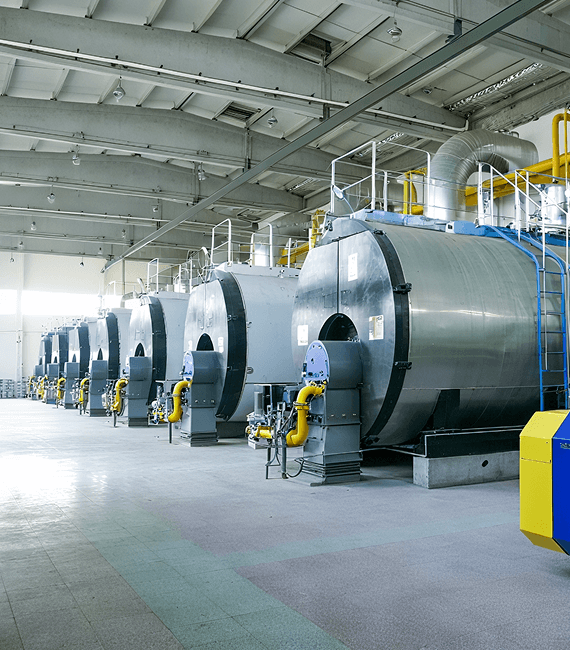

Continuous contact between thermal oil and oxygen under high temperature conditions is the core cause of oil deterioration and equipment failure in industrial thermal oil heaters.Nitrogen gas protection is a mature supporting solution for industrial thermal oil systems, which can effectively inhibit the aging of oil products.
Nitrogen protection replaces the gas phase space of the expansion tank with an inert gas, reduces the oxygen content, and blocks the oxidation of oil products from the source.Combined with industrial working conditions, this paper analyzes the nitrogen seal protection mechanism of the system, the working principle of the system, and the core points of operation and maintenance selection.
The conventional operating range of industrial thermal oil furnaces is 200℃ to 350℃. The high temperature environment will greatly improve the molecular activity of thermal oil and reduce its chemical stability.There is no significant change in the oil's contact with air at room temperature, but oxygen will continue to participate in molecular reactions under high temperature conditions, which significantly accelerates the aging of the oil.
The oxidation reaction will continue to change the core physical and chemical parameters of the thermal oil, resulting in an increase in viscosity, a decrease in flash point, and an attenuation of heat transfer efficiency. At the same time, organic acids, colloids, asphaltene and other degraded products will continue to be generated.Such products cannot be eliminated naturally and will continue to accumulate in the system.
After the accumulated deterioration products are polymerized and precipitated, sludge and hard carbon deposits will form, which are attached to the heat transfer walls of pipelines, heat exchangers and furnace bodies, which directly cause problems such as reduced heat transfer efficiency, clogged pipelines, and local overheating.Controlling the oxygen contact amount and contact time of high-temperature thermal oil is the basis for the stable operation of industrial thermal oil systems.
The pipeline of the standard enclosed thermal oil circulation system is completely airtight with the furnace body, and the oil circulates in a closed loop. Under normal operation, it will hardly touch the atmosphere, which can effectively avoid a wide range of oxidation problems.
The expansion tank is the only equipment in the system that cannot be fully filled with oil, and it is also the core point of air exchange.The thermal expansion and contraction characteristics of the thermal conductive oil are obvious. When it heats up and expands, excess oil flows into the expansion tank, and when it cools down and shrinks, the volume inside the system is vacant, and the gas phase medium needs to be filled to prevent the negative pressure of the pipeline from collapsing.
The conventional gas phase space of the industrial expansion tank accounts for 30% to 50% of the tank volume.Under unprotected working conditions, the space is directly connected to the atmosphere, and oxygen continues to dissolve in the surface thermal oil and gradually diffuses inward. It is the only channel for the oxidation and deterioration of oil products in the closed system, and it is also a targeted protection point for nitrogen protection technology.
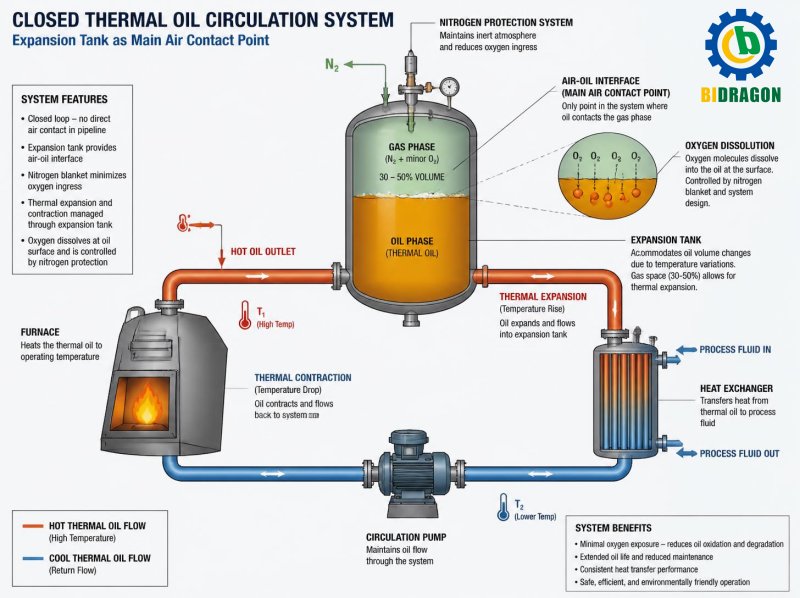
Oxygen is the direct cause of the high temperature deterioration of the thermal oil. The higher the oxygen content and the longer the contact time, the faster the aging rate of the oil.The measured data show that at 300℃, the oxidation rate of the thermal oil exposed to the air is 6 to 8 times that of the oxygen-free confined environment, and the performance attenuation can occur in a short period of operation.
The organic acid generated by oxidation will corrode the inner wall of the metal of the equipment, and at the same time catalyze the cracking and polymerization of oil products, forming a deterioration cycle.Small molecule cracking products will reduce the flash point and ignition point of oil products, increase safety risks, and macromolecular polymerization products will gradually form colloids and sludge.
The sludge is attached to the wall of the heat transfer pipe, the furnace body and the filter with the circulation of the oil, forming an uneven sedimentary layer.A carbonaceous sedimentary layer with a thickness of only 0.5mm can cause a decrease in heat transfer efficiency by 8% to 12%, which directly increases equipment energy consumption and reduces production capacity.In severe cases, it will cause blockage of pipelines, insufficient flow, and over-temperature of the furnace body, which will greatly shorten the service life of oil products and equipment.
Isolating oxygen and reducing the oxygen concentration in the gas phase can inhibit the oxidation reaction from the source, reduce the generation of degraded products, stabilize oil performance, avoid heat transfer and circulation failures, and effectively reduce operation and maintenance costs and downtime losses.
Facing frequent thermal fluid degradation, high fuel bills, or planning a new thermal fluid heater installation? Partner with our thermal energy experts today to discover high-efficiency, nitrogen-sealed system designs engineered to double your fluid life and maximize ROI.

Nitrogen is chemically inert and does not react with thermal oil or metal equipment under high-temperature operating conditions. By continuously supplying high-purity nitrogen into the vapor space of the expansion tank to displace internal air, a nitrogen blanketing system maintains the oxygen content below 2%, creating a stable, low-oxygen environment.
This low-oxygen environment directly eliminates contact between the oil and air, thereby significantly inhibiting oxidation reactions. A stable nitrogen blanket can reduce the oil oxidation rate by more than 85% and substantially decrease the formation of organic acids, all without altering the oil's physicochemical properties or corroding the equipment structure.
This approach involves clear operational trade-offs; continuous nitrogen supply and periodic pressure calibration increase consumable and maintenance costs. However, when compared to the costs associated with oil replacement, equipment cleaning, and downtime losses incurred within just one to two years of unprotected operation, the long-term economic advantages are substantial.
The generation of thermal oil sludge and hard sediments depends entirely on the oxidation, cracking and polymerization reactions induced by oxygen.The precursor substances such as gum and asphaltene produced by oxidation continue to accumulate and solidify, and finally form a sedimentary layer attached to the inner wall of the equipment.
Sediments will continue to deteriorate the working conditions of the system.Carbon deposits on the heat transfer wall will cause the pipe wall to overheat, further accelerating the cracking of oil products, resulting in continuous thickening of carbon deposits.Pipeline sludge will reduce the diameter of the flow pipe and reduce the circulating flow rate, resulting in uneven heat transfer and unbalanced equipment load.
Nitrogen protection can reduce the coking deposition rate by 90% by strictly controlling the oxygen content to weaken the oxidation and deterioration process, and maintain the cleanliness of oil products and pipelines for a long time.The limitation of this technology is that it can only inhibit oxidized carbon deposits and cannot eliminate trace deposits generated by long-term high-temperature cracking of oil products. The system still needs regular filtration and maintenance.
Oxygen is a necessary condition for the combustion reaction of combustible media. After the volatile lightweight combustible gas of the thermal oil gathers in the expansion tank, if the oxygen content falls into the explosion limit, high temperature hot spots or electrostatic sparks will cause safety hazards.
Nitrogen filling the gas phase space can suppress the oxygen content below the combustible threshold value, eliminate the risk of gas phase combustion and explosion, while avoiding local over-temperature deterioration caused by severe oxidation and exothermic of oil products, and broaden the safe operation boundary of the system.
The protection of the nitrogen sealing system has clear limitations and cannot replace core safety devices such as temperature interlocking, overpressure relief, and emergency shutdown, and cannot cope with failures such as over-temperature, overpressure, and pipeline leakage.Excessive dependence on nitrogen gas protection will cause security risks, which is a trade-off point that needs to be taken into account in system design and operation and maintenance.
The closed-loop circulation pipeline is filled with liquid thermal oil throughout the process, there is no gas phase space, and there is no problem of oxygen gathering and oil-gas contact.In order to adapt to the thermal expansion and contraction of oil products, the expansion tank must reserve the air volume. It is the only oxygen intrusion point of the entire system and the only area that needs inert protection.
Nitrogen only needs to act on the gas phase space to achieve global oxygen content control, and access to the gas phase area of the expansion tank can achieve effective protection under the premise of minimum nitrogen consumption, while avoiding the direct passage of nitrogen into the oil circuit to produce air bubbles and gas resistance, to ensure the stable operation of the circulation system.
This arrangement can control operation and maintenance costs and avoid system interference, but it requires higher sealing and voltage regulation accuracy of the expansion tank.The failure of the tank seal will directly cause nitrogen leakage and protection failure. Therefore, the sealing and pressure monitoring at this point are the core focus of operation and maintenance.
The nitrogen sealing system takes the gas phase space of the expansion tank as the core, maintains an inert environment through dynamic pressure adjustment, and adapts to the volume fluctuations caused by oil temperature changes.
During normal operation of the equipment, the pressure regulating device stably delivers high-purity nitrogen to the expansion tank, replaces the internal air and maintains a preset pressure interval.During the heating stage, the volume of the oil expands, and the compressed gas phase space causes the pressure to increase. The system automatically relieves the pressure and discharges excess nitrogen to avoid overpressure of the tank.
During the cooling and shutdown phase, the oil product shrinks, the volume of the gas phase space increases, and the pressure drops. The system automatically triggers the gas replenishment program to replenish nitrogen to maintain positive pressure and prevent negative pressure from inhaling external air.
The system realizes oxygen isolation through continuous dynamic voltage regulation. A small amount of nitrogen will be lost during operation. There will be mechanical wear and tear on the long-term start and stop of the voltage regulating components, and regular calibration and maintenance are required.This kind of operation and maintenance loss is much lower than the economic loss caused by oxidation failure, and the overall is in a controllable range.
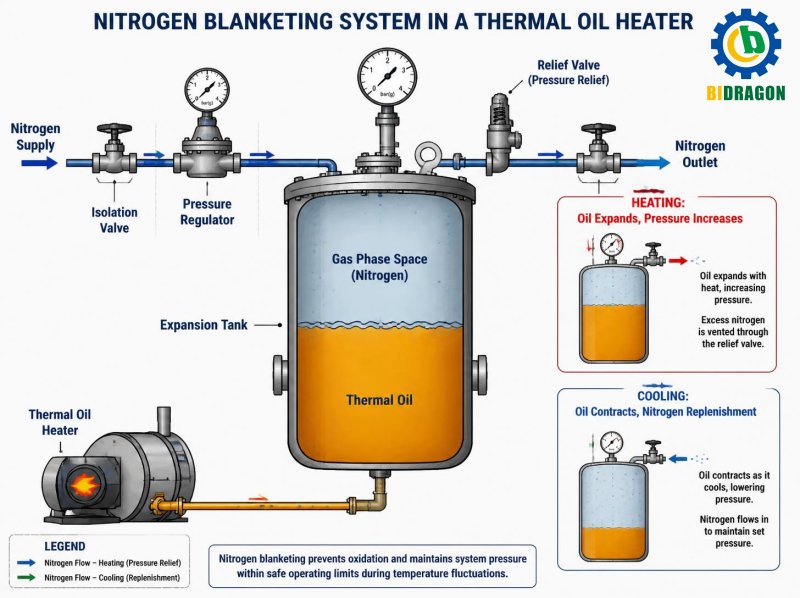
The complete nitrogen sealing system is composed of many types of special components, and each performs its own functions to complete the inert protection and pressure control, which is the basis for the stable operation of the system.
The nitrogen supply source mostly uses liquid nitrogen storage tanks or high-purity nitrogen cylinders to stably provide nitrogen with a purity of 99.9% and above to prevent impurities from interfering with the protection effect.The nitrogen sealing valve and the pressure regulating valve are the core regulating components, which accurately control the replenishment flow and pressure, and adapt to the dynamic pressure changes of the system.
The pressure gauge and pressure transmitter collect gas phase pressure data in real time to provide accurate data support for automatic adjustment, and the monitoring accuracy directly determines the effect of voltage regulation.The temperature and pressure resistant pipeline is responsible for nitrogen transmission to avoid deformation and leakage under high temperature conditions.
The connection part of the expansion tank is strengthened and sealed to prevent nitrogen leakage and air infiltration.The pressure relief safety device is responsible for the pressure relief under overpressure conditions and protects the safety of the equipment structure.Supporting monitoring instruments can realize pressure alarm and data recording, which is convenient for operation and maintenance personnel to control the status of the equipment in real time.
There are obvious cost trade-offs in component selection. The initial investment in low-profile components is low, but the leakage rate is high, the adjustment accuracy is poor, the failures are frequent, and the long-term operation and maintenance costs are higher.The initial investment of industrial-grade high-precision components is higher, but the stability is strong, the nitrogen loss is low, and it is suitable for long-term continuous production conditions.
There is no unified standard for nitrogen sealing pressure in thermal oil furnaces. The parameters are customized and matched according to equipment specifications, expansion tank volume, and operating temperature range. The core refers to the structure design of the expansion tank.
The conventional nitrogen sealing pressure of small equipment is 0.02MPa to 0.05MPa, and the medium and large continuous operation equipment is controlled from 0.05MPa to 0.1MPa.This pressure interval allows the gas phase pressure in the tank to always be higher than the external atmospheric pressure, and the air infiltration is isolated through the positive pressure.
The pressure setting needs to take into account two-way risks. Excessive pressure will increase the pressure load on the sealing structure, accelerate the aging of the seal, and increase nitrogen loss and operating costs.The pressure is too low to form an effective positive pressure, and the air will be inhaled during the cooling and negative pressure stage, which directly leads to the failure of the nitrogen seal and the acceleration of oil oxidation.
The optimal pressure parameters of the equipment must strictly follow the manufacturer's design standards and engineering requirements. Arbitrary adjustment will break the system pressure balance and cause various failures such as leakage, overpressure, and oil deterioration.
Pressure stability is the core index for determining the working conditions of nitrogen sealing. The pressure of the system in normal operation is stable in a preset range, with only small fluctuations.The continuous drop in pressure means that there is leakage or insufficient air replenishment, and frequent overpressure and pressure relief indicate that the pressure regulating element is faulty.
Daily operation and maintenance requires regular inspection of valves, pipelines, connectors and monitoring instruments, and timely handling of common problems such as pipeline aging, loose interfaces, valve stagnation, and instrument misalignment, so as to avoid protection failures caused by minor defects.
The state of the oil product can intuitively reflect the protection effect. Under normal nitrogen sealing conditions, the oil product is clear, the viscosity is stable, and there is no large amount of impurity sludge.The blackening of the oil, the continuous increase in viscosity, and the frequent clogging of the filter all mean that the oxygen intrusion is serious and the nitrogen seal protection fails.
The expansion tank needs to carry out regular air tightness testing and internal cleaning to investigate hidden leakage problems.Maintenance work needs to conform to manufacturer specifications. Excessive reduction in maintenance frequency will increase the probability of failure, and excessive maintenance will generate unnecessary operation and maintenance expenses.
Equipment selection gives priority to models with original integrated nitrogen seal design. The pipeline layout, pressure matching and sealing structure of the integrated equipment are more adapted to the working conditions of the equipment, and the stability and protection effect are better than that of later modified equipment.
Focus on verifying the volume, gas phase ratio and sealing configuration of the expansion tank, and confirm that the complete system of nitrogen supply, pressure regulation and pressure relief is fully matched, without protective shortcomings, and can be adapted to the rated working load of the equipment.
Combined with the nitrogen sealing system that matches the corresponding level of the highest operating temperature of the equipment, the high-temperature equipment has higher requirements for pressure accuracy and sealing. At the same time, confirm the model of thermal oil adapted to the equipment to ensure that the working conditions match the oil parameters.
Verify the response accuracy and adjustability of core configurations such as pressure control, safety pressure relief, and abnormal alarm. Supporting temperature, pressure, and liquid level monitoring instruments need to be complete and reliable to achieve monitoring and traceability of operating conditions.
The selection must conform to general industrial standards, verify the integrity of equipment technical documents, and consider the manufacturer's commissioning services and late maintenance capabilities. Through reasonable selection, the initial investment and long-term operation and maintenance costs of the equipment can be balanced to reduce the risk of failure.
The nitrogen protection of the industrial thermal oil furnace is isolated by the positive pressure of the inert gas, blocking the only oxygen intrusion channel of the thermal oil system.It effectively inhibits the high-temperature oxidation of oil products, reduces the generation of sludge and carbon deposits, and stabilizes the heat transfer efficiency and operating reliability of the equipment.Its protection ability depends on precise pressure regulation and intact supporting components, and the cost of consumables, maintenance and equipment loss needs to be balanced during operation.As the core configuration of the thermal oil furnace, the nitrogen sealing system is deeply integrated with the equipment structure, circulation and safety system, which is the key to ensure the long-term safe and efficient operation of the system.