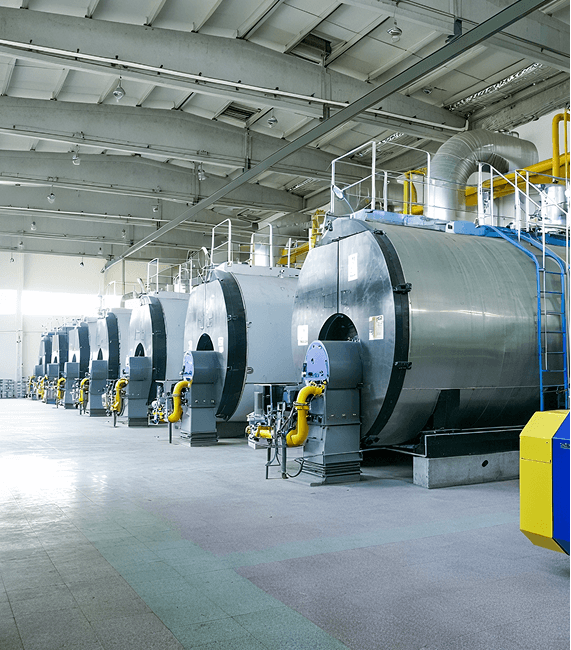

Waste heat boilers are widely used in various industrial processes. They are mainly used to recover waste heat from high-temperature flue gas and convert it into usable steam, effectively reducing production energy consumption and providing a stable heat source for production and power generation.
During the long-term continuous operation of the boiler, the dust-containing medium in the flue gas will continue to accumulate on the heating surface and the flue to form ash.Ash accumulation will deteriorate the heat transfer performance and flue gas circulation conditions, threatening the operating stability of the equipment.

Waste heat boiler ash accumulation is the phenomenon of solid particles and combustion residual ash in the flue gas deposited and attached to the pipe wall, flue and pipe bundle gap of the heating surface.When the flue gas flows through the heat transfer area, the ash particles remain on the inner wall of the equipment through impact, sedimentation, heat transfer adsorption, etc., gradually forming an ash layer covering the heat transfer surface.
Industrial ash accumulation can be divided into three forms, with obvious differences in performance and cleaning difficulty.Loose ash has a loose texture and weak adhesion. It can be removed by conventional purging, and it is mostly formed in low-temperature heat transfer areas.The compacted ash is densely formed from loose ash that has been squeezed by long-term flue gas, and the bottom layer is firmly attached. Ordinary soot blowing can only clean up the floating ash on the surface.Sintered hard ash is born under high temperature conditions. The low melting point components of the ash are melted and cured, and the hardness and adhesion are extremely strong. Conventional cleaning methods are invalid and can only be processed by mechanical or chemical methods.
The distribution of ash accumulation has significant regional characteristics.The high-temperature superheater is easy to generate sintered hard ash, and the dense tube bundle of the evaporator is easy to accumulate compacted ash. The economizer and the low-temperature flue at the tail are dominated by fine particles of loose ash, which can easily cause local blockage and weaken the waste heat recovery capacity at the end.
The growth rate of ash accumulation and the curing effect are directly affected by the parameters of the working conditions.The higher the concentration of flue gas dust, the faster the ash accumulation rate.The particle size, morphology and mineral composition of ash particles determine the deposition and sintering characteristics.High temperature will accelerate the melting and curing of ash, and if the flue gas flow rate is too low, it will lose its self-cleaning ability and intensify particle accumulation.
The thermal conductivity of ash accumulation is much lower than that of boiler metal pipes, which will form an insulating layer on the outside of the pipe wall, which will significantly increase the thermal resistance of heat transfer.The measured data show that the heat transfer efficiency of the boiler decreases by 15% to 20% when the ash accumulation thickness is 5 mm, and the heat transfer resistance increases by 3 to 5 times after the thickness exceeds 10 mm, and the heat transfer is greatly attenuated.
Blocked heat transfer will directly reduce the amount of waste heat recovery, and the steam output will continue to decline under stable working conditions. Severe ash accumulation can cause the total amount of waste heat recovery to decrease by more than 20%, and the energy output efficiency of the equipment will be significantly reduced.
Insufficient heat transfer caused by ash accumulation will increase the exhaust temperature by 30 to 50 degrees Celsius.The site usually makes up for the steam gap by increasing the load, and increases the energy consumption of the front-end production in disguise, forming a continuous waste of performance.
The thickness, density and coverage of ash accumulation determine the degree of heat transfer attenuation.Uniform thin ash causes linear efficiency loss, and local thick layers of hard ash will cause uneven heat transfer and disrupt the overall thermal balance of the boiler.
The accumulation of ash will squeeze the flow gap of the pipe bundle, reduce the effective flow cross-section of the flue gas, and directly increase the flow resistance.Under severe ash accumulation conditions, the overall pressure drop on the flue gas side can increase by 20% to 40%, and the resistance continues to increase with the thickening of ash accumulation.
The increase in voltage drop forces the induced draft fan to increase the frequency and increase the load, and the operating current and power consumption rise synchronously.Even if the fan is running at full load, it is difficult to maintain the rated flue gas flux, which not only increases the energy consumption of operation and maintenance, but also restricts the flue gas emission efficiency of front-end equipment.
Local ash blocking will cause the flue gas to deflect, and the flue gas will pass through the unobstructed channel at high speed, exacerbating the wear of the local pipe wall, and at the same time forming a differentiated ash accumulation growth rate, so that the problem of ash blocking and ash accumulation will continue to worsen.
The pressure difference between the import and export of flue gas is a reliable early warning indicator of ash accumulation.After excluding the interference of fluctuations in working conditions and equipment failures, the pressure difference continues to rise in a stepped manner, and it can be determined that the ash accumulation in the boiler continues to increase.
Sulfur, chlorine compounds and alkali metal salts in the flue gas ash will form a corrosive dielectric layer on the pipe wall, causing corrosion of medium and high temperature deposits.This corrosion mode does not require the participation of condensate, and the coverage is much larger than the acid dew point corrosion of the low-temperature flue. The formation mechanism and action interval of the two are completely independent.
Sediment corrosion will cause pitting of the pipe wall and peeling of the surface layer, and long-term operation will lead to thinning of the wall thickness.The scouring and wear of the hard particles of flue gas in the deflected area can make the local wear rate reach 3 to 5 times the design benchmark.The superposition of wear and corrosion can easily cause perforation of the pipe wall and leakage of media, which directly causes equipment to be shut down for maintenance.
The risk of corrosion depends on the ash content, pipe wall temperature, flue gas operating conditions and ash accumulation state.The higher the sulfur and chlorine content, the higher the operating temperature, and the denser the ash layer, the more serious the corrosion damage to the pipe wall.
Is severe flue gas pressure drop forcing your induced draft fans to run at max load while choking your production line? Take total control of your system resistance and flue dynamics with our reliable industrial waste heat boilers featuring streamlined flow paths and low-resistance design structures.
Request a tailored waste heat project proposal now.

Low-speed areas such as dead corners of the flue and the leeward surface of the pipe bundle are prone to continuous accumulation of floating ash, which continuously narrows the circulation space and reduces the local flow rate, forming a closed loop of ash accumulation, which eventually causes local flue blockage.
When the flue gas temperature is in the range of 800 degrees Celsius to 1100 degrees Celsius, the low-melting alkali metal components of the ash melt and bond, and gradually solidify to form a high-hardness sintered hard ash.This kind of ash accumulation has a dense structure, which cannot be removed by conventional steam and air soot blowing, and will stick to the surface of the heated surface for a long time.
Local blockage will completely disrupt the flue gas flow field, causing a wide range of flue gas diversion, causing a vicious circle of increased local wear and increased local ash accumulation, and greatly attenuating the operating performance of the equipment in a short period of time.
Under normal working conditions, the heat transfer load of each heating surface of the boiler is balanced and stable. Uneven ash accumulation will break the heat balance, and the heat transfer in the ash accumulation area will fail, and the clean area will be overloaded with heat transfer, and the overall heat transfer will be disturbed.
The imbalance in heat transfer is directly manifested as the increase in exhaust temperature and the decrease in steam production. Severe local ash accumulation will cause large fluctuations in steam temperature, which cannot meet the stability requirements of the back-end production process.
The partial flow of flue gas and ash blocking will cause uneven temperature field in the furnace and increase the risk of thermal stress damage to the equipment.The parameter fluctuations caused by ash accumulation are affected by multiple conditions, and it is impossible to rely on a single temperature index to determine the degree of ash accumulation, and a comprehensive analysis of multiple parameters is required.
Increased ash accumulation requires shortening the cleaning cycle and increasing the frequency of inspections. Frequent cleaning will consume more steam and electricity, which will significantly increase daily operation and maintenance costs and labor workload.
Severe ash accumulation will force the boiler to operate at reduced load, reduce the energy utilization rate of the system, and at the same time greatly increase the probability of failure such as medium leakage and pipe wall damage, increase the risk of unplanned downtime, and disrupt the rhythm of continuous production.
Repeated ash accumulation and frequent purging will accelerate the aging of the pipe wall and shorten the service life of the equipment.Timely capture of abnormal ash accumulation and dynamic optimization of ash removal strategies can effectively reduce operation and maintenance risks and ensure long-term stable operation of equipment.
The dust load of flue gas is the basic cause of ash deposition. The higher the dust concentration, the greater the amount of ash deposited per unit time, and the faster the growth rate of ash accumulation.Significant ash accumulation can occur in a short period of time under high-dust conditions, and the ash accumulation cycle under low-dust conditions is significantly longer.
The physical and chemical properties of ash particles directly determine the form of ash accumulation.Fine particles and irregular particles are easier to deposit stably. Low melting point substances such as alkali metals, sulfur and chlorine in the ash are the core triggers for the generation of sintered hard ash, and the higher the content, the more significant the tendency to calcination.
The working conditions of the flue gas and the structure of the equipment regulate the distribution and curing effect of ash accumulation.The temperature fits the ash melting interval, which will enhance the viscosity of the particles, the flow rate is too low to lose the ability to clear itself, and the flow rate is too high to intensify the impact deposition.The low-speed dead ends formed by dense tube bundles and multi-corner flue pipes provide stable conditions for ash deposition.
Under high temperature environment, the ash minerals will melt and crystallize, forming high-stability compound salts, which will harden the loose floating ash quickly and greatly increase the difficulty of cleaning.There are differences in the flue gas and equipment structure of different industrial working conditions, and the mechanism and degree of hazard of ash accumulation are different. Targeted control plans need to be formulated.

The smoke temperature, flow rate, and dust concentration of different heat transfer areas of the boiler vary greatly, and the form and risk of ash accumulation are different. It is necessary to combine the flow field and temperature characteristics to identify high-incidence areas.
The high-temperature inlet superheater is a high-emission area of sintered hard ash. The high-temperature environment activates the ash activity and easily forms hard fouling. It not only attenuates the high-temperature heat transfer capacity, but also induces high-temperature corrosion and thinning of the pipe wall. Conventional cleaning is difficult to deal with thoroughly, and long-term accumulation threatens the quality of equipment and steam.
The evaporator tube bundle is dense, the flue gas flow rate is low, and the particulate matter sedimentation is large, which forms compacted ash.Ash accumulation will increase the thermal resistance of heat transfer and the pressure drop of flue gas, weaken the heat transfer efficiency, and increase the energy consumption of induced draft fans.
The economizer and the tail flue are low-temperature areas with no sintering conditions, mainly fine particles and loose ash accumulation.Long-term accumulation can easily cause local ash blocking, heat transfer failure, and increased energy consumption, and there are many dead corners in the area and strong concealment of ash accumulation, which can easily accumulate and deteriorate for a long time.
On-site, it is necessary to combine the boiler structure and flue gas parameters to accurately locate the high-incidence area of ash accumulation, and dynamically adjust the frequency and intensity of ash removal to avoid systemic failures caused by uncontrolled local ash accumulation.
The flue gas pressure difference is the most sensitive indicator for determining ash accumulation.When the load, smoke temperature, and flow are stable, the pressure difference between the import and export continues to rise, which means that the flow resistance increases and ash accumulates. Instantaneous fluctuations do not have reference value, and long-term trends need to be tracked to eliminate interference from working conditions.
The smoke temperature changes of each measuring point can assist in identifying local ash accumulation and abnormal heat transfer.The smoke temperature at the outlet of the heating surface rises abnormally, and the temperature deviation of the flue section is too large, which can directly determine the failure of local heat transfer, the presence of ash blocking and the partial flow of flue gas.
The change of steam parameters is an important basis for severe ash accumulation.Under stable operating conditions, the steam output drops and the steam temperature deviates from the rated range, which means that the heating area is severely reduced and the waste heat recovery capacity has declined significantly.
The current of the induced draft fan rises synchronously with the active power, which is a supporting feature of the increase in voltage drop. Some working conditions will also be accompanied by abnormal equipment vibration and noise, which can be used as an auxiliary diagnostic basis.
A single parameter cannot accurately determine the ash accumulation state. It is necessary to combine the operating trend, on-site inspection, and the difference between the parameters before and after the ash removal to avoid misjudgment of operation and maintenance decisions.
Normalization and precise cleaning are the core of ash accumulation control. Timely removal of surface floating ash can avoid ash compaction and sintering, eliminate the generation of heavy hard ash from the source, and reduce the difficulty of subsequent operation and maintenance and the risk of failure.
The cleaning method needs to match the ash accumulation characteristics and equipment structure.Slightly loose ash accumulation is suitable for low-intensity purging, dense and viscous ash accumulation needs to increase the purging intensity, and precise cleaning mode is used in complex and restricted areas to avoid invalid operations and waste of energy consumption.
Real-time working condition monitoring can realize early ash accumulation prevention and control, continuously track differential pressure, smoke temperature, steam parameters and fan energy consumption, can capture minor anomalies in advance, and avoid severe ash accumulation problems through mild ash removal intervention, greatly reducing the cost of rectification.
Optimized operating conditions can control ash from the source.Stabilizing the flow rate of flue gas, eliminating low-speed dead ends, and accurately controlling the operating temperature can effectively inhibit particle sedimentation and the generation of viscous hard ash.
The cleaning cycle and intensity need to be dynamically optimized to adapt to fluctuating industrial working conditions.The cleaning interval is shortened under high-dust conditions, and the cycle is appropriately extended under low-load cleaning conditions. At the same time, the purging intensity is strictly controlled, and a trade-off is made between the cleaning effect and the wear protection of the pipe wall.
The selection of ash removal requires comprehensive ash hardness, adhesion, ash separation, equipment structure and operating conditions, taking into account the ash removal efficiency, operating cost and equipment protection, and avoiding the damage and hidden dangers caused by blind ash removal.
Steam soot blowing has the broadest applicability, suitable for loose and lightly compacted ash accumulation in medium and high temperature areas, low equipment transformation cost, and can be adapted to continuous production conditions.However, its cleaning effect on sintered hard ash is limited. Excessive purging will exacerbate pipe wall wear and consume self-produced steam to increase system energy consumption.
Compressed air soot blowing operation and maintenance is simple, there is no steam loss, and the operating cost is low. It is only suitable for the cleaning of loose fine ash in the low-temperature tail flue and economizer. It cannot handle compaction and viscous ash accumulation. It is only used as an auxiliary means of cleaning.
Mechanical cleaning includes vibration, manual peeling, etc., which can completely remove sintered hard ash and severely compacted ash, but requires offline operation of equipment, interrupts the production process, and improper operation can easily damage the pipe bundle welds and pipe walls, which requires high operating accuracy.
For severe ash accumulation accompanied by corrosion damage, equipment testing and evaluation must be completed first, and special cleaning plans must be formulated to prevent pipe wall leakage caused by blind operation.All cleaning operations must follow the original factory specifications and safety standards to ensure the long-term safety of the equipment.
After cleaning, it is necessary to compare the pressure difference of the flue gas before and after under the same load and flue gas conditions to verify the recovery of the flow resistance.Limited improvement in differential pressure means that there is hard residual ash or partial ash blocking, and secondary cleaning operations need to be supplemented.
Verify the exhaust temperature, regional smoke temperature distribution and steam output. The high-quality cleaning effect is reflected in the rebound of heat transfer capacity, the decline of exhaust temperature, the return of steam parameters to the rated range, and the uniform temperature distribution. The quality of the cleaning can be quantified and the subsequent cleaning cycle can be optimized.
Investigate the residual ash on the heating surface and pipe bundle through visual and non-destructive testing, focus on verifying the high temperature area and the dead angle of heat transfer, and simultaneously check the pipe wall for purge wear, mechanical scratches and thinning problems, and confirm that there is no trend of expansion in the corrosion area.
Comprehensively verify the operating status of the soot blower, pipeline, valve and control system, and investigate faults such as stagnation, leakage, and uneven injection to ensure the stable operation of subsequent normalized soot cleaning.
After the cleaning is completed, establish a new parameter benchmark, track the changes of differential pressure, temperature, and steam parameters for a long time, record the law of ash accumulation, and continuously iteratively optimize the cleaning plan to form a closed-loop control.
In the daily operation of waste heat boilers, ash accumulation is the most common and easily overlooked hidden problem.The seemingly slight accumulation of ash layer not only reduces the operating efficiency of the equipment, but also increases the daily maintenance cost, which directly affects the operating reliability of the entire waste heat boiler.
To make the waste heat boiler operate stably and efficiently for a long time, the core lies in doing a good job of early prevention and control and dynamic operation and maintenance.Rely on operation data monitoring to detect early signs of ash accumulation in a timely manner, and choose the appropriate cleaning method according to the actual working conditions of the boiler, so as to strike a balance between effective cleaning and protecting the boiler tube bundle.At the same time, doing a good job of checking the status after each cleaning can reduce the various problems caused by ash accumulation from the root cause.