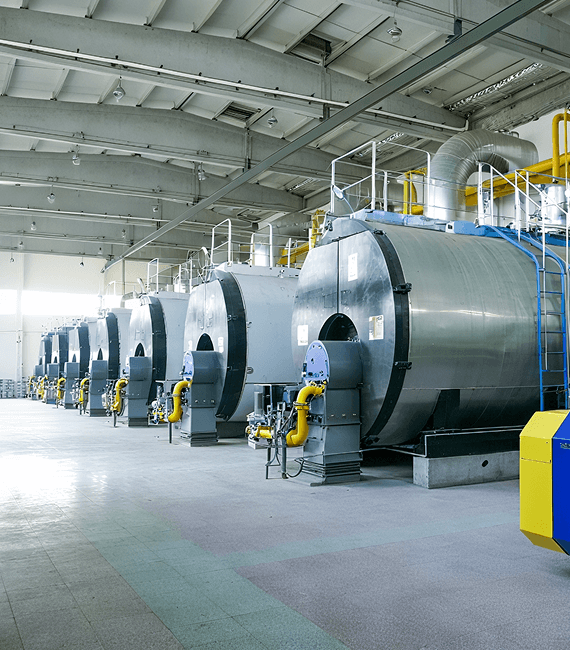

The core stages of granulation, tempering, puffing, and drying in feed production are inseparable from steam, and the fuel cost corresponding to steam is an important part of the plant's operating cost.Judging from industry data, thermal energy (steam) accounts for about 40%-50% of the total energy consumption of compound feed production, and the overall energy cost accounts for 10%-20% of the total production cost.When oil and gas prices fluctuate, changes in steam costs will directly squeeze profit margins.
Biomass boilers use agricultural waste as fuel, which can usually significantly reduce the fuel cost of steam, but the initial investment in such equipment is generally higher than that of traditional gas-fired and fuel-fired boilers.For the operators of feed plants, there are two core issues that they are most concerned about before making decisions: how much money can they save by switching to biomass boilers?How long will it take for all the funds invested in the early stage to be recovered?
The return on investment and payback period can not be calculated by just looking at the boiler quotation. It is affected by multiple variables such as fuel price, running time, boiler efficiency, and total project investment.Next, we will disassemble the complete calculation logic and combine the actual cases of feed plants to explain how to scientifically evaluate the investment value of biomass boilers.
[Want an accurate, custom-built ROI analysis for your feed mill? Contact our energy experts today to get a free professional biomass boiler assessment!]

When many people evaluate biomass boilers for the first time, they will directly compare the equipment quotations of different manufacturers, and feel that the cheap one is the cost-effective one. This is a common misunderstanding.
The core logic of return on investment is to use the money saved every year to cover the initial total investment.The same boiler, placed in a factory that produces continuously in three shifts, and in a factory that only operates day shifts, the annual fuel savings may be more than twice the difference, and the payback period is naturally completely different.
What really determines the ROI is not the purchase price of the equipment itself, but the cost difference of the whole life cycle.It is necessary not only to calculate how much fuel costs can be reduced, but also to consider the additional operation, maintenance, and labor costs, and to calculate the complete investment of the entire project.
To make a relatively accurate ROI calculation, you need to organize the following basic data in advance. The closer the data is to the actual operation of the factory, the higher the reference value of the calculated payback period.:
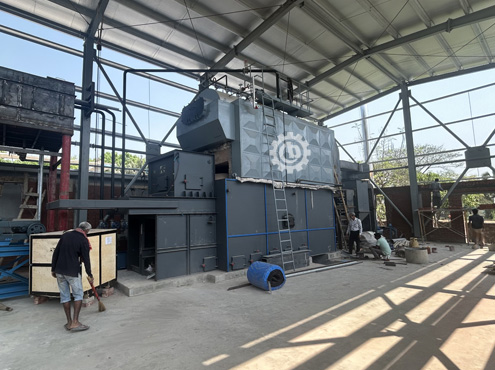
The calculation logic of the payback period is not complicated. The core is to go in four steps: first calculate the current cost, then calculate the cost of the new system, calculate the annual net savings, and finally divide the total investment by the annual net savings.
The first step is to calculate the annual fuel cost of existing boilers, which is the benchmark for all comparisons.
The basic calculation formula is very direct:
current annual fuel cost = annual fuel consumption × fuel unit price
When actually calculating, pay attention to the unity of units.Different fuels have different units of measurement. Natural gas is measured in cubic meters, diesel is measured in liters or tons, and coal is measured in tons. The safest way is to uniformly convert it into “fuel cost per ton of steam”, and then multiply it by the total annual steam production. Taking a common industrial natural gas boiler as an example, when the thermal efficiency is about 92%, the production of 1 ton of saturated steam consumes about 70-85 m3 of natural gas, and the industry's general estimate is about 75m3.If the current price of local industrial natural gas is USD 0 0.53/m3, then the fuel cost per ton of steam is about USD339.77.
If the exact steam output is not clear, it can also be calculated directly from the total fuel payment amount of the past full year. This method is the closest to the actual expenditure and has the smallest error.
The second step is to calculate the annual operating cost after switching to a biomass boiler." "The easiest mistake to make here is to compare "how much is natural gas for one party”and “how much is biomass for one ton”, ignoring efficiency differences and additional operating costs.
First of all, the actual biomass fuel consumption must be calculated.The calorific value of biomass fuels is generally lower than that of fossil energy sources. For example, the calorific value of rice husk is about 3,000 kcal/kg, which is much lower than that of natural gas at 8,500 kcal/m3.
Superimposing the differences in boiler efficiency, the final actual fuel consumption will differ from the theoretical value. Taking the chain grate biomass boiler with a thermal efficiency of 85% as an example, it takes about 230 kg of fuel to produce 1 ton of steam when burning rice husk.
In addition to fuel costs, biomass boilers have several operating expenses that cannot be ignored.:
Reduce electricity bills: induced draft fans, feeders, slag remover, and dust removal equipment will increase power consumption. Usually, each ton of steam consumes 3-6 degrees more electricity than gas-fired boilers.
Labor-saving: Most gas-fired boilers can be unattended, and biomass boilers require special personnel to take care of fuel supply and clean up ash, which will increase labor costs.
Annual maintenance fee: There are many moving parts of biomass boilers, and there are ash accumulation and coking problems. The annual maintenance fee accounts for about 2.5%-4% of the total investment, which is higher than that of gas-fired boilers.
Fuel ash treatment: The ash produced by combustion needs to be cleaned regularly. The ash content is about 1%-3% of fuel consumption, which will result in treatment costs.
Adding up all these projects is the complete annual operating cost of the biomass boiler.
The third step is to calculate the annual net savings amount. The formula is: Annual net savings = total annual operating cost of existing boilers−total annual operating cost of biomass boilers
It should be noted here that the operating cost of the existing boiler must also be considered complete, not just fuel.Gas and fuel-fired boilers also have electricity and maintenance fees, but the amount is lower than that of biomass boilers.The difference between the two is the real savings in the bag.
In other words, the difference in fuel costs is only a gross savings, from which the additional electricity bills, new labor, additional maintenance, ash treatment and other costs of biomass boilers need to be deducted, and the rest is the real annual net income.When many manufacturers advertise, they only mention fuel savings and do not mention additional operating costs, so the calculated ROI will be significantly inflated.
The fourth step is to calculate the static payback period.
The core formula is: payback period (year) = total project investment ÷ annual net savings
The shorter the payback period, the faster the initial investment recovery rate and the lower the project risk.In the feed industry, the payback period of 2-4 years is usually within the acceptable range.
This simple static algorithm also has limitations. It does not consider the time value of funds, loan interest, equipment depreciation, residual value and other factors.If it is a large-scale project above one million, it is recommended to supplement the net present value (NPV) and internal rate of return (IRR) analysis, and the financial assessment will be more comprehensive. For the preliminary feasibility judgment, the static payback period is intuitive enough and easy to use.
[Skip the guesswork and let our engineers calculate your exact savings. Partner with us for turnkey biomass solutions designed to maximize your plant's profitability.]
Taking a medium-sized livestock and poultry feed factory as an example, we will fully demonstrate the calculation process and help everyone establish specific numerical concepts.
This factory originally had a 2-ton/hour natural gas steam boiler, which mainly supplied the granulation and a small amount of drying sections. The specific working conditions and parameters are as follows:
The above are the estimated values of typical working conditions and are only used to demonstrate the calculation logic. The actual project must be replaced by the real operating data of the factory itself.
First calculate the annual fuel cost of existing natural gas boilers: each ton of steam consumes about 75 m3 of natural gas, with an average load of 1.5t/h, and consumes 112.5 m3 of gas per hour.
Annual air consumption: 112.5 m3/h × 5000 h = 562,500 m3
Annual fuel cost: 562,500 m3 × 0.53 USD/m3 ≈298,295 USD (approximately 298,300 USD)
Then calculate the annual fuel cost of biomass boilers: each ton of steam consumes about 230 kilograms of rice husk, and 0.345 tons are consumed per hour.
Annual rice husk consumption: 0.345t/h × 5000 h = 1725 tons
Annual fuel cost: 1725 t × 42.42 USD/t ≈73,182 USD (approximately 73,200 USD)
The difference in annual fuel cost: 29.83−7.32 = USD 2225,100 for fuel alone, which can save about US。225,100 per year.
Next, deduct the operating cost of the biomass boiler that is more increased than the original system.:
1.Additional electricity bill: each ton of steam consumes about 4 degrees more power, and the annual power consumption is 1.5×4×5000=30,000 degrees, calculated at 0.12 USD/degree, about 3636 USD
2.Labor cost: 1 new boiler and yard administrator, with an annual salary and social security of about USD9 9,848
3.Maintenance cost: estimated at 3% of the total investment, 318,200 × 3% ≈ 9,546 USD
4.Miscellaneous fees for ash treatment and fuel transfer: about USD 3 3,030/year
Total annual additional operating costs:3636 + 9848 + 9546 + 3030 ≈ 26060 USD(approximately 26,100 USD)
Annual net savings = annual fuel savings−additional operating costs = 22.51−2.61 = USD199,000
The total investment of the project is 318,200 USD, and the annual net savings are about 199,000 USD. Static payback period = 31.82 ÷ 19.90 ≈ 1.6 years
In other words, under this typical operating condition, the payback period for replacing a natural gas boiler is about 19 months.
This result corresponds to a scenario where industrial gas prices are high and local biomass resources are sufficient.If the original fuel is coal and the fuel cost base is lower, the net savings of the same steam production will be about 90,900-106,100 USD in the next year, and the payback period will be extended to 3-3.5 years, which is basically in line with the industry average. The payback period of the actual project will fluctuate with changes in fuel prices, running time, boiler efficiency, and total project investment. This value is for reference only.
For the same biomass boiler, the return on investment calculated in different feed plants may be several times worse, and the core difference comes from three aspects.
Fuel cost is the most important variable affecting ROI.Biomass fuels are not standardized commodities, and their prices and supplies are extremely regional. The biomass fuels commonly used in feed mills include rice husk, sawdust, sawdust, bagasse, palm husk, peanut husk and other agricultural residues. The calorific value, ash content, and price of different categories vary greatly.For example, the ex-factory price of rice husk is very low in the main rice producing areas such as Northeast and Jiangxi, but after the transportation distance exceeds 200 kilometers, the ex-factory price may double.
There are several hidden costs that can easily be ignored:
When calculating fuel costs, the on-site price of the incoming plant must be used and converted according to the actual calorific value. You can't just look at the unit price figure on the quotation.
The equipment utilization rate directly determines the total annual fuel savings.The same boiler, which runs continuously 24 hours a day and only runs 8 hours of day shifts, can save 3 times the annual fuel cost.
Production fluctuations in the feed industry are generally large. Many factories have obvious light and peak seasons, full-capacity production during the peak season, and production is reduced or even discontinued in the off-season.In this case, the peak load cannot be used to calculate the savings, but the average annual load must be used to calculate. The selection of boiler capacity will also affect the return.If the boiler is selected too large and runs at low load for a long time, the thermal efficiency will decrease, and the actual fuel consumption will be higher than the theoretical value; if the boiler is selected too small, it will not meet the peak production demand, which will affect production capacity.
Generally speaking, for feed plants with an annual operating time of more than 4,000 hours, the economy of biomass boilers will be more prominent.If the annual operation is less than 2000 hours, the payback period will be greatly extended, and the cost performance is not high.
The thermal efficiency of the boiler directly determines the fuel consumption.Also burning rice husk, a boiler with a thermal efficiency of 88% can save nearly 10% of fuel costs in a year compared to a boiler with a thermal efficiency of 80%.
But you can't just stare at the thermal efficiency as an indicator. High-efficiency boilers tend to sell for higher prices, and they need to be judged in combination with long-term operating costs. The operating cost of biomass boilers is generally higher than that of gas and fuel-fired boilers: there are many moving parts such as grates, feeders, and slag remover, which require regular maintenance; the combustion process is prone to ash accumulation and coking, and the cleaning workload is large; special personnel are required to take care of fuel and ash, and labor costs are higher; consumables and operation and maintenance of dust removal systems will also increase expenditures.
Some manufacturers will reduce the configuration of auxiliary machines when they quote low prices. After actual operation, the failure rate is high and the maintenance cost is high, but the whole life cycle cost is more expensive.Therefore, it is not possible to simply compare the purchase price of the boiler, but depends on the configuration and long-term operating costs of the entire system.
When many people first come into contact with biomass boilers, they mistakenly think that the boiler quotation is the total investment, and when the project is implemented, they find that the actual expenditure is greatly overspent.The price of the boiler main unit usually accounts for only 40%-60% of the total investment of the entire project, and the rest is the auxiliary system and engineering costs.
A complete investment in biomass boiler projects generally includes the following core components:
These add up to the complete total project investment (CAPEX).If only the price of the boiler host is used as the payback period, the result will be too optimistic and deviate greatly from the actual situation. For example, for a 5-ton biomass boiler, the main engine may only cost about 60,600 USD, but the complete set of turnkey projects usually cost 272,700-333,300 USD , which is several times the gap.
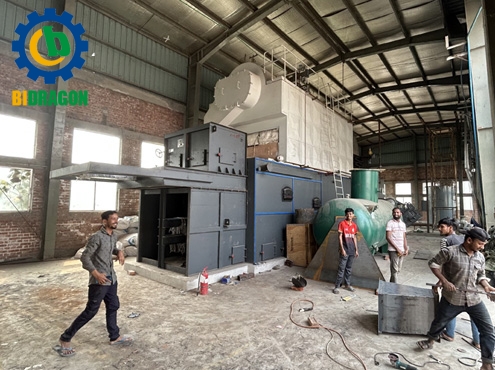
The economy of biomass boilers is always compared with the original fuel. When replacing different traditional fuels, the return on investment is very different.
|
Fuel Type |
Key Cost Considerations |
|
Natural Gas |
Local gas price levels, pipeline connection fees, supply stability |
|
Diesel |
High volatility in fuel prices, high transportation and storage costs |
|
Coal |
Low fuel cost, but strict environmental requirements and large amounts of ash residue to handle |
|
Rice Husk |
Extremely low price in main production areas, strong seasonality, large moisture fluctuations |
|
Wood Chips |
Stable calorific value, cheap in forestry production areas, distance of transport has a major impact |
|
Bagasse |
Extremely low cost around sugar mills, but supply is highly seasonal |
There is no “best”fuel in the absolute sense. The economic value of biomass boilers depends entirely on local fuel resources and the operating conditions of the plant.For example, a feed plant built next to a rice processing plant has almost zero cost of rice husk, and the payback period may be less than one year; in areas where there are no local biomass resources, the fuel needs to be transported over long distances, which may not be as cost-effective as burning natural gas.
If you want a boiler service provider to give an accurate return on investment assessment, it is not enough to just say “I want a biomass boiler”.The more detailed factory data is provided, the more realistic the calculation results will be.
The first is the basic information of the existing boiler, which is the benchmark for all comparisons.:
The second is the factory's production and steam consumption data, which determines the boiler selection and annual running time.:
Finally, the local biomass fuel resources directly affect fuel costs.:
With these data, boiler suppliers can estimate the adapted boiler capacity, fuel consumption, annual fuel savings, approximate investment and payback period in a targeted manner, and give a preliminary assessment with practical reference value.
The return on investment of biomass boilers cannot be judged by equipment quotation alone. Fuel cost, boiler efficiency, running time, biomass availability, and total project investment are the five core factors that determine the payback period.
When evaluating feed plants, they must use their own actual operating data to calculate, and do not only rely on the theoretical fuel savings advertised by the manufacturers.The fuel price difference may seem considerable, but additional operating costs, easily overlooked auxiliary equipment and engineering investment will lengthen the actual payback period.
A simple static payback period can serve as a preliminary tool for investment assessment. For larger projects, further financial analysis such as net present value and internal rate of return can be conducted, taking into account the cost of capital and equipment depreciation, which will make the assessment more complete. If your factory has a steady demand for steam and access to reasonably priced biomass fuel nearby, you can engage a professional boiler service provider to conduct a detailed, project-specific assessment; this will allow for an accurate calculation of the investment payback period based on actual operating conditions.
[Ready to slash your steam costs and achieve a fast payback? Reach out to us now to start planning your high-efficiency biomass boiler project!]