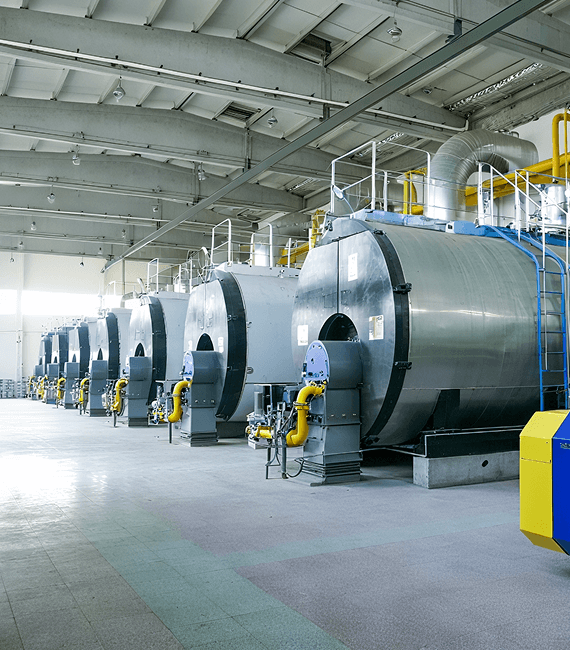

Starting up a boiler is like warming up a large, cold machine. The process from a completely cold state to normal operation, seemingly just a simple operation of increasing temperature and pressure, is actually one of the riskiest stages in the entire equipment's operating cycle.
Many industrial users, whether power plants, chemical plants, or food processing plants, have had this question: Why can't the rate of temperature and pressure increase be accelerated to put the boiler into operation as soon as possible? After all, every minute of downtime could mean lost production.
The answer is actually quite simple: limiting the rate of temperature and pressure increase is not to "slow down the process," but to protect the boiler's core components and avoid irreversible damage caused by improper operation, which could lead to longer downtime for maintenance or even complete equipment failure. This is a globally accepted safety principle in the industrial boiler industry, and it is clearly required by both ASME and EN standards.
The boiler's core components, such as the steam drum, headers, and superheater outlet headers, are all made of thick-walled, high-strength alloy steel. These types of components are characterized by slow heat conduction; heat transfer from the surface to the interior takes time.
During startup, combustion begins inside the furnace, and heat initially acts on the inner walls of these components. The inner walls, in direct contact with high-temperature water or steam, experience a rapid temperature rise; while the outer walls, due to their slower heat conduction, rise in temperature more slowly.
This temperature difference between the inner and outer walls leads to uneven thermal expansion of the metal. The inner walls, attempting to expand, are constrained by the cooler, slower-expanding outer walls, generating significant instantaneous thermal stress. The faster the temperature and pressure increase, the greater the temperature difference and the stronger the stress.
When the stress exceeds the yield strength of the metal, the component undergoes plastic deformation. More seriously, each startup represents a stress cycle; after multiple cycles, fatigue cracks appear in the metal, slowly propagating and eventually causing the component to break—a fatal blow to the boiler.
In essence, controlling the pressure increase rate controls the rate of change of saturation temperature, indirectly controlling the temperature difference in the metal walls, allowing thick-walled components sufficient time to adapt to temperature changes and preventing excessive thermal stress.
.png)
During startup, the boiler's water circulation is not fully established, the water flow is slow, and there is a significant time lag in heat exchange between the water-cooled walls and the steam drum. If the temperature and pressure rise too quickly at this stage, two problems can easily occur.
The first is a false water level. The water-cooled walls are heated relatively strongly; rapid heating will cause a large amount of water within the walls to vaporize instantly, generating numerous bubbles. These bubbles expand rapidly, quickly "raising" the water level in the steam drum, creating a false high water level.
This false water level can mislead operators. If the judgment is incorrect, it may lead to water carryover in the steam, damaging downstream equipment such as the turbine and heat exchangers, increasing maintenance costs.
The second problem is an excessive temperature difference between the upper and lower walls of the steam drum. The upper part of the steam drum is in contact with steam, while the lower part is in contact with water. The condensation heat transfer coefficient of steam is much lower than that of water, resulting in the upper wall of the steam drum heating up faster than the lower wall.
If the temperature and pressure rise too quickly, the temperature difference between the upper and lower walls will widen further, leading to arching and deformation of the steam drum, and even weld cracking. Industry standards typically require that the temperature difference between the upper and lower walls of the steam drum not exceed 50°C; if this limit is exceeded, the heating rate must be reduced.
The boiler's heating surfaces, especially the water-cooled walls, are prone to uneven heating during the initial startup phase. Because the water circulation is not yet stable, the water flow velocity in some water-cooled wall tubes is very slow, or even stagnant, failing to effectively remove heat from the tube walls.
Meanwhile, other tubes connected in parallel may have lower temperatures; this temperature difference is what we commonly refer to as thermal deviation. Rapid temperature and pressure increases will cause a sharp rise in temperature in those tubes with poor water flow, leading to overheating, creep, bulging, and in severe cases, tube rupture.
For large boilers, there is another special risk point—the lower radiant zone. During the initial startup phase, after the lower burners are put into operation, the heat load in the lower radiant zone will be highly concentrated.
If the heating rate is too rapid, the metal temperature of the water-cooled wall in that area will spike instantly. If a good steam-water circulation has not yet been established within the tubes, film boiling is highly likely to occur, leading to deteriorated heat transfer, further increasing the tube wall temperature, and ultimately causing a tube rupture.
A single instance of localized overheating may not cause immediate damage, but repeated thermal deviations over a long period will accelerate the aging of the heated surfaces and significantly shorten the boiler's service life.
.png)
Besides the boiler body, auxiliary components such as steam pipelines and high-temperature valves also need proper protection during startup. These components are also mostly thick-walled structures, and rapid heating and pressurization will place double pressure on them.
On one hand, there is thermal stress; on the other hand, there is mechanical stress from pressure. The superposition of these two stresses can easily lead to leaks at flange joints, valve jamming, and even cracks. Once a leak occurs, it will not only affect normal startup but may also cause safety hazards.
Furthermore, the boiler's furnace walls, refractory castables, and insulation layers are in a contracted state when cold, lacking sufficient expansion margin. Rapid heating causes the moisture inside these materials to vaporize rapidly, generating enormous internal pressure. This can lead to cracking and spalling of the refractory layer and deformation of the furnace wall.
Repairing this type of damage is not only time-consuming and costly, but it also affects the boiler's insulation performance, increasing subsequent energy consumption. Simultaneously, the boiler's steel structure and piping contract when cold; rapid heating can cause hangers to jam, insufficient expansion gaps, and consequently, structural deformation, even damaging the furnace wall.
In many industrial scenarios, boilers are paired with downstream equipment such as steam turbines, or provide steam for processes in chemical, food, and pharmaceutical industries. In such cases, the temperature and pressure control during startup directly affects the safe operation of the entire system.
If the temperature and pressure rise too quickly, the steam temperature and pressure will fluctuate drastically, easily causing water hammer and thermal deformation in the steam turbine, leading to increased turbine vibration and even blade damage. This can result in significant losses for power plants and other enterprises that rely on steam turbines.
For industries such as chemicals and food, unstable steam parameters directly interfere with the temperature and pressure control of production processes. For example, in the sterilization process of the pharmaceutical industry, fluctuations in steam temperature can lead to substandard product quality; in the reaction process of the chemical industry, unstable pressure can cause process accidents and production losses.
The core of controlling the rate of heating and pressurization is "stability." Based on operational experience with industrial boilers, several practical suggestions can be referenced, adhering to international standards such as ASME, EN, and DIN throughout the process.
First, phased control is crucial. During the cold ignition phase, a small flame and slow temperature increase should be used, prioritizing the gradual heating of the boiler water to establish basic water circulation. Avoid increasing the combustion load immediately.
The low-pressure pressurization phase is the key control stage. The rate should be slowest during this phase, focusing on monitoring the temperature difference between the inner and outer walls and the upper and lower walls of the steam drum, ensuring it does not exceed standard limits. Once the temperature difference stabilizes, the pressurization rate can be gradually increased.
Upon entering the medium- and high-pressure phases, the rate can be appropriately increased, provided the temperature difference meets the standards, but it must still remain stable until the pressure reaches the rated parameters. Throughout the entire process, avoid rushing and prevent drastic parameter fluctuations.
Secondly, real-time monitoring is crucial. Using temperature sensors and water level gauges, monitor the wall temperature of the steam drum, headers, and water-cooled walls, as well as the water level in the steam drum. If excessive temperature difference or temperature rise is detected, immediately reduce the combustion load, pause pressurization, and resume only after parameters stabilize.
Additionally, preheating the equipment is also essential. Before startup, warm up the main steam pipes and valves to prevent sudden contact between cold pipes and hot steam, which could cause thermal shock and damage to pipes and valves.
Many users believe that limiting the rate of temperature and pressure increase will delay production, but in reality, it is the most economical and effective way to protect equipment.
Proper startup control can reduce startup failures by more than 30%, extend the boiler's service life by 5-10 years, and significantly reduce maintenance costs and downtime losses. For industrial enterprises, long-term stable equipment operation is key to controlling costs and improving efficiency.
It is important to clarify that the boiler startup speed is never determined by combustion efficiency, but by the equipment's tolerance. Scientifically controlling the rate of temperature and pressure increase, allowing the boiler to gradually adapt to changes from cold to hot, is crucial to avoiding irreversible damage and ensuring long-term stable operation.
Q: Does Accelerating The Heating And Pressurization Rate Really Shorten The Start-Up Time?
A: On the surface, accelerating the rate allows the boiler to reach its rated parameters faster, but this operation can cause irreversible damage to thick-walled components and heating surfaces. The time spent on subsequent repairs and component replacements far exceeds the time saved by accelerating the rate, ultimately leading to longer downtime.
Q: What Are The Specific Risks Of Not Controlling The Heating And Pressurization Rate?
A: The most common risks include water-cooled wall tube rupture, steam drum deformation, and steam pipeline leaks. In severe cases, this can lead to boiler damage and even cause the entire industrial system to shut down, resulting in huge economic losses.
Q: Are There Any International Standards That Clearly Stipulate Limits On The Start-Up Rate?
A: Yes, international industrial boiler standards such as ASME, EN, and DIN have clear and mandatory requirements for wall temperature difference, heating rate, and pressurization rate during the boiler start-up phase. The purpose is to ensure equipment safety and extend its service life.