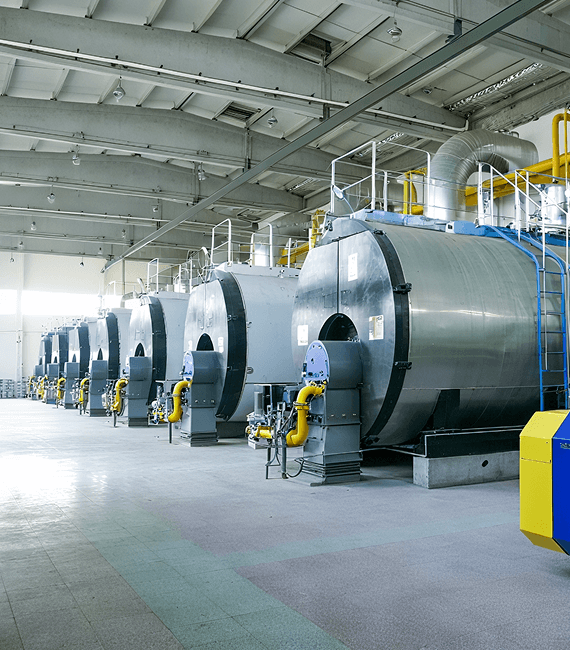

For industrial boilers, operational status directly impacts the stability of production lines, on-site operational safety, and equipment service life. Accurately determining the optimal timing for shutdown and maintenance is crucial for balancing production continuity, equipment safety, and operational and maintenance (O&M) costs.
Operating a boiler in a compromised state—or "running with an ailment"—creates significant latent safety hazards; conversely, arbitrary shutdowns disrupt production rhythms, resulting in lost capacity and incurring additional costs. Both of these extreme approaches inflict unnecessary losses upon an enterprise.
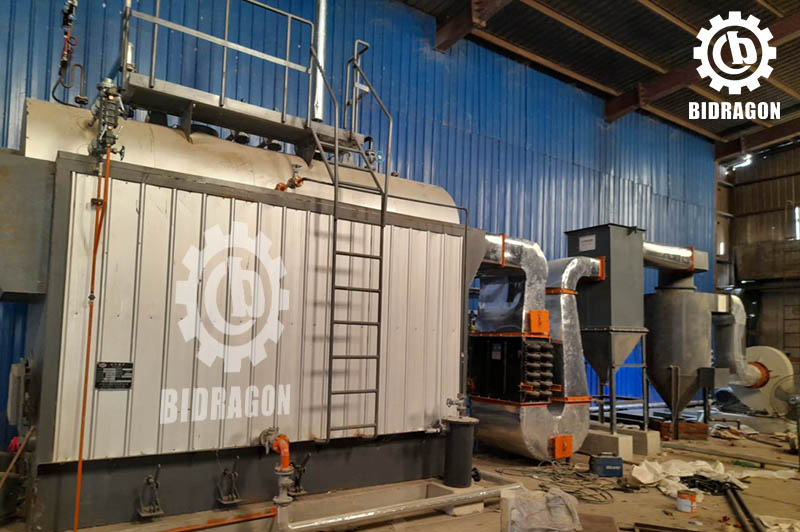
Industrial boilers operate continuously under conditions of high temperature and high pressure, subjecting their internal components to constant alternating stresses and corrosive media. If minor faults are not addressed promptly, they can rapidly deteriorate and trigger severe consequences. Delaying necessary maintenance—at best—accelerates the wear and tear of heating surfaces and pressure-bearing components, thereby shortening the equipment's service life and driving up the costs of future major overhauls.
At worst, such delays can precipitate safety incidents—such as leaks, overpressure events, or tube ruptures—endangering the physical safety of operators and forcing unplanned shutdowns. The losses incurred from unplanned shutdowns far exceed those associated with scheduled maintenance; not only do they bring the entire production line to a complete halt, but they also drastically increase the human, material, and time costs required for accident aftermath management and production recovery.
Conversely, excessive maintenance or unnecessary, arbitrary shutdowns also result in a loss of operational efficiency. The startup and shutdown of industrial boilers must adhere to strict procedures regarding temperature ramping and pressure regulation; frequent cycling exacerbates thermal fatigue in components while simultaneously interrupting continuous production, reducing capacity utilization rates, and incurring additional costs for fuel and O&M labor.
The decision of whether a boiler requires shutdown for maintenance centers on a comprehensive assessment across four critical dimensions. These four dimensions collectively cover the core aspects of safe boiler operation, and all are indispensable. Specifically, they include the structural integrity of pressure-bearing components, the stability of the water circulation system, the stability of combustion conditions, and the reliability of safety protection systems.
Pressure-bearing components constitute the core structure of an industrial boiler; they are constantly subjected to the forces of high-pressure steam and high-temperature media. Maintaining their structural integrity is the absolute baseline for safe operation; any anomaly in this dimension is directly linked to major safety risks, leaving no room for compromise. The assessment focuses primarily on the external appearance, structural integrity, and sealing status of these components. It involves screening for issues such as media leakage, localized deformation, surface cracks, excessive wall thinning, and bulging. This scrutiny covers critical sections including the steam drum, water walls, superheaters, economizers, and various headers. Once damaged, the severity of the damage to these components escalates rapidly with continued operation and cannot be self-repaired.
In terms of quantitative metrics, if the measured wall thickness of a pressure-bearing component falls below 85% of its design thickness—or if visible, persistent leaks, cracks, or bulges are detected by the naked eye—the risk-related costs of continued operation rise exponentially. Such damage directly compromises the structural strength of the pressure-bearing system and can trigger large-scale leaks or tube ruptures within a short timeframe. At this juncture, continuing to operate a "sick" boiler may appear to save on immediate maintenance costs, but in reality, it entails bearing the colossal costs of equipment destruction, production interruptions, and accident-related compensation. From the perspective of balancing risks against costs, the detection of such definitive damage mandates the immediate prioritization of a shutdown for maintenance, thereby eliminating any reliance on sheer luck.
Water circulation is the core process for heat transfer within an industrial boiler, and water level stability serves as a direct indicator of a healthy circulation system. Anomalous water levels often signal blockages in the circulation loop, flow imbalances, or monitoring system malfunctions—issues that can directly trigger catastrophic problems such as overheating of heating surfaces or "dry burning" (operating without sufficient water). Routine operation and maintenance protocols require continuous monitoring of water level fluctuations to screen for recurring low-level or high-level alarms, as well as "false water level" phenomena. False water levels can mislead operational assessments, masking genuine underlying circulation failures and thereby presenting a heightened, insidious risk. From a quantitative perspective, if water level fluctuations exceed the normal operating range of ±10%—and remain unstable despite standard interventions such as water replenishment, blowdown, and pipeline clearing—exhibiting persistent intermittent or continuous anomalies, it indicates a substantial failure within the water circulation system. An unstable water circulation system leads to insufficient flow of the working medium within the heat-absorbing tubes; this causes localized spikes in tube wall temperatures which, upon exceeding the material's thermal tolerance limits, result in creep and cracking, ultimately damaging the heat-absorbing surfaces.
If operation is forcibly continued, the damage to the heat-absorbing surfaces will progressively worsen. Subsequent repairs would necessitate the replacement of a greater number of components and entail longer downtime, resulting in overall costs far exceeding those associated with a planned shutdown for maintenance. Such water level anomalies—which cannot be resolved through routine operational procedures—serve as one of the primary criteria for mandating a shutdown for maintenance.
The combustion conditions within an industrial boiler directly impact both operational efficiency and furnace safety. Unstable combustion not only diminishes fuel utilization efficiency and increases energy consumption but also poses risks of abnormal furnace pressure, flameout, flashback, and even furnace explosion (deflagration); consequently, it constitutes a critical parameter requiring rigorous monitoring. Assessing combustion conditions requires close attention to flame characteristics, furnace pressure fluctuations, ignition success rates, and the frequency of combustion disturbances. Under normal operating conditions, the boiler flame should be uniform and stable, furnace pressure should remain within the designated design range, and there should be no signs of frequent flameouts or flashbacks.
When combustion conditions undergo persistent deterioration—manifesting as flame deflection, localized high-temperature slagging, furnace pressure repeatedly deviating beyond the normal range of ±200 Pa, or multiple instances of ignition failure, combustion interruption, or signs of flashback occurring within a short timeframe—it signifies a substantial failure within the combustion system, air distribution system, or fuel supply system, rendering them incapable of sustaining a normal, stable combustion state.
Combustion anomalies directly disrupt the internal thermal equilibrium of the furnace, resulting in severe temperature distribution imbalances. This not only accelerates the wear and damage of localized heat-absorbing surfaces but also significantly elevates the probability of a furnace explosion, causing safety risks to escalate continuously. Should a furnace explosion occur, the resulting shockwave would directly impact the main structural integrity of the furnace, causing irreparable structural damage. Even in the absence of such overt, catastrophic accidents, unstable combustion leads to abnormally high flue gas temperatures and a drastic decline in boiler thermal efficiency; over the long term, this results in substantial fuel waste and imposes significant additional operational costs. This compounded state—characterized by the simultaneous presence of significant safety risks and economic losses—clearly indicates that continued boiler operation is inadvisable and necessitates an immediate assessment for shutdown and maintenance.
The safety protection and control system serves as the final line of defense for industrial boilers. Even if the boiler vessel itself currently exhibits no apparent damage, a failure of the protection system leaves the equipment in an unprotected state, rendering it vulnerable to any sudden anomaly that could escalate into a major accident. Operations and maintenance personnel must regularly inspect the status of safety valves, water level gauges, pressure gauges, audible and visual alarms, operational interlocks, and automatic protection devices to ensure that all safety accessories are responsive, provide accurate readings, and that automatic interlock protection functions can be reliably triggered.
In practical operations, any deviation exceeding 5% between the safety valve's actual lift pressure and its design value, instances where water level gauges or pressure gauges are inaccurate and cannot be recalibrated, or cases where alarms or interlock protections suffer from intermittent malfunctions or complete failure, all fall under the category of a non-compliant protection system. While such issues may superficially appear to have no immediate impact on routine short-term operations, they effectively strip the boiler of its critical ability to provide protection against sudden faults such as overpressure, low water levels, or flame failure, thereby leaving the equipment in a continuously high-risk, unsupervised state.
Under these circumstances, continued operation relies entirely on real-time manual monitoring. However, manual intervention carries inherent risks—specifically, response delays and errors in judgment—which make it impossible to address sudden faults in a timely manner, leading to potentially catastrophic consequences. There is absolutely no room for compromise when safety accessories fail; such failures constitute a primary and compelling justification for mandatory shutdown and maintenance. The cost of a short-term shutdown for repairs is invariably far lower than the exorbitant price that would be paid for an accident resulting from continued operation without adequate safety protection.
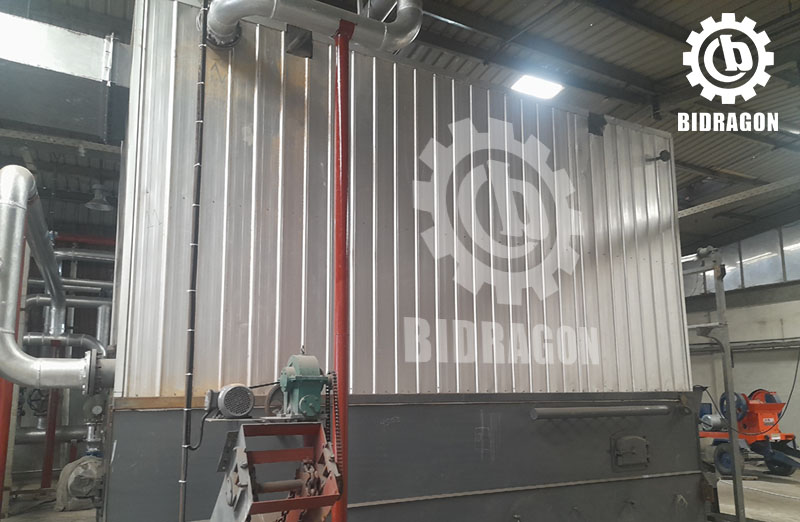
Before an industrial boiler failure erupts, it typically emits clear warning signals through its operating parameters and equipment status. Operations and maintenance personnel can detect these signals during routine inspections and make proactive decisions to shut down the unit, thereby preventing the fault from escalating. Common critical warning signs include: operating pressure consistently deviating from design values or proving impossible to regulate stably; main steam temperature and heating surface tube wall temperatures repeatedly exceeding normal ranges; flue gas temperature consistently exceeding the design value by more than 30°C; the appearance of abnormal noises or vibrations during operation; and the frequent triggering of various operational alarms that cannot be cleared through standard operating procedures. These signs do not appear in isolation; rather, they serve as direct, visible manifestations of internal component failures or system imbalances. When a single warning sign appears in isolation, it typically suffices to simply intensify real-time monitoring.
However, if multiple types of warning signs converge simultaneously, it indicates that the equipment fault has entered a phase of rapid deterioration. Failure to shut down promptly will directly escalate a minor fault into a major equipment failure. By correlating routine inspection data with specific warning signs, personnel can accurately assess the trend of equipment deterioration, shifting from reactive emergency repairs to proactive, planned maintenance. This approach effectively controls maintenance costs and production losses while mitigating the cascading negative impacts associated with unplanned downtime.
Certain operational anomalies constitute extremely hazardous conditions that leave absolutely no room for continued observation; in such cases, it is mandatory to immediately cut off the fuel supply, execute an emergency boiler shutdown, and initiate a specialized maintenance protocol. The defining characteristic of these conditions is that the equipment has completely lost the fundamental prerequisites for safe operation, and a major hazard could erupt at any moment.
Specific emergency situations include: widespread and severe leakage in pressure-bearing components that cannot be controlled through valve adjustments; severe water shortage within the boiler—where normal water levels cannot be restored after replenishment, and where "blind" (uncontrolled) replenishment is strictly prohibited; and operating pressure that remains persistently above safe limits, where safety valves fail to lift and relieve pressure, and manual pressure relief measures are also ineffective in halting the pressure rise.
Furthermore, situations involving the total failure of the safety protection system—leaving the unit completely devoid of protective safeguards—or a complete loss of control over combustion conditions (manifesting as persistent flame-outs, flashbacks, or furnace positive pressure significantly exceeding safe limits, thereby posing a clear risk of deflagration) also fall under the category of scenarios requiring immediate boiler shutdown.
Under such emergency conditions, the risks associated with continued operation are entirely uncontrollable; any delay will inevitably exacerbate the incident, leading to irreversible consequences such as equipment destruction and personnel casualties. The primary objective of an immediate shutdown is to isolate the source of risk, prevent further equipment damage, and minimize accident-related losses. In such instances, the costs associated with a short-term interruption in production need not be considered; safety control and prevention constitute the absolute top priority—a non-negotiable baseline in the operation and maintenance of industrial boilers.
Not all equipment anomalies necessitate an immediate shutdown. Certain minor malfunctions do not pose an immediate risk of triggering a safety incident, thereby permitting a brief period of operation under heightened monitoring. However, a strict time limit for this monitoring period must be established, and a comprehensive plan for a scheduled shutdown must be formulated as quickly as possible. Prolonged delays or allowing the fault to develop unchecked are strictly prohibited.
Operating conditions that allow for a deferred shutdown primarily include: minor, slow seepage from pressure-bearing components—provided the leakage volume remains stable, shows no signs of increasing, and does not compromise the stability of the overall operating pressure; or moderate ash accumulation on heating surfaces or within flues, resulting in a slight decline in thermal efficiency but without triggering excessive temperature alarms.
Other scenarios falling into this category include: minor, recurring deviations in operating parameters from their design values—provided they can be temporarily managed through manual intervention and have not yet breached safety alarm thresholds; or minor anomalies in auxiliary components that do not impact the operation of the core system and show no obvious signs of deterioration.
The rationale behind this approach is that a brief period of monitored operation can avert an abrupt interruption in production and minimize capacity losses. However, this strategy mandates the assignment of dedicated personnel to conduct intensified inspections and record parameter fluctuations in real time. Should the anomaly escalate or parameters spiral out of control, an immediate shutdown becomes mandatory. This period of monitored operation is not indefinite; typically, it should not exceed 72 hours. During this window, all preparations for maintenance and repair must be completed; once the time limit expires, the scheduled shutdown must be executed immediately to prevent a minor fault from evolving into a major failure—a scenario that would not only double repair costs but potentially force a shift from a planned shutdown to an unplanned emergency repair.
Decisions regarding boiler shutdowns and maintenance cannot be based solely on subjective experience or arbitrary conjecture; they must be firmly grounded in a foundation of continuous, authentic, and comprehensive daily inspection data. Complete operational data provides a clear reflection of the long-term trends in equipment condition, thereby furnishing an objective and reliable basis for rational decision-making. Operations and maintenance (O&M) personnel must regularly record core operating parameters—specifically including boiler water levels, main steam pressure and temperature, furnace pressure, flue gas temperature, fuel consumption, and heating surface tube wall temperatures—to generate continuous operating trend curves. Concurrently, they must conduct thorough condition checks on pressure-bearing components, combustion systems, and protection systems, while maintaining comprehensive and standardized O&M logs.
By comparing historical data against real-time data, personnel can accurately identify anomalous parameter fluctuations and subtle trends indicating equipment deterioration. Such latent issues are often difficult to detect during a single routine inspection but become clearly evident through long-term data analysis. The core value of daily inspections lies in proactively uncovering latent faults, seizing the optimal window for maintenance, and containing faults in their incipient stages. This approach reduces the complexity and cost of repairs while safeguarding the stability of production schedules and preventing sudden breakdowns from disrupting operations.
In actual O&M practice, numerous misjudgments can lead to delayed maintenance or unnecessary, excessive repairs. The most critical pitfall is placing undue emphasis solely on the superficial, temporary stability of the equipment while completely disregarding underlying trends of fault deterioration.
Some O&M personnel, observing that the boiler currently exhibits no overt faults, deliberately overlook subtle issues—such as minor parameter deviations, intermittent alarms, or slight instrument inaccuracies—reasoning that if these issues do not immediately impact current production, they require no attention. Over time, the accumulation of such minor faults gradually erodes the equipment's overall safety performance, eventually escalating into uncontrollable, major-repair-level breakdowns.
Another common pitfall is underestimating the risks associated with intermittent faults. Occasional interlock failures, transient water level fluctuations, or minor vibrations may appear to have no impact on operations; in reality, however, they serve as precursors to component aging or system imbalances and can suddenly worsen after repeated occurrences. Furthermore, some personnel—driven by an excessive pursuit of production continuity and a reliance on wishful thinking—delay necessary maintenance, ultimately triggering unplanned shutdowns that result in financial losses far exceeding the cost of scheduled maintenance. Additionally, blindly trusting instrument data without verifying its accuracy—and subsequently making misjudgments based on erroneous readings—constitutes another common error. All these pitfalls disrupt the critical balance between safety and efficiency, thereby increasing O&M risks and financial losses.
Deciding whether an industrial boiler requires a shutdown for maintenance should not be a reactive decision made only after overt faults have fully manifested; rather, it requires the proactive identification and capture of various signals indicating latent risks. In the operation and maintenance of industrial boilers, a perfectly idealized, fault-free operating state is unattainable. However, timely and precise shutdown decisions enable faults to be contained during their incipient stages, thereby averting safety accidents and minimizing losses associated with unplanned downtime. Furthermore, such decisions strike a balance between short-term production efficiency and long-term equipment safety, ultimately facilitating efficient operation and maintenance throughout the entire lifecycle of the equipment.