
If you've operated a biomass boiler for more than a heating season, you've probably already met slagging or fouling in person — usually in the form of a maintenance crew chipping hardened deposits out of the furnace on a Saturday morning. It's one of the most common complaints we hear from plant operators, and for good reason. Ash-related problems are consistently ranked among the top causes of unplanned downtime in biomass combustion systems, right alongside fuel feeding issues and emissions non-compliance.
This isn't a cosmetic issue. Slagging and fouling quietly erode efficiency, shorten equipment life, and turn a boiler that should run for weeks between service visits into one that needs constant attention. The good news is that both problems are well understood, and there are proven ways to keep them under control. Let's walk through what's actually happening inside the furnace, why it happens more with biomass than with other fuels, and what you can do about it.
The two terms get used interchangeably a lot, but they describe different things happening in different parts of the boiler.
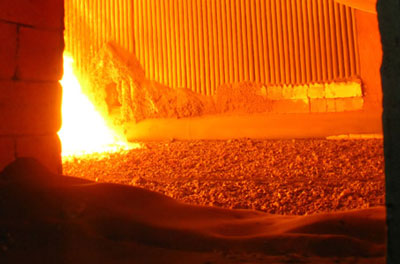
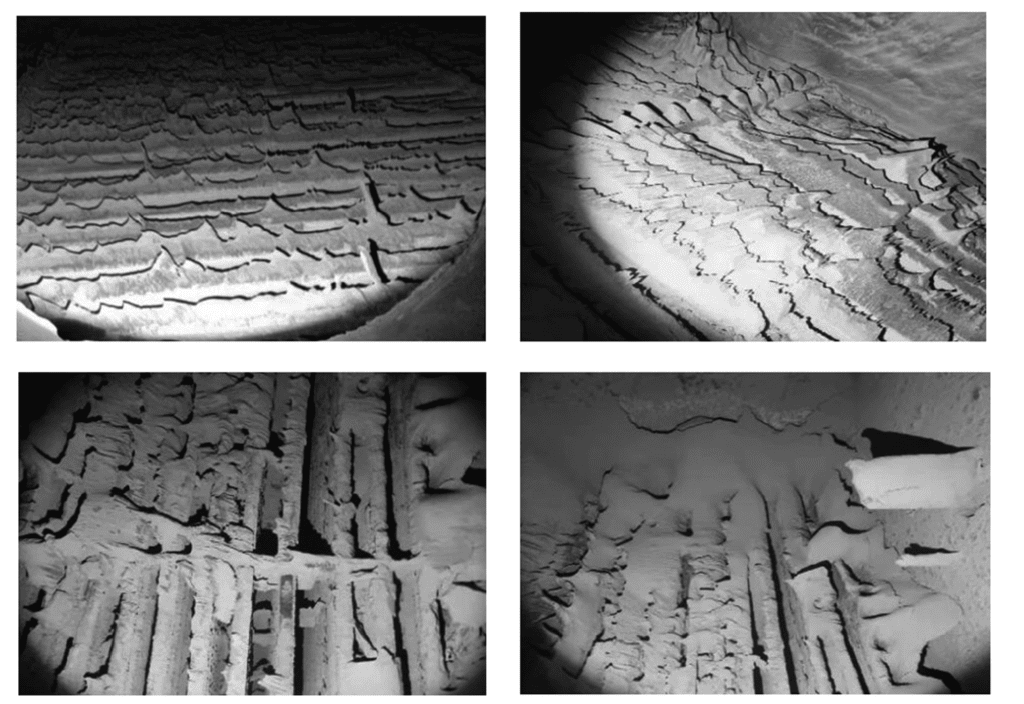
Slagging happens in the high-temperature zone of the furnace, typically on or near the grate and refractory surfaces. Mineral compounds in the fuel ash melt or soften at combustion temperatures, then re-solidify as a glassy, hardened deposit once they cool slightly. Left unchecked, slag can build up thick enough to block combustion air, disrupt fuel movement across the grate, and in bad cases fuse into chunks that need to be broken apart manually.
Fouling, on the other hand, occurs further downstream, in the convective heat exchanger sections and flue gas passages where temperatures are lower. Here, volatile ash components — mostly alkali and chlorine compounds that vaporized in the flame — condense onto tube surfaces as fine particulate. It tends to look more like soot or a crusty coating than melted rock, but it does the same damage: it gets between the flue gas and the heat exchanger tubes and blocks heat transfer.
Why This Matters for Biomass Fuel Specifically
Coal-fired boilers deal with ash too, but biomass introduces a chemistry problem that coal mostly doesn't. Herbaceous fuels — straw, husks, agricultural residues — carry much higher concentrations of potassium, sodium, and chlorine than wood does. Research on cereal straw, for example, has found potassium levels in ash reaching 0.5 to 2 weight percent, with chlorine up to 0.2 to 1 weight percent. Those elements are exactly the ones responsible for lowering the melting point of ash, which is why straw-fed boilers tend to slag far more aggressively than wood chip boilers running under the same conditions.
An extreme illustration of this comes from bioethanol stillage residues, an unusually ash-rich byproduct. Lab tests found sodium and potassium making up somewhere between 21 and 30 percent of total ash weight, with an ash melting temperature under 600 to 630°C — well below typical furnace temperatures, which is exactly why that particular fuel stream tends to slag almost on contact. Most commercial wood biomass sits in a much safer range, but it shows how directly ash chemistry drives slagging risk.

There isn't one single cause — it's usually a combination of fuel chemistry, combustion conditions, and boiler design working against each other.
This is the root cause in most cases. Potassium and sodium react with silica in the ash to form low-melting-point compounds, while chlorine accelerates the release and transport of these alkalis through the flue gas. According to IEA Bioenergy research on herbaceous biomass, potassium and chlorine correlate directly with reduced ash melting temperature, and in many herbaceous fuels these elements need to be reduced by a factor of 10 to 20 to fall within levels acceptable for thermal conversion equipment. That's a substantial gap, and it explains why fuel switching or blending is often the first lever operators reach for.
Ash melting behavior isn't a single number — it's usually characterized by three reference temperatures: the point where ash starts to soften, the point where it melts, and the point where it flows freely. Clean, high-quality wood biomass generally has ash melting temperatures in a comfortable range, with studies putting typical values around 1230°C to 1330°C for most wood fuels, and above 1500°C for some woody species. Agricultural residues and contaminated fuel streams can sit hundreds of degrees lower, which puts them much closer to actual furnace operating temperatures — and that's where the trouble starts.
Even with a reasonably good fuel, uneven combustion can create hot spots that exceed the local ash melting point even though the average furnace temperature looks fine on paper. This tends to happen around burner nozzles, air injection points, or areas where fuel piles up unevenly on the grate.
Air staging that isn't well tuned leads to a mix of over-fired and under-fired zones across the grate. Over-fired zones run hot enough to promote slagging, while under-fired zones produce incomplete combustion and more particulate that later ends up fouling downstream surfaces. It's a case where getting one variable wrong tends to create two separate problems.
Tube spacing that's too tight relative to the flue gas velocity and ash loading gives deposits more surface area to bridge and cling to. Boilers designed primarily for clean wood chips sometimes struggle when fed higher-ash or higher-alkali fuels later on, simply because the heat exchanger geometry wasn't built with that ash loading in mind.
None of this is just an inconvenience — it shows up directly on the operating cost line.
Ash and soot deposits act as insulation between the flue gas and the boiler's heat exchanger surfaces, which is about the worst place to have insulation. Industrial boiler assessments commonly cite that even thin deposits of half a millimeter to one millimeter can cut heat transfer efficiency by 5 to 10 percent while raising flue gas temperature by 20 to 40°C. Left to accumulate over months rather than being addressed early, that number climbs further — some industrial reviews put total losses from unmanaged fouling and soot buildup at 5 to 15 percent or more. One documented case involving a 30 t/h steam boiler saw flue gas temperature climb from 190°C to 240°C over six months as deposits built up — a clear, measurable efficiency drain that crept in gradually enough that nobody noticed until the fuel bill did.
Once slag hardens on the grate or refractory, there's often no way around physically breaking it up and removing it. That means a shutdown, a cool-down period, and a crew with hand tools — not exactly a quick job, and not one that happens on a convenient schedule.
Beyond the cleaning itself, heavy slagging accelerates wear on grates, refractory linings, and ash handling equipment. Parts that would normally last several seasons start needing replacement annually, and labor hours spent on ash management pile up over the course of a year.
Chlorine doesn't just lower ash melting points — it actively attacks metal. Chloride compounds condensing on tube surfaces break down the protective oxide layer that normally shields steel from oxidation, which is a well-documented mechanism behind high-temperature corrosion in biomass and waste-fired boilers. Once that protective layer is gone, tube wall thinning can progress fairly quickly, especially in superheater sections running at higher metal temperatures.
For an industrial site relying on the boiler for process steam, an unplanned trip because of a blocked grate or a fouled heat exchanger isn't just a boiler problem — it stops production downstream. That's usually the cost that gets an operator's attention fastest, even more than the fuel efficiency numbers.
Most of this is manageable if you catch it early. The trouble comes from letting it run unmonitored for weeks or months.
This is probably the single most useful early warning sign available, and it doesn't require special instrumentation beyond what most boilers already have. As a rule of thumb used in industrial boiler assessments, roughly a 1 percent efficiency loss occurs for every 40°F rise in stack temperature above the clean baseline. Record your stack temperature right after a cleaning or service visit, treat that as your reference point, and track drift from there on a regular basis — weekly is reasonable for most industrial operations.
There's no substitute for actually looking at the furnace and heat exchanger surfaces on a set schedule, rather than only when something already seems wrong. Early-stage slag and fouling are much easier to remove than deposits that have had months to harden.
As deposits build up in the flue gas path, they restrict flow and increase pressure drop across the affected section. Tracking this over time — alongside flue gas temperature — gives a fuller picture of where deposits are forming and how fast.
None of these fixes work in isolation — the boilers that run cleanest usually combine two or three of them.
Blending a high-alkali fuel like straw with cleaner wood biomass is one of the most direct ways to dilute the problem at the source, since it lowers the average potassium and chlorine content reaching the furnace. In some cases, water leaching of herbaceous biomass before combustion has also proven effective, with tests showing potassium and chlorine can be extracted down to levels far more compatible with standard thermal equipment. It's a more involved process step, but for fuel streams that are otherwise attractive on cost, it can make the difference between usable and unusable.
Better air staging and more even fuel distribution across the grate reduce the local hot spots that drive slag formation in the first place. This is where automatic combustion control earns its keep — steady, well-tuned air-to-fuel ratios keep peak temperatures more predictable and avoid the swings that push localized zones past the ash melting point.
Mechanical ash removal and soot blowing don't stop deposits from forming, but they keep them from accumulating past the point where they start affecting heat transfer or blocking airflow. Automating this cycle rather than relying on manual cleaning rounds is one of the more direct ways to cut both downtime and labor hours tied to ash management — something we cover in more detail in our piece on automatic ash removal systems.
Grate type matters more than people sometimes expect — water-cooled grates, for instance, keep bed temperatures below the ash softening point far more reliably than fixed grates when burning higher-alkali fuels. Heat exchanger tube spacing sized appropriately for the expected ash loading also buys real margin before fouling starts to bite into efficiency.
Mineral additives, kaolin in particular, work by chemically binding with potassium during combustion to form potassium aluminum silicate compounds with a much higher melting point than the original ash minerals. Research reviewing additive performance across a range of biomass fuels has consistently found kaolin among the most effective options for reducing slagging tendency, particularly in high-alkali fuels where fuel switching alone isn't practical.
A cleaning schedule built for clean wood chips isn't going to hold up once a plant starts burning agricultural residue or a fuel blend with more variability. Matching inspection and cleaning intervals to the actual fuel being burned — rather than a generic manufacturer default — keeps deposits from reaching the point where they require major intervention.
A lot of the ash-related headaches operators deal with trace back to a boiler that was designed around one fuel spec and then fed something a bit different once it was actually in operation. Combustion control tuned for the fuel mix in use, grate design suited to the expected ash chemistry, and heat exchanger spacing that accounts for real-world ash loading go a long way toward avoiding the problem rather than managing it after the fact. If you're evaluating equipment for a fuel stream with variable ash content — agricultural residues, mixed biomass, or anything outside clean wood chips — it's worth discussing the specific fuel analysis with your equipment supplier before finalizing the design, rather than after the first heating season reveals a mismatch.
What biomass fuels are most prone to slagging?
Herbaceous and agricultural residues — straw, rice husk, corn stover, and similar fuels — carry higher potassium and chlorine content than wood, which lowers ash melting temperature and increases slagging risk. Fuel streams contaminated with soil or sand can make the problem worse, since silica interacts with alkali metals to form additional low-melting compounds.
How often should biomass boilers be cleaned to prevent fouling?
It depends heavily on fuel type and ash content, but tracking flue gas temperature drift against a clean baseline is a better guide than a fixed calendar interval. A boiler running clean wood pellets might go several weeks between cleanings, while one running higher-ash agricultural fuel may need weekly attention.
Can additives really prevent slagging in biomass boilers?
They can meaningfully reduce it, particularly kaolin-based additives that bind potassium into higher-melting compounds. They're not a complete substitute for good combustion control or appropriate fuel selection, but combined with those measures they're a well-documented mitigation tool.
What's the difference between slagging and clinkering?
The terms are often used interchangeably in practice. Clinkering typically refers to the hardened, fused ash lumps that form on or near the grate, which is really a specific and visible outcome of the slagging process.
If you're sourcing a biomass boiler for a fuel stream you're not fully confident about — mixed agricultural residues, variable moisture, higher ash content than typical wood chips — it's worth getting the fuel analyzed and reviewed against the combustion and grate design before you commit to a spec. Reach out to our technical team with your fuel data and we can walk through what to expect.