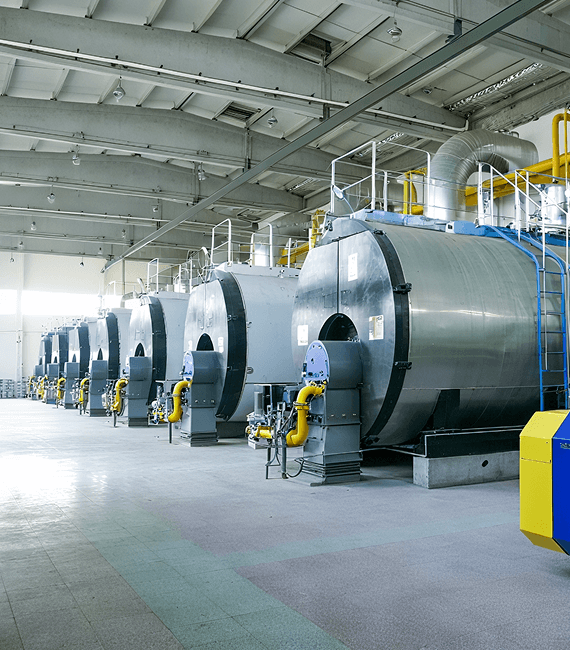

Steam pressure is a critical operational parameter for industrial steam boilers. Pressure stability directly determines the consistency of production line processes, product quality, and equipment service life. Fluctuations in steam pressure are a common issue in boiler operation and maintenance. Many operators make only temporary adjustments without addressing the root cause; over time, this not only increases energy consumption but also creates potential safety hazards.
There is no universal standard for the normal operating pressure of industrial boilers. It is primarily determined by equipment design specifications and production process requirements; operating pressures vary among low-, medium-, and high-pressure boilers. Maintenance personnel need to distinguish between three key parameters: design pressure, which is the maximum safe pressure limit of the equipment, and operation under overpressure is strictly prohibited; set pressure, which is the system's preset operating target value; and operating pressure, which is the equipment's real-time working pressure.
Minor pressure fluctuations are permissible during normal operation. The generally accepted industry standard for reasonable fluctuation is ±5% of the set pressure; variations within this range do not compromise production or equipment safety. Familiarity with the equipment's normal pressure baseline is essential for distinguishing between normal fluctuations and malfunctions, thereby avoiding operational errors.
Unstable steam pressure manifests through several distinct warning signs; careful inspection allows for the early identification and mitigation of potential issues. The most immediate indicator is abnormal fluctuation in pressure gauge readings, where pressure frequently exceeds the standard operating range or oscillates between highs and lows, failing to stabilize at the set value. Concurrently, burner operation becomes erratic, characterized by frequent start-stop cycles, fluctuating firing rates, intermittent ignition, and inconsistent combustion. Steam pipes may produce water hammer noises, and the associated valves may vibrate. In severe cases, the seals may loosen and there may be slight air leaks. Furthermore, fluctuations in steam supply volume and quality (dryness/wetness) to end-use equipment can cause variations in process temperatures and product quality deviations, disrupting the normal operation of the production line.
Frequent Pressure Swings? It May Be Time to Upgrade
Repeated trips, unstable combustion, inconsistent product quality — often this isn't something maintenance alone can fix.
It's a sign your equipment or control system can no longer keep up with your production demands.
[Get a Custom Equipment Quote] →

There are almost no single causes for unstable steam pressure at the site. Adjusting a single parameter often fails to completely solve the problem. Below, we break down the five most common root causes encountered in the field.
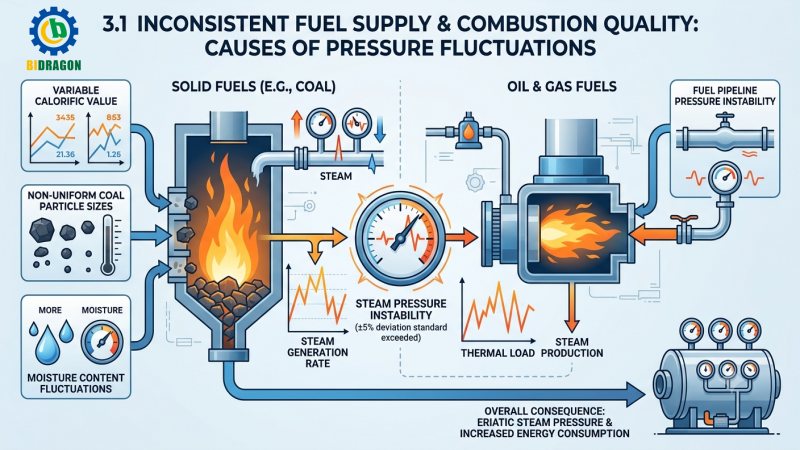
Unstable combustion conditions are a primary cause of steam pressure fluctuations, a problem particularly prevalent in boilers using solid fuels. Non-uniform coal particle sizes, inconsistent fuel calorific values, and significant fluctuations in material moisture content can all cause the heat generated within the furnace to rise and fall unpredictably. Uneven heat generation per unit of time disrupts the rate of steam production, directly triggering pressure fluctuations.
Oil- and gas-fired boilers can experience similar issues. Unstable supply pressure in fuel delivery pipelines leads to fluctuating intake volumes of fuel and air at the burner. Consequently, the burner's output power varies frequently, making it impossible to maintain a stable thermal load within the furnace.
Changes in boiler feedwater rate and volume directly alter the steam-water balance within the steam drum, serving as a major trigger for pressure fluctuations. Many on-site feedwater system malfunctions stem from degraded feedwater pump performance, sticking control valves, or sluggish response times. When the control system issues a makeup water command, the feedwater equipment fails to respond promptly, resulting in inconsistent flow rates.
Excessively high water levels compress the steam space, causing steam to carry significant amounts of moisture as it exits. This not only degrades steam quality but also destabilizes the effective steam generation rate. If the water level remains low, it will trigger the boiler's safety protection mechanism. In mild cases, the load will automatically decrease; in severe cases, the furnace will be shut down directly due to interlocking, causing a sudden drop in pressure.
Frequent water level fluctuations disrupt the boiler's steam generation rhythm. Repeated changes in heat transfer conditions across heating surfaces cause the steam generation rate to vary, ultimately manifesting as sustained fluctuations in system pressure.
Dynamic changes in factory production conditions are a primary external cause of pressure instability. Steam-consuming equipment on many production lines operates intermittently rather than continuously. The sudden startup or shutdown of one or more units causes drastic, instantaneous changes in steam demand across the piping network.
In facilities where multiple processes run simultaneously, steam consumption schedules vary widely between workshops. Alternating or staggered usage patterns keep the overall steam load in a state of constant, irregular flux. If the boiler's adjustment speed cannot keep pace with these load changes, pressure deviations—either too high or too low—inevitably occur.
In scenarios involving multiple boilers operating in parallel, uneven load distribution is a common issue. When some boilers operate under overload conditions while others idle at low loads, the pressure balance of the entire steam system is disrupted, leading to widespread pressure fluctuations.
Boiler pressure regulation relies entirely on automated control systems; anomalies in control loop parameters or hardware failures are frequent causes of pressure fluctuations. After prolonged operation, PID control parameters may drift from their optimal settings. Improper parameter tuning can lead to over-regulation or sluggish response. When minor pressure deviations occur, the system attempts repeated corrections, ultimately resulting in sustained pressure oscillations.
Aging or calibration drift in various sensing elements is also common. Pressure transmitters and flow sensors may experience data drift after long-term use, causing the collected pressure and flow data to diverge from actual operating conditions. Consequently, the control system regulates based on erroneous data, making it impossible to maintain precise and stable pressure.
Mechanical faults in actuators cannot be overlooked either. Issues such as sticking, fouling, or sluggish movement in regulating valves and variable-frequency fans prevent control commands from being effectively executed. If the equipment fails to respond promptly to load adjustment commands, pressure deviations will continue to widen.
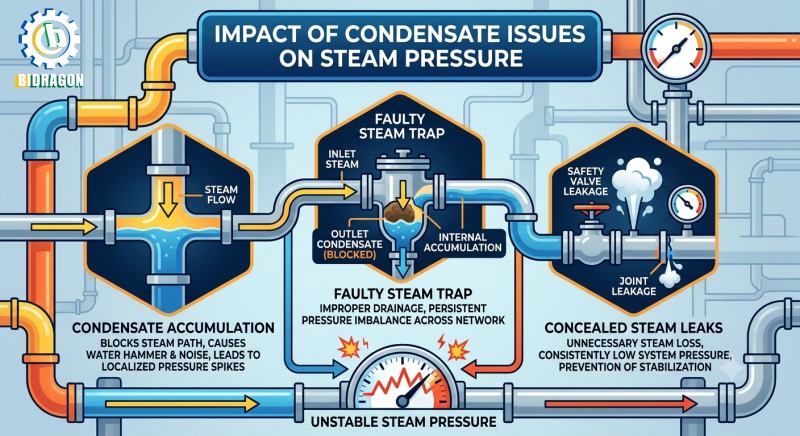
The efficiency of condensate drainage and the unobstructed flow within the steam piping network directly affect system pressure balance—a factor often overlooked by operations and maintenance personnel. Large accumulations of condensate that are not promptly drained occupy space intended for steam flow. This not only causes water hammer and abnormal noise in the piping but also impedes steam transmission, triggering localized, sudden spikes or drops in pressure.
Steam traps are critical components for drainage and pressure stabilization. Blockages or malfunctions in steam traps lead to condensate accumulation and persistent pressure imbalance across the network. Conversely, internal leakage in steam traps causes unnecessary steam loss, resulting in consistently low system pressure that fails to stabilize at the setpoint.
Additionally, minor leaks in safety valves or failure to reseat tightly after lifting can cause system depressurization. While such concealed leaks may not trigger catastrophic failures, they prevent pressure stabilization, leading to persistent, minor fluctuations.
Many view boiler pressure fluctuations as minor issues; however, they continuously impact equipment efficiency and operational safety, potentially leading to major failures if left unaddressed over the long term.
Frequent pressure fluctuations cause the burner to cycle on and off repeatedly and necessitate constant adjustments to firing rates. This instability in combustion conditions significantly reduces overall thermal efficiency, resulting in higher factory energy consumption and rising production costs. Frequent operational adjustments accelerate mechanical wear on various equipment components. Parts such as control valves, actuators, fans, and pumps suffer from shortened lifespans and increased failure rates due to constant cycling and frequent actuation.
Significant pressure fluctuations can easily trigger the boiler's safety interlock systems. Unnecessary trips and emergency shutdowns disrupt production schedules, leading to line stoppages and lost output. For downstream processes, unstable steam pressure causes fluctuations in heating temperatures and steam flow rates, compromising product processing precision and increasing defect and scrap rates. Additionally, end-use steam equipment subjected to unstable load conditions ages more rapidly.
Stabilizing boiler steam pressure relies on proper system matching and routine maintenance to minimize the risk of fluctuations at the source. Optimizing control logic is fundamental. By combining feedforward and feedback control, the system can anticipate load changes in advance. This effectively improves the response speed of the control system and reduces pressure oscillations. Regular calibration of metering instruments is also essential. Pressure transmitters and flow sensors can drift over time; periodic calibration ensures data accuracy, providing a reliable basis for control system adjustments.
Optimize the air-to-fuel ratio based on actual production loads. Combustion requirements for air and fuel vary with load conditions; pre-configuring combustion parameters for both high and low loads ensures more consistent combustion and reduces pressure fluctuations caused by instability. Finally, ensure routine maintenance of the condensate system. Regularly inspect and replace faulty steam traps and clear pipeline debris to guarantee smooth condensate recovery. Maintain pressure balance within the pipeline network to mitigate pressure instability at the transmission and distribution stages.
Steam pressure fluctuations in many industrial facilities often stem from improper boiler selection. When equipment capacity does not match actual production loads, the resulting issues are difficult to fully resolve through subsequent operation and maintenance. If the selected boiler is oversized, it often operates at low loads, leading to persistent minor pressure fluctuations and higher energy consumption. Conversely, an undersized boiler cannot meet peak steam demands; insufficient steam output causes consistently low pressure, disrupting normal production.
To maintain stable pressure, a boiler's operational flexibility must align with the facility's actual load patterns. For facilities with significant load fluctuations, a single boiler often struggles to handle all operating conditions. Using multiple boilers in parallel and distributing the load effectively ensures stable equipment operation and significantly improves the pressure stability of the entire steam system.
Minor pressure fluctuations can typically be resolved by operations and maintenance staff through routine inspections, parameter fine-tuning, and equipment cleaning. However, persistent or high-risk malfunctions require the expertise of professional boiler technicians to mitigate safety risks.
If pressure fluctuations persist after routine troubleshooting and adjustments, professional inspection is required. Frequent activation of safety interlocks or unexplained alarm-induced shutdowns indicates high-risk operating conditions. Continued operation poses risks of leaks or explosions; the system must be shut down immediately for professional repair.
Enterprises can also engage professional teams for periodic combustion analysis and comprehensive equipment commissioning to identify potential issues early and minimize pressure fluctuation problems.
Can weather or environmental conditions affect steam pressure stability?
Yes, they can have an impact. Sudden changes in air temperature or humidity alter the temperature and moisture content of the intake air, indirectly affecting combustion efficiency within the furnace. In cold winter conditions, accelerated heat loss from piping and increased steam loss can also cause slight variations in system pressure. Most such environmental effects result in minor fluctuations rather than severe pressure oscillations.
Do steam pressure fluctuations always pose a safety risk?
Not all fluctuations are safety hazards. Minor fluctuations within a normal operating range are a standard part of the equipment's self-regulating process. However, significant fluctuations exceeding standard ranges, frequent oscillations, or sudden spikes and drops in pressure can disrupt production, damage equipment, and create safety risks, requiring prompt corrective action.
How quickly should a boiler respond to sudden changes in load?
There is no fixed response time for standard industrial boilers; the key is matching the rate of load changes at the facility. Smaller boilers generally respond faster, whereas larger boilers have greater thermal inertia, resulting in a slightly slower response. An acceptable operating state is one where, following a load change, the pressure returns to the set range within a short period without sustained deviation.
Does the age of the boiler affect pressure control performance?
Service life directly impacts control performance. In older boilers, issues such as scaling and aging of heat transfer surfaces, mechanical wear, reduced sensor accuracy, and degradation of control circuits can all impair pressure regulation capabilities. The longer the equipment has been in service, the higher the likelihood of pressure fluctuations, necessitating more frequent maintenance and calibration.
Don't Let Pressure Problems Cost You Production
We provide full system evaluations and upgrade solutions tailored to your actual load requirements.
[Request a Quote] | [Talk to a Solutions Specialist]
Instability in industrial boiler steam pressure is never merely a minor issue involving a single component. Maintaining long-term pressure stability requires more than just ad-hoc adjustments after a malfunction occurs. By promptly identifying early warning signs and addressing minor issues, operators can effectively minimize equipment failures and production downtime.