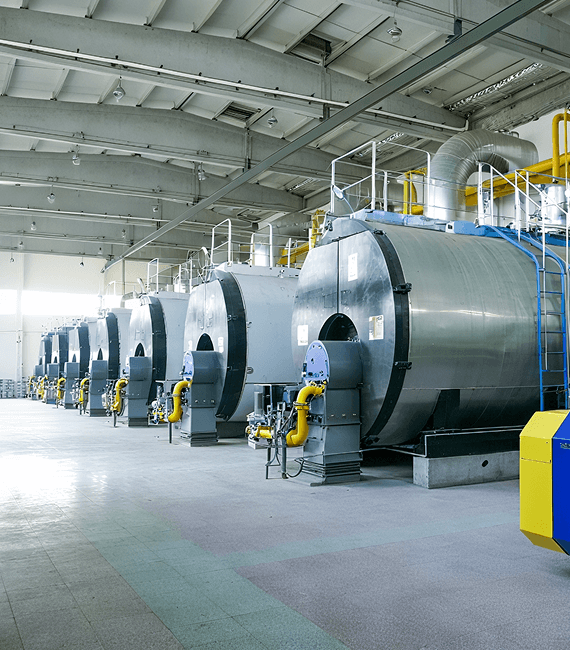

Under the current trend of energy conservation and environmental protection, CFB boilers have become core equipment in many industries. Whether it's power generation, chemical production, centralized heating, or waste treatment, you can always find their presence.
Compared with traditional boilers, the most significant feature of CFB boilers is their ability to adapt to various fuels and achieve low emissions, which is the core reason why many enterprises choose them. However, many customers and front-line maintenance personnel often have a question.
Why can CFB boilers achieve efficient combustion and low emissions? The answer is simple: it lies in its two cycles - the material cycle and the heat cycle.
These two cycles are not isolated but work together and complement each other to form the core advantage of CFB boilers. Today, from the perspective of front-line engineers, we will break down these two cycles, explain their working principles, functions, and the details to pay attention to during daily operation in plain language.
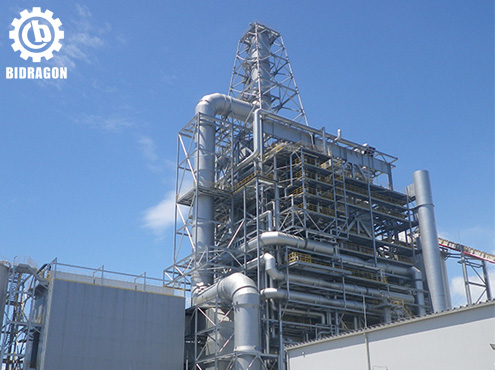
Many people find the two cycles of CFB boilers complex when they first encounter them. In fact, as long as you grasp the core definitions, it's quite easy to understand. The two cycles refer to the material cycle and the heat cycle, which have clear divisions of labor and are both indispensable.
The material cycle, simply put, is the process in which fuel particles, ash, limestone, and other materials in the boiler repeatedly circulate within the system. It can be further divided into the internal circulation within the furnace and the external circulation outside the furnace.
The heat cycle is the process in which the heat generated by fuel combustion is transferred, recovered, and reused within the boiler system through bed material and flue gas. The core is to fully utilize the heat and reduce waste.
The relationship between the two can be simply summarized as follows: The material cycle is the foundation of combustion and reaction. Without the material cycle, the fuel cannot be burned completely, and desulfurization will not be effective. The heat cycle is the guarantee of energy utilization efficiency. Without the heat cycle, the heat generated by combustion will be lost in large quantities, and the boiler efficiency will not increase.
Now let's delve into these two cycles respectively and see how they work and how they collaborate to enhance the performance of the boiler.
Material circulation is the core of a CFB boiler and the key to achieving efficient combustion and low emissions. The entire circulation is divided into two parts: the internal circulation and the external circulation. Although they have different functions, they work together to ensure the repeated utilization and full reaction of materials.
As the name suggests, the internal circulation occurs within the furnace and does not require external equipment. It is the main component of the material circulation.
Its movement path is clear: fuel particles are carried upward by the gas flow in the furnace. After rising to a certain height, they will gradually gather together due to gravity and the wall effect, and then fall along the furnace wall. Once they reach the bottom of the furnace, they will be blown up again by the rising gas flow, forming a repetitive cycle of rising → gathering → wall descent → rising again.
The formation of this cycle mainly relies on three factors: the carrying force of the gas flow, the weight of the particles themselves, and the effect of the furnace wall. It is a self-formed cycle without the need for external equipment such as separators and return feeders.
A key feature of the internal circulation is its large circulation volume. Its volume is approximately 3 to 5 times that of the external circulation, meaning that the majority of the material circulation process takes place within the furnace.
The internal circulation also has practical functions. It extends the residence time of fuel particles in the furnace, allowing the fuel sufficient time to burn fully and reducing the waste of unburned carbon. Additionally, the repeated tumbling of particles enhances the gas-solid mixing, making the temperature in the furnace more uniform and avoiding local high temperatures, thereby reducing the risk of coking.
Moreover, a uniform temperature field can improve heat transfer efficiency, enabling the heat generated by fuel combustion to be transferred more efficiently to the heat exchange surfaces, laying the foundation for subsequent heat circulation.
Unlike the internal circulation, the external circulation requires external equipment to form a complete closed loop. Its core function is to further enhance combustion efficiency and desulfurization effect, serving as an important supplement to the material circulation.
The complete path of the external circulation is clear: furnace → cyclone separator → return feeder → dense phase zone of the furnace. These three devices each have their own roles and are indispensable for ensuring the smooth operation of the external circulation.
The specific working process is as follows: after fuel combustion in the furnace, the generated flue gas will carry a portion of fine particles, including unburned carbon particles, combustion ash, and limestone particles used for desulfurization, all of which are discharged from the furnace.
When these flue gases carrying fine particles enter the cyclone separator, the separator will separate the fine particles from the flue gas, and the clean flue gas will enter the tail flue. The separated fine particles will be sent back to the return feeder through the return valve and then returned to the dense phase zone of the furnace to continue participating in combustion and desulfurization reactions.
The external circulation has several advantages. Firstly, it allows unburned carbon particles to return to the furnace for combustion, significantly increasing the fuel burnout rate and reducing fuel waste. Secondly, limestone particles can repeatedly participate in desulfurization reactions, enhancing desulfurization efficiency without the need for excessive additional desulfurization agents. Finally, the high-temperature particles returned to the furnace can help stabilize the furnace bed temperature, ensuring the stable operation of the boiler.
Here is a key point that requires special attention during daily operation: the unobstructed operation of the return system. If the return feeder gets clogged or cokes, the external circulation will be interrupted, directly leading to abnormal furnace bed temperature, unstable combustion, and even forced shutdown.
In addition, the separation efficiency of the cyclone separator is also crucial. If the separation efficiency decreases, a large amount of fine particles will be carried out with the flue gas, not only reducing the effectiveness of the external circulation but also increasing the wear of the tail flue, affecting the long-term operation of the boiler.
Many people tend to confuse the inner circulation with the outer circulation. In fact, as long as you grasp a few key differences, you can quickly distinguish between them. Below, we will use simple comparisons to help you clarify the differences between the two:
|
Feature |
Internal Circulation |
External Circulation |
|
Location of occurrence |
Inside the furnace |
Outside the furnace |
|
Dependence on equipment |
No |
Yes (separator + return valve) |
|
Circulation amount |
Large (dominant) |
Small |
|
Core function |
Mixing and temperature stabilization |
Burnout and desulfurization |
Simply put, the internal circulation is responsible for stability, ensuring uniform furnace temperatures and thorough mixing of materials; the external circulation is responsible for cleanliness, ensuring complete fuel combustion and thorough desulfurization. It is through the synergy of these two processes that the material circulation system achieves its maximum effectiveness.
If material circulation addresses the question of "how to burn," then heat circulation addresses the question of "how to effectively utilize the generated heat." The heat produced by fuel combustion is not consumed in a single, one-off process; rather, through circulation, it undergoes maximum recovery and utilization—a key factor contributing to the high efficiency of CFB boilers.
The starting point of the heat circulation cycle is the combustion of fuel within the furnace. Upon entering the furnace, the fuel undergoes complete combustion at a bed temperature of 850–900°C, releasing a substantial amount of heat.
This heat is not allowed to dissipate directly; instead, it is rapidly absorbed and carried away by the bed material and flue gas present within the furnace. The bed material serves as the primary carrier of heat; it rapidly stores thermal energy and subsequently flows through the furnace as part of the material circulation cycle.
The heat-laden bed material and flue gas come into contact with the water-cooled walls and various heat-absorbing surfaces within the furnace, transferring their thermal energy to these surfaces. Upon absorbing this heat, the heat-absorbing surfaces heat the water flowing inside them, converting it into steam. This steam can then be utilized for power generation or district heating, thereby meeting the production and operational demands of the enterprise.
Circulating ash (specifically, the high-temperature particulate matter participating in the material circulation cycle) plays a pivotal role in the heat circulation process. As these high-temperature particles circulate, they carry a significant amount of thermal energy back into the furnace, thereby facilitating the redistribution of heat within the combustion chamber.
It is precisely because of this heat recirculation provided by the circulating ash that the furnace temperature remains stable within the optimal range of 850–900°C. This specific temperature range is critical: it not only ensures complete fuel combustion and maximizes the desulfurization efficiency of limestone but also prevents issues such as slagging or clinkering caused by localized overheating.
Without the heat recirculation provided by the circulating ash, the furnace temperature would experience drastic fluctuations; this would not only compromise combustion efficiency and desulfurization performance but also significantly increase the operational risks associated with the boiler.
Waste Heat Recovery from Flue Gas
After passing through the furnace chamber and heat exchange surfaces, the flue gas generated by fuel combustion still retains a certain amount of thermal energy. CFB boilers recover and utilize this residual heat through downstream components—specifically, the economizer and the air preheater—thereby further enhancing the boiler's overall thermal efficiency.
The function of the economizer is to utilize the waste heat from the flue gas to preheat the boiler feedwater. Consequently, the feedwater attains a certain temperature before entering the furnace chamber, which reduces the thermal energy required for fuel combustion and lowers overall energy consumption.
The air preheater, conversely, utilizes the flue gas's waste heat to elevate the temperature of the combustion air entering the furnace. Raising the inlet air temperature facilitates faster and more complete fuel combustion; simultaneously, it mitigates the impact of cold air on the furnace temperature, thereby helping to maintain a stable bed temperature.
The core value of heat circulation lies in ensuring the full utilization of the thermal energy generated by fuel combustion, thereby minimizing waste. Specifically, it stabilizes the boiler's combustion conditions and mitigates operational risks associated with temperature fluctuations.
Furthermore, through the recovery and reuse of thermal energy, heat circulation improves energy utilization efficiency and reduces fuel consumption, thereby lowering a company's operating costs. Additionally, a stable bed temperature and efficient heat transfer facilitate low-emission boiler operation, ensuring compliance with environmental regulations.
We have previously discussed the material circulation and heat circulation cycles individually; however, these two cycles are not isolated entities. They share a close synergistic relationship, and it is only when they operate in perfect harmony that a CFB boiler can achieve its optimal performance.
Material circulation serves as the carrier medium for heat circulation. Without the circulation of solid materials, the bed material would be unable to transport thermal energy as it flows through the furnace chamber, rendering the uniform transfer and recovery of heat impossible.
Conversely, heat circulation provides the stable thermal environment necessary for material circulation. Without the stable bed temperature maintained by heat circulation, the fuel would fail to combust completely; consequently, the material circulation cycle would lose its functional significance—or indeed, might even cease to operate normally.
Simply put, material circulation and heat circulation play complementary roles: one provides the carrier medium, while the other provides the necessary conditions. They are mutually dependent and mutually reinforcing.
It is precisely due to the synergistic interaction of these two circulation loops—the material circulation and the heat circulation—that the CFB boiler is able to achieve high combustion efficiency and high desulfurization efficiency, while simultaneously ensuring stable operation, energy conservation, and reduced consumption.
High combustion efficiency is attributed to the repeated cycling of materials, which provides the fuel with sufficient residence time to burn completely; high desulfurization efficiency results from the repeated utilization of limestone particles, thereby maximizing their desulfurization potential; and the stable operating state—along with reduced energy consumption—is the combined result of the interplay between the heat circulation and the material circulation.
Material circulation ensures efficient combustion; heat circulation ensures stable operation and significant cost savings. Although simple, this statement precisely encapsulates the core functions of the two circulation loops; by keeping this in mind, one can quickly grasp the fundamental value of these two processes.
Having understood the principles and synergistic interactions of the two circulation loops, the more critical step is to apply this knowledge to daily operations. Drawing upon frontline operational experience, we have summarized several common issues related to these two circulation loops, along with corresponding optimization suggestions, with the aim of helping operators avoid malfunctions and maintain stable boiler operation.
The most common issue is blockage of the material return device (return leg). This is the primary cause of interruptions in the external circulation loop, typically resulting from excessively high temperatures within the return device—leading to material coking—or from the presence of oversized material particles.
The second most common issue is a decline in separator efficiency. This manifests as a significant quantity of fine particles being entrained in the flue gas and discharged, leading to a reduction in the external circulation rate, a subsequent drop in both combustion efficiency and desulfurization efficiency, and an exacerbation of erosion within the downstream flue gas ductwork.
Another issue involves fluctuations in bed temperature. These fluctuations are predominantly linked to impeded internal circulation or an imbalance in the heat circulation loop; excessively high bed temperatures can easily lead to material coking, whereas excessively low temperatures result in incomplete fuel combustion.
Additionally, the problem of coking (clinker formation) is frequently encountered. This is primarily caused by localized overheating or impeded material circulation, which causes fuel or bed material to adhere to and solidify on the furnace walls, thereby disrupting the boiler's normal operation.
To address these issues, we offer several practical optimization suggestions. First, it is essential to optimize the gas-solid fluidization state by adjusting the airflow volume and the material circulation rate to ensure the smooth, unimpeded flow of both the internal and external circulation loops.
Second, the separator should be inspected regularly. Any accumulated ash or debris within the separator must be removed promptly to maintain its separation efficiency, thereby preventing any negative impact on the external circulation loop caused by a decline in separation performance. Furthermore, it is crucial to prioritize ensuring the unimpeded flow of the material return system. The return valve and material returner should be inspected regularly; any issues involving coking or blockages must be addressed promptly. If necessary, the parameters for the return air can be adjusted to guarantee a smooth return flow.
Finally, precise control over fuel and air supply is essential. Based on the specific characteristics of the fuel being used, the coal feed rate and air intake volume should be adjusted to maintain a stable furnace bed temperature within the range of 850–900°C, thereby preventing localized overheating or excessively low temperatures.
At this juncture, it should be clear that the numerous advantages of CFB boilers stem primarily from these two core circulation mechanisms. It is precisely because of the synergistic interplay between the material circulation and the heat circulation that CFB boilers have secured such a prominent position within the industry. The specific advantages are outlined below:
Strong Fuel Adaptability: Whether utilizing low-grade fuels—such as coal with low calorific value, high ash content, or high moisture levels—or alternative sources like coal gangue, coal slime, and biomass, CFB boilers can combust them efficiently. This eliminates the need for complex fuel preparation processes, thereby helping enterprises reduce their fuel costs.
High Desulfurization Efficiency: Thanks to the material circulation mechanism, limestone particles can repeatedly participate in desulfurization reactions. This allows for the achievement of high desulfurization efficiency—meeting stringent environmental requirements for ultra-low emissions—without the need for extensive additional desulfurization equipment.
Low NOx Emissions: Since the furnace bed temperature is maintained stably within the 850–900°C range, this specific temperature window effectively inhibits the formation of nitrogen oxides (NOx). Consequently, low NOx emission levels can be achieved without the necessity of complex denitrification equipment.
Stable Operation: Benefiting from the synergistic action of the two circulation loops, key boiler parameters—such as bed temperature and pressure—remain highly stable. The boilers offer a wide load adjustment range, enabling them to adapt to various operating conditions and significantly reducing the probability of operational faults or unplanned shutdowns.
A Point of Emphasis: The fundamental source of all these advantages lies precisely in the two circulation mechanisms inherent to CFB boilers. By fully grasping the principles of these two circulation loops, one effectively grasps the core competitive advantage of CFB boiler technology.
The two circulation mechanisms within CFB boilers constitute the core foundation for their high efficiency, low emissions, and stable operation. Material circulation serves as the basis for combustion and chemical reactions; through the synergy of internal and external loops, it facilitates complete fuel combustion and highly efficient desulfurization. Heat circulation, meanwhile, ensures the efficient utilization of energy and maintains the stability of the furnace bed temperature. Only when these two mechanisms operate in smooth synergy can the boiler achieve safe, economical, and long-term operation. By keeping this core principle in mind during the equipment selection, operation, and maintenance phases, operators can effectively mitigate potential faults and fully leverage the inherent advantages of the equipment.