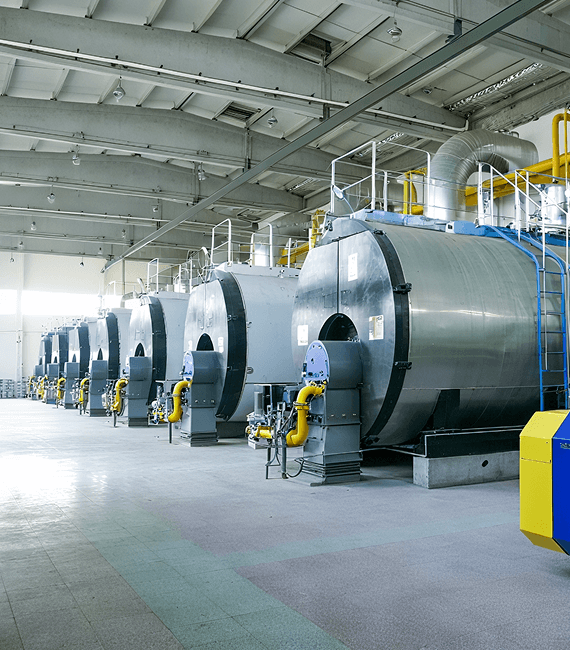

Industrial boilers serve as the "heart" of production for many factories. Whether for power generation, heating, or process heating applications, stable boiler operation is absolutely indispensable. However, the extent to which a boiler's proper functioning relies on water quality is far greater than many people imagine.
Water quality directly impacts a boiler's service life and operational efficiency, and is even critical to production safety. Among the numerous water quality control parameters, the pH value of boiler feedwater stands out as one of the most critical control variables. Today, from the perspective of actual operational practice, we will discuss why pH control is of such vital importance to boilers.
Fundamentally, pH is a metric used to measure the acidity or alkalinity of an aqueous solution; in the context of water chemistry, its primary function is to reflect the concentration of hydrogen ions present in the water. The pH test strips we commonly use allow for a simple assessment of a water sample's acidity or alkalinity, with values typically ranging from 0 to 14.
Specifically, a pH value of 7 indicates that the water is neutral. A value less than 7 indicates acidity. The smaller the value, the stronger the acidity. A value greater than 7 indicates alkalinity. The higher the value, the stronger the alkalinity. For boiler feedwater, however, pH is far more than just a simple indicator of acidity or alkalinity; it directly influences the reactions of various ions within the water, as well as the condition of the boiler's metal components.
Boiler pipes, water-cooled walls and other components are mostly made of carbon steel or low alloy steel, and these metals react completely differently under different pH environments. Simply put, even minute fluctuations in pH levels can trigger issues such as metal corrosion and scale formation, thereby compromising the operational integrity of the entire boiler system.
A low pH value in boiler feedwater creates an acidic environment, which directly damages the protective oxide film on metal surfaces. We know that metals rust easily in acidic water, and the internal metal components of a boiler, subjected to long-term high temperature and pressure, experience even more severe acid corrosion.
I previously encountered a power plant with an 80MW subcritical gas-fired boiler. After 11 months of operation, a water pressure test revealed a leak in the water-cooled wall steel pipes. The investigation revealed that the main cause was the low pH value of the boiler feedwater, leading to under-scale corrosion inside the steel pipes, ultimately causing the leak.
Acidic corrosion accelerates metal oxidation and material loss. Initially, it may only be slight pitting corrosion. Over time, it forms ulcer-like corrosion, and in severe cases, it can directly lead to pipe leaks and boiler tube rupture. This not only affects production but also poses a significant safety hazard.
Boiler feedwater contains minerals such as calcium and magnesium. The precipitation and deposition of these minerals are directly related to pH value. Both excessively high and low pH values can promote the premature precipitation of these minerals, forming scale.
Scale has particularly poor thermal conductivity. Even a thickness of only 1 mm can increase boiler energy consumption by 2% to 5%. This is because scale hinders heat transfer, requiring the boiler to consume more fuel to achieve its rated steam output.
More seriously, scale adhering to the boiler's heating surfaces can cause localized overheating, exceeding the metal's tolerance range. This can lead to deformation and damage of the heating surfaces, and even serious accidents such as tube rupture, significantly shortening the boiler's lifespan.
In boiler water treatment, chemical agents such as deoxygenators and scale inhibitors are added to help protect the boiler. The effectiveness of these agents depends crucially on the suitability of the feedwater pH value. For example, deoxygenators can only effectively remove oxygen from the water and prevent oxygen corrosion when the pH value is above 8.5. If the pH value is too low, the effectiveness of the deoxygenator will be greatly reduced, or even completely ineffective. At the same time, a suitable pH value also supports alkalinity control, avoiding unnecessary side reactions between chemicals.
Improper pH control not only wastes chemicals and increases water treatment costs, but may also lead to chemical inactivation, exposing the boiler to the risk of corrosion and scaling, resulting in more harm than good.
Many people believe that the higher the pH value, the better, but this is not the case. If the pH value of the boiler feedwater is too high, such as exceeding 11, it will weaken the toughness of the metal, especially in stress concentration areas such as welds and elbows, making them prone to cracking.
This metal damage caused by excessively high pH values is called caustic embrittlement. Its danger lies in the fact that the initial cracks are relatively hidden and not easily detected. Once the cracks expand, they will seriously affect the structural integrity of the boiler, reduce equipment life, and even cause safety accidents.
The most typical example is the high-pressure boiler. Because of its high operating pressure, the risk of caustic embrittlement is even higher. Therefore, pH control must be carefully managed; excessively high alkalinity should not be pursued.
The steam generated by the boiler is used for either power generation or industrial processes. High purity is required. Abnormal pH levels directly affect steam quality.
If the pH is too high or too low, the surface tension of the boiler water changes, easily causing foaming. In severe cases, steam-water co-occurrence occurs, where steam and water mix together and cannot be effectively separated. This results in the steam carrying a large amount of moisture and impurities, reducing steam purity.
Impuric steam affects the operation of downstream steam-using equipment. For example, scaling on turbine blades and corrosion in heat exchangers not only reduce system efficiency but also increase equipment maintenance costs and may even affect product quality.
Based on years of operational experience and relevant standards, the commonly recommended pH range for industrial boiler feedwater is 8.5–9.5. This range effectively inhibits corrosion and minimizes scaling, thereby ensuring the stable operation of the boiler.
However, pH requirements vary depending on the boiler's operating pressure. For low-pressure boilers (operating at pressures below 1.6 MPa), a feedwater pH greater than 7 is sufficient; for medium-pressure boilers, the recommended range is 8.8–9.2. For high-pressure boilers, if the system incorporates copper components, the pH should be controlled within the range of 8.8–9.3. If no copper components are present, this range can be broadened to 9.0–9.5.
It is important to note that, regardless of the type of boiler, the pH value must be controlled within a reasonable range. Too high or too low a pH value will pose safety hazards and cause performance loss to the boiler, so we must not be careless.
Firstly, there is the quality and impurities of the raw water. Many factories now use reverse osmosis demineralized water or sodium ion exchange softened water as boiler feedwater. The pH of reverse osmosis demineralized water is mostly between 5 and 6, which is inherently acidic. The pH of sodium ion exchange softened water is between 5.5 and 7.5, and it may also be acidic. This is the fundamental factor affecting feedwater pH.
Secondly, there are dissolved gases. Dissolved gases in the water, such as oxygen and carbon dioxide, directly affect the pH. For example, carbon dioxide dissolves in water to form carbonic acid, lowering the pH and making the water acidic. While oxygen does not directly change the pH, it accelerates metal corrosion, indirectly affecting pH stability.
Furthermore, chemical dosing and the water treatment process also affect pH. Insufficient alkali addition cannot effectively neutralize acidic substances, resulting in a low pH. Excessive alkali addition leads to an excessively high pH. Additionally, incomplete filtration and softening processes can leave impurities, affecting pH stability.
The most common method is to use alkaline agents for adjustment. Currently, sodium hydroxide and sodium carbonate are the main agents used, each with its own characteristics. Sodium hydroxide adjusts pH quickly and directly. However, it is easy to overdose and is a hazardous material, requiring proper precautions during operation. Sodium carbonate provides a gentler adjustment, resulting in a more stable pH value. It is also relatively safe, but requires a larger dosage and has a slower adjustment speed.
Many factories use an alternating approach. When the pH value is too low, sodium hydroxide is used first to quickly raise it, followed by sodium carbonate to maintain stability, which is both economical and effective. In recent years, many factories have also begun using BF-30A corrosion and scale inhibitor. This multi-functional agent can adjust pH value and also provides corrosion and scale prevention, replacing traditional single agents.
Besides chemical adjustment, deoxygenation and deaeration technologies are also important. Through thermal deoxygenation, vacuum deoxygenation, and other methods, oxygen and carbon dioxide are removed from the water, reducing the generation of acidic substances at the source and helping to maintain pH stability.
In addition, online monitoring and automatic adjustment are also essential. Many factories now install online pH monitors to monitor the pH value of their feedwater in real time. Combined with automatic dosing systems, these systems automatically adjust the dosage of chemicals based on the monitoring data. This reduces human error and ensures the pH value remains within a reasonable range.
The most direct problem caused by abnormal pH is corrosion and metal damage. Low pH leads to acidic corrosion, resulting in pitting and ulceration. High pH can cause caustic embrittlement, leading to metal cracks. Both of these conditions directly damage boiler components.
Secondly, it causes scaling and reduced efficiency. Inappropriate pH promotes scale formation, which adheres to heating surfaces, reducing heat transfer efficiency and increasing fuel consumption. It also shortens the boiler's maintenance cycle and lifespan.
In addition, abnormal pH can lead to unstable boiler operation and frequent malfunctions, such as steam-water bubbling and pipeline leaks. These issues affect production schedules, increase equipment maintenance costs, and cause unnecessary losses to the factory.
Regular monitoring is fundamental and the most crucial step. It is recommended to manually test the feedwater pH value at least 1-2 times daily, calibrating the pH meter before each test. Use buffer solutions with pH values of 4.01, 6.86, and 9.18 to ensure accurate data. Simultaneously, compare the manually tested data with data from the online monitoring instrument to promptly identify any anomalies.
For plants with the resources, it is recommended to install an automated pH control system. Online pH monitoring instruments provide real-time data feedback, avoiding errors due to human intervention. This allows for precise pH control, especially suitable for medium- and high-pressure boilers and continuously operating production lines.
Furthermore, establishing standard operating procedures is crucial. Clearly define the dosage, monitoring frequency, and procedures for handling anomalies. For example, how to adjust the dosage when the pH value is below 8.5.How to handle signs of corrosion or scaling? Ensure that every operator follows the correct procedures to avoid pH abnormalities caused by improper operation.
Controlling the pH value of boiler feedwater is not merely a simple water quality indicator adjustment. It directly impacts the safe operation, service life, and production efficiency of the boiler. No negligence is permissible. In actual operation, we must prioritize pH monitoring and control. Based on the actual conditions of the boiler, such as pressure and water quality, formulate a reasonable control range and adjustment plan, and match appropriate reagents and monitoring equipment.