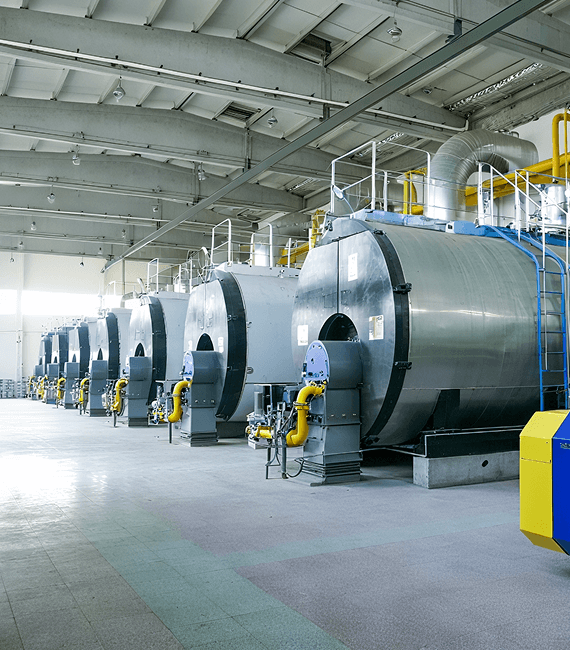

In industrial production, steam boilers serve as indispensable core equipment; from food processing to chemical manufacturing, virtually every industry requiring a continuous source of heat or power relies on their support. The performance of a steam boiler directly impacts production efficiency, operating costs, and compliance with environmental standards.
Among the many types of boilers available, the AFBC boiler is a highly specialized form of fluidized bed boiler—specifically, an Atmospheric Fluidized Bed Combustion Boiler. Compared to traditional boilers, its most distinctive feature is the utilization of fluidized combustion technology at atmospheric pressure. This approach allows it to generate steam stably while simultaneously addressing environmental concerns and offering superior fuel flexibility.
Simply put, the core logic behind an AFBC boiler is straightforward: within an atmospheric environment, fuel particles are suspended and combusted within an upward-flowing stream of air, creating a state resembling fluid flow. This process facilitates more uniform combustion and heat transfer, ultimately achieving highly efficient, clean, and flexible steam generation.
.png)
Let's begin with a simple, accessible definition: An AFBC boiler is a specific type of Fluidized Bed Boiler (FBC boiler) that operates entirely at atmospheric pressure, requiring no high-pressure environment. Its core mechanism involves suspending fuel particles—such as coal, lignite, or biomass—within an upward-blowing stream of air to form a "fluidized bed"; the combustion of the fuel takes place entirely within this bed layer.
Its fundamental principle is "fluidization": when the velocity of the airflow reaches a certain threshold, the previously static solid particles are lifted by the air stream, exhibiting characteristics similar to a flowing liquid. This fluid-like state ensures intimate contact between the fuel and the air, resulting in more uniform combustion and a more balanced distribution of heat, thereby preventing issues such as localized overheating or incomplete combustion.
Compared to the traditional boilers we commonly encounter, AFBC boilers present several distinct differences—differences that are readily apparent in actual operational practice.
A significant distinction is the lower combustion temperature: whereas traditional boilers typically operate at combustion temperatures exceeding 1000°C, AFBC boilers maintain their combustion temperatures within a controlled range of 800°C to 900°C. This temperature range ensures both the complete combustion of fuel and a reduction in the generation of nitrogen oxides (NOx)—since the prolific formation of NOx is typically associated with high-temperature combustion.
Furthermore, it offers superior adaptability to low-grade fuels. Traditional boilers burn fuels with low calorific values and high impurity levels—such as coal gangue, inferior-quality coal, and biomass waste—inefficiently and are prone to slagging; however, by leveraging the characteristics of fluidized-bed combustion, AFBC boilers can effectively utilize these types of fuels, thereby lowering fuel costs for enterprises.
Currently, AFBC boilers are widely deployed across numerous industries—including food processing, rice milling, textiles, and chemical manufacturing. They are suitable for any application requiring a continuous and stable supply of steam, and are particularly well-suited for enterprises facing stringent environmental regulations or relying on diverse and complex fuel sources.
Many customers ask me if AFBC boilers, which look complex, are difficult to understand in practice. In fact, this is not the case; the operating process can be broken down into several sequential steps, and it becomes clear when examined step by step.
The benefits of this fluidized state are clear: it ensures an exceptionally uniform temperature distribution within the bed, significantly increases the contact area between fuel particles and air, accelerates heat transfer, and prevents localized overheating or underheating.
Generally, the operating efficiency of AFBC boilers can reach 85% to 90%, which is considered relatively high among industrial boilers and helps enterprises effectively reduce energy costs.
The cyclone separator first removes large particulate matter from the flue gas; the economizer and air preheater further recover residual heat from the flue gas; and finally, the electrostatic precipitator thoroughly filters out fine dust, ensuring that the discharged flue gas complies with national pollution emission standards.
These ash and slag are not waste; bottom ash and fly ash can be used in the production of cement and bricks, as well as for backfilling in construction projects, thereby achieving resource recycling and reducing waste emissions.
Having covered the basic operating steps, we will now delve into the core processes to help you better understand the boiler’s operational logic and identify minor issues during daily operation.
The operational performance of an AFBC boiler relies on the coordination of all its components, much like the parts of a machine—each is indispensable. Below, we introduce several core components, along with their functions and important considerations.
Fuel Supply System: Primarily responsible for delivering fuel uniformly and steadily into the fluidized bed. There are two common feeding methods: bottom pneumatic feeding and top feeding.
Bottom pneumatic feeding uses high-pressure air to blow fuel particles from the bottom of the bed into the fluidized bed. Its advantages include uniform feeding and rapid mixing of the fuel with the bed material. Surface feeding, on the other hand, involves spreading the fuel directly onto the surface of the fluidized bed, making it suitable for fuels with slightly larger particles that are not easily lifted by the airflow. Companies can select the appropriate feeding method based on their specific fuel type.
Air Distribution System: Also known as an air distributor, this component is installed at the bottom of the boiler and is a key element in forming the fluidized bed. Its function is to distribute air uniformly across the entire bed surface, ensuring that all particles within the bed are suspended by the airflow to achieve uniform fluidization and prevent localized poor fluidization or slagging.
To protect the air distributor, a refractory lining is typically applied to its surface, or a static bed layer and water-cooled wall tubes are installed to prevent damage from high temperatures and particle erosion. If air distribution is uneven, it can easily lead to localized particle settling, creating “dead zones” that affect normal boiler operation.
Bed and In-Bed Heat Transfer Surfaces: The bed is classified into shallow and deep beds. Shallow beds have a lower height and faster fluidization velocity, making them suitable for small boilers; deep beds have a greater height, more stable fluidization, and higher combustion efficiency, making them suitable for large industrial boilers.
The in-bed heat transfer surfaces primarily consist of various tube bundles, which can be installed horizontally, vertically, or at an angle. Their function is to absorb the heat generated by fuel combustion and transfer it to the feedwater. Many factors influence the heat transfer efficiency of the heat transfer surfaces, such as bed pressure, temperature, gas flow velocity, and particle size; these parameters require close monitoring during daily operation.
Ash and Slag Handling System: This system is primarily divided into two parts: bottom ash handling and fly ash handling. Bottom ash handling employs mechanical ash removal methods; depending on the boiler load, either continuous or intermittent ash removal can be selected to ensure that bottom ash does not accumulate at the bed bottom and impair fluidization.
Fly ash handling employs a multi-stage collection process: large fly ash particles are first captured by cyclone separators, followed by the collection of fine fly ash via baghouse filters or electrostatic precipitators, ensuring that fly ash is not emitted with the flue gas. Both collected fly ash and bottom ash can be recycled, thereby reducing the company’s waste disposal costs.
Many enterprises choose AFBC boilers primarily because they value their practicality and economic efficiency. The advantages of these boilers are not merely theoretical claims; In terms of operating efficiency, AFBC boilers have very high combustion efficiency, especially in the utilization rate of low-grade fuels, which is much higher than that of traditional boilers. This is because fluidized combustion facilitates thorough contact between the fuel and air, thereby avoiding the issues of fuel accumulation and incomplete combustion often encountered in traditional boiler systems.
Furthermore, the combustion temperature in AFBC boilers is relatively low, preventing the melting and slagging (clinkering) of ash residues. This reduces the downtime required for cleaning caused by slagging, thereby extending the boiler's continuous operating duration. Simultaneously, low-temperature combustion minimizes the generation of nitrogen oxides (NOx), eliminating the need for additional denitrification equipment and resulting in savings on capital investment.
Regarding design, AFBC boilers feature a relatively compact footprint. Due to their high heat transfer efficiency, they require less floor space than traditional boilers to achieve the same steam generation capacity, making them an ideal choice for enterprises with limited site availability. Additionally, they offer rapid start-up and shut-down capabilities; they can quickly reach their rated load after ignition and cool down rapidly upon shut-down, making them well-suited for production environments that require frequent cycling.
Fuel flexibility is a major highlight of AFBC boilers. Unlike traditional boilers, which often impose strict requirements on fuel quality, AFBC boilers can combust a wide variety of materials—ranging from conventional fuels such as coal and lignite to low-grade fuels like biomass, agricultural waste, and coal gangue. They are even capable of co-firing multiple types of fuel simultaneously.
This feature is highly practical for enterprises with diverse fuel sources or those sensitive to fuel costs, as it effectively reduces fuel procurement expenses while simultaneously enabling the productive utilization of waste materials.
In terms of environmental protection and maintenance, AFBC boilers also offer distinct advantages. By introducing limestone into the fluidized bed, the boilers can effectively capture sulfur dioxide (SOx) generated during combustion. When combined with the reduction in nitrogen oxides achieved through low-temperature combustion, the system can easily meet environmental emission standards without the need for substantial additional investment in pollution control equipment.
Moreover, AFBC boilers experience minimal ash accumulation and reduced corrosion of heat-transfer surfaces. Consequently, routine maintenance is straightforward—requiring no complex procedures—and maintenance costs are significantly lower than those associated with traditional boilers, thereby alleviating the operational and maintenance burden on enterprises.
AFBC boilers are highly adaptable and can be utilized in virtually any industry requiring a continuous supply of steam. The following section outlines their practical application scenarios across specific sectors, allowing readers to identify relevant examples applicable to their own industries.
In rice milling plants, the application of AFBC boilers is extensive. The rice milling process generates substantial quantities of rice bran and husks—both excellent sources of biomass fuel. Previously, much of this material was discarded as waste; however, it can now be combusted in AFBC boilers to generate steam for use in milling, drying, and other operations. This approach simultaneously resolves waste disposal issues and reduces fuel costs.
In the plywood and furniture industries, manufacturing processes produce large volumes of waste materials such as sawdust and wood veneers. These waste products possess a moderate calorific value, making them suitable for use as fuel in AFBC boilers. The resulting steam can be utilized for operations such as wood drying and hot-press molding, thereby enabling the resource-efficient recycling of waste materials and lowering production costs for enterprises.
The chemical and textile industries have a substantial demand for steam, requiring it to be delivered at stable pressures and with high purity. AFBC boilers are capable of continuously and stably generating high-temperature, high-pressure steam, thereby meeting the requirements of continuous production processes such as chemical reactions and textile dyeing/printing. Furthermore, their robust environmental performance ensures compliance with the stringent environmental regulations applicable to the chemical and textile sectors.
The food processing and dairy industries impose rigorous hygiene standards on steam, strictly prohibiting the presence of impurities or contaminants. AFBC boilers achieve complete combustion, producing pure steam that poses no risk of contamination to food or dairy products. Consequently, they are ideally suited for applications such as food sterilization, drying, and dairy processing, thereby safeguarding product quality.
The pharmaceutical and paper manufacturing industries demand precise control over steam temperature and pressure parameters. AFBC boilers offer exceptional operational stability, enabling the precise regulation of steam parameters to meet the diverse requirements of various stages within pharmaceutical and paper production processes. Additionally, their characteristics of low emissions and minimal maintenance requirements serve to reduce both operational/maintenance costs and environmental compliance burdens for these enterprises.
The AFBC boiler is a highly efficient industrial steam-generating device that utilizes atmospheric fluidized bed combustion technology to achieve complete fuel combustion and uniform heat transfer. Its low-temperature combustion range (800–900°C) effectively mitigates issues such as incomplete combustion, slagging, and environmental pollution. Moreover, the system demonstrates high fuel flexibility, enabling the efficient utilization of low-grade fuels. For enterprises requiring a continuous and stable steam supply—and prioritizing both cost-efficiency and environmental protection—it stands as the preferred solution, offering simple maintenance and stable operation.