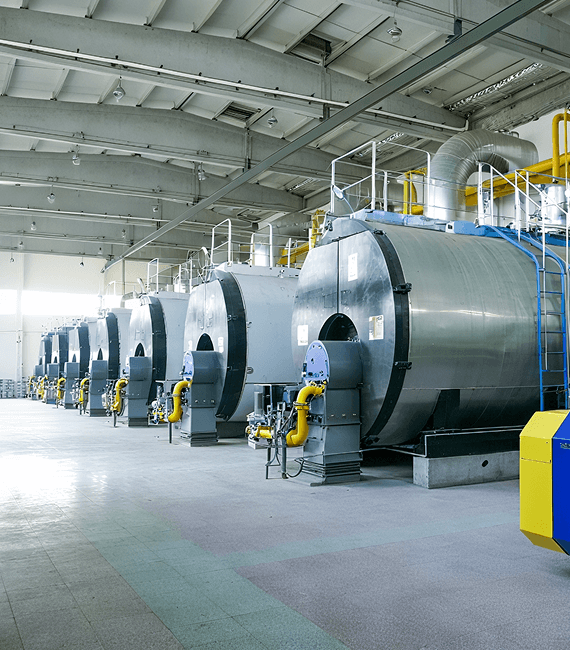

As anyone involved in food factory operations knows, the selection and design of boilers are no trivial matters; they directly determine the stability of the steam supply to the workshops and, more importantly, impact the factory's monthly operating costs and energy consumption. If an unsuitable boiler is selected, it not only results in wasted energy and persistently high maintenance costs but can also lead to production shutdowns during peak periods due to an insufficient steam supply. We must take boilers as the core focus. We analyze the characteristics of steam demand in food production. We formulate a scientific configuration scheme. We can avoid unnecessary detours in this way. We reduce operational risks effectively. The factory can gain stronger market competitiveness finally.
Industrial boilers serve as the central apparatus for steam generation within food factories. Every production stage that relies on steam from raw material pretreatment, sterilization, and disinfection to product drying and thermal insulation is entirely dependent on the boiler's continuous support. Key performance parameters such as thermal efficiency, steam output, and pressure stability are directly correlated with the factory's overall production efficiency.
The critical importance of boiler selection permeates every single stage of the entire production process. If the selected boiler is undersized, it will fail to meet steam demands during peak production periods, forcing production lines to grind to a halt; the financial losses incurred from such downtime can amount to thousands or even tens of thousands of dollars per hour. Conversely, if the boiler is oversized, not only does the initial capital investment in equipment skyrocket, but thermal efficiency also plummets significantly during periods of low-load operation, leading to severe energy waste and a corresponding surge in operating costs. Consequently, for food factories, precise boiler selection is not merely a discretionary choice but the fundamental prerequisite for achieving efficient and economical operations—a task that leaves absolutely no room for negligence.
Steam demand in food factories exhibits two distinct characteristics: spatial dispersion across multiple points and significant load fluctuation. Within the workshops, multiple production lines and various processing stages often consume steam simultaneously; moreover, the specific volume and timing of steam consumption vary from one process to another, resulting in a constantly shifting, dynamic overall steam load. These fluctuations are not random; rather, they are inextricably linked to the factory's production schedule and process sequencing. The disparity in steam consumption between peak periods and off-peak periods can exceed 50%, thereby imposing rigorous demands on the boiler system's adaptability and responsiveness.
These inherent characteristics dictate that the capacity design and system configuration of the boiler cannot be approached using a one-size-fits-all methodology. If designed based on a fixed load, a boiler system will inevitably face one of two scenarios: either steam supply proves insufficient during peak periods—thereby slowing down production—or energy is wasted during off-peak periods, leading to increased costs. Therefore, the design of a boiler system must be grounded in the facility's actual steam operating conditions. By scientifically calculating the average load, peak load, and load duration, it is possible to determine a rational capacity and configuration scheme that not only satisfies production steam requirements but also maximizes energy utilization efficiency, thereby keeping operating costs within a reasonable range.
Boiler configuration in food processing plants cannot simply replicate the standard approaches used for general industrial boilers; instead, it must be tailored to the specific production characteristics of the food industry, prioritizing three key factors: flexibility, rapid response capability, and hygiene compliance.
Many people mistakenly believe that choosing a large boiler can solve all steam needs, which is a misconception. A single large boiler has a limited load adjustment range; when steam demand drops below 30% of its rated capacity, thermal efficiency plummets, resulting in significant energy waste. Furthermore, the failure of a single boiler can interrupt the steam supply for the entire plant, leading to substantial losses due to downtime. Additionally, a single large boiler entails high initial capital investment, and its subsequent maintenance complexity and costs are far greater than those of a system comprising multiple smaller boilers; from a comprehensive perspective, it is not a cost-effective solution.
Modular and parallel-connected systems represent a superior alternative. Multiple small boilers can be operated in parallel and can be flexibly started and stopped according to the steam load, ensuring that each boiler operates in the high-efficiency load range of more than 85%, which greatly improves energy utilization. Although the initial investment for such a system may be 10% to 15% higher than that of a single large boiler, the additional outlay can be quickly recouped over the long term through energy savings and reduced downtime losses. Moreover, the failure of a single boiler does not disrupt overall operations, thereby substantially mitigating the risk of production interruptions and enhancing overall system reliability.
Gas-fired boilers are widely utilized in food processing plants due to their distinct advantages: rapid ignition and startup—reaching rated steam output within 15 to 30 minutes—which enables them to respond swiftly to sudden changes in steam demand. They also boast high combustion efficiency, achieving thermal efficiencies of 90% to 95%, while generating minimal pollutant emissions; consequently, they do not require complex dust removal or desulfurization equipment, making them easy to maintain. However, it also has its shortcomings. Its operating costs are greatly affected by fluctuations in gas prices, it requires a stable gas supply pipeline, the initial investment in pipeline laying is high, and gas outages will directly affect production.
Once-through boilers and modular boilers stand out as the preferred high-efficiency choices for food processing plants. Once-through boilers are compact and lightweight, occupying only 30% to 50% of the floor space required by traditional water-tube boilers, making them ideal for factories with limited space. Furthermore, they boast high heat exchange efficiency and rapid start-up and shut-down capabilities, allowing them to adapt quickly to load fluctuations; their initial investment cost is merely about 20% higher than that of traditional boilers. Modular boilers consist of multiple independent units that can be flexibly combined to match specific load requirements. For future capacity expansion, one simply needs to add more modules rather than replacing the entire system; however, this design demands sophisticated coordination control among the modules, making maintenance slightly more complex.
Combining high-efficiency and energy-saving technologies can further improve boiler efficiency. For example, condensation recovery technology can recover waste heat from flue gas and improve thermal efficiency by 3%-5%. However, additional investment in condensation recovery equipment is required, which increases the initial investment and maintenance costs for regular cleaning. With proper planning, the long-term energy-saving benefits are worth the investment.
The core principle of boiler selection lies in balancing peak load requirements with daily average loads, ensuring the selected capacity is neither excessively large nor too small. Selection should be anchored to the average load, while also taking into account the duration and frequency of peak loads to determine the appropriate rated capacity: if peak loads are brief and infrequent, a modest capacity margin (redundancy) suffices; conversely, if peak loads are prolonged and frequent, the rated capacity must be increased or multiple boilers operated in parallel to prevent supply shortages.
Selecting a boiler with a capacity that is either too large or too small leads to operational issues. Choosing the wrong boiler model can cause problems: if the model is too large, the thermal efficiency will decrease by 5%-10% when operating at low load, increasing fuel consumption and equipment depreciation and maintenance costs; if the model is too small, the steam supply will be insufficient during peak hours, resulting in losses of tens of thousands of yuan for each shutdown, and long-term overload operation will also shorten the boiler's lifespan and increase the risk of failure. In practice, the optimal selection principle dictates that the boiler's rated capacity should exceed the average load by 20% to 30%, ensuring that thermal efficiency remains at or above 80% even during peak load operation, thereby striking a balance between capital investment and operational costs.
Integrating the design of steam storage systems with boilers helps mitigate the impact of sudden load fluctuations on the boiler, thereby enhancing the overall stability and reliability of the steam supply system. Steam storage tanks can store steam and release it quickly when the load increases suddenly, avoiding boiler pressure fluctuations and allowing adjustment time; when the load decreases, they can store excess steam to avoid waste, making the boiler run more smoothly and reducing malfunctions.
However, more steam storage systems are not necessarily better, as they increase investment costs. The larger the capacity, the higher the investment, and regular maintenance is required. There is also a 1%-2% steam loss. A recommended optimal capacity falls within the range of 10% to 15% of the boiler's rated hourly output; this range effectively meets load regulation requirements while simultaneously keeping investment and steam loss costs under control.
Food production places extremely stringent demands on steam purity; specifically, "clean steam" must be free of oil, dust, and chemical impurities. Failure to meet these standards risks product contamination, endangers consumer health, and can result in catastrophic damage to a brand's reputation. As a source of clean steam, the boiler must be designed to work closely with the clean steam system; this is a key point in the configuration of boilers in food factories.
To satisfy these purity requirements, the boiler must be equipped with a high-quality feedwater treatment system to minimize impurity levels in the incoming water supply. Internally, the boiler should utilize corrosion-resistant and scale-resistant materials to prevent impurities from precipitating into the steam. When integrated with a dedicated clean steam generator, the boiler must maintain stable steam pressure and temperature parameters to ensure that fluctuations do not compromise the quality of the generated clean steam. This integrated design increases investment and system complexity, and has higher maintenance costs, but it can ensure food hygiene and safety, avoid product scrapping, and is a necessary and worthwhile long-term investment.
Food processing plants typically utilize three primary types of boiler fuels: natural gas, electricity, and biomass. These three fuels differ greatly in characteristics, supply conditions, and operating costs. When choosing one, one cannot only consider a single factor. One must comprehensively consider factors such as supply stability, control difficulty, cleanliness, and cost, and choose according to the actual situation of one's own factory in order to select the most suitable fuel type and avoid operational problems later.
Natural gas boasts high combustion efficiency, clean emissions, and simple controls, and it responds rapidly to fluctuations in load demand. It is particularly well-suited for food processing plants subject to stringent environmental regulations or those experiencing significant variability in steam requirements. However, its operating costs are highly susceptible to fluctuations in natural gas prices. Furthermore, it necessitates a stable pipeline infrastructure the initial installation costs for which can be substantial and any interruption in the gas supply will result in an immediate halt in production. Electric boilers offer stable operation, high control precision, zero pollutant emissions, and ease of maintenance. They are ideal for small-scale facilities or scenarios involving low steam demand coupled with extremely strict environmental standards. Nevertheless, electric boilers incur the highest operating costs; the cost per kilowatt-hour of steam produced is approximately two to three times that of natural gas, and large-scale implementation can place significant additional strain on a plant's overall electrical load.
Biomass fuel is characterized by low costs and diverse sources, and it qualifies as a renewable energy resource, making it a viable option for food processing plants with access to a stable supply of biomass. However, its combustion efficiency is relatively low, with a thermal efficiency of only 75%-85%, and it produces certain pollutants during combustion, requiring dust removal equipment and resulting in high maintenance costs. In addition, the storage of biomass fuel requires a considerable amount of space, which increases the site costs of the factory, and these are also factors that need to be considered when making a selection.
Improving boiler thermal efficiency constitutes a pivotal step for food processing plants seeking to reduce their operational costs. Many facilities may not fully realize that for every one-percent increase in boiler thermal efficiency, they can save tens of thousands of yuan annually in fuel expenses; over the long term, these cumulative savings can amount to a substantial financial benefit for the plant. However, boiler efficiency optimization must not be pursued blindly. However, boiler efficiency optimization should not be carried out blindly. It should start from multiple aspects such as equipment modification and operation management, while taking into account both optimization costs and energy-saving benefits. In pursuit of high efficiency, excessive modification funds should not be invested, as this would be counterproductive.
Economizers and waste heat recovery systems serve as the core components for enhancing boiler thermal efficiency. Economizers utilize the waste heat from boiler flue gas to preheat feedwater, thereby lowering both the feedwater temperature and the temperature of the flue gas exiting the boiler; this process can boost thermal efficiency by 2% to 4%. Waste heat recovery systems, meanwhile, capture residual heat from flue gas for purposes such as preheating combustion air or generating hot water for industrial use, thereby further enhancing energy utilization efficiency. However, the adoption of such equipment entails increased initial capital outlay; specifically, the investment costs for economizers and waste heat recovery systems typically account for approximately 10% to 15% of the total boiler investment. Furthermore, these systems require periodic cleaning and maintenance, which leads to increased operational costs; consequently, a careful balance between costs and benefits must be struck when making equipment selection decisions.
Reducing fuel consumption constitutes another critical avenue for optimizing efficiency. Optimizing combustion control to ensure complete fuel combustion reduces waste and lowers pollutant emissions. Additionally, adjusting boiler operating parameters to avoid low-load operation and ensure the boiler is always in its high-efficiency load range can also effectively reduce fuel consumption. Nevertheless, optimizing combustion controls necessitates the implementation of intelligent control systems, which entails higher equipment costs. Moreover, this approach demands a higher level of professional expertise from operating personnel, thereby underscoring the necessity of comprehensive staff training.
Steam loads in food processing plants fluctuate with particular frequency. Traditional manual control methods are simply incapable of responding rapidly to such fluctuations; this often leads to instability in steam pressure and temperature, which in turn compromises product quality. Furthermore, manual control necessitates a larger workforce, thereby increasing labor costs. The implementation of boiler control and automation systems effectively resolves these issues by enhancing system operational stability and minimizing the need for human intervention, making boiler operation significantly more hassle-free.
Intelligent control systems continuously monitor steam loads and boiler operating parameters in real time. Based on changes in load, they automatically adjust combustion rates and feedwater flow to ensure that steam pressure and temperature remain stable within their designated ranges. With a control precision reaching ±0.05 MPa, these systems effectively prevent production issues caused by parameter fluctuations. Multi-boiler联控 systems enable the coordinated operation of multiple units; they automatically start, stop, and distribute loads among boilers in response to demand changes, ensuring that each unit operates within its high-efficiency zone. This further enhances the overall efficiency and stability of the system while minimizing energy waste.
Of course, automation systems do have their drawbacks. They entail increased capital expenditure on equipment; a complete intelligent control system typically accounts for approximately 20% to 25% of the total boiler investment. Additionally, these systems require periodic maintenance and software upgrades, which results in higher ongoing maintenance costs. However, from a long-term perspective, automation systems significantly reduce the need for manual labor—potentially saving one to two operators per boiler—thereby effectively lowering labor costs. Moreover, they mitigate the risk of malfunctions caused by human error, thereby enhancing production stability. Consequently, the overall cost-effectiveness of these systems remains very high.
Boiler water treatment is a critical factor in ensuring both the safe operation of boilers and the quality of the steam produced. The water treatment requirements for boilers in food processing plants are significantly more stringent than those for standard industrial boilers. Inadequate water treatment can easily lead to boiler scaling and corrosion; this not only shortens the boiler's service life but also compromises steam quality—potentially contaminating food products and inflicting irreparable losses upon the facility. Therefore, food processing plants must prioritize boiler water treatment with the utmost seriousness, allowing for absolutely no laxity in this regard.
The core objective of boiler water treatment is to remove hardness, impurities, and dissolved gases from the feedwater, thereby preventing internal scaling and corrosion within the boiler. The detrimental effects of scaling are evident: for every millimeter of scale accumulation, a boiler's thermal efficiency drops by 2% to 3%. This not only increases fuel consumption but, in severe cases, can also lead to the overheating and damage of boiler tubes. Corrosion, conversely, compromises the structural integrity of the boiler itself, heightening the risk of malfunctions and potentially triggering safety incidents. Consequently, food processing plants must be equipped with comprehensive water treatment systems and conduct regular water quality testing to ensure that feedwater meets boiler operational specifications, thereby safeguarding both boiler safety and steam quality at the source.
Boiler maintenance directly impacts operational stability and service life. For food processing plants, boiler maintenance is of paramount importance; should a boiler malfunction and shut down, the entire production line would grind to a halt, resulting in catastrophic losses. Therefore, boiler maintenance in food processing plants should prioritize preventive strategies—proactively identifying potential faults to minimize downtime risks and ensure the boiler's long-term, stable operation, thereby serving as a reliable safeguard for production activities.
To further mitigate the risk of downtime, it is essential to establish a comprehensive maintenance archive. This archive should meticulously document the boiler's operating parameters, maintenance history, and records of any malfunctions. By analyzing this data, operators can anticipate potential faults and take preemptive measures to nip problems in the bud. Concurrently, professional training for operating personnel must be intensified to enhance their maintenance skills and emergency response capabilities. This ensures that minor faults can be addressed immediately upon detection—preventing them from escalating—and thereby minimizing downtime to the greatest extent possible.
Given the unique steam demand characteristics and stringent hygiene requirements inherent to the food industry, boiler systems cannot simply adopt generic configurations designed for general industrial applications; rather, they must strike a balance between flexibility, efficiency, and regulatory compliance. For food processing plants, prioritizing the scientific configuration and management of boiler systems not only mitigates operational risks but also enhances core competitiveness, providing robust support for the plant's sustainable development. This is a critical issue that every food processing plant operator must take seriously.