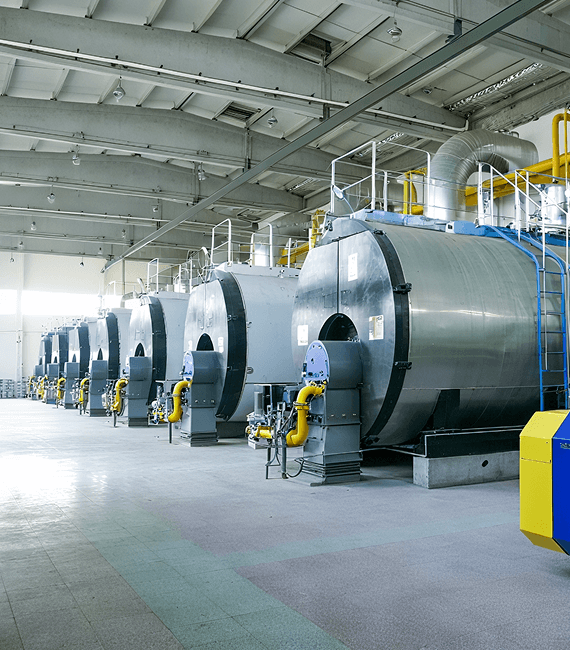

Furnace temperature is a critical parameter in the operation of biomass boilers. Maintaining a stable temperature is essential for steady combustion, extending equipment lifespan, and ensuring operational safety. Issues such as high energy consumption, equipment vulnerability, and operational malfunctions are frequently linked to a lack of control over furnace temperature.
Prolonged operation at excessive temperatures leads to in-furnace coking, slagging, and ash accumulation, while also corroding refractory materials and causing wear on key components like the grate and heating surfaces. Furthermore, it disrupts combustion dynamics and reduces thermal efficiency, potentially triggering safety hazards such as smoke emission and furnace overpressure.
There is no single, fixed standard temperature for biomass boiler furnaces; the appropriate operating temperature range varies significantly depending on the boiler's model, capacity, and structural design. Factors such as the boiler's design, combustion method, and rated load directly determine the optimal temperature range. Additionally, the type and condition of the fuel used in daily operations can slightly influence combustion temperatures.
In practical operation and maintenance, the equipment manual and factory parameter specifications provided by the manufacturer serve as the primary references for determining the normal furnace temperature; all operational adjustments must be based on the manufacturer-stipulated ranges. Relying solely on experience to judge whether temperatures are excessive should be avoided to prevent operational risks arising from subjective decision-making.
Deviations from the standard temperature range—whether too high or too low—result in adverse effects. Excessively low temperatures lead to incomplete combustion, causing problems such as black smoke emissions, low thermal efficiency, and fuel wastage. Conversely, excessively high temperatures accelerate equipment wear, trigger coking and slagging, and compromise the stable operation of the entire combustion system.
Excessive furnace temperature in biomass boilers is usually caused by a combination of operating conditions, with an imbalance in operating parameters being the primary trigger. Excessive fuel feeding combined with slow grate speed causes fuel to accumulate in the furnace and significantly extends the combustion residence time; the resulting continuous buildup of heat leads to overheating. Imbalanced airflow ratios are also a frequent issue; excessive primary air, secondary air, or induced draft volumes create an oxygen-rich environment that intensifies combustion, disrupts the normal air-to-fuel balance, and directly causes a rapid spike in furnace temperature. Additionally, ash accumulation, coking, and slagging resulting from long-term operation can cover heating surfaces and impede normal heat dissipation, causing heat to become trapped and accumulate within the furnace, thereby continuously driving up the temperature.
Beyond operating conditions, fluctuations in fuel quality and malfunctions in temperature-measuring equipment are also significant causes of furnace overheating. Unstable fuel characteristics—such as sudden drops in moisture content, uneven particle sizes, or inconsistent specifications—directly alter the fuel's calorific value and combustion rate, leading to abnormal temperature spikes. Meanwhile, if temperature-measuring devices like thermocouples or sensors become fouled with ash or fail due to aging, they may report falsely high temperatures; if operations and maintenance personnel adjust equipment parameters based on this erroneous data, it can easily lead to operational errors that ultimately trigger actual overheating faults.
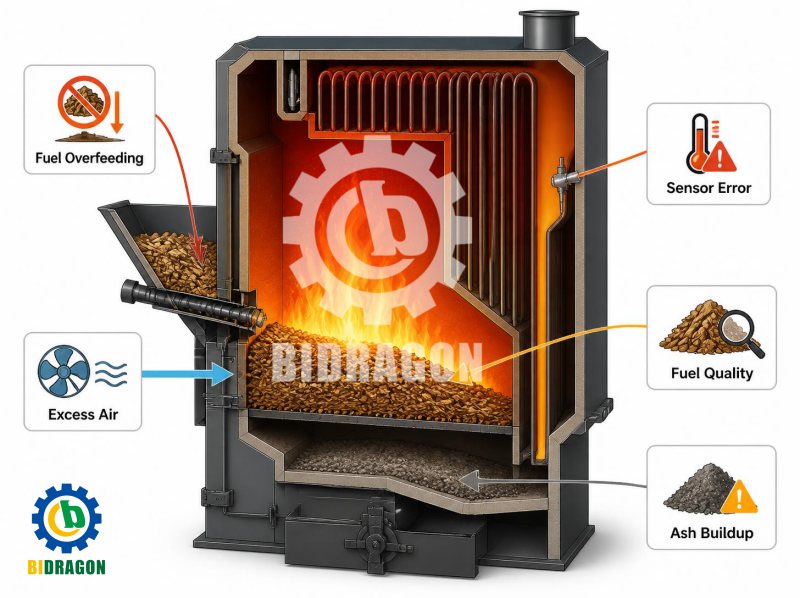
When addressing furnace overheating, avoid blind actions or making drastic, simultaneous adjustments to multiple parameters. Chaotic adjustments can completely disrupt the combustion balance, easily triggering secondary issues such as flameout, deflagration, or abnormal furnace pressure. A standardized handling process requires a step-by-step troubleshooting approach.
Excessive fuel feeding is a common cause of furnace overheating; operators must assess the boiler's actual load to determine if the feed rate should be reduced. If the feed speed and total quantity exceed load requirements, the feed speed can be slightly lowered to reduce the amount of fuel entering the furnace per unit of time. This lowers the total heat release within the furnace, allowing the temperature to gradually return to normal. During adjustment, the condition of the fuel feeder must also be checked to rule out issues like jamming, clogging, or uneven feeding, thereby preventing fuel accumulation that could cause localized high temperatures. Crucially, do not reduce the feed rate drastically; excessive reduction can lead to insufficient fuel and incomplete combustion, potentially causing operational problems such as flameout or an inability to meet load demands.
When the furnace overheats, one should not simply reduce airflow blindly; the key is to optimize the air-to-fuel ratio and restore a reasonable combustion rhythm. First, check the airflow rates for primary and secondary air to determine if the airflow is excessive.
Excess air provides abundant oxygen for combustion, accelerating the fuel burning rate and directly driving up the furnace temperature. In this situation, the airflow can be slightly reduced based on the flame's appearance to gradually match the current fuel feed rate.
Drastic, sudden reductions in air intake are strictly prohibited. A sudden drop in airflow leads to insufficient oxygen, creating an oxygen-starved combustion environment. Incomplete fuel combustion generates large amounts of harmful gases like carbon monoxide and can lead to issues such as smoldering and carbon buildup, creating safety hazards.
The core logic behind airflow adjustment is to match the air intake to the current fuel quantity and combustion requirements, ensuring steady, complete, and stable combustion, thereby controlling the furnace temperature at its source.
An imbalance in furnace negative pressure is a significant factor contributing to overheating. Negative pressure is primarily determined by the operating frequency of the induced draft fan and the volume of induced air; abnormal pressure values directly alter the dynamics of air intake and flue gas exhaust within the furnace.
If the negative pressure is excessively high, a stronger suction effect is created, drawing large amounts of cold ambient air into the furnace. This excess air accelerates fuel combustion and increases overall combustion intensity, causing the furnace temperature to rise continuously. Furthermore, excessive negative pressure disrupts flue gas flow patterns, preventing heat from being exhausted effectively and further exacerbating the overheating issue.
Operations and maintenance personnel should compare the current pressure against the manufacturer's standard range and make fine adjustments to the induced draft fan frequency to bring the furnace negative pressure within an appropriate range. After adjustment, they should monitor flue gas emissions, furnace pressure, and temperature fluctuations to ensure stability and prevent excessive volatility from affecting combustion conditions.
An excessively slow grate operating speed is a common cause of overheating that is easily overlooked on-site. The grate is responsible for transporting fuel and discharging ash/slag; its speed directly determines the residence time of the fuel within the furnace.
When the grate speed is too low, fuel fed into the furnace cannot be transported rearward, burned out, and discharged in a timely manner, leading to continuous accumulation in the furnace's combustion zone. Prolonged fuel residence time results in more complete combustion, causing heat to build up inside the furnace and driving temperatures steadily higher. Additionally, fuel accumulation can lead to localized combustion of thick fuel layers, creating high-temperature zones and increasing the risk of slagging.
During routine inspections, personnel should observe whether the grate operates smoothly, fuel distribution is uniform, and ash/slag discharge at the rear is unobstructed. Based on the boiler's rated parameters, the grate speed should be increased slightly to shorten fuel residence time and prevent overheating caused by fuel accumulation. After adjustment, particular attention should be paid to the degree of fuel burnout to avoid issues such as incomplete combustion and fuel waste resulting from excessive speed.
Is erratic combustion efficiency quietly driving up your daily fuel consumption while overheating your system?
Protect your operational margins with our high-efficiency biomass boilers, featuring precision primary and secondary air distribution and automated fuel-to-oxygen balancing.
Secure your custom industrial boiler solution here.

The moisture content of biomass fuel has a direct impact on furnace combustion temperature and is a primary cause of daily temperature fluctuations. Higher fuel moisture means significant heat is consumed to evaporate the water during combustion; consequently, less heat is available to raise the temperature or perform work, resulting in a generally lower furnace temperature.
If fuel moisture drops suddenly without timely adjustments to parameters such as boiler feed rate or airflow, the heat consumed for evaporation per unit mass of fuel decreases sharply. The heat that would have been used to evaporate the moisture is instead released into the furnace, causing the thermal load to rise rapidly and leading to excessive furnace temperatures.
Factors such as dampness in the storage area, exposure to the elements, and variations in pile thickness can all cause fluctuations in fuel moisture. Frequent moisture changes lead to unstable furnace temperatures and erratic combustion conditions. During daily operations, it is essential to keep the storage environment dry, standardize fuel stacking practices, and minimize moisture fluctuations. Additionally, feed rates and airflow parameters should be fine-tuned based on the fuel's moisture content to optimize combustion conditions.
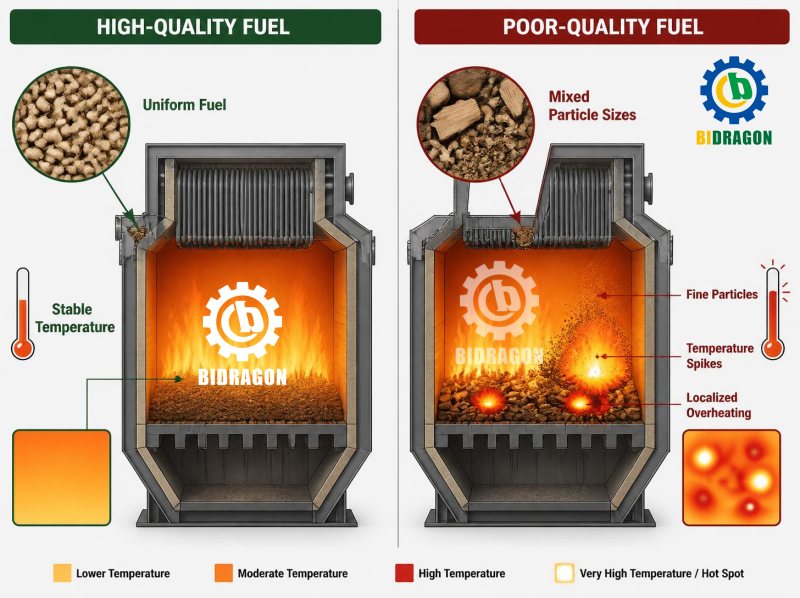
Beyond moisture content, factors such as particle size, uniformity, and purity significantly influence combustion dynamics and temperature within the furnace. High-quality, consistent fuel enables steady, uniform combustion, keeping the furnace temperature within a stable range. Conversely, inconsistent fuel quality often leads to temperature irregularities.
If fuel particles are excessively large or uneven in size, some fuel burns slowly, resulting in delayed burnout. In contrast, fine particles burn and release heat rapidly, causing a sudden spike in early-stage furnace temperature. A mixture of varying particle sizes disrupts combustion rhythm, leading to severe temperature fluctuations.
If the fuel contains excessive fines or impurities, these materials burn rapidly upon entering the furnace, creating localized high-temperature zones. This localized overheating can spread, causing the overall furnace temperature to exceed limits and significantly increasing the risk of coking and slagging.
When frequent, abnormal temperature spikes occur, and equipment, airflow, and feeding issues have been ruled out, the recent fuel batches should be closely inspected. Promptly replacing substandard fuel and standardizing fuel specifications are fundamental measures for stabilizing furnace temperature.
Short-term overheating causes only minor operational fluctuations; however, prolonged high-temperature operation has multiple negative impacts on the boiler, potentially leading to serious malfunctions over time.
The most immediate hazard of high temperatures is the aggravation of coking, slagging, and ash accumulation within the furnace. High temperatures cause the ash content in the fuel to melt and adhere to the furnace walls, heat-transfer surfaces, and grate. As these deposits thicken, they block flue gas passages, reduce heat-transfer efficiency, and drive up energy consumption.
Prolonged overheating severely damages the furnace's refractory materials. Refractory bricks and castables subjected to sustained high-temperature exposure may crack, spall, or pulverize. Once the refractory layer is compromised, high heat directly attacks the boiler's metal casing, shortening the equipment's overall lifespan and increasing maintenance costs and downtime.
Uncontrolled furnace temperatures disrupt the combustion balance. Fluctuating combustion rates and localized overheating lead to unstable flames and fluctuating flue gas parameters, impairing the performance of environmental protection systems (such as desulfurization, denitrification, and dust removal) and increasing the risk of exceeding emission limits.
In extreme overheating scenarios, internal pressure rises sharply, potentially causing positive furnace pressure, flame flare-outs, or smoke leakage; severe cases can lead to equipment failure and on-site safety hazards.
Prevention is key to managing furnace overheating; standardized daily operation and maintenance can avert most high-temperature issues at the source and ensure stable boiler operation. Daily measures include standardizing fuel specifications, strictly controlling fuel moisture and particle size, ensuring moisture-proof storage, and minimizing fluctuations in fuel calorific value. Operators should also optimize the ratio of primary and secondary air to induced draft, maintaining a stable air-to-fuel balance without making arbitrary, drastic adjustments to airflow. Regular inspections of the grate and ash discharge equipment are essential, as is the timely removal of ash and coke deposits from the furnace and heat-transfer surfaces to prevent heat accumulation. Additionally, temperature sensors and thermocouples must be regularly calibrated and serviced to ensure data accuracy, allowing for continuous monitoring of operating parameters and proactive, fine-tuned adjustments to address temperature fluctuations.
Furnace temperature control cannot rely on a single temperature reading; relying on one parameter is limiting and fails to provide a comprehensive assessment of the combustion status within the furnace. Accurate control of combustion conditions requires a holistic analysis of multiple core parameters.
Key core parameters include real-time furnace temperature, boiler operating load, and fuel feed rate. These three parameters directly reflect the boiler's current output and heat input, serving as the fundamental basis for temperature regulation.
Next, it is crucial to monitor air distribution and pressure parameters, including primary and secondary airflow rates, furnace negative pressure, and flue gas oxygen content. Oxygen levels provide a direct indication of combustion completeness, while negative pressure and airflow dictate the dynamics of gas intake and exhaust, serving as critical indicators for adjusting the fuel-to-air ratio.
Supplementary parameters include flue gas temperature and grate speed. Flue gas temperature reflects heat utilization efficiency, while grate speed determines the fuel's combustion duration. Accurate and rational operational adjustments—necessary to prevent temperature excursions—can only be made by analyzing the trends of all parameters rather than relying on isolated, instantaneous readings.
Minor temperature excursions can often be rectified by fine-tuning operating parameters; however, uncontrolled overheating necessitates an immediate shutdown to mitigate safety risks. The decision to shut down should be based on the alarm temperature specified by the equipment manufacturer. If an alarm is triggered by high temperatures and the temperature continues to spike—refusing to drop despite standard interventions such as reducing fuel feed, adjusting airflow, or modifying negative pressure—the unit must be shut down immediately for inspection.
If overheating is accompanied by signs of unstable operation—such as positive furnace pressure, flame flare-outs, erratic combustion, or abnormal equipment noise—an emergency shutdown procedure must be initiated immediately. Boilers should never be allowed to operate for extended periods while experiencing uncontrolled overheating. Attempting to keep the equipment running solely through repeated parameter adjustments creates a high risk of equipment damage and safety accidents; timely shutdown is essential to investigate and eliminate underlying hazards.
In summary, most instances of excessive furnace temperature in biomass boilers result from the interplay of multiple factors. When addressing overheating issues, avoid rash actions or drastic changes to multiple parameters; instead, aim to steadily bring the combustion conditions back within the normal operating range. The core of boiler temperature control lies not merely in suppressing high temperatures, but in maintaining a stable, complete, and safe combustion state through consistent fuel quality, standardized operations, and regular inspections. This approach not only mitigates equipment wear and safety risks associated with overheating but also ensures the boiler's efficient, stable, and long-term operation.