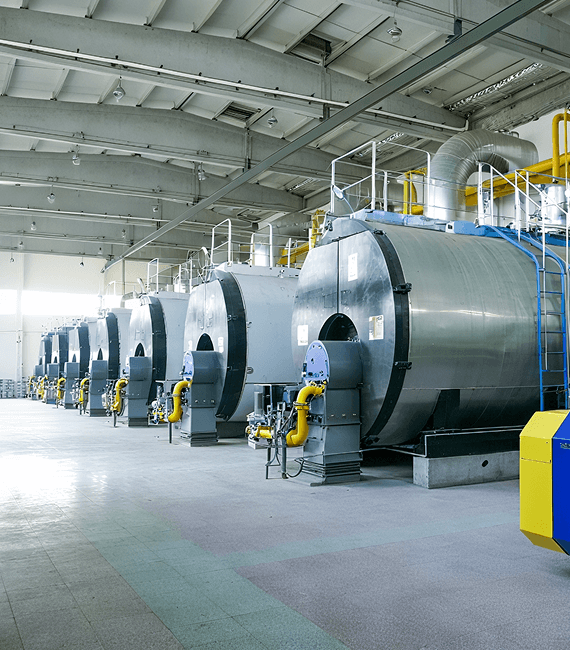

Biomass boilers are widely used for industrial heat supply, space heating, and small-to-medium-scale power generation due to their diverse fuel sources, low carbon footprint, and low operating costs. However, excessive flue gas dust emissions represent a common operational challenge. Excessive dust causes wear and tear on equipment such as boiler flues and induced-draft fans, thereby driving up operation and maintenance costs. It also leads to non-compliance with environmental standards, exposing enterprises to the risk of penalties and production shutdowns. Many enterprises fail to achieve effective remediation primarily because they do not identify the root cause and instead rely on isolated, piecemeal measures. In this article, I will analyze the issue based on actual boiler operating conditions.
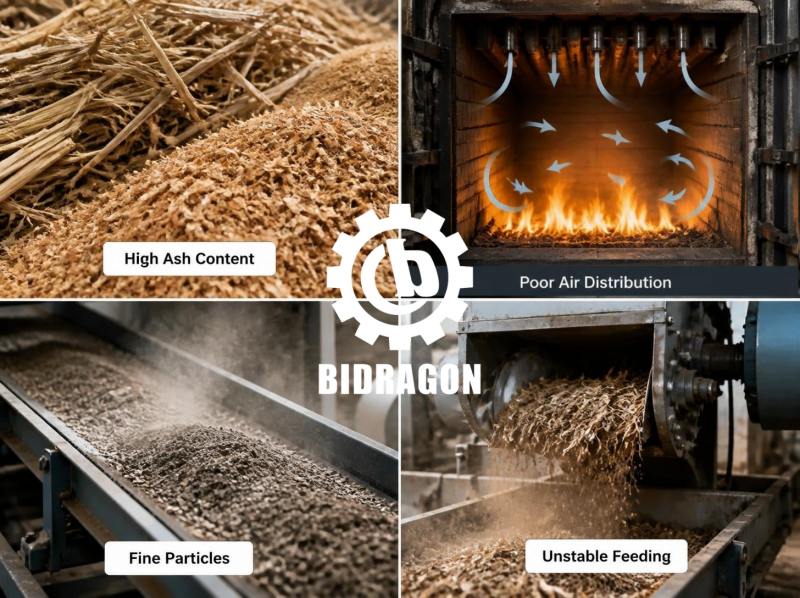
Excessive dust levels in biomass boiler flue gas usually result from a combination of factors. The primary causes fall into four categories: poor fuel quality, improper furnace airflow distribution, poor material condition, and unstable feeding. The mechanisms behind dust generation in these boilers differ significantly from those in conventional coal-fired boilers.
High fuel ash content is a fundamental cause. Biomass raw materials such as straw, sawdust, and rice husks naturally contain a certain amount of ash. Burning these materials generates large quantities of solid particulate matter, which is the primary source of flue gas dust. Improper air distribution in the furnace is the most common human-caused problem on site. Many operators apply habits from coal-fired boilers, often leading to airflow imbalances.
If the airflow is excessive, the gas stream carries unburnt particles into the flue. Conversely, if the airflow is insufficient, a lack of oxygen prevents complete fuel combustion. Both scenarios ultimately lead to increased dust emissions.
A high content of fine particles in the feedstock directly increases fly ash production. Processes such as crushing, stockpiling, and transporting biomass materials generate significant amounts of lightweight fines. These fine particles burn extremely rapidly and cannot fully combust within the furnace; instead, most are swept away by the flue gas stream, sharply raising the dust concentration.
Unstable operation of the feeding system also exacerbates the problem of excessive dust. Uneven feeding can cause fuel to accumulate in the furnace. Accumulated fuel may undergo intense localized combustion, disrupting internal airflow. Ash and slag deposits are then kicked up by the airflow and discharged with the flue gas, thereby increasing total dust emissions.
Addressing the issue of excessive dust emissions from biomass boilers does not require the blind replacement of major equipment. The overall remediation strategy can be divided into two core approaches. The first is source control: reducing dust generation during combustion through fuel pretreatment and combustion adjustments. The second is end-of-pipe treatment: filtering particulate matter from the flue gas using suitable dust removal equipment. Combining these two methods is essential to achieving long-term, stable compliance with emission standards.
Combustion conditions directly determine the volume of fly ash produced. Properly adjusting the combustion state within the furnace is the most cost-effective and immediate method for reducing dust, and it serves as the foundation for any dust-removal system upgrades.
The ratio of primary to secondary air must align with the combustion characteristics of the biomass fuel. Primary air is primarily responsible for transporting fuel and sustaining combustion at the bottom of the furnace; the airflow rate should not be excessive, so as to avoid directly lofting fine ash particles within the furnace. Secondary air serves to replenish oxygen in the upper and middle sections of the furnace, ensuring the complete burnout of suspended, fine fuel particles. Operators can make incremental adjustments to damper openings based on boiler load to identify the optimal air ratio for the specific fuel in use, thereby minimizing unburned fly ash.
Furnace temperature must be maintained within an appropriate range. Biomass fuels have specific optimal combustion temperatures. If the furnace temperature is too low, combustion is incomplete, resulting in significant carbon dust generation. Conversely, if the temperature is too high, the fuel undergoes rapid thermal decomposition, producing increased amounts of fine dust and exacerbating boiler slagging issues. During routine operation, furnace temperature and stable combustion conditions can be maintained by adjusting the fuel feed rate and airflow settings.
Ensure a uniform and steady fuel feed throughout the process. Intermittent feeding or fluctuating feed rates cause the furnace's combustion state to fluctuate repeatedly. A stable feed rate allows the fuel to burn steadily layer by layer, preventing localized flare-ups and the entrainment of ash and slag. Routine inspections of the feeder and screw conveyor equipment are essential to promptly address issues such as material jams, slippage, or uneven feeding.
Biomass flue gas dust is characterized by fine particles, light weight, and some of it being sticky. Relying on a single type of dust removal equipment rarely yields ideal results. The industry's mainstream and proven solutions utilize multi-stage, combined dust removal systems tailored to specific boiler operating conditions.
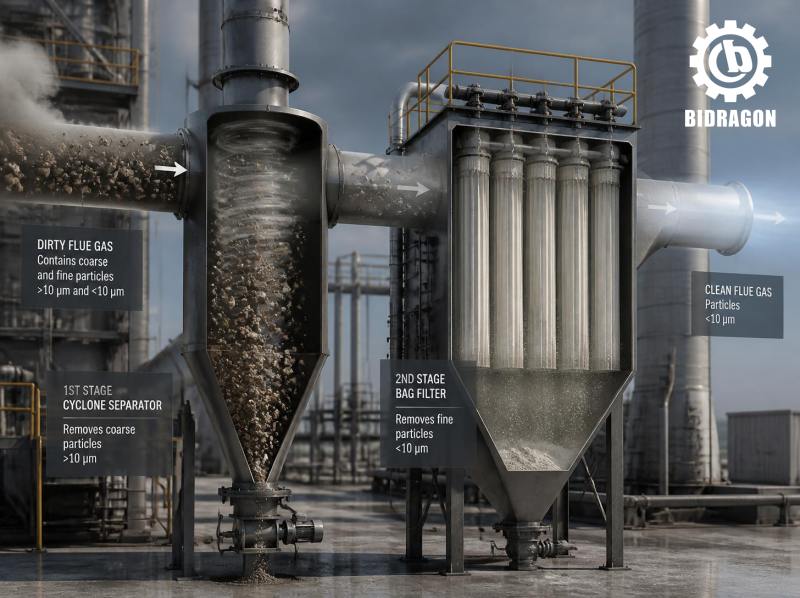
The combination of a cyclone separator and a baghouse filter is the most versatile solution. The primary-stage cyclone separator filters out large ash particles and debris, thereby reducing the processing load on downstream equipment. The subsequent baghouse filter captures micron-sized fine dust, ensuring stable overall dust removal efficiency. This combination offers high adaptability and low operation and maintenance costs, making it the preferred choice for small- and medium-sized industrial boilers.
A combination of cyclone separation and electrostatic precipitation is better suited for large-scale boiler operations. Large biomass power boilers generate high volumes of flue gas and dust; following coarse filtration by the cyclone separator, the electrostatic precipitator utilizes an electric field to capture fine particulate matter. This system handles extremely high gas volumes and is ideal for units operating continuously under high loads, though it entails higher initial investment costs and stricter requirements for operation and maintenance expertise.
Wet dust removal is better suited for handling highly sticky fly ash. Certain biomass fuels with high moisture content produce sticky dust that tends to adhere to filter bags or electrodes, causing equipment blockages. Wet scrubbing systems capture sticky dust using water mist while simultaneously removing some flue gas pollutants, making them ideal for production scenarios involving inconsistent fuel quality and highly adhesive dust.
Fuel is the source of dust generation. Effective fuel pretreatment fundamentally reduces fly ash formation during combustion and significantly alleviates the operational load on downstream dust removal equipment.
Strictly control fuel moisture content. Fuel with excessive moisture slows down combustion and generates large amounts of water vapor within the furnace; the resulting intensified airflow turbulence easily carries fine ash particles out of the system. Furthermore, damp fuel tends to clump and burn unevenly, further increasing dust emissions. For standard biomass fuels, moisture levels should be maintained within an appropriate range, and the mixing of dry and wet fuels during feeding should be avoided.
Standardize fuel particle specifications. Fuels with inconsistent lengths and sizes exhibit vastly different combustion rates. Fine powder burns up quickly and is carried away by the airflow, while large fuel chunks burn incompletely; both scenarios increase dust levels. Standardized crushing and screening processes ensure uniform particle size, effectively stabilizing combustion conditions.
Remove fine powder and impurities from the fuel beforehand. Fine powder and loose dust generated during raw material storage and handling are major sources of fly ash. Before feeding, excess fine powder is filtered out by screening equipment to reduce the proportion of fine powder entering the furnace, which can directly reduce the dust content in the flue gas.
Many enterprises focus solely on the operational status of dust removal equipment while overlooking the decisive impact of fuel parameters on dust emissions. Fuel moisture content and particle size directly determine the completeness of combustion and the amount of fly ash entrained in the flue gas.
Excessive fuel moisture is a major cause of incomplete combustion. Dry biomass fuel burns rapidly, evenly, and completely upon entering the furnace. In contrast, fuel with high moisture content consumes furnace heat to evaporate the water first, causing local temperatures to drop. As the fuel fails to burn out completely, large quantities of fine carbonaceous particles are generated; these are carried out with the flue gas, directly increasing dust concentration. Additionally, water vapor increases the flue gas velocity, entraining more furnace ash into the flue.
Fuel particle size directly determines the amount of fly ash produced. Fine, powdery fuel burns so quickly that it is swept away by the gas flow before combustion is complete, resulting in significant fly ash generation. Conversely, excessively large fuel particles suffer from incomplete internal combustion, producing residual carbon particles that also increase dust emissions. Uniformly sized particles ensure consistent combustion rates, significantly reducing fly ash generation.
From the perspective of dust control, there are clear industry standards for high-quality biomass fuel specifications. Ideally, fuel moisture content should remain consistent, avoiding significant mixing of dry and wet materials. Particles should be screened to ensure uniformity, with no excessive fine powder or oversized raw material chunks. Long-term use of compliant fuel stabilizes boiler dust emissions and significantly reduces the likelihood of equipment failure.
What happens to your dust levels when fuel quality isn't perfect?
Our biomass boilers are engineered for wider combustion tolerance, keeping emissions stable even when fuel isn't. Contact our engineers to find the right fit.

Many enterprises initially install only single-stage dust removal equipment. Once operational, they frequently encounter issues such as excessive dust emissions, frequent equipment clogging, and rapid filter element degradation. The core reason is the large particle size range of biomass flue gas dust. The mixture ranges from millimeter-level coarse ash to micron-level fine ash, making it impossible for a single-stage device to filter them all.
Single-stage dust removal equipment has distinct performance limitations. Relying solely on cyclone dust collectors filters out only large particles while having negligible effect on fine dust, making it difficult to meet final emission standards. Conversely, using only a bag filter exposes the filter bags to direct impingement by large ash particles and debris, accelerating wear and clogging, shortening the equipment's lifespan, and increasing O&M costs due to frequent part replacements.
Multi-stage dust removal employs a combined logic of coarse and fine filtration, assigning specific roles to handle dust of different particle sizes. The first stage captures large ash particles and debris from the flue gas, lowering the initial dust load and reducing the burden and wear on downstream equipment. The secondary fine filtration equipment is specifically designed to capture suspended fine dust, making up for the shortcomings of the coarse filtration equipment. The synergy between these two stages significantly enhances overall dust removal efficiency.
Standard industry configurations for multi-stage systems are well-established and suitable for the vast majority of operating conditions. The front end is equipped with coarse dust removal equipment for preliminary pretreatment. The back end is equipped with fine treatment equipment such as bag filters, electrostatic precipitators, and wet scrubbers to ensure that the final emissions meet the standards. This staged approach guarantees effective dust removal while minimizing equipment wear and maintenance costs, offering far superior cost-effectiveness compared to single-stage systems.
There is no single "best" dust removal system; the ideal choice depends on your specific operating conditions. When selecting equipment, do not blindly copy the configurations used by others. Instead, make a comprehensive assessment based on boiler operating parameters, flue gas characteristics, and fuel types.
First, consider the fundamental flue gas parameters. Flue gas temperature is a critical factor: excessively high temperatures can damage fabric filter bags, while low temperatures can lead to condensation and "blinding" (clogging) of the bags. The humidity of flue gas directly affects the stickiness of dust. Dust in high-humidity flue gas tends to stick together, making it unsuitable for simple baghouse dust collection. A combination of wet dust collection solutions should be preferred.
Match the equipment to the dust characteristics. For dry dust generated by standard dry wood chips or straw, fabric filtration offers the best results, along with ease of maintenance and manageable costs. Wet dust removal is better suited for sticky dust resulting from bark or moist raw materials. For high-capacity power generation boilers handling large volumes of dust, electrostatic precipitators offer superior processing efficiency.
Finally, match the equipment specifications to the boiler capacity. Small industrial heating boilers have small flue gas volumes and large load fluctuations; a simple combination of cyclone separators and bag filters can fully meet their needs. Medium-to-large biomass boilers, which operate continuously and handle large total volumes of flue gas, require multi-stage dust removal systems with sufficient processing headroom to prevent dust emissions from exceeding limits during peak loads.
Many enterprises are fully equipped with dust removal systems yet still experience excessive dust emissions. This is often due to inadequate daily maintenance. Routine maintenance of both the dust removal system and the boiler is key to ensuring consistently low dust emissions.
Regularly clean and inspect core dust removal components. After long-term use, the filter bags of baghouse dust collectors will accumulate dust, become clogged, wear out, or break. Regular cleaning and replacement of damaged filter bags are necessary to prevent filter bag failure and direct dust discharge. For electrostatic precipitators, electrodes require regular cleaning to remove accumulated dust and inspections to ensure proper operation, thereby preventing a drop in collection efficiency.
Routinely calibrate and inspect the feeding system. Issues such as feeder jams, uneven feeding, or belt slippage directly cause fluctuations in combustion conditions. Daily operations and maintenance should include checking the running status of feeding equipment and calibrating feed rates to ensure continuous, uniform fuel delivery into the furnace, thereby stabilizing combustion at the source.
Check for air and dust leakage. Poor sealing at flanges, connections, or access doors on boiler flues and dust removal equipment can lead to air leakage. Ingress of cold outside air alters flue gas velocity, stirs up accumulated dust inside the equipment, and disrupts the negative pressure balance of the dust removal system, ultimately reducing dust removal efficiency. Sealing points must be inspected regularly, and aging seals repaired promptly, to eliminate air and dust leakage.
Dust control cannot rely solely on post-event rectification. Real-time monitoring and advance adjustments are essential for long-term stable compliance. Manual periodic testing fails to detect instantaneous emission spikes in a timely manner, making online monitoring an indispensable tool for the operation and maintenance of industrial boilers.
Installing online flue gas monitoring equipment enables 24-hour real-time surveillance. Fluctuations in boiler load, fuel changes, or minor equipment malfunctions can cause sudden spikes in dust concentration. The online monitoring system can capture key data such as particulate matter emission concentration, flue gas flow, temperature, and humidity in real time, and can issue timely warnings once a trend of exceeding the standard is detected.
Daily operations require close tracking of several key parameters. Real-time particulate emission concentration is the core indicator for determining compliance. Flue gas temperature and humidity parameters help assess the risk of condensation or filter bag blinding within the dust removal equipment. System negative pressure and flue gas velocity are monitored to troubleshoot issues such as flue blockages or air leakage.
Operational strategies should be dynamically adjusted based on monitoring data rather than relying on a fixed set of parameters over the long term. When changing fuel types, adjusting boiler loads, or experiencing seasonal temperature shifts, operators should fine-tune air distribution, fuel feed rates, and dust cleaning cycles based on monitoring data to ensure the entire system operates at peak efficiency.
Excessive dust levels in the flue gas of biomass boilers are not an inherent defect of the equipment. Most of these problems are caused by improper matching of fuel management, combustion conditions, dust removal configuration, and operation and maintenance monitoring. Relying solely on dust removal system retrofits or combustion adjustments cannot guarantee long-term, stable compliance. Enterprises must implement coordinated, multi-dimensional corrective measures covering fuel pretreatment, furnace combustion optimization, matched multi-stage dust removal systems, and routine O&M monitoring. Only by dynamically adjusting strategies based on specific boiler operating conditions and fuel characteristics can enterprises effectively reduce equipment O&M costs.