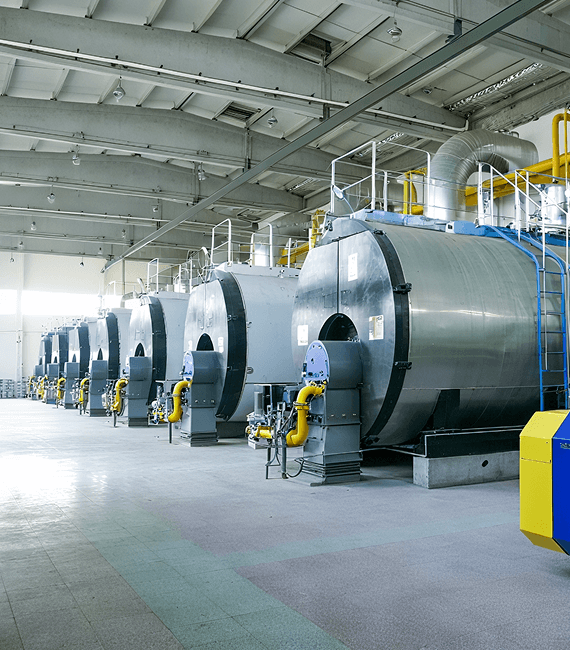

Those in the industrial sector know that industrial boilers are the "heart" of production, and their installation quality directly impacts safety, efficiency, and compliance. While industrial systems and regulations differ across countries, a global consensus has been reached regarding the safety, compliance, and reliability of boiler installation. Standardized procedures can reduce risks, extend boiler lifespan, and prevent accidents and losses caused by improper installation.
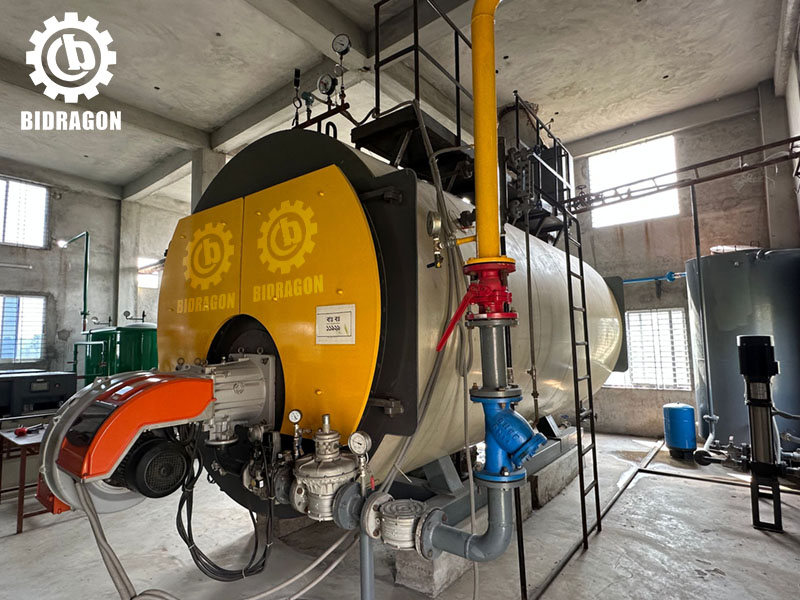
Industrial boiler installation standards are technical specifications covering the entire process from boiler arrival, assembly, commissioning to acceptance. Their core principle is to unify installation practices, define quality baselines, and ensure boilers operate within standards. This set of standards has a very broad scope, covering the vast majority of industrial scenarios worldwide, regardless of country, fuel type, or boiler specification.
The three most commonly used industrial boiler types—steam, hot water, and thermal oil—must all adhere to these guidelines. Steam boilers are primarily used in chemical and power generation industries, operating at high pressure and requiring high precision in the assembly of pressure-bearing components. Hot water boilers are mainly used for residential and office building heating and domestic hot water supply, operating at lower pressures and emphasizing system sealing and circulation stability. Thermal oil boilers use mineral oil or synthetic oil as the medium, operating at normal pressure and high temperature, suitable for precise temperature control scenarios, with a focus on the sealing of the circulation system and piping layout.
Boiler installation and acceptance is a systematic project, with each step closely linked from initial planning to commissioning. The core of the globally accepted process is "compliance first, quality foremost, and safety as the core," with clear specifications for each stage to ensure full traceability.
Pre-installation planning is a prerequisite for smooth progress. The core is to do three things well to ensure compliance with local regulations and international standards.
Confirm boiler design parameters, verifying rated pressure, temperature, evaporation capacity or thermal power one by one to match site requirements. Simultaneously, verify the compliance of design drawings, confirm that the structure and materials of pressure-bearing components meet standards, and avoid design flaws.
The installation unit must possess the corresponding qualifications, demonstrating that its technology, equipment, and management capabilities meet the standards. On-site operators must hold professional certifications; key positions such as welding and hoisting require specialized assessments, and unlicensed operation is strictly prohibited.
An installation notification letter must be submitted to the special equipment regulatory department in advance, specifying the boiler model, installation location, and other information. Simultaneously, a complete set of technical documents, including design drawings, equipment certificates of conformity, and material certificates, must be prepared to provide a basis for acceptance.
The boiler foundation is the "foundation," bearing the weight of the equipment and determining operational stability. A comprehensive re-inspection must be conducted before installation to ensure it meets design requirements.
The foundation strength must meet the operational load requirements. Construction can only proceed after the foundation has been properly cured according to regulations. The foundation surface must be flat, and the levelness deviation must meet international standards to avoid uneven stress on the boiler body due to tilting. When laying out the foundation, the longitudinal and transverse center lines must be perpendicular. The allowable deviation for the positioning distance between two columns is ±2mm, and the difference in diagonal length between four symmetrical columns should not exceed 5mm.
The boiler placement follows the principle of "precision and stability," using appropriate hoisting equipment to avoid collisions with the boiler body and pressure-bearing components. After placement, leveling is achieved using shims, and strict control is maintained over the center lines of the boiler drum, headers, and steel frame installation deviations. The grout layer thickness at the column base and foundation should be no less than 50mm. After alignment, welding is performed for fixation, with the weld length being 6-8 times the diameter of the pre-embedded reinforcing bars.
Pressure-bearing components (boiler drum, headers, etc.) are the core of safety; the quality of assembly and welding directly affects the pressure-bearing capacity and is a key control point.
Before welding, a specific process is developed based on the boiler material and wall thickness. After evaluation and verification of feasibility, certified welders operate according to specifications, controlling parameters such as current and voltage to avoid defects such as incomplete penetration and slag inclusions.
After welding, a visual inspection is conducted first to confirm the absence of surface defects. Important welds require non-destructive testing such as radiographic and ultrasonic testing to ensure the absence of internal hidden dangers. Detailed records of welding parameters, welder information, and inspection results are kept, and non-destructive testing reports are compiled to ensure weld traceability.
Auxiliary systems and safety devices are essential for the normal operation of the boiler. Installation quality directly affects stability and must strictly adhere to international standards.
Fuel and flue gas systems are arranged according to fuel type: For oil/gas-fired boilers, ensure pipeline sealing to prevent leaks; for coal-fired boilers, optimize forced and induced draft to ensure complete combustion. The flue gas system emphasizes sealing and insulation, and provides pre-installed testing interfaces; the furnace wall pressure taps are tilted upwards at an angle >30° to the horizontal, and horizontal pipes are installed at the acute angle of the material flow.
Safety valves, pressure gauges, and water level devices must be calibrated before use: safety valves should trip to relieve pressure in case of overpressure; pressure gauges should have an accuracy ≥0.5; the water level gauge elevation should deviate from the normal water level in the boiler drum by ±2mm, and three water level levels should be clearly marked. The interlocking protection system should have clear logic, monitor parameters in real time, and automatically alarm and shut down if parameters exceed limits.
Pressure testing and commissioning are crucial for verifying installation quality and must be performed strictly according to international standards to ensure safe operation.
The hydrostatic test primarily examines the sealing and strength of pressure-bearing components. It includes rated pressure and overpressure tests: 1.25 times the rated pressure for the boiler body and 1.5 times for the reheater. Before the test, the boiler should be filled with water and vented. Water filling should take ≥4 hours in winter and 2-3 hours in other times. At least two calibration pressure gauges should be installed on the boiler, and the test pressure should be based on the reading on the upper steam drum.
The hydrostatic test pass criteria are: pressure drop ≤0.1 MPa/min for the boiler body and ≤0.05 MPa/min for the reheater, with no leakage and no obvious deformation. Personnel should stay away from pressure-bearing components during the test, and the pressure should be reduced before inspection.
After passing the test, the sealing of flanges and pipe joints should be checked. An additional airtightness test should be performed for oil/gas-fired boilers. Cold-state commissioning verifies the mechanical performance of auxiliary equipment, while hot-state commissioning simulates normal operating conditions, checking combustion efficiency and parameter compliance. Adjustments are recorded to prepare for acceptance.
Final acceptance requires the participation of the installer, user, and supervisor. The entire process quality is verified against a checklist, covering core aspects such as foundation, welding, safety devices, and testing and commissioning.
The core basis for acceptance is complete technical documentation. Design drawings, certificates of conformity, welding qualification reports, and non-destructive testing reports are required. For export projects, international certification documents such as ASME and EN are additionally required.
Boiler commissioning requires meeting three conditions: successful acceptance with no hidden dangers, complete and compliant documentation, and certified operators who are proficient in operating procedures and safety precautions.
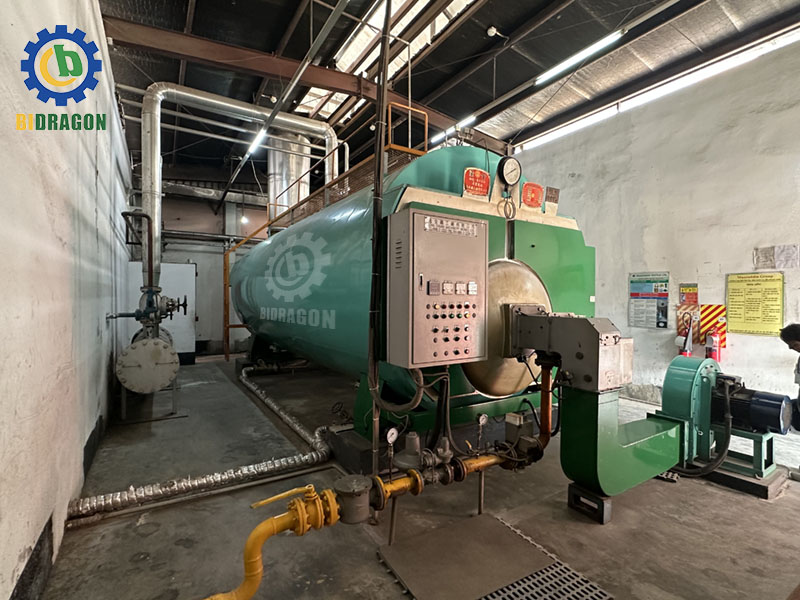
For multinational projects or boiler exports, familiarity with the three major global standards is essential. These standards form the basis for national standards development, ensuring consistent and compliant installation quality.
The ASME Boiler and Pressure Vessel Code (US Standard) has high global recognition and is suitable for export to Europe, America, and the Middle East. Based on relevant chapters of ASME BPVC, it adopts a "performance-oriented" design, allowing the use of internationally recognized materials and emphasizing life-cycle safety. Certification grants an "S/H" stamp, serving as an international "technical passport." The European EN standards and PED framework are core guidelines in Europe. The EN 12953 series specifies shell-and-shell boilers; EN 12953-1 applies to boilers with an inner diameter greater than 400 mm and a pressure greater than 0.5 bar. PED is a mandatory EU regulation, and EN standards are crucial for obtaining CE marking and legal distribution.
ISO and other international standards cover general technical requirements (such as ISO 17640 weld inspection and ISO 16528 installation acceptance), complementing ASME and EN, and providing a globally unified technical reference.
Boiler installation is a high-risk operation and must adhere to the principles of "prevention first, full participation, and full-process control" to ensure both construction safety and quality standards are met.
Lifting, welding, and pressure testing are high-risk stages: Before lifting, inspect equipment and lifting tools, and set up a warning zone; during welding, provide fire extinguishers and enhance ventilation; during pressure testing, strictly control pressure and the rate of pressure increase, with dedicated personnel monitoring and immediate pressure release in case of abnormalities.
Quality control checkpoints are implemented throughout the entire process, covering basic re-inspection, welding inspection, pressure testing, etc. Only when a checkpoint passes can the process proceed. Complete inspection records are maintained to ensure quality traceability.
With increasing global environmental awareness, boiler installation must balance performance and environmental protection, ensuring emissions comply with international regulations and local standards.
The flue gas system must be sealed to prevent leaks, with a reasonable flue slope to prevent corrosion, and a secure connection between the flue and the chimney. Dust removal, desulfurization, and denitrification equipment must be installed and commissioned simultaneously. A flue gas monitoring system must be installed according to HJ 75-2017 standards to ensure data accuracy.
Export projects must meet the standards of the target country (such as the EU EEA and the US EPA). The EU has strict requirements for NOₓ emissions, requiring the installation of high-efficiency denitrification equipment. Testing interfaces must be reserved during installation, and the monitoring system must be commissioned to support environmental compliance.
Boiler acceptance in all countries follows unified principles, focusing on three dimensions: mechanical integrity, performance verification, and safety device confirmation, to ensure qualified installation and reliable operation.
Regarding mechanical integrity, it is essential to ensure that all components are complete, secure, and free from deformation or damage; welds are qualified and defect-free; pipelines are leak-free and sealed; foundation settlement is uniform; and platforms and ladders conform to design specifications, ensuring operational safety.
In the performance verification phase, hot-state testing confirms that parameters such as rated output and thermal efficiency meet standards; auxiliary systems operate stably; combustion is complete; emissions are compliant; and the system meets production process requirements.
For safety device verification, safety valves, pressure gauges, and other accessories must be tested individually to ensure sensitive operation; interlocking protection systems must automatically alarm and shut down when parameters exceed limits, preventing potential hazards.
Document integrity and traceability are core requirements for global acceptance. Complete documentation must be retained throughout the entire process to ensure traceability of every procedure and component, providing a basis for operation, maintenance, and auditing.
Installation records must cover various records including foundation re-inspection, welding, and testing. These records must be detailed, accurate, and complete, without omissions or alterations. They serve as the basis for acceptance and a reference for subsequent troubleshooting. Material records must include procurement information, material certificates, unique weld numbers, and complete inspection reports to ensure compliance and accuracy. Documentation must be retained until the boiler is scrapped. International projects must comply with standards such as ASME and PED, and ensuring successful local audits and acceptance is a prerequisite for entering the international market.
Globally accepted boiler installation and acceptance standards are based on unified technical specifications, eliminating regional and fuel differences, and achieving a balance between safety, quality, and environmental protection. Regardless of the industrial scenario, safety, compliance, and reliability are the core objectives.
Standardized installation reduces risks, prevents accidents, ensures boiler performance meets standards, extends service life, reduces operation and maintenance costs, and guarantees continuous and stable production. As industry develops, standards will continue to improve, but the core principles of "safety first, compliance priority, and quality as the foundation" will remain unchanged, safeguarding global industry.