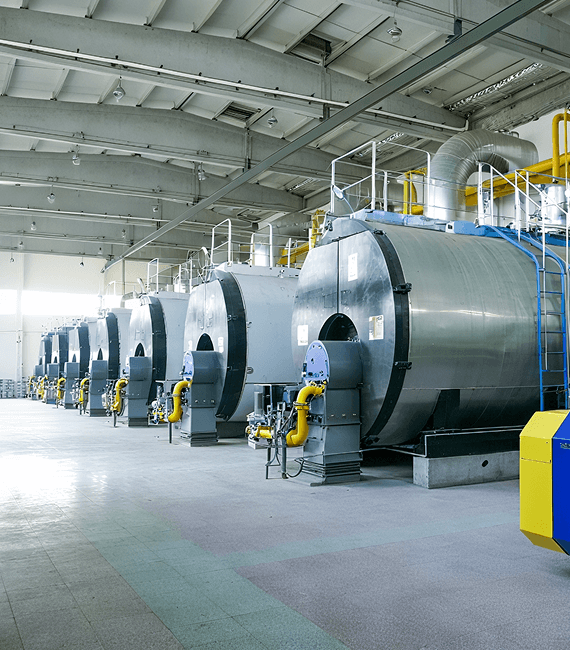

Nowadays, when you do industrial boiler operation and maintenance, you can't get around the topic of denitrification. Whether it is a steam boiler in a factory, or a large boiler in a power plant, as long as the combustion process is involved, it will produce nitrogen oxides (NOx).
These gases will not only pollute the air, will also allow companies to face the pressure of environmental compliance - once the emissions exceeded the standard, the light is a fine, the heavy is a shutdown, the subsequent rectification of the cost of denitrification is much higher than the pre-deconstruction to do a good job.
The so-called boiler denitrification, in layman's terms, is through specific technical means to reduce NOx emissions in the boiler flue gas, so that the flue gas emission standards. I have been in the boiler industry for many years, contact with all sizes of boiler denitrification projects, from dozens of tons of small industrial boilers to hundreds of tons of large power station boilers are involved.
Next, I will combine the actual project experience, talk to you about the current mainstream of the four boiler denitrification technology, the principle of each technology, the advantages and disadvantages of practical use.
Many corporate friends will ask, do not do denitrification okay? The answer is clear: no, and the losses outweigh the gains. First of all, the hard requirements of environmental compliance, now the state and local industrial boilers have a clear limit of NOx emissions, different regions, different industries, although there are differences in standards, but the overall trend is becoming more and more stringent.
For example, many industrial cities in the north, the requirement of the boiler NOx emission concentration does not exceed 50 mg / m3, some areas in the south, although a little more lenient, but also basically controlled within 100 mg / m3. If you do not do denitrification, or denitrification effect does not meet the standards, the environmental protection department's inspection can easily be detected, when the fine, production stop, the loss of more than just money.
In addition to compliance requirements, denitrification of the boiler itself is also beneficial. NOx is corrosive, long-term high concentration of emissions, will corrode the boiler flue, heat exchanger and other components, shortening the service life of the equipment. Many factories reflect frequent boiler failures, high maintenance costs, in fact, has a lot to do with the corrosion of NOx.
In addition, now green production has become the trend of enterprise development, do a good job of denitrification, not only to avoid environmental risks, but also to enhance the brand image of the enterprise, whether it is docking customers or apply for policy support, are more advantageous. On the contrary, once the denitrification is not up to standard was exposed, the enterprise's reputation has a great impact.
SCR technology is currently the most used denitrification of large industrial boilers, such as pulverized coal boilers in power plants, circulating fluidized bed boilers in large chemical companies, most of which use this technology.
The principle is not complicated, that is, in the flue outside the boiler, install a SCR denitrification reactor, denitrification module is installed inside. The flue gas discharged from the boiler will enter this reactor vertically, and after passing through the multi-layer catalyst module inside, NOx will be reduced to nitrogen (N2) and water (H2O), which are harmless and will not cause secondary pollution.
The biggest advantage of this technology is the high efficiency of denitrification, which can reach 80%-90% in actual operation, and as long as the parameters are debugged in place, it can fully meet the most stringent environmental standards. And the technology has been very mature, after many years of market verification, operational stability is also relatively good, suitable for large-scale boilers for long-term continuous operation of the demand.
But it also has obvious shortcomings, that is, the initial investment is relatively large. A complete set of SCR denitrification system, including reactors, catalysts, piping and other equipment, the cost is not low. What's more critical is that the catalyst is a consumable product, which usually needs to be replaced once in 2-3 years, and the price of catalyst is not cheap.
On top of that, denitrifying agent needs to be added continuously during operation, which will also increase the long-term operation cost. Therefore, this technology is more suitable for large-scale industrial enterprises with sufficient budget and high environmental standards, such as thermal power plants and large-scale iron and steel mills, while small and medium-sized enterprises with limited budgets are generally not recommended to be prioritized.
The biggest difference between SNCR technology and SCR technology is that it does not require a catalyst, which is also the main reason for its lower cost. The installation and operation of this technology is relatively simple. Instead of installing a large reactor in the flue, all that is required is to punch a few holes in the boiler and stick the lance inside the furnace chamber.
Its principle is to use the high temperature inside the furnace, generally in the range of 750-1100 ℃, through the gun to the furnace chamber spray denitrifying agent, commonly used denitrifying agent is urea or ammonia. These denitrifying agents will react with NOx in the flue gas at high temperatures, eventually generating nitrogen and water to achieve the purpose of denitrification.
For small and medium-sized industrial boilers, the advantages of SNCR technology are outstanding. The price of the equipment is not high, the installation cycle is short, and the price of the denitrifying agent is also relatively affordable, the long-term operating costs are relatively low. If the environmental protection standards in the region where the enterprise is located are not particularly strict, such as NOx emission limits in 100-200 mg/m3, this technology can fully meet the demand.
However, its denitrification efficiency is relatively low, generally only 50%-60%, it is difficult to meet the particularly stringent environmental standards. And it is very strict on the requirements of the furnace temperature, if the temperature is lower than 750 ℃, denitrification agent can not be fully reacted, not only denitrification effect is not good, but also cause ammonia escape.
After the ammonia escapes, it will react with other substances in the flue gas to form ammonium salt, which adheres to the boiler piping and dust collector, easily causing equipment blockage and corrosion, and forming secondary pollution. Therefore, this technology is more suitable for small and medium-sized enterprises, such as small chemical factories, food processing plants, boilers, environmental protection requirements are moderate, limited budget, is a more appropriate choice.
Polymer denitrification technology is a denitrification method that has gradually gained popularity in recent years, and it belongs to this category, including PNCR technology. Its installation is somewhat similar to that of SNCR, in that it involves drilling holes in the boiler and inserting the lance into the high-temperature zone inside the furnace chamber, without the need to install large-scale external equipment.
However, its denitrifying agent and reaction efficiency, than SNCR has significantly improved. Commonly used denitrifying agents are solid powders or granules that are easy to transport, unlike ammonia, which carries the risk of leakage. These denitrifying agents react with NOx at high temperatures and do not require a catalyst, and can also achieve high denitrification efficiency.
With ordinary polymer denitrification technology, the denitrification efficiency can reach 70%-80%, and with PNCR technology, the efficiency can reach more than 90%, close to the level of SCR technology. And it does not produce ammonia escape, do not have to worry about the problem of secondary pollution, there is no additional corrosion of the boiler equipment.
In addition, this technology uses an intelligent control system, which does not require frequent manual operation, as long as the parameters are set, the system can automatically spray denitrifying agent, which reduces manual intervention and the risk of operational errors. The upfront investment is much lower than SCR and similar to SNCR, and the long-term operating costs are also lower because the amount of denitrifying agent is relatively small, and there is no need to replace the catalyst.
I have contacted many small and medium-sized enterprises that previously used SNCR technology, and then changed to polymer denitrification technology because of higher environmental standards, and the feedback is good. Its scope of application is also relatively wide, whether it is a small industrial boiler, or medium-sized power station boilers, can be used, especially suitable for those who want to take into account the effect of denitrification and cost of the enterprise.
Combined denitrification technology, simply put, is the combination of two or more denitrification technologies, the most common is the joint use of SNCR and SCR, that is, SNCR / SCR combined denitrification technology.
Its principle is to utilize the low-cost advantage of SNCR technology, first in the furnace chamber for a preliminary removal of NOx, NOx concentration in the flue gas to a certain level, and then through the SCR reactor for deep removal, and ultimately to achieve a very high denitrification efficiency. This ensures the denitrification effect and reduces the overall investment and operating costs.
The denitrification efficiency of this technology is very high, generally up to about 90%, fully able to meet the strict environmental requirements of large enterprises. For example, large power plants, iron and steel mills, and some enterprises located in environmentally sensitive areas, NOx emission requirements are extremely high, the use of joint denitrification technology is more appropriate.
Its shortcoming is that the initial investment is higher than a single SNCR or polymer denitrification technology, but lower than a single SCR technology. And the system is relatively complex, need to debug the parameters of the two denitrification technologies at the same time to ensure synergistic operation. However, for the budget, strict environmental requirements of large enterprises, these investments are worthwhile, can effectively avoid environmental risks, while reducing long-term operating costs.
Many enterprise friends read the above technology introduction, or do not know how to choose. In fact, no complex calculations, as long as the combination of the actual situation of their own enterprises, focusing on the consideration of four aspects, you can make a suitable choice.
The first is the type and size of the boiler. If it is a large boiler, such as power station boilers and chemical boilers with an evaporation capacity of more than 100 tons / hour, priority should be given to SCR technology or combined denitrification technology, because these boilers emit a lot of NOx, and only efficient denitrification technology can meet the requirements. If it is a small and medium-sized boiler, the evaporation capacity is between 10-100 tons/hour, give priority to SNCR or polymer denitrification technology, which is more cost-effective.
Next is the fuel characteristics. Different fuel combustion produces different NOx concentrations, such as pulverized coal boiler combustion produces a high concentration of NOx, the need for efficient denitrification technology; while biomass boilers, gas boilers produce a low concentration of NOx, the use of SNCR or polymer denitrification technology is sufficient.
Then it is the local environmental protection standard. This is the most critical factor, if the local environmental protection standards are strict, NOx emission limits within 50 mg / m3, can only choose SCR technology or joint denitrification technology; if the limit is 100-200 mg / m3, SNCR or polymer denitrification technology can meet the requirements.
Finally, the economic budget. Sufficient budget, the pursuit of long-term stable operation, choose SCR or joint denitrification technology; limited budget, environmental protection requirements moderate, choose SNCR technology; want to take into account the effect and cost, choose polymer denitrification technology (including PNCR).
To give a simple example, if it is a small food processing plant, boiler evaporation capacity of 20 tons / hour, the local NOx emission limit of 150 mg / m3, the budget is limited, choose SNCR technology can be; if it is a medium-sized chemical plant, boiler evaporation capacity of 80 tons / hour, the local NOx emission limit of 80 mg / m3, want to take into account both the effect and the cost of polymer denitrification technology is the most appropriate choice.
As environmental regulations become more and more stringent, boiler denitrification technology is also being upgraded. In the next few years, there are several trends are more obvious.
First, environmental standards will continue to tighten, whether it is a large enterprise or small and medium-sized enterprises, the requirements of denitrification efficiency will be higher and higher, which will promote the popularity of high-efficiency denitrification technology, such as PNCR technology, joint denitrification technology, will be used by more companies in the future.
Second, the technology will continue to innovate, mainly focused on reducing costs and improving stability. For example, the catalyst of SCR technology, the future may develop a longer service life, lower prices, reduce long-term operating costs; polymer denitrification technology denitrification agent, but also in the direction of more efficient, more environmentally friendly development.
Third, the degree of intelligence will be increasingly high. Now many denitrification systems have achieved intelligent control, the future will be further integrated with the overall control system of the boiler to achieve real-time monitoring, automatic adjustment of parameters, reduce manual operation, improve operational stability, while reducing energy consumption.
There is also green and low-carbon, the future of denitrification technology will pay more attention to environmental protection, reduce secondary pollution, while reducing energy consumption, in line with the demand for green production. For example, the production and use of denitrifying agent will be more environmentally friendly to avoid additional burden on the environment.
The key to denitrification of industrial boilers is to choose the right technology, not only to meet the requirements of environmental compliance, but also to fit the budget and operational needs of enterprises, to avoid blind investment but can not achieve the results. 4 mainstream technologies have their own adaptive scenarios: large-scale high-demanding enterprises rushed to the SCR or joint denitrification, small and medium-sized budgetary constraints on the choice of SNCR, want to take into account both the effect and the cost of polymer denitrification (including PNCR).
If you are still unsure of the selection or denitrification transformation program, you can contact us, with years of hands-on experience to provide customized one-stop service to help you avoid pits and save heart. Reminder, boiler denitrification sooner rather than later, early planning and installation, not only to avoid environmental fines, but also long-term savings in operation and maintenance costs.
Q1: How Often Do Denitrifying Agents And Catalysts Need To Be Replaced?
The replacement cycle of different technologies is different. catalyst of SCR technology is generally replaced once in 2-3 years, depending on the operating conditions and catalyst quality; urea or ammonia used for SNCR technology is continuously added, there is no fixed replacement cycle, and the dosage is adjusted according to the operating load and denitrification effect of the boiler; solid denitrifying agent of polymer denitrification technology is also continuously added, and it can be replenished according to the need.
Q2: Can Existing Industrial Boilers Retrofit Denitrification System?
Yes, most of the existing boilers can retrofit denitrification system, SNCR and polymer denitrification technology retrofit is relatively simple, do not need to carry out major modifications to the boiler, as long as the boiler holes to install guns, piping and control systems can be arranged, the construction period is also relatively short, generally 1-2 weeks can be completed.
The retrofit of SCR technology is relatively more complicated, need to install the reactor on the flue, may need to adjust the layout of the flue, the construction period is relatively longer, generally 1-2 months, depending on the type of boiler and site conditions.
Q3: What Is The Difference Between Pncr Technology And Traditional Polymer Denitrification Technology?
The main difference is the denitrification efficiency. The efficiency of traditional polymer denitrification technology is generally 70%-80%, while PNCR technology through the optimization of denitrifying agent formula and reaction process, the efficiency can reach more than 90%, close to SCR technology. In addition, PNCR technology denitrifying agent reaction is more adequate, will not produce ammonia escape, operational stability is also better, but the cost is slightly higher than the traditional polymer denitrification technology.
Q4: How To Control The Operating Cost Of Boiler Denitrification?
First of all, we should choose the right denitrification technology, according to our environmental requirements and budget, choose the most cost-effective technology to avoid over-investment; secondly, we should do a good job in the daily maintenance of the system, such as regularly checking the lance, piping and control system, to avoid equipment failure resulting in a decline in the efficiency of denitrification and increase the amount of denitrifying agent; lastly, we should optimize the operating parameters, according to the operating load of the boiler and the NOx concentration of the flue gas, to adjust the amount of denitrifying agent, to avoid waste. The last is to optimize the operating parameters, according to the operating load of the boiler and NOx concentration in the flue gas, adjust the dosage of denitrifier to avoid waste.