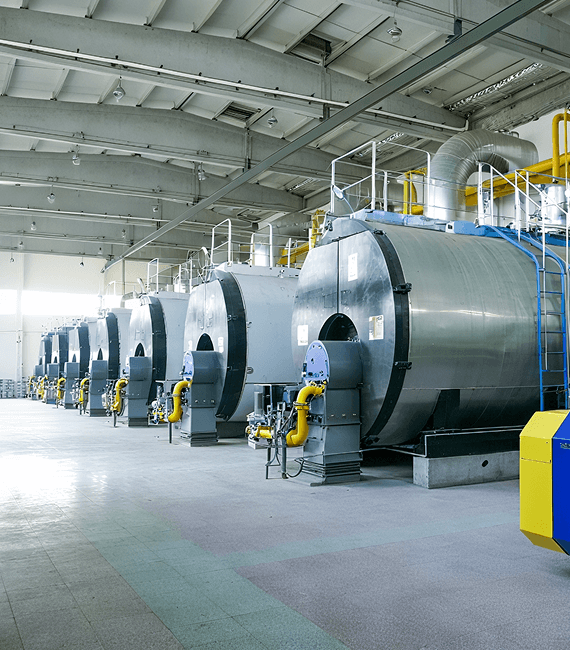

Heat transfer is a core aspect of industrial boiler operation; its efficiency directly determines the boiler's thermal efficiency and operational reliability, and is crucial for controlling industrial energy consumption. Industrial heat transfer relies on three methods: convection, radiation, and conduction, which together accomplish the energy conversion in the boiler.
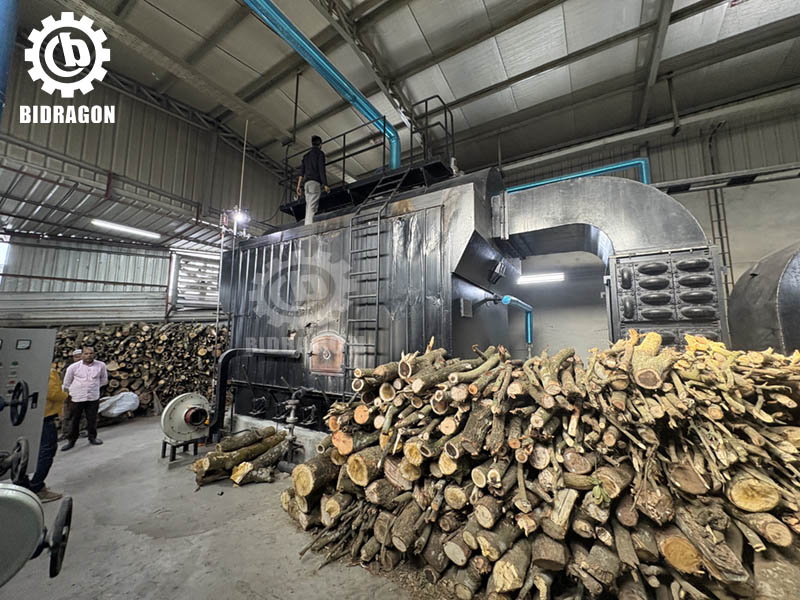
Industrial boilers are the core equipment for producing steam or hot water. Their main task is to transfer the thermal energy of the fuel to the working fluid, providing a qualified working fluid with a pressure of 0.7-10 MPa and a temperature of 180-540℃. The heat transfer path is clear: the fuel burns in the burner to generate high-temperature flue gas at 800-1200℃, which then transfers heat to the working fluid through the water-cooled walls and convection tube bundles, completing the energy conversion. Maintaining stable parameters throughout this process is essential.
The structural design of the boiler furnace, water-cooled walls, convection tube bundles, economizer, and other components directly affects the heat transfer effect. Each component has a specific function and works in conjunction with others; their layout and operational stability determine the overall performance of the boiler, ensuring efficient heat absorption by the working fluid and meeting the precise steam parameter requirements of industry.
The low-NOx burner is the core combustion equipment of industrial boilers, directly determining the quality of combustion ignition and initial heat intensity. Combustion efficiency and flame shape govern subsequent heat transfer. A high-quality low-NOx burner can precisely control the air-fuel ratio between 1.05 and 1.2, increasing the fuel burnout rate to over 99%, reducing unburned losses, and simultaneously forming a high-temperature flame field with stable temperature and uniform distribution, creating conditions for efficient heat transfer to the water-cooled walls. This is the basis for achieving boiler thermal efficiency exceeding 88%.
The furnace is the key space for fuel combustion and high-temperature flue gas flow. The structural design must consider both combustion completeness and flue gas flow. In engineering practice, optimizing the furnace volumetric heat intensity to 200-400 kW/m³ can extend the residence time of high-temperature flue gas to 2-3 seconds, allowing the fuel heat to be fully transferred to the flue gas. At the same time, it guides the flue gas to uniformly scour the water-cooled walls at a flow rate of 10-15 m/s, avoiding local overheating of the tube walls and reducing the risk of high-temperature corrosion. The water walls, convection tube bundles, and economizer tubes are the core heat transfer components of the boiler, primarily consisting of carbon steel tubes, which facilitate heat transfer between high-temperature flue gas and the working fluid. Materials such as 20G and 12Cr1MoVG steel are used, with thermal conductivities of 45 W/(m·K) and 40 W/(m·K) respectively. The tube wall thickness is designed to be 4-8 mm, ensuring both efficient heat transfer and resistance to high-temperature corrosion. The design must consider the boiler's rated evaporation capacity and operating pressure, optimizing the tube bundle spacing to extend service life.
The feedwater pump, circulation pump, and PLC control system provide stable support for heat exchange. The feedwater pump outlet pressure must be at least 0.5 MPa higher than the boiler's operating pressure to ensure continuous feedwater flow through the economizer and steam drum; the circulation pump maintains stable flue gas and working fluid flow rates, preventing fluid stagnation and subsequent tube wall overheating. The PLC system monitors parameters such as flue gas temperature and working fluid pressure in real time, dynamically adjusting the burner's firing rate and pump speed to control the heat exchange conditions within the optimal range, thus avoiding efficiency losses caused by parameter fluctuations.
Heat transfer in industrial boilers is centered on convection, radiation, and conduction, and these are not isolated processes. The three methods collectively determine the overall heat transfer efficiency of the boiler, and their influence weight varies with operating conditions. Understanding the influencing factors of each method is key to optimizing boiler structure and improving operating performance. This article focuses on these principles to support efficient boiler operation.
Heat conduction is the fundamental form of heat transfer in boilers, primarily achieved through cross-medium transfer via the water-cooled walls and economizer tube walls. The high temperature of 800-1200℃ generated by fuel combustion acts on the outside of the tube wall, penetrates the wall through the thermal conductivity of the steel, and is transferred to the feedwater or steam flowing inside, completing the directional transfer of heat. This process directly affects the boiler's thermal efficiency; inefficient conduction will cause significant heat loss.
Material thermal conductivity and wall thickness are core factors affecting heat conduction. The higher the thermal conductivity, the faster the heat transfer; for every 1mm increase in wall thickness, the thermal resistance increases by approximately 0.02 (m·K)/W. Industrial boiler tube walls mostly use high-thermal conductivity steel, with a thickness controlled at 4-8mm, maximizing conduction efficiency while ensuring structural strength. Neglecting thickness optimization will significantly increase heat loss.
Scaling and fouling are the biggest obstacles to conduction efficiency. Calcium and magnesium ions in the working fluid form scale on the inside of the water-cooled walls, with a thermal conductivity of only 0.5-1 W/(m·K), equivalent to 1/40 of steel; flue gas dust and unburned particles accumulate on the outside of the tube bundle, and a thickness exceeding 1mm will double the thermal resistance. This not only reduces heat transfer efficiency but also causes the tube wall temperature to rise by more than 50℃, accelerating material aging and increasing maintenance costs.
Convective heat transfer relies on the relative motion between the fluid and the tube wall, manifested in the boiler as a two-way exchange between high-temperature flue gas and the outside of the convection tube bundle, and water and steam inside the tubes, accounting for 40%-60% of the total heat transfer. Its efficiency is affected by flow velocity, turbulence state, and material properties, making it a core target for on-site adjustment. How to control flow velocity and turbulence state? This needs to be precisely set based on working conditions.
Convective heat transfer between flue gas and the convection tube bundle is a critical step in heat transfer. High-temperature flue gas flows through the tube bundle at a velocity of 10-15 m/s under pressure difference, resulting in forced convection, with a heat transfer coefficient of 50-100 W/(m²·K). The flow velocity of water and steam inside the tubes is controlled at 1-3 m/s, and the convective heat transfer coefficient reaches 1000-3000 W/(m²·K), directly determining the heat absorption rate of the working fluid. If the flow velocity fluctuates by more than 20%, the steam generation rate and parameter stability will be affected.
Flow velocity, turbulence state, and material properties determine the efficiency of convective heat transfer. Increased flow velocity enhances fluid disturbance, reduces the boundary layer thickness, and thus increases the heat transfer coefficient. Under turbulent conditions, the fluid is fully mixed, and the heat transfer rate is 3-5 times that of laminar flow, which is the ideal working condition for boiler convective heat transfer. Changes in the specific heat capacity and viscosity of the working fluid directly affect the heat transfer coefficient. On-site adjustments of the pump speed are necessary to control the working fluid flow velocity within the optimal range to maximize heat transfer efficiency.
Radiative heat transfer is the dominant transfer mechanism in the high-temperature regions of the boiler, achieved through radiation from the flame and high-temperature flue gas, without the need for an intermediate medium. In the furnace, radiative heat transfer accounts for 50%-70% of the total heat transfer, and is crucial for ensuring high-temperature heat transfer. When the flame temperature exceeds 1000℃, the intensity of radiative heat transfer increases exponentially.
The furnace is the main location for radiative heat transfer. The flame temperature can reach 1000-1500℃, transferring a large amount of heat to the water-cooled walls through thermal radiation. For every 100℃ increase in temperature, the radiative heat transfer increases by approximately 46%, far exceeding convection and conduction. The furnace structure design directly determines the radiation effect, and the emissivity of the water-cooled wall surface should be controlled at 0.8-0.9 to maximize the capture of radiant energy. Temperature, flue gas composition, and tube wall emissivity dominate radiative heat transfer. Radiative heat transfer is directly proportional to the fourth power of temperature, making temperature the core influencing factor. Radiative heat transfer is strongest when the CO₂ and H₂O content in the flue gas are controlled at 10%-15% and 5%-10%, respectively. Increasing tube wall emissivity by 0.1 increases the radiative heat transfer coefficient by 8%-10%; this is achieved in engineering practice through oxidation treatment of the tube walls.
In the operation of industrial boilers, convection, radiation, and conduction are coupled. Each mode plays a dominant role in different regions, forming a complete heat transfer system. Simply optimizing one mode will not improve boiler performance. The furnace chamber is primarily dominated by radiation with secondary convection, while the tube bundle region involves a combination of convection and conduction. The interaction of these three modes is essential for ensuring efficiency.
In the high-temperature zone of the furnace, radiative heat transfer accounts for over 60%, accompanied by convective heat transfer between the flue gas and the water-cooled walls; heat is transferred through conduction within the tube walls, while the outer surface is simultaneously subjected to convection and radiation. The coupled effect of these three modes determines the overall efficiency of the boiler. Engineering design must consider the relationship between these three modes; systematic optimization is necessary to maximize heat transfer capacity, while improvements in a single aspect yield minimal results.
The overall heat transfer coefficient K is a core indicator for evaluating the synergistic effect, comprehensively reflecting the capacity of the heat transfer system. The K value integrates convection, radiation, and conduction coefficients, encompassing thermal resistance factors such as fouling and material properties, with units of W/(m²·K). The K value of industrial boilers is typically 100-500 W/(m²·K); a higher value indicates stronger overall heat transfer efficiency and is a core parameter for design, evaluation, and optimization.
Temperature difference is the core driving force for heat transfer; heat spontaneously transfers from a high-temperature object to a low-temperature object. The magnitude of the temperature difference determines the heat transfer rate and limit; without a temperature difference, there is no heat transfer. Industrial boilers need to maintain a temperature difference of 50-200℃, ensuring that the heat transfer rate meets production needs while avoiding excessive temperature differences that could lead to overheating of the tube walls. Balancing efficiency and safety, temperature difference control is crucial.
The amount of heat transferred is directly related to the heat transfer area and thermal resistance. When the temperature difference and K-value are constant, every 10 m² increase in heat exchange area increases the heat exchange rate by 8%-12%. Industrial boilers increase the area by increasing the density of convection tube bundles and optimizing the water-cooled wall layout. Thermal resistance is inversely related to heat exchange. Every 0.01 (m²·K)/W increase in fouling thermal resistance reduces the heat exchange rate by more than 5%. Reducing various thermal resistances is the core means of improving heat exchange.
Steady-state and non-steady-state conditions significantly affect heat exchange. In steady-state conditions, parameters such as temperature and pressure are constant, and the heat exchange rate is stable at ±5% of the design value, which is the ideal operating state for the boiler and ensures continuous production. Under non-steady-state conditions, parameter fluctuations lead to unstable heat exchange, which not only reduces efficiency but also exacerbates pipe wall fatigue. On-site, precise adjustment through the PLC system is required to quickly restore steady-state conditions.
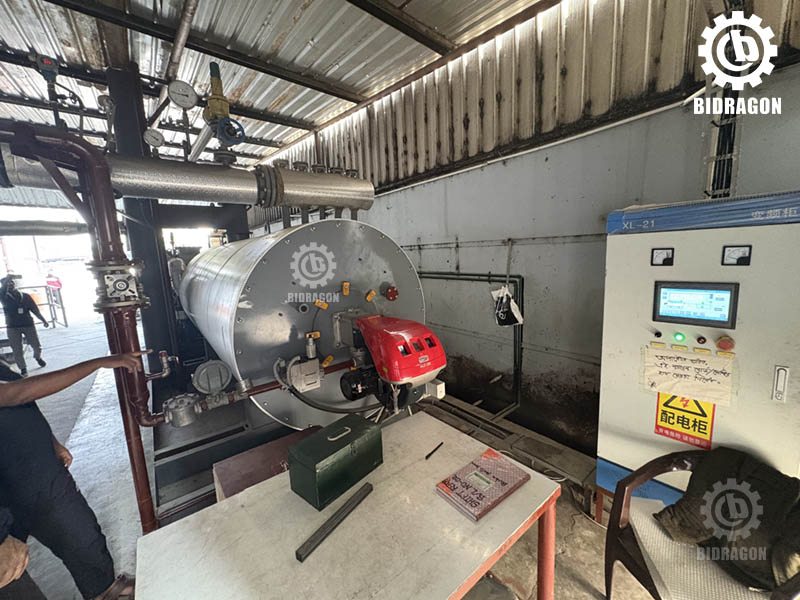
Temperature difference directly affects the heat exchange performance of the boiler. Reasonably increasing the temperature difference can improve the heat exchange rate and shorten the heating time of the working fluid. However, if the temperature difference exceeds 200℃, the pipe wall temperature will exceed the design threshold, accelerating material aging and shortening the service life. In engineering, an optimal temperature difference range needs to be set to achieve a balance between economy and safety, rather than blindly pursuing a high-temperature difference.
Heat exchange area and structural layout are fundamental influencing factors. Increasing the area can directly increase the heat exchange rate and meet high-load demands. Scientifically arranging the tube bundles and controlling the spacing to 2-3 times the pipe diameter can optimize the fluid path and heat distribution, enhance convection and radiation effects, and avoid uneven local heat exchange. The design needs to consider the overall structure of the boiler, balancing efficiency and space to achieve optimal matching.
Fluid flow velocity, pressure, and physical property parameter control affect convective heat transfer efficiency and are key to on-site adjustment. Controlling the flue gas velocity at 10-15 m/s and the working fluid velocity at 1-3 m/s can promote turbulence formation, enhance disturbance, and optimize heat exchange. If the pressure fluctuation exceeds 0.3 MPa, the fluid physical properties change, and the heat transfer coefficient fluctuates accordingly. On-site, it is necessary to adjust the operating conditions in real time based on fuel characteristics to maintain optimal efficiency.
The thermal conductivity of the material determines the conduction efficiency. 20G steel has a thermal conductivity of 45 W/(m·K), and 12Cr1MoVG has a thermal conductivity of 40 W/(m·K), making them the mainstream materials for boiler tube bundles. High thermal conductivity reduces thermal resistance and improves heat transfer rate. Boiler operating environments are high-temperature and corrosive, requiring materials with high-temperature and corrosion resistance to prevent damage and deformation that would reduce the heat exchange area and ensure stable heat exchange.
The heat transfer path in industrial steam boilers is divided into three stages, with each stage closely interconnected. A malfunction in any stage will affect heat utilization efficiency, impacting steam parameters and production progress. Understanding the path and the characteristics of each stage is fundamental to optimizing control and improving efficiency. Parameter control in each stage directly affects the final heat exchange effect.
The first stage is fuel combustion and flue gas heating. Fuel is mixed with air and burned in a low-NOx burner, with an air-fuel ratio of 1.05-1.2 and a combustion efficiency exceeding 99%. Chemical energy is converted into thermal energy, and the flue gas temperature rises to 800-1200℃. The combustion efficiency in this stage determines the total amount of heat released; incomplete combustion will cause significant energy waste, making it the primary control point for energy-efficient operation.
The second stage is heat transfer from flue gas to the tube bundle. High-temperature flue gas transfers heat to the water-cooled walls and convection tube bundles through a combination of convection and radiation. The heat exchange efficiency of the tube bundle determines the heat utilization rate; if the ash deposit thickness exceeds 1 mm, the heat transfer coefficient decreases by more than 20%, resulting in serious waste of flue gas waste heat. Regular cleaning and descaling are necessary measures to ensure smooth heat transfer.
The third stage is working fluid heat absorption and phase change. The heat transferred by the tube bundle is absorbed by the feedwater, and the water temperature rises to the boiling point. Phase change occurs in the steam drum to produce saturated steam, which is then heated to 180-540℃ by the superheater to meet industrial parameter requirements. In this stage, it is necessary to maintain a stable feedwater flow to prevent local water shortages that could lead to dry burning of the tube walls and cause safety accidents.
Shell-and-tube heat exchangers and plate heat exchangers are isolation-type heat transfer devices in boiler systems, enabling heat exchange between different fluids while preventing fluid contact, thus ensuring purity and operational safety. Heat exchangers are widely used for flue gas waste heat recovery, preheating feedwater to 100-150℃, increasing boiler thermal efficiency by 3%-5%, and reducing fuel consumption, making them core equipment for energy saving and emission reduction.
When designing heat exchangers, the core challenge lies in balancing pressure drop and the heat transfer coefficient K value. Increasing the heat transfer area and optimizing the flow path can increase the K value, but this will also increase the pressure drop and pump energy consumption. In engineering practice, the pressure drop needs to be controlled within 0.1-0.3 MPa, and the K value maintained at 200-500 W/(m²·K), balancing heat transfer performance and energy consumption costs, rather than solely pursuing a single indicator.
Heat exchangers can recover waste heat from flue gas, reducing heat loss. Boiler flue gas temperature is usually 150-200℃; direct discharge would result in energy waste. By recovering waste heat through heat exchangers to preheat combustion air or feedwater, the flue gas temperature can be reduced to below 100℃, increasing thermal utilization efficiency by 3%-5%. Simultaneously, it optimizes heat distribution, precisely heating working fluids with different temperature requirements, achieving energy saving and consumption reduction.
Convection, radiation, and conduction constitute the core heat transfer system of industrial boilers, each playing a specific role in different areas. The water-cooled wall area relies on radiation and conduction, while the convection tube bundle area is primarily driven by convection. The coupled effect of these three directly determines boiler thermal efficiency, operational stability, and energy consumption. Simply optimizing one method alone cannot achieve performance breakthroughs. Only by considering the coupling principles and systematically designing and adjusting the system can heat transfer efficiency be maximized.