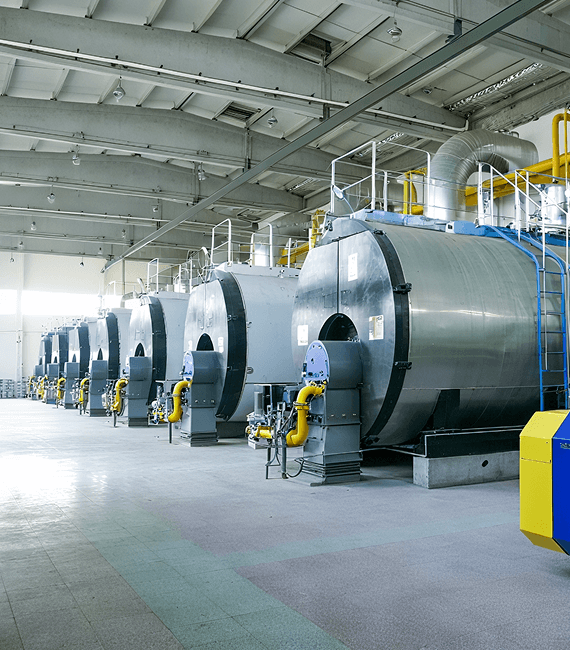

Industrial boilers constitute one of the core components of modern industrial production and power supply infrastructure. Whether providing the steam and hot water required for factory operations or facilitating power generation at utility plants, the stable operation of boilers is indispensable. Acting as the "heart" of the industrial system, they provide continuous energy support for a wide array of production activities.
Among the many types of industrial boilers available, the CFBC boiler has gradually emerged as a leading choice. CFBC stands for Circulating Fluidized Bed Combustion Boiler. Distinguished by its unique combustion method, this type of boiler demonstrates exceptional advantages in terms of both energy utilization efficiency and environmental emission control.
Today, as global standards for energy efficiency and environmental protection continue to rise, CFBC boilers are playing an increasingly critical role across various industrial sectors, including power generation, chemical manufacturing, and metallurgy.
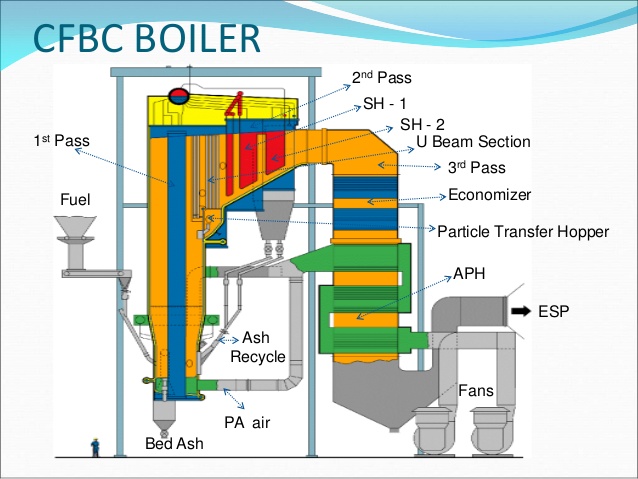
Simply put, a CFBC boiler is an industrial boiler designed to combust fuel within an environment characterized by a high concentration of bed material. Unlike traditional boilers, where combustion takes place on a stationary grate, the CFBC process utilizes airflow to maintain the fuel in a suspended state.
Within a CFBC boiler, the fuel and ash particles are subjected to a stream of primary air, creating a "fluidized state" that mimics the flow characteristics of a liquid. In this fluidized state, the fuel particles are able to achieve intimate contact with the combustion air, thereby facilitating a more uniform and complete combustion process.
The core operating logic of a CFBC boiler centers on suspending the bed material in a stream of air, causing it to exhibit fluid-like flow characteristics. The formation of this fluidized state relies primarily on a continuous supply of primary air; the airflow velocity is precisely regulated—sufficient to suspend the bed material, yet not so strong as to blow it directly out of the furnace chamber.
The combustion temperature is strictly controlled within the range of 800–900°C. This temperature window, validated through extensive long-term practical application, represents the optimal range for ensuring both complete fuel combustion and the effective control of pollutant generation.
Traditional pulverized coal boilers typically operate at combustion temperatures ranging from 1300°C to 1700°C; in contrast, the combustion temperatures in CFBC boilers are significantly lower. These lower combustion temperatures reduce the generation of pollutants—such as nitrogen oxides (NOx)—at the source, constituting one of the primary foundations of the CFBC boiler's environmental advantages.
The combustion process in a CFBC boiler begins with the mixing of fuel, ash, and bed material. Once these materials are introduced into the furnace chamber, primary air is injected from the bottom of the chamber, generating intense turbulence.
This turbulence thoroughly agitates the fuel, ash, and bed material particles, suspending them within the furnace space. This suspended state ensures that every fuel particle comes into intimate contact with the air, thereby eliminating the issue of localized incomplete combustion often encountered in traditional boilers.
The circulation system is the most distinctive feature of a CFBC boiler—indeed, it is the very source of the word "Circulating" in its name. During the combustion process, a portion of the unburned fuel particles and ash is carried out of the furnace chamber along with the flue gas.
These particles are captured and separated by cyclone separators located at the rear of the boiler, after which they are returned to the furnace chamber via a recirculation system for secondary combustion. This continuous circulation process not only enhances fuel utilization efficiency but also serves to further reduce pollutant emissions.
CFBC boilers employ a staged air supply strategy; in addition to the primary air introduced at the bottom, secondary air is injected into the furnace chamber at various vertical levels. This design enables effective control over the combustion temperature within the furnace, preventing the occurrence of localized overheating. Furthermore, staged air supply facilitates a more uniform mixing of air and fuel; while enhancing combustion efficiency, it simultaneously reduces the generation of nitrogen oxides, thereby further bolstering its environmental performance.
The widespread application of CFBC boilers in the industrial sector is inextricably linked to their unique structural and design characteristics. These features not only guarantee efficient and stable operation but also serve to lower operation and maintenance costs.
The boiler is equipped with a water-cooled, high-temperature cyclone separator capable of operating stably in high-temperature environments; this component effectively separates solid particles from the flue gas, providing a reliable safeguard for the circulation system. Another key feature is its high-concentration solids circulation, which ensures the full utilization of fuel energy through the continuous recycling and combustion of materials.
Unlike traditional fluidized bed boilers, CFBC boilers do not require the installation of submerged tubes; this significantly reduces the abrasion of internal piping caused by circulating bed materials, thereby extending the service life of the equipment. Moreover, the combustion chamber features a relatively small cross-section, occupying less floor space and making it suitable for installation in a wide variety of site configurations.
Additionally, CFBC boilers feature fewer fuel feed points, which simplifies the structure of the fuel feeding system. Concurrently, they possess excellent load-following capabilities, allowing for flexible adjustment of power output in response to production demands and enabling adaptation to the operational requirements of diverse working conditions.
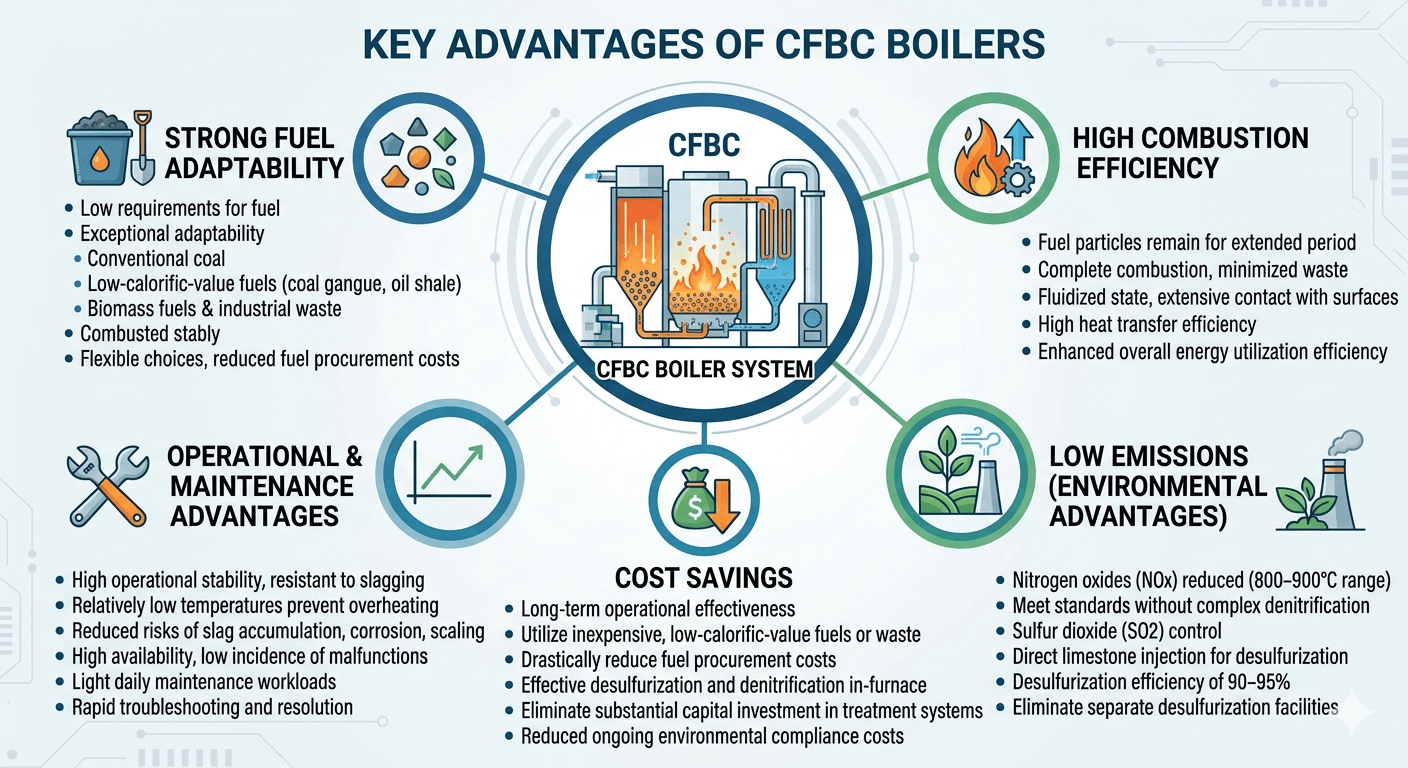
A major standout advantage of CFBC boilers is their extremely low requirements for fuel and their exceptional adaptability. They can burn not only conventional coal but also low-calorific-value fuels, such as coal gangue and oil shale.
Furthermore, biomass fuels and industrial waste can also be combusted stably within CFBC boilers. This broad fuel adaptability allows enterprises to make flexible choices based on local fuel resource availability, thereby reducing fuel procurement costs.
CFBC boilers boast high combustion efficiency, a benefit primarily derived from two factors. On one hand, fuel particles remain in the furnace chamber for an extended period, allowing for complete combustion and minimizing the waste associated with unburned fuel.
On the other hand, the material in its fluidized state achieves extensive contact with the heat-absorbing surfaces; this results in high heat transfer efficiency, enabling the rapid transfer of combustion-generated heat to the working fluid and thereby enhancing overall energy utilization efficiency.
Environmental performance constitutes one of the core competitive strengths of CFBC boilers. Because combustion temperatures are maintained within the 800–900°C range, the generation of nitrogen oxides (NOx) is significantly reduced, allowing emission standards to be met without the need for complex denitrification equipment.
Regarding sulfur dioxide (SO2) control, CFBC boilers allow for the direct injection of limestone into the furnace chamber for desulfurization. This process achieves a desulfurization efficiency of 90–95%, eliminating the need to construct separate desulfurization facilities and thereby simplifying the overall environmental treatment process.
CFBC boilers exhibit high operational stability and are resistant to slagging. The relatively low combustion temperatures prevent localized overheating within the furnace chamber, thereby reducing the risks of slag accumulation on furnace walls, as well as corrosion and scaling in the boiler tubes.
The equipment boasts high availability and a low incidence of malfunctions, resulting in relatively light daily maintenance workloads. Even in the event of minor faults, rapid troubleshooting and resolution are possible, minimizing downtime and ensuring the continuity of production operations.
From a long-term operational perspective, CFBC boilers offer effective cost savings for enterprises. On one hand, they can utilize inexpensive, low-calorific-value fuels or waste materials as feedstock, thereby drastically reducing fuel procurement costs.
On the other hand, their inherent capabilities for effective desulfurization and denitrification eliminate the need for substantial capital investment in expensive flue gas treatment systems, while simultaneously reducing the ongoing operational costs associated with environmental compliance.
The AFBC, or Bubbling Fluidized Bed Boiler, represents an earlier generation of fluidized bed boiler technology. It features a relatively simple structure and lower capital investment costs; however, it operates on a smaller scale, making it best suited for use by small and medium-sized enterprises.
The CFBC builds upon the AFBC design by incorporating a material circulation system. This enhancement results in higher combustion efficiency and greater fuel flexibility for the CFBC, enabling it to meet the large-scale operational demands of major industrial facilities and power plants. However, its structural complexity is relatively higher, and its initial investment cost is slightly greater.
PC boilers—also known as pulverized coal boilers—are a widely utilized type of boiler in conventional power plants. While they feature mature technology, high combustion temperatures, and stable output, their drawbacks are also quite evident: excessively high combustion temperatures result in significant emissions of pollutants such as nitrogen oxides, necessitating the installation of complex flue gas treatment systems.
In contrast, CFBC boilers center on low-temperature combustion to minimize pollutant generation at the source, thereby offering distinct environmental advantages. Furthermore, they demonstrate superior fuel flexibility compared to PC boilers, capable of efficiently burning a wide variety of low-grade fuels; however, in terms of technological maturity within large-scale power plant applications, they currently lag slightly behind PC boilers.
Leveraging their strong fuel adaptability and characteristics of being both eco-friendly and highly efficient, CFBC boilers have found widespread application across numerous industrial sectors. They are particularly well-suited for projects with stringent environmental requirements and complex fuel supply sources.
In regions with strict environmental regulations, the low-emission advantage of CFBC boilers allows them to easily meet local environmental standards, thereby avoiding penalties associated with exceeding emission limits. Furthermore, they are suitable for use in large-capacity power plant boilers and supercritical steam power generation projects, providing efficient and environmentally sound solutions for electricity production.
Additionally, within Combined Heat and Power (CHP) systems, CFBC boilers are capable of simultaneously generating both electricity and thermal energy. This enables the cascaded utilization of energy resources, significantly enhancing overall energy efficiency, and makes them ideal for meeting the centralized energy supply needs of industrial parks and large-scale enterprises.
Beyond the aforementioned low-emission characteristics, CFBC boilers demonstrate further outstanding performance in terms of environmental protection, aligning perfectly with global trends toward green development.
They employ an in-furnace desulfurization process utilizing limestone, a "dry process" method that eliminates the need for external desulfurization equipment and substantial water resources. This approach not only reduces environmental treatment costs but also minimizes water consumption. Moreover, the inherent low-temperature combustion characteristics of CFBC boilers fundamentally inhibit the formation of nitrogen oxides (NOx), resulting in emission concentrations significantly lower than those of traditional boilers.
Concurrently, CFBC boilers support biomass co-firing—the practice of combusting biomass fuels in combination with coal or similar fuels. This process facilitates carbon neutrality regarding CO2 emissions, thereby assisting enterprises in achieving their green and low-carbon development objectives while remaining fully compliant with environmental policy directives.
In recent years, driven by increasingly stringent environmental regulations and growing demands for energy efficiency, the market for CFBC boilers has exhibited a steady upward growth trajectory. In 2024, the global market size for CFBC boilers reached US$2.5 billion.
According to industry forecasts, the global CFBC boiler market is projected to reach a size of US$4.1 billion by 2033. This represents a Compound Annual Growth Rate (CAGR) of 7.2%, indicating substantial potential for future market expansion.
Three primary factors are driving the growth of the CFBC boiler market. First, the global demand for energy efficiency is on the rise; in an effort to reduce energy costs, enterprises are increasingly opting for high-efficiency boiler equipment, making CFBC boilers a preferred choice.
Second, environmental regulations across various nations are becoming increasingly stringent, leading to ever-higher emission standards for industrial boilers. The inherent low-emission advantage of CFBC boilers enables them to effectively meet these evolving market demands. Furthermore, continuous advancements in CFBC boiler technology have enhanced both operational stability and economic viability, thereby further accelerating their market adoption.
Despite its promising outlook, the CFBC boiler market faces several challenges. The initial investment cost for CFBC boilers is relatively high, creating significant upfront financial pressure for many small and medium-sized enterprises (SMEs).
Additionally, the operation and maintenance of CFBC boilers are relatively complex, requiring specialized personnel; this requirement inevitably increases operational and maintenance costs for businesses. Moreover, the rapid advancement of new energy generation technologies poses a certain degree of competitive pressure on the CFBC boiler sector.
In the future, CFBC boilers are expected to evolve toward deeper integration with biomass and other renewable energy sources, thereby further enhancing their low-carbon and eco-friendly performance. The growing adoption of Combined Heat and Power (CHP) systems will also open up a wider range of application scenarios for CFBC boilers.
Emission control technologies will continue to undergo upgrades, further reducing pollutant emissions to meet increasingly rigorous environmental standards. Concurrently, the accelerating pace of industrialization in emerging markets—and the consequent surge in demand for industrial boilers—will serve as a new driving force for the growth of the CFBC boiler market.
Leveraging its unique circulating fluidized bed combustion mechanism, the CFBC boiler boasts a core set of advantages, including strong fuel adaptability, high combustion efficiency, low pollutant emissions, and stable operation. It not only fulfills the energy requirements of industrial production and power generation but also assists enterprises in reducing costs and achieving compliance with environmental standards, establishing itself as a highly competitive boiler type within the modern industrial landscape.
As environmental policies continue to tighten and energy structures undergo optimization, the role of CFBC boilers within the future energy ecosystem is set to become even more pivotal. Whether for large-scale power plants, chemical manufacturing facilities, or projects subject to stringent environmental mandates, CFBC boilers offer reliable, efficient, and eco-friendly energy solutions.